

Seven decades of Japan building the Philippines — in concrete, steel, and trust
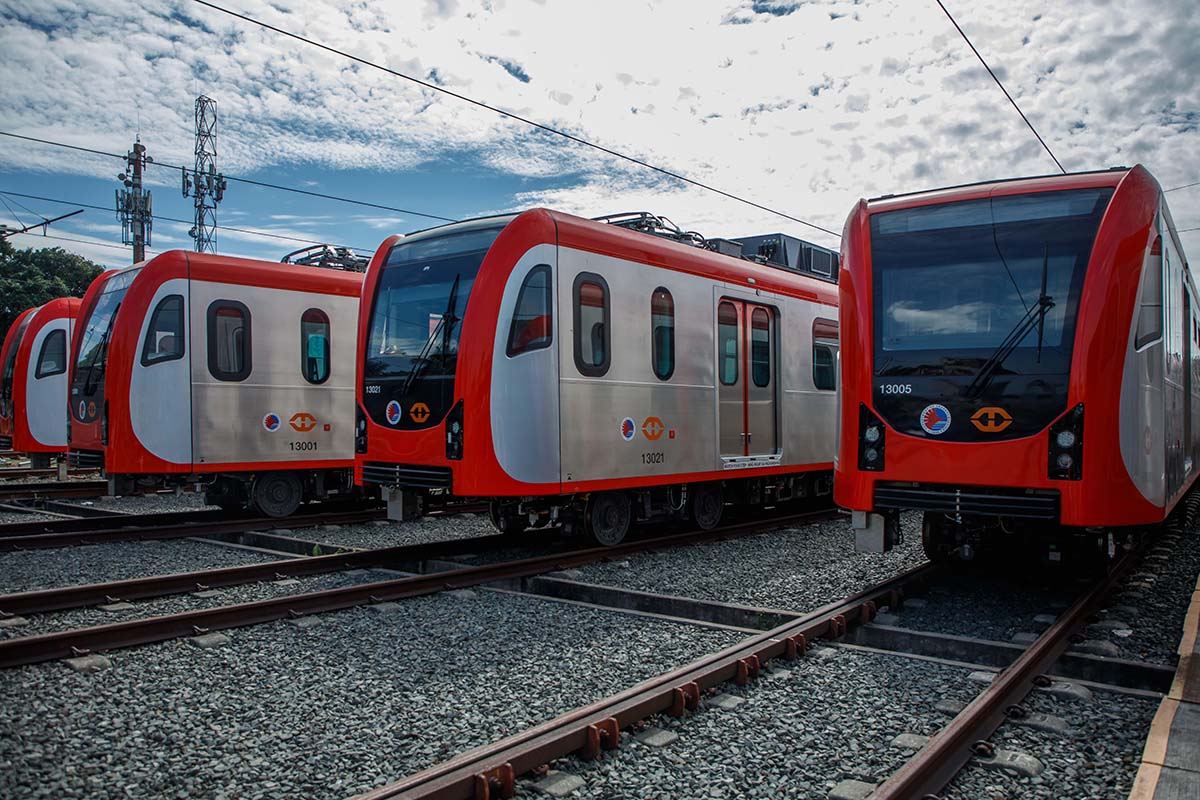
Before the morning rush hits, before the jeepneys rev and the expressways grid-lock, there is a brief window in Metro Manila when the city moves on its own terms. On the elevated tracks of the LRT-1 — the Green Line stretching from Baclaran to Fernando Poe Jr. Avenue — a handful of early commuters stand on clean platforms and wait. They have done this for forty years. Most of them do not know that the system carrying them to work, and the team quietly maintaining the line so that it keeps carrying them tomorrow, has a Japanese signature running through it like rebar through concrete.
That signature is about to become a lot harder to miss.
When the Metro Manila Subway opens — the Philippines’ first underground rail line, threading through the bedrock beneath Quezon City and south toward Taguig — the scale of what Japan has built here across seven decades will be impossible to overlook. At ₱488.48 billion, it is the largest single infrastructure project in Philippine history.
As of February 2026, the project is 54 percent complete and moving ahead of its original timetable. On March 27, 2026 — the exact date marking 70 years of Japan-Philippines diplomatic relations — then-Ambassador Endo Kazuya and DFA Secretary Enrique Manalo signed the latest JICA loan tranche for the project: 220 billion yen in additional financing, an act the then-Ambassador described as a symbol of the 70th anniversary. It was that. It was also, more precisely, the continuation of something that has been under way for a very long time.
The Foundation: What Came Before

“In 2026, Japan and the Philippines celebrate 70 years of friendship, built on peace, prosperity, and shared possibilities,” says Baba Takashi, Chief Representative of JICA Philippines. “As the partnership has evolved from post-war reconstruction to comprehensive national development, JICA has responded to the country’s changing needs through a range of Official Development Assistance modalities.” The formal partnership began in 1956, when Japan and the Philippines normalized diplomatic relations and Japan committed to an ODA relationship that has never lapsed. By 1954, technical cooperation was already under way — making the Philippines the oldest recipient of Japanese ODA worldwide.
“Our cooperation strengthens linkages between regions and communities, unlocking local potential and promoting inclusive and sustainable development,” says Baba. “This is greatly reflected in the expansive portfolio of JICA projects in the Philippines, highlighted by flagship projects on the Metro Manila Subway Project, the North-South Commuter Railway Project and our investment and engagement for the Light Rail Transit system, transforming mobility and connectivity.”
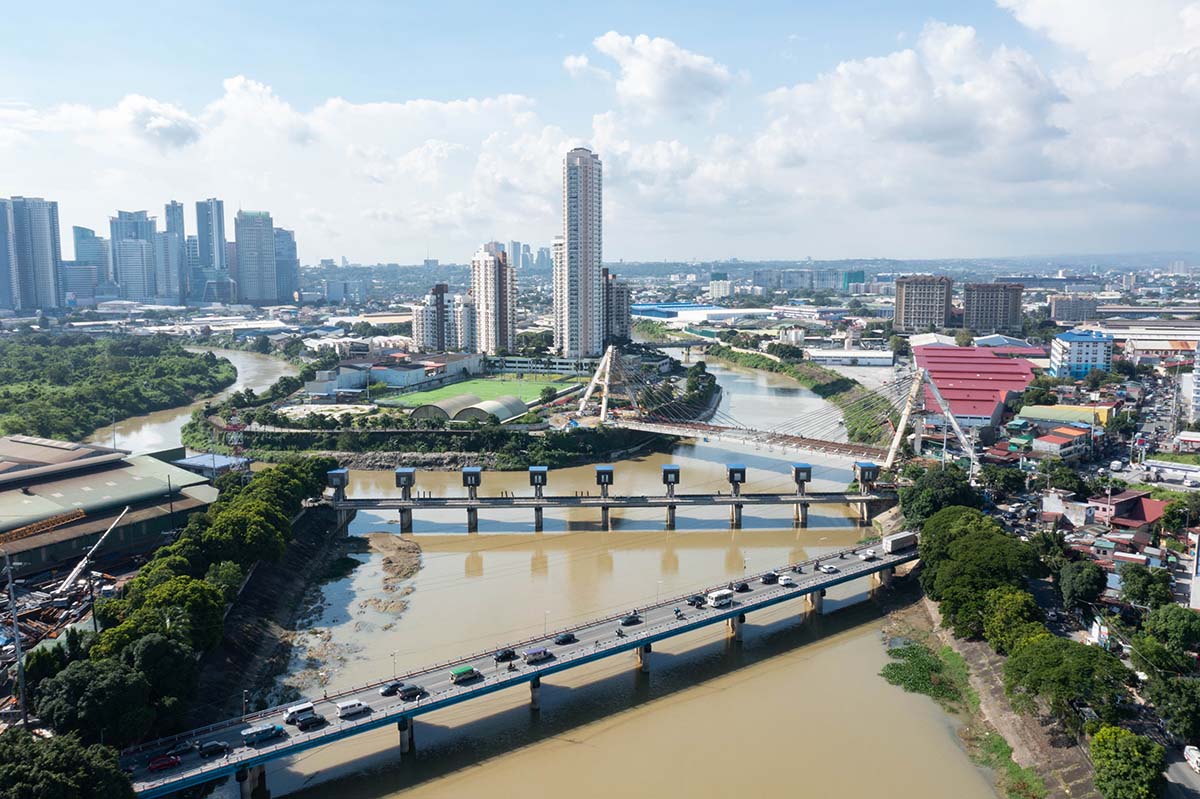
Among the earliest expressions of that cooperation was flood infrastructure. Through the 1970s and 1980s, JICA co-financed the Manggahan Floodway — which diverts Marikina River water into Laguna de Bay during typhoon season — the Rosario Weir, and successive phases of the Pasig-Marikina River Channel Improvement Project. These are not glamorous undertakings. They work by preventing things from happening. As Baba puts it: “Drawing on Japan’s extensive experience as a disaster-prone nation, JICA’s initiatives prioritize increased pre-disaster investment, improved disaster risk governance across all levels of government, and recovery and reconstruction efforts that rebuild safer, more resilient society based on the concept of ‘build back better.’”
“JICA’s cooperation in the Philippines has always been guided by the vision of ‘leading the world with trust,’ a holistic approach rooted in long-term engagement, knowledge exchange, and respect for local ownership.”
Baba Takashi, Chief Representative of JICA Philippines
“JICA’s cooperation in the Philippines has always been guided by the vision of ‘leading the world with trust’ and its mission to advance human security and quality growth,” says Baba, “a holistic approach rooted in long-term engagement, knowledge exchange, and respect for local ownership.”
That commitment extends today to a direct equity stake in Light Rail Manila Corporation, the operator of LRT-1 — the first time JICA has made an equity investment in a Philippine transit operator. LRT-2, the Purple Line running east-west across the metropolis, was built on Japanese ODA. The MRT-3 has been maintained under Sumitomo’s management for years, a contract renewed as recently as September 2025.
What Is Being Built Now
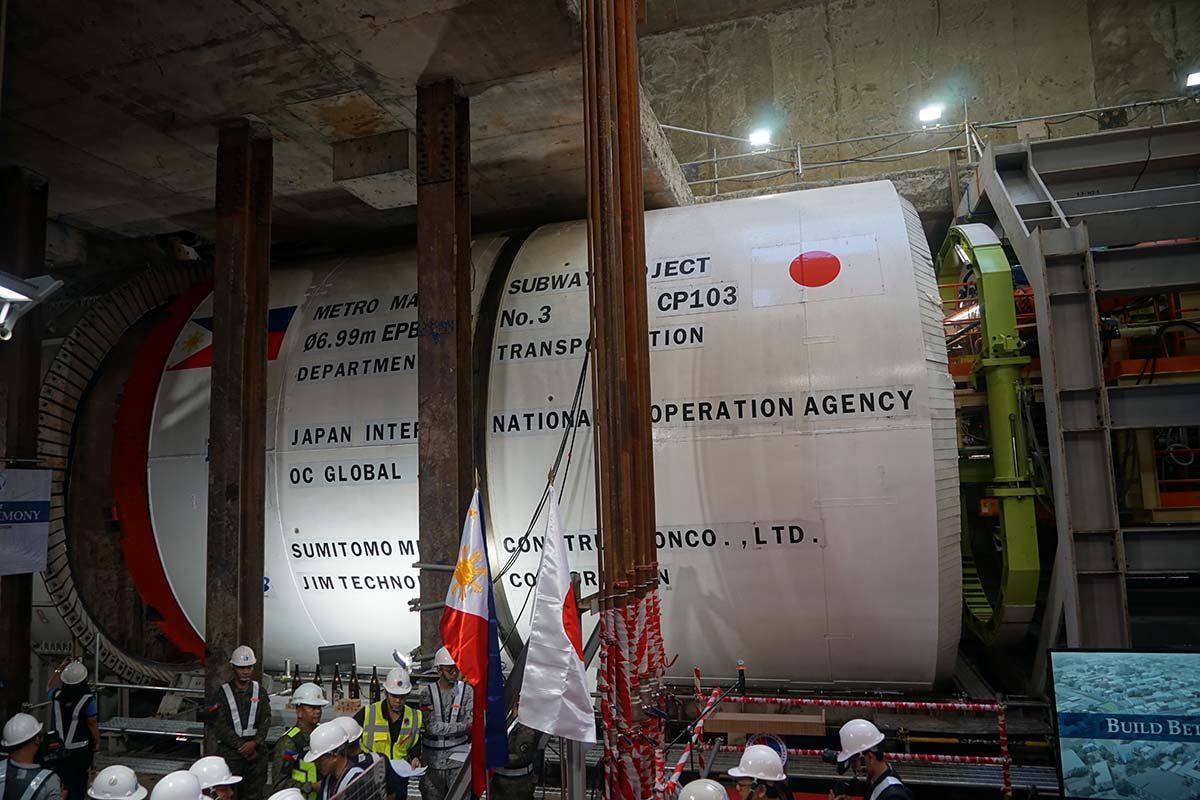
The Metro Manila Subway is the headline project — the DOTr’s own “Project of the Century.” At P488.48 billion, with JICA loans covering approximately P370.7 billion of that total, it is the largest Japanese ODA commitment to a single project in the agency’s history worldwide. The 33-kilometer underground line runs 17 stations from Valenzuela to Bicutan with a branch to NAIA Terminal 3, designed to carry between 400,000 and 800,000 passengers daily. A demonstration run is targeted for early 2028, with full operations expected in 2031.
The industrial commitment behind the project is substantial. Civil works are being led by a consortium of Shimizu Corporation, Fujita Corporation, Takenaka Corporation, and EEI Corporation. Japan Transport Engineering Company (JTREC) and Sumitomo Corporation are supplying rolling stock. Mitsubishi Electric is designing and delivering all electromechanical systems — power supply, signaling, telecommunications, and platform screen doors. The fourth loan tranche, signed on the 70th anniversary, continued the financing structure that has been building since the first tranche agreement in 2018.
North of the subway, the North-South Commuter Railway is taking shape as the backbone of a future national rail network. JICA is co-financing the NSCR alongside the Asian Development Bank, with the Valenzuela-to-Clark segment on track for completion before mid-2028. At its southern end, the NSCR integrates physically with the subway at FTI-Bicutan — the two systems designed from the outset to function as one.
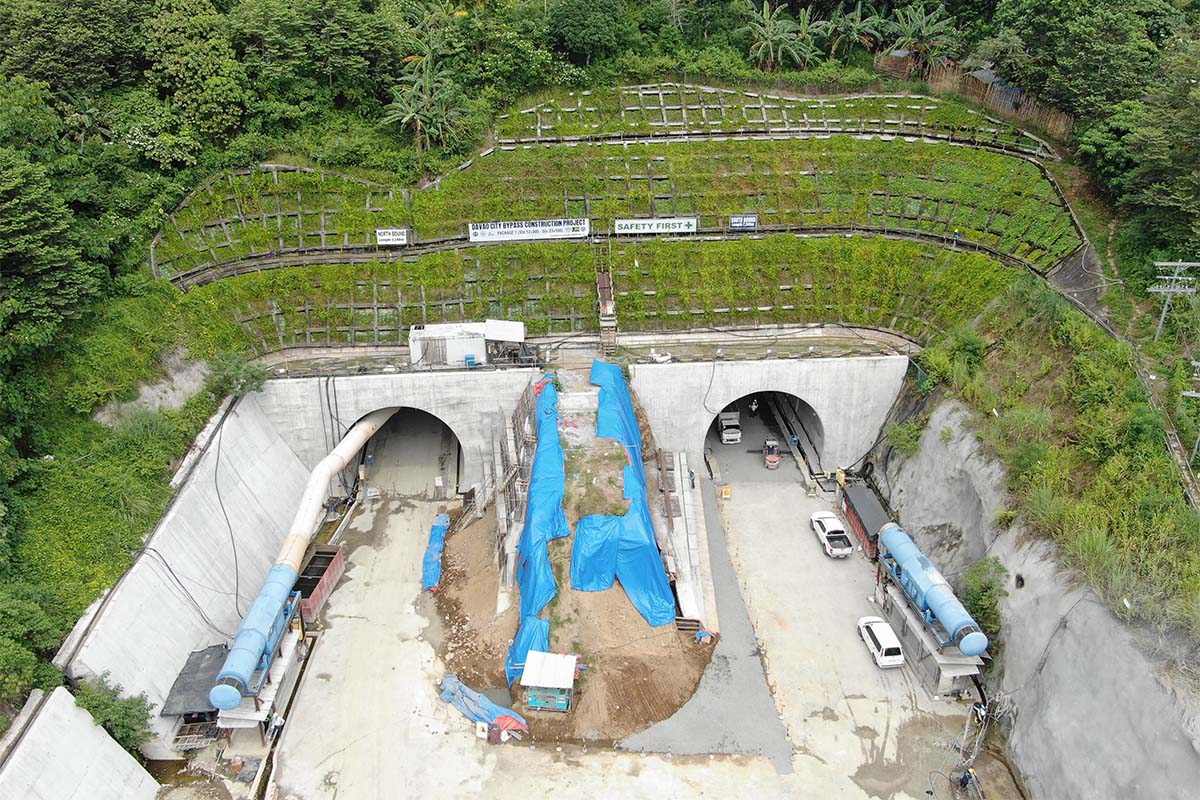
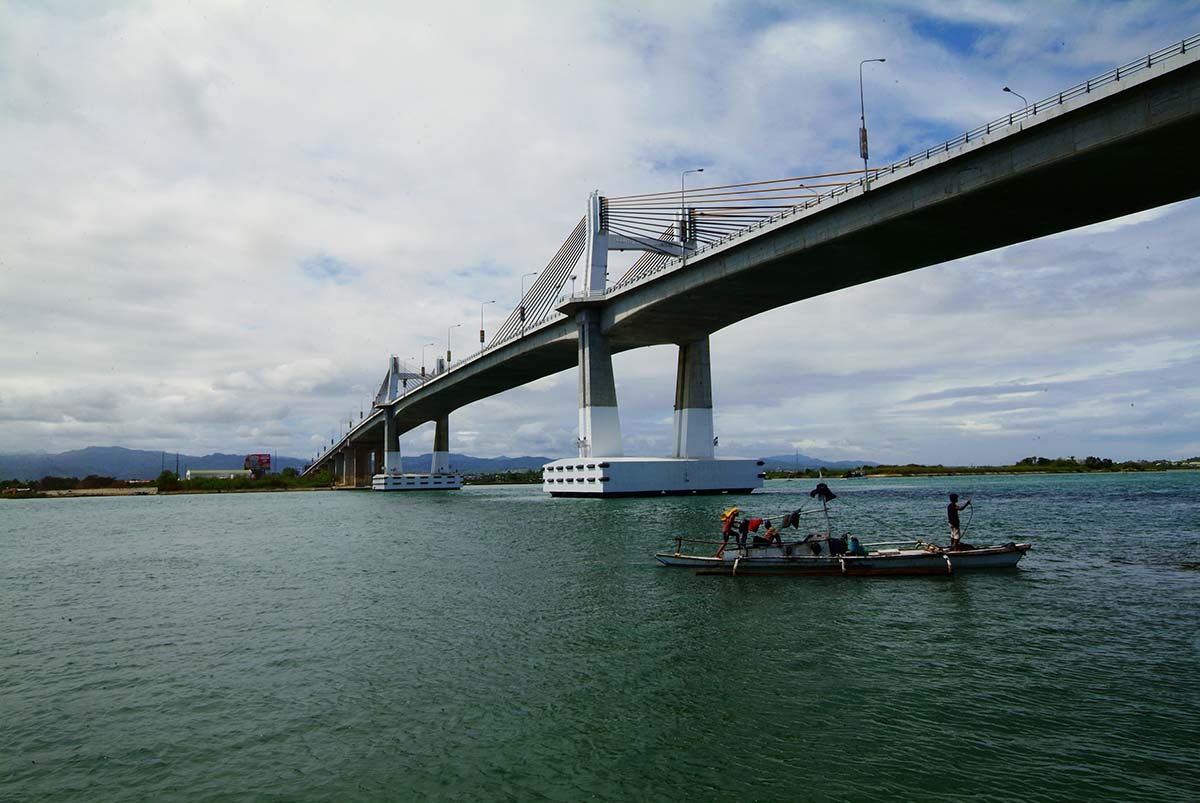
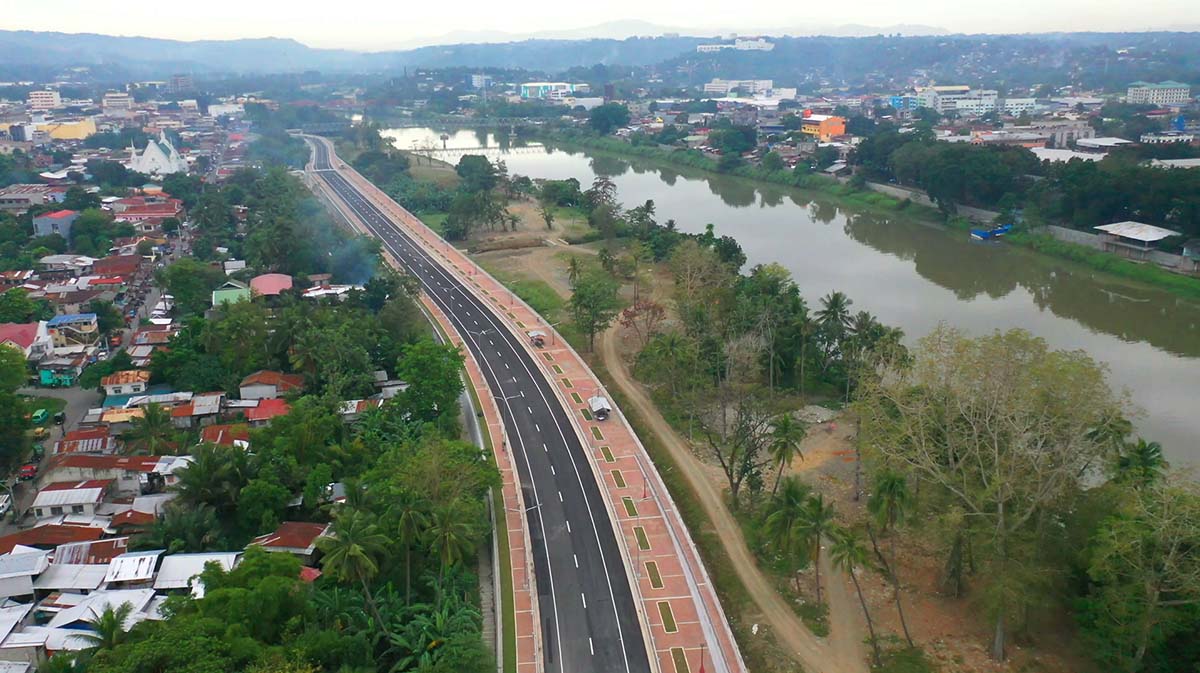
Outside the capital, the Davao City Bypass — which includes the longest mountain tunnel in the Philippines, built using Japanese tunneling technology — is under construction. JICA has also committed financing for the Central Mindanao High Standard Highway, the Cebu-Mactan fourth bridge and coastal road, the Dalton Pass east alignment road, and a Metro Manila priority bridges seismic improvement program. Japan remains the Philippines’ largest development partner, accounting for $13.9 billion — approximately one-third of the country’s total active ODA portfolio. More than half of JICA’s Philippines portfolio is invested in transport.
In the Field
“JICA’s cooperation in the Philippines has always been guided by the vision of ‘leading the world with trust,’” says Baba, “a holistic approach rooted in long-term engagement, knowledge exchange, and respect for local ownership.” That commitment is expressed not only in loans and engineering contracts but in the 44,000 Filipino trainees and scholars JICA has supported, and in the more than 1,700 Japan Overseas Cooperation Volunteers who have served across the archipelago since the first dispatch in 1966. This year marks the 60th anniversary of that program — sixty years of Japanese volunteers working in Philippine schools, hospitals, farms, and local government offices.
On the major infrastructure projects, JICA’s approach goes beyond financing. Filipino engineers work alongside Japanese counterparts through every phase of construction — not as subcontractors handed finished plans, but as co-learners in a process designed to build Philippine capacity to operate and maintain what is being built. When the subway opens and the consortium hands it over, Philippine engineers will run it.
“Guided by the principle under Human Security, communities should meaningfully share in the dividends of peace,” says Baba. “We have applied a long-term, systems-focused approach to help strengthen institutions, seeking to improve everyday lives and create lasting opportunities for the Bangsamoro people as they advance toward stable self-governance and inclusive, sustained socio-economic development, grounded in a culture of peace.”
The partnership has also moved into domains that would have been unrecognizable a decade ago. Through JICA’s Public-Private Partnership Promotion Program, Spectee Pro — an AI-powered real-time disaster information system developed by Tokyo-based Spectee Inc. — is now operational across Philippine government agencies, enabling faster collection and visualization of critical information during emergencies. The technology, says Spectee COO Satoshi Negoro, is rooted in Japanese experience: “Japan’s disaster management practices grew out of hard-earned lessons about how much damage can result from the information vacuum immediately after a disaster. Spectee was built precisely to close that gap.” Breaking through to Philippine government agencies, Negoro acknowledges, “came early only because of the institutional trust that JICA and Japan’s ODA history have built over many years.” The technology ran on a track laid over decades of patient relationship-building.
The Next Chapter
“As the Philippines enters a new chapter as an upper-middle-income country, development cooperation must continue to evolve to address increasingly complex economic, social, and environmental challenges,” says Baba. “Strong multi-stakeholder partnerships will remain essential to achieving sustainable, inclusive, and impactful development outcomes.” JICA’s equity investment in Light Rail Manila Corporation is one expression of that evolution. “This partnership reflects the power of co-creation,” says Baba, “where public and private partners jointly shape solutions to address immediate service needs.”
Spectee is an early working example of that direction. Looking ahead, Negoro sees the relationship itself shifting: “The Japan-Philippines relationship is shifting its center of gravity from aid to co-creation. If Japanese technology companies can build commercial value on the foundation of trust that ODA has created, I hope Spectee can serve as one working example of that model.” Japan has also committed to energy resilience through the Asia Zero-Emission Community framework, providing emergency response and medium-term solutions to supply challenges across the region.
“Through sustained collaboration across public and private actors, supporting innovation and digital transformation, and advancing shared solutions through partnership,” says Baba, “JICA seeks to ensure that development cooperation remains responsive, future-ready, and aligned with national priorities.”
Return, for a moment, to the morning commuter on the LRT-1. She has been riding this line for years. What she may not know is that the act of grace in 1953 helped make this line possible. That the agreement signed in 1956 laid the ground for a relationship that has never stopped building. That the team maintaining her train answers to a Japanese company. That the engineers preparing the system that will carry her daughter to work in the early 2030s learned their trade working alongside Filipino counterparts who will carry the knowledge forward.
Infrastructure lasts. The Manggahan Floodway has been managing typhoon water for forty years. The rails on the Green Line have carried hundreds of millions of journeys. The subway will carry billions more.
Japan builds things to last. What it is really building, alongside the concrete and the steel and the tunnels bored through bedrock, is time. Seventy years of it. And the investment is nowhere near complete.