
The little-known friendship between Larry Alcala and Osamu Tezuka—and how an old letter brought their families and legacies together again.
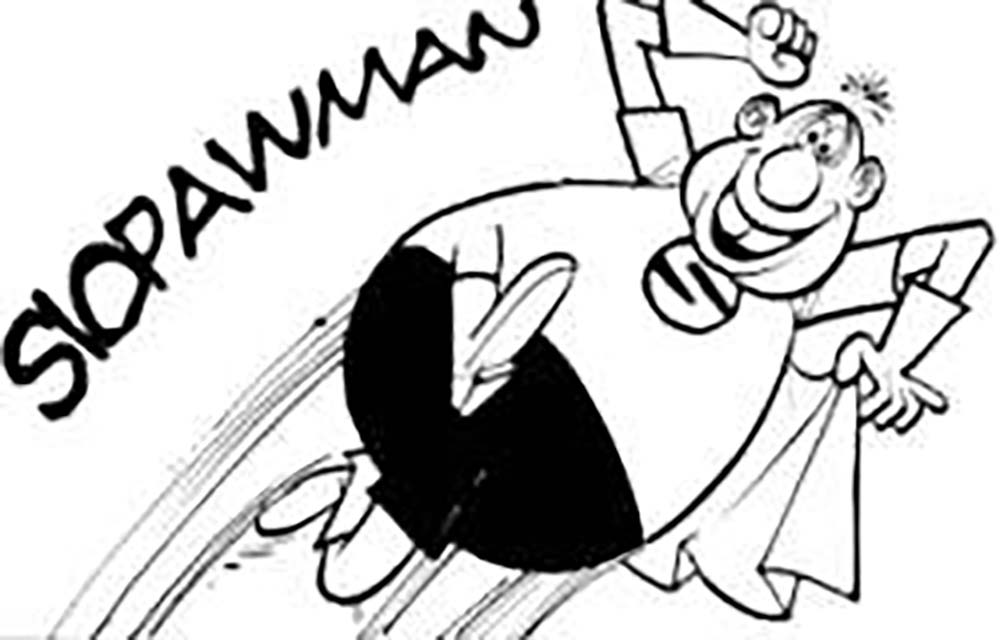
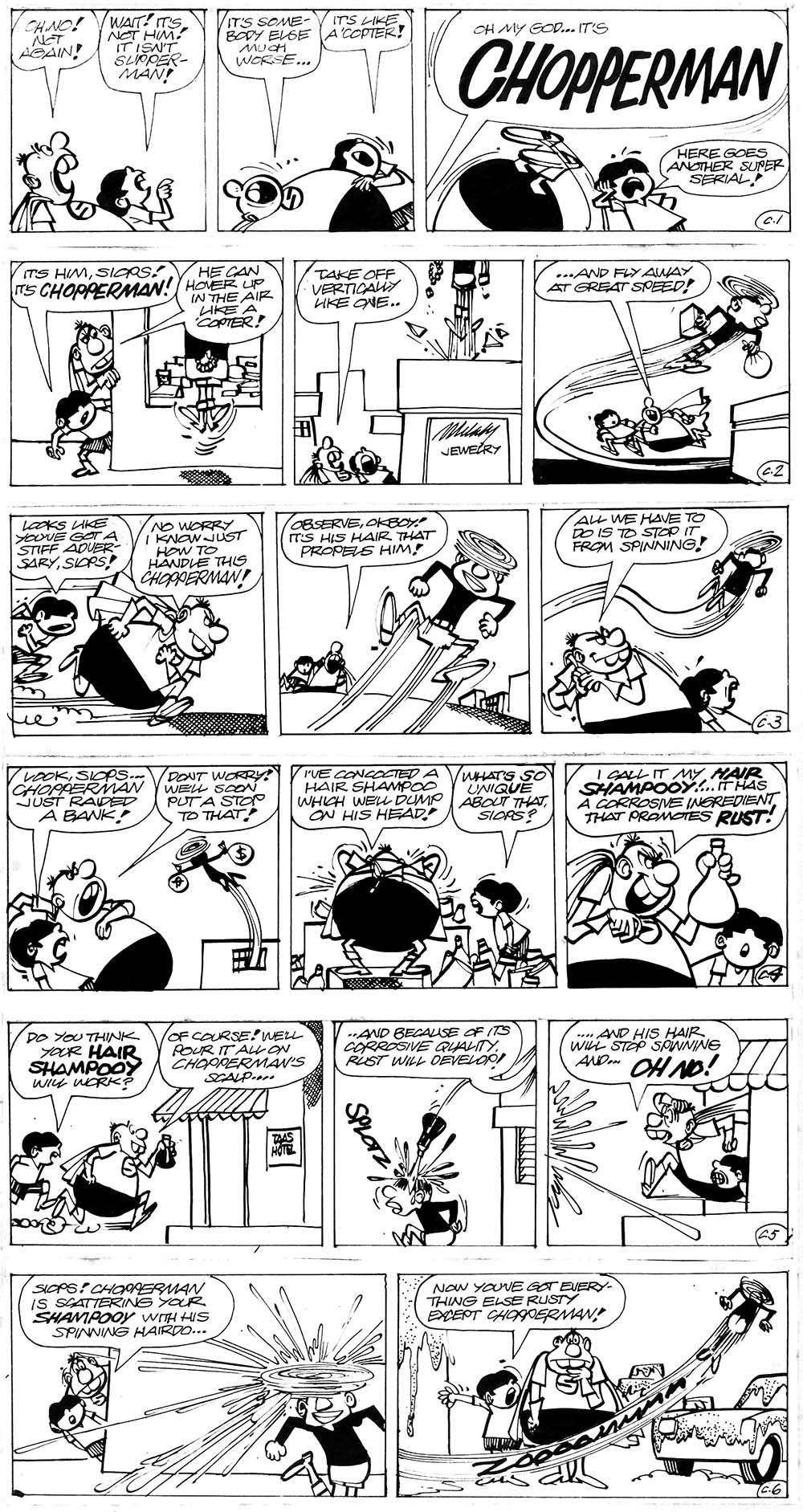
Astro Boy could fly. Siopawman—round, big-toothed and sustained by enormous helpings of siopao—was more likely to make his readers laugh. One became the wide-eyed mechanical hero of Japanese manga and animation; the other was an irreverently Filipino answer to the superhero. Behind them were two men who spoke the same language long before their characters could travel easily across borders: Osamu Tezuka and Larry Alcala.
For children growing up in the Philippines in the 1980s, before cable television multiplied the available channels, Astro Boy already belonged to the landscape of childhood. He came from Japan, but the adventures of the little robot with jet-powered boots felt strangely close to home. Alcala’s characters, meanwhile, were unmistakably of this place. Siopawman, Kalabog en Bosyo, Mang Ambo and the teeming scenes of “Slice of Life” reflected Filipino humour, habits and everyday disorder with great affection.
Behind these two bodies of work was a friendship that remained largely outside public view. Alcala, hailed as the “Dean of Filipino Cartoonists,” and Tezuka, widely regarded as the “Father of Manga” or the “God of Manga,” were born just two years apart. They met in Japan in 1984 and found in each other something rarer than professional admiration: a peer who understood the peculiar demands and possibilities of drawing for a mass audience.
More than four decades later, an old letter—complete with a hand-drawn Astro Boy—has brought that relationship back to life.
The artists first encountered each other at the Asia Manga Hiroshima Conference in May 1984, a gathering of 13 Asian cartoonists that included Alcala and Tezuka.
“Osamu Tezuka found many similarities between him and my father,” says Alcala’s son, Lauro Alcala Jr. “Both had published cartoons professionally while still studying in 1946. Both had unusually prolific outputs, and both became the most influential cartoonists in their respective countries by the time they met.”
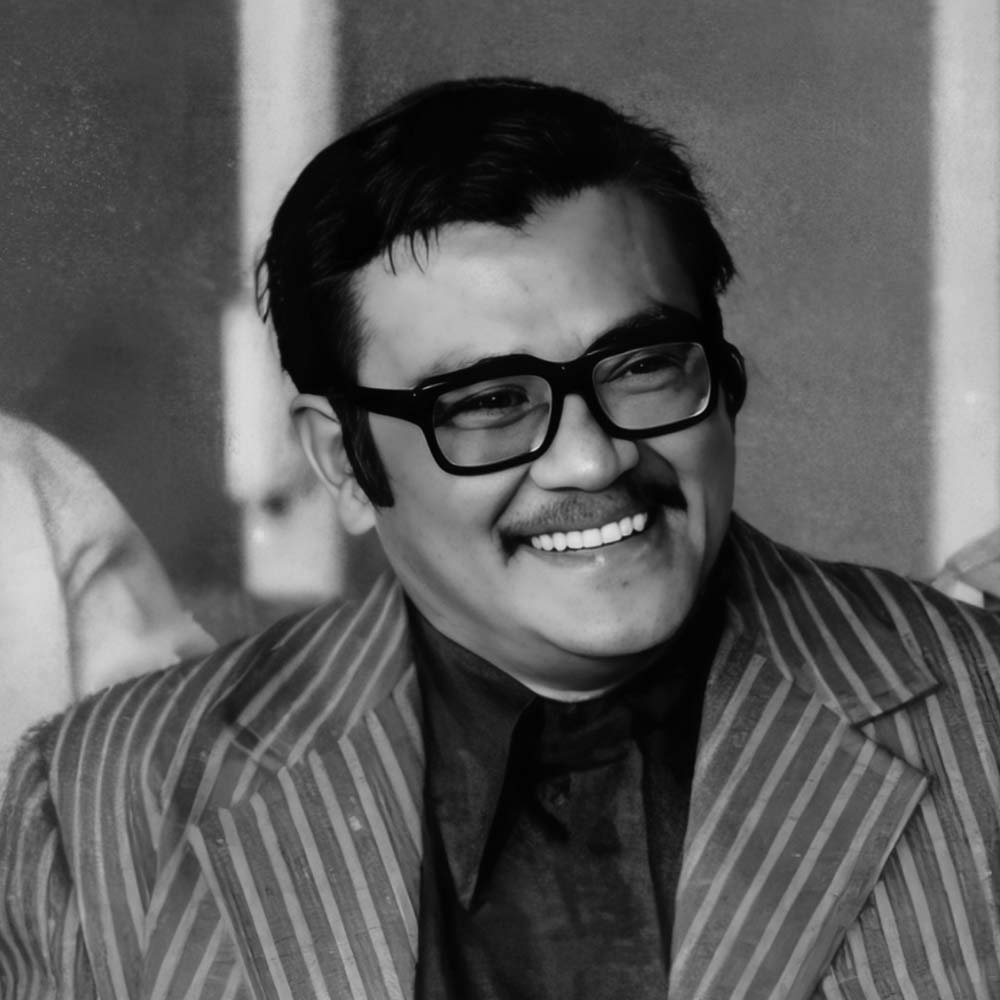
Their friendship extended beyond the conference hall. According to Lauro Jr, both men loved Disney films and visited Tokyo Disneyland together. It was there that Alcala began to understand just how famous his new companion was.
“As they walked, Tezuka was surrounded by fans asking for autographs and photos,” Lauro Jr recalls. “Only then did my father realise that the person he was walking with was a very important public celebrity in Japan. It was the God of Manga himself, Osamu Tezuka, and he felt so honoured to be shown around by such a great cartoonist.”
They remained in touch through letters. After Alcala died in 2002, his family found letters and gifts from the Japanese artist. According to Lauro Jr, the two men wrote about cartooning in Asia as well as more personal matters, which the family has chosen to keep private.
One surviving letter eventually caught the attention of Tenie Santos, assistant director of Fundacion Sansó. The foundation had begun working with the Alcala family through ICArE, its Initiative for the Continuation of Artist Estates. The programme helps artists’ families organise archives, manage copyright and authentication, work with cultural institutions and prepare for future exhibitions, books or museums without having to disperse the collections they inherited.
“The problem with building an artist’s legacy here in the Philippines is that when an artist passes away, the family often doesn’t know how to manage the collection or the archives left behind,” Santos says.
It is a quiet but essential form of cultural care. An artist’s reputation can appear permanent while resting on surprisingly fragile foundations: ageing paper, scattered records, uncertain ownership and the memories of relatives.
ICArE gives families the knowledge needed to turn these vulnerable holdings into living archives.
For the Alcala estate, the objective was clear. The family wanted younger Filipinos to encounter his work—not merely as nostalgia from their parents’ and grandparents’ generation, but as part of a continuing visual culture.
During an early conversation, Alcala’s granddaughter Anna mentioned that her grandfather and Tezuka had been friends. Santos’s reaction was immediate: “You mean Astro Boy?”
Then she saw the letter.
“I thought, ‘That’s a really important archival discovery,’” she says. “It would be a shame if the Filipino people never learned about it. I think both the Filipino and Japanese communities should know that there is an art-historical connection between the Philippines and Japan.”
The discovery complicates the familiar account of cultural influence travelling in only one direction. Generations of Filipinos have absorbed Japanese manga and animation. Far fewer know that a Filipino cartoonist once sat with Tezuka as a colleague, discussing the future of their disciplines.
“For so long, we only knew that Filipinos were heavily influenced by Japanese anime and art,” Santos says. “We never imagined that there was a Filipino who might also have influenced the God of Manga.”
Fundacion Sansó began searching for a route to Tezuka’s estate. It contacted the municipality associated with the Osamu Tezuka Manga Museum and was eventually directed to Tezuka Productions. Santos then filled in the company’s online inquiry form—an ordinary digital gesture carrying an extraordinary story.
“I’m going to shoot my shot here,” she remembers thinking.
Her message introduced Alcala as a Philippine National Artist and the dean of Filipino cartooning. She explained that his family possessed documentary evidence of the friendship and proposed an exhibition to mark Alcala’s 100th birthday. Two months later, Tezuka Productions requested a full proposal.
The exchange led to an official collaboration and, when the Alcala family travelled to Japan, a meeting at Tezuka Productions. Lauro Jr describes walking into its offices and meeting company president Takayuki Matsutani as “the most humbling experience” for the family.
“President Matsutani was gracious as a host and welcomed us with much hospitality,” he says. “He was very happy to learn about the friendship between my father and Osamu Tezuka, and he even showed us some magazine clippings of them together. We discussed how to continue the relationship between my father and Tezuka Productions, and it opened the way for future collaborations.”
The Tezuka archive contained an article about the artists’ 1984 meeting, published in the June 10, 1984 issue of the Tezuka Fan Magazine, but apparently none of their letters or exchanged sketches. The material preserved by the Alcala family has therefore added another piece to the historical record.
The renewed connection is being celebrated in an exhibition bringing Alcala’s work together with archival prints of Tezuka’s Astro Boy art. Its September 5 opening forms part of the celebration of Alcala’s centenary. One of Tezuka’s sons, Makoto Tezuka, is also expected to visit the Philippines for the occasion.
At the time of writing, the project represents Tezuka Productions’ first official partnership with a Filipino organisation. Whether encountered just before or after its opening, the exhibition is more than a commemorative event. It is the public continuation of a friendship that began in Hiroshima more than 40 years ago.
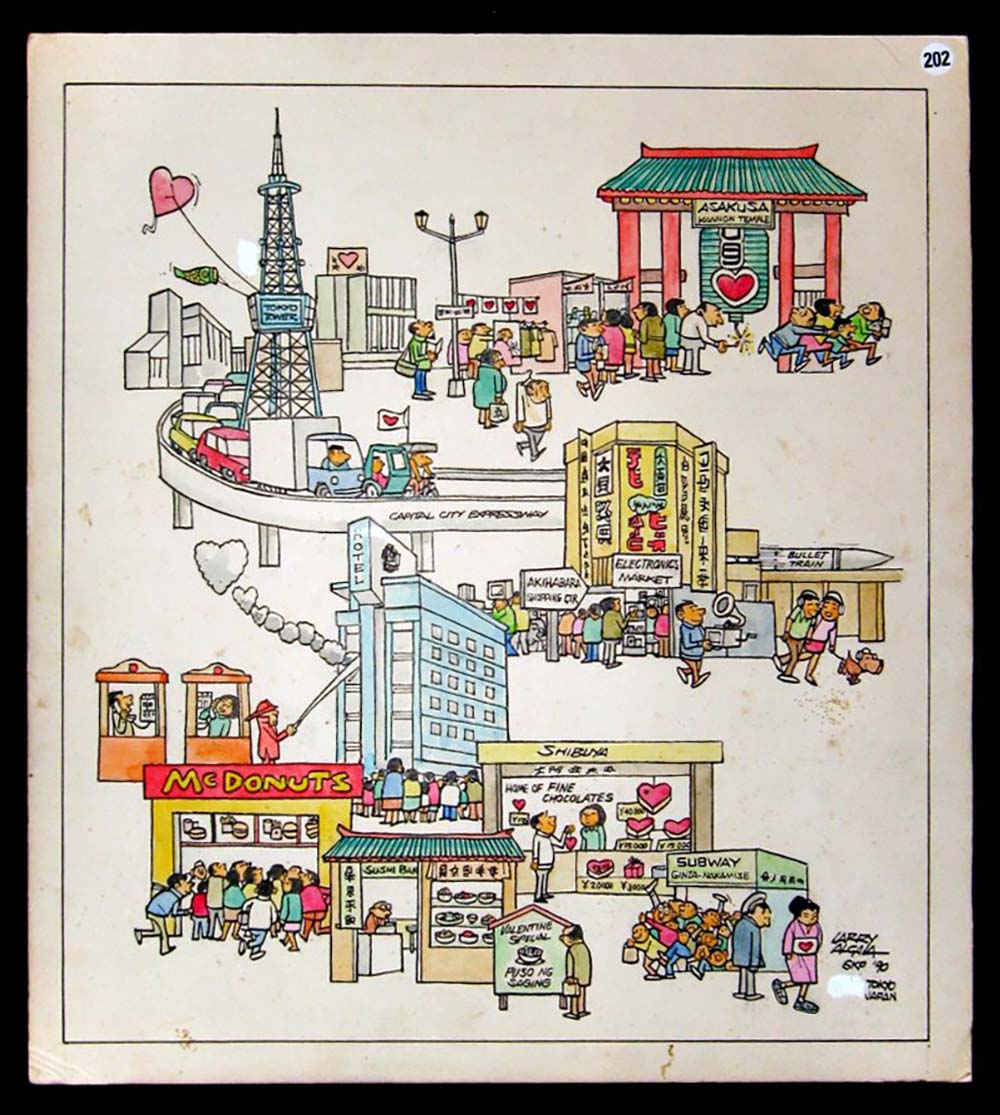
There is an appealing symmetry to the collaboration. Alcala spent much of his career demonstrating—through the quality, intelligence and ubiquity of his work—that cartooning deserved to be treated as art.
There is an appealing symmetry to the collaboration. Alcala spent much of his career demonstrating—through the quality, intelligence and ubiquity of his work—that cartooning deserved to be treated as art. He helped establish visual communication education in the Philippines, contributed to its curriculum and was among the country’s earliest teachers of animation. Tezuka transformed manga and animation in Japan while arguing for their wider cultural and international role.
After meeting Tezuka, Alcala was struck by the respect Japanese society accorded its cartoonists. In the Philippines, Lauro Jr says, cartooning was not then granted the same seriousness.
“For many people, it was not even considered an art form,” he says. “Of course, now that he received the National Artist Award, it proves that cartooning is indeed an art form. But at that time, it wasn’t well received.”
Both artists understood drawing as a means of international exchange. At the Hiroshima conference, Tezuka delivered a lecture titled “The Role of Manga as a Common Language in the International Community.” Tezuka Productions says he believed that “manga transcends national borders,” a conviction that helped him form friendships around the world.
Alcala spoke that language fluently. His Philippines and Tezuka’s Japan were distinct places, marked by different histories, but the two artists recognised the same things in each other: discipline, curiosity, humour and an almost inexhaustible need to draw. Talent had gravitated towards talent, requiring neither a shared nationality nor much translation.
The friendship now returns as the Philippines and Japan mark 70 years of diplomatic relations. The alignment was not planned. According to Santos, the project was conceived for Alcala’s centenary before the foundation realised that it coincided with the bilateral anniversary.
“I think it was something in the universe that made it all work together,” she says.
Perhaps the more meaningful diplomacy is the smaller one: two men walking through Disneyland; letters crossing the sea; an Astro Boy sketched on a page and kept safe by a family for decades.
“Anything is possible as long as the story is genuine and carries an important message,” Santos says. “Especially now, in this era, we need friendship and love to be out there more than anything.”
Astro Boy and Siopawman emerged from different imaginations, but their creators understood the same essential truth. A line drawn well can travel remarkably far. Sometimes it can even find its way home.