
A jazz concert on Manila’s diplomatic calendar traced a musical bond between Japan and the Philippines that runs back a full century — long before any treaty made it official.
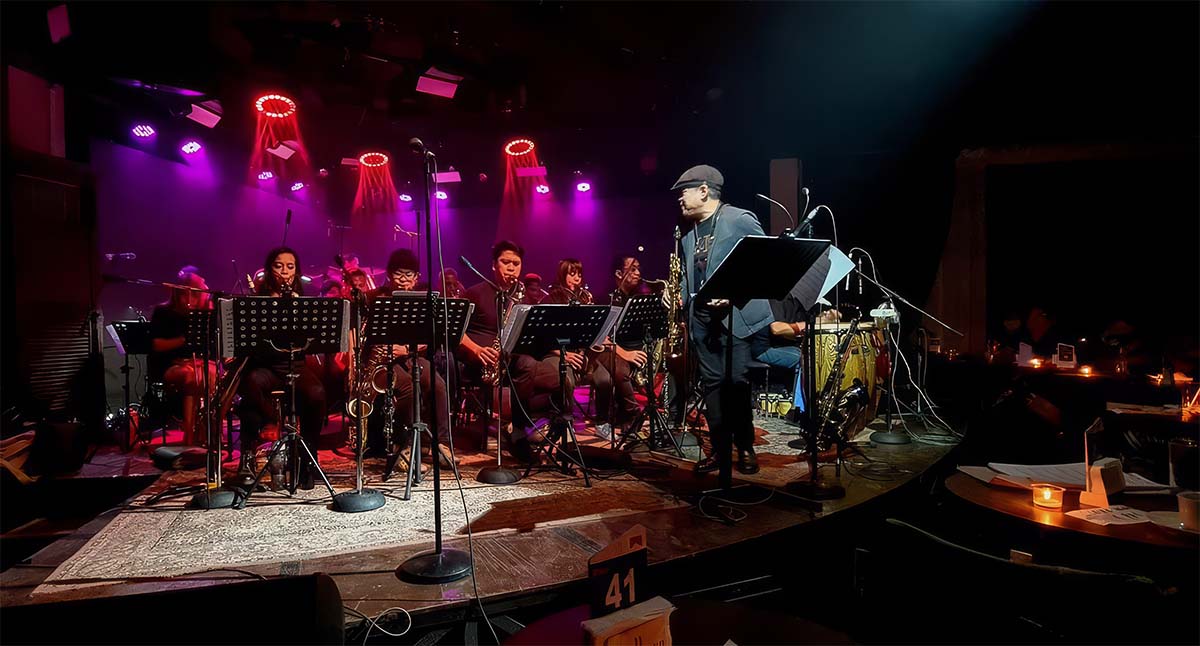
The Philippines and Japan didn’t need a treaty to start speaking the same musical language. In the 1920s, Filipino musicians — schooled in American ragtime and dance music during the Philippines’ years as a US colony — arrived aboard transpacific ocean liners and filled the hotel ballrooms of Kobe, Osaka and Yokohama, teaching, by example, a country that had barely heard the word “jazz” how to swing. “Music has always been the secret language of our two nations,” Charito says. “Historically, Filipinos were the pioneers who brought jazz to Japan in the 1920s, performing in the hotels of Tokyo and Yokohama during the early Jazz Age.”
The claim holds up. Japan’s jazz historians date the genre’s arrival to precisely this period, crediting visiting Filipino bands — rather than the handful of early Japanese dance orchestras — with introducing the improvised, syncopated sound now inseparable from the word “jazz.” Japanese musicians of the era later credited Filipino players with introducing genuine improvisation to the bandstand. When the Great Kantō Earthquake flattened Tokyo in 1923, the scene simply relocated to Osaka and Kobe, where Filipino-heavy ensembles kept the dance halls running until the capital rebuilt.
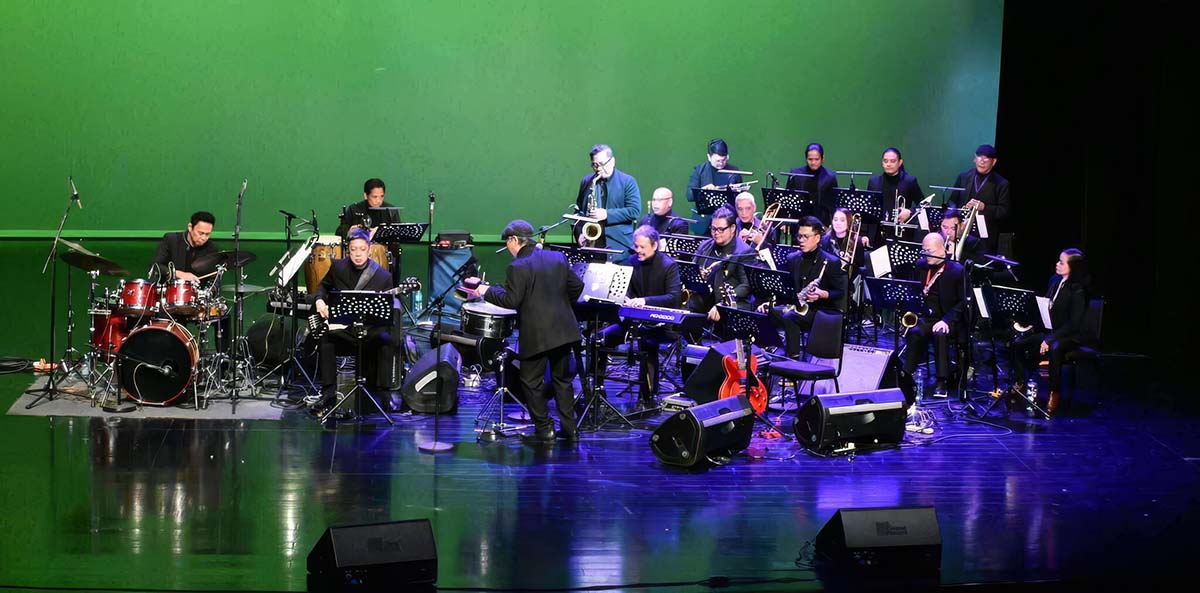
That history was very much alive in January, when the Japanese Embassy and Japan Foundation Manila staged “Harmony of Friendship: A Jazz Prelude to 70 Years of Japan-Philippine Ties” at the Proscenium Theater in Makati. The evening belonged to two performers whose own careers extend that century-old exchange: vocalist Charito and conductor Mel Villena.
“I’ve realized that being a global artist isn’t about erasing where you’re from,” she says. “It’s about using your roots to branch out into new, unexpected directions.”
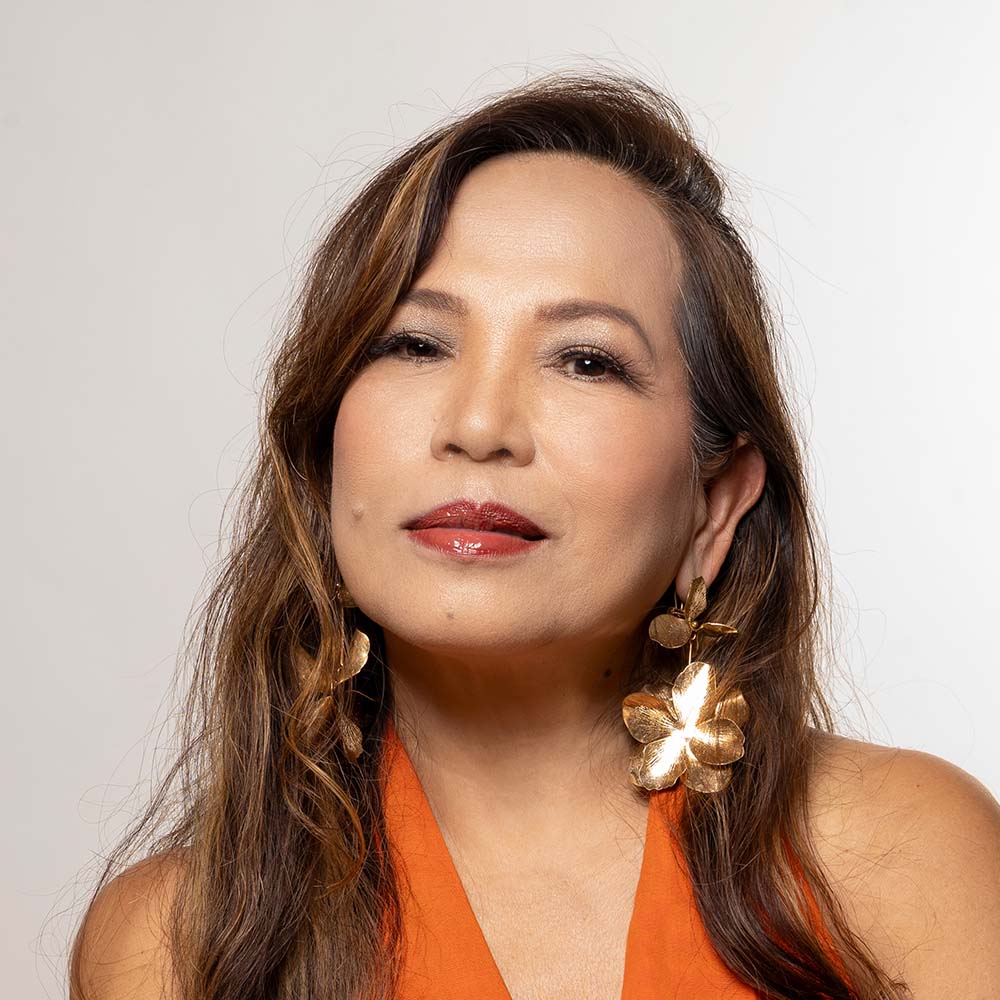
Vocalist Charito Vagara
Charito extended that lineage literally. She has lived and worked in Tokyo for the better part of two decades, becoming one of the most decorated vocalists in Japan’s jazz scene — in 1996, the first Filipino artist to perform at the Montreal Jazz Festival, and twice a Jazz Disc Award winner for collaborations with Brazilian composer Ivan Lins and the Manhattan Jazz Orchestra.
That long residency shaped her as a musician. “Living and working in Japan has taught me the beauty of precision and ‘Ma’ — the space between notes,” she says. “Japanese culture values silence just as much as sound.” Combining that discipline with the warmth of Filipino artistry, she says, gave her a more balanced musical identity. “I’ve realized that being a global artist isn’t about erasing where you’re from,” she says. “It’s about using your roots to branch out into new, unexpected directions.”
In 2012, Charito turned that philosophy into an institution, founding the Tokyo-Manila Jazz & Arts Festival (TMJAF) to put musicians from both countries on the same stage. “Music shouldn’t just be a performance we watch,” she says. “It should be a conversation we have together.”
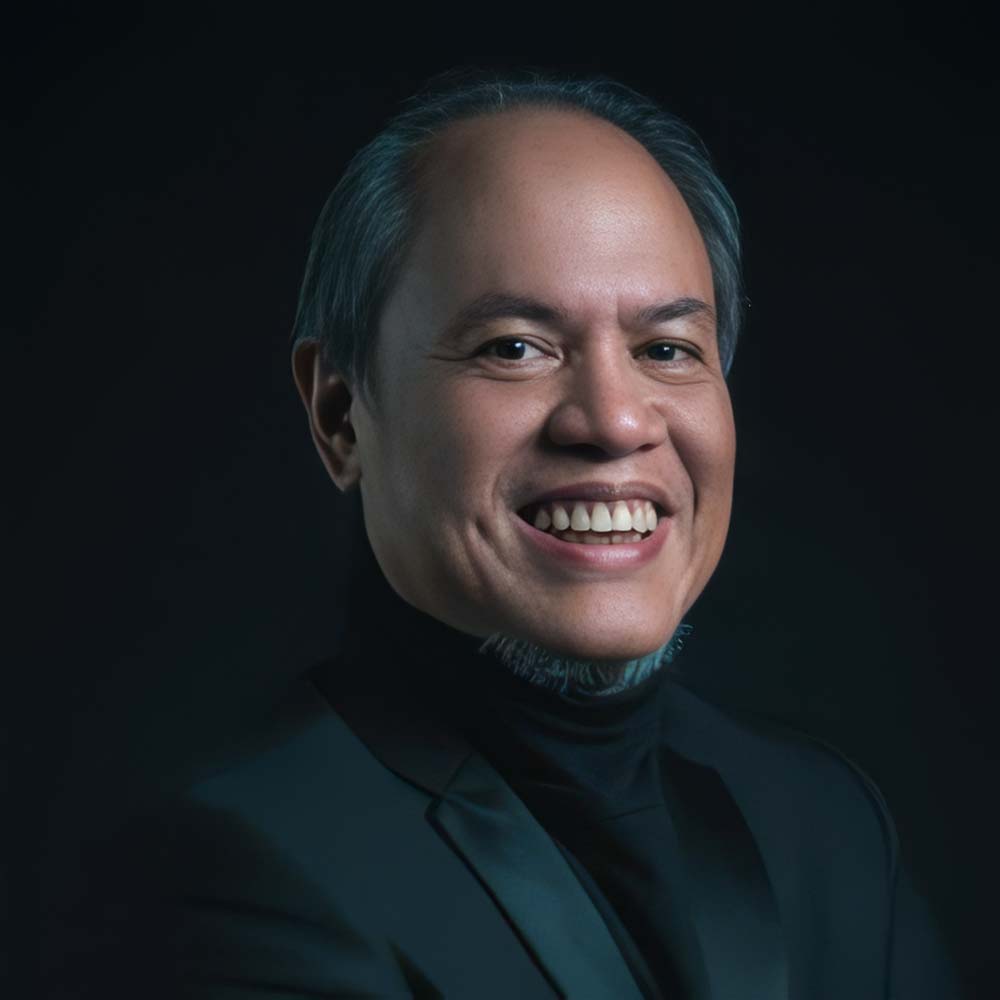
Villena, who conducts the AMP Big Band and has spent decades introducing jazz to Filipino audiences, calls TMJAF one of the best platforms for that cause. “The Manila-Tokyo Jazz Festival undertaken by Ms. Charito Vagara is one of the best venues to support this endeavor,” he explains. “It fosters the deep cultural connection aspects of the music in relation to both countries’ western influences.”
Now in its second decade, TMJAF has outgrown the club circuit it started on, and January’s concert was its most visible stage yet.
Villena describes jazz as an important, underappreciated part of Filipino musical heritage. “Jazz music, particularly the big band genre, is a deep part of our Pinoy western musical heritage,” he says. “Music that carries with it a sense of joy and cerebral quality that has a uniquely profound way of engaging its performer and listener.”
“Jazz has always been there. Overshadowed in every generation by whatever popular thing comes out, only to renew and spring forth again each time a new voice finds its way to be heard.”
Conductor Mel Villena
For Villena, jazz’s staying power lies in its refusal to stay still. “Jazz has always been there,” he says. “Overshadowed in every generation by whatever popular thing comes out, only to renew and spring forth again each time a new voice finds its way to be heard.”
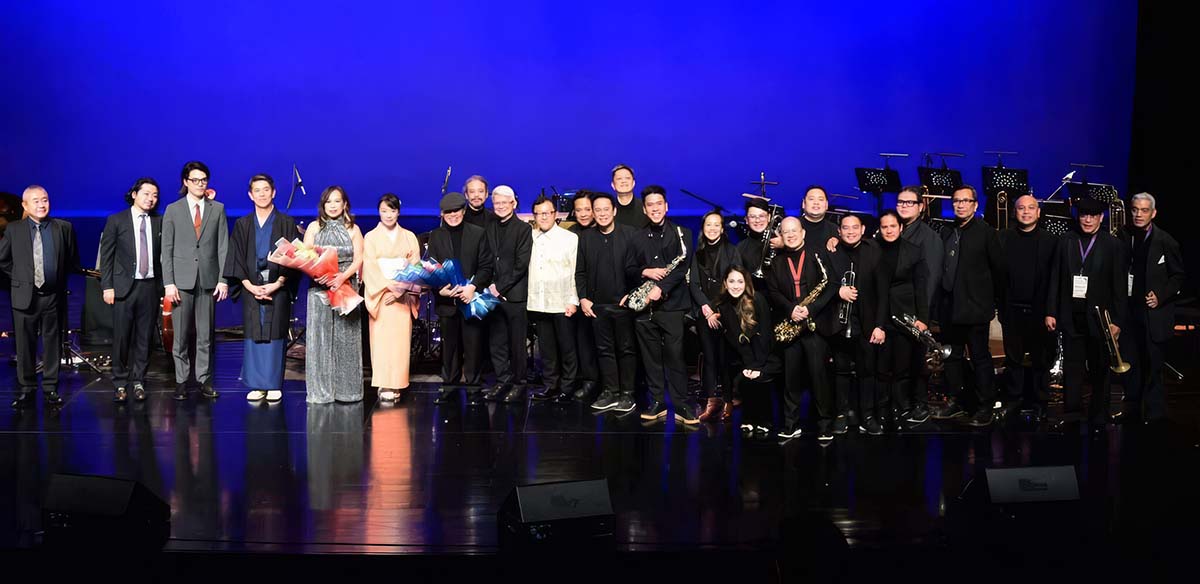
Charito, for her part, is focused on the next generation of listeners. “To grow the Philippine jazz scene without the ‘pretentious’ label, we must return to the roots of jazz as social music,” she says. “We need to take jazz out of the black-tie venues and into community spaces.” Blending the genre with contemporary sounds, she adds, is part of the answer. “When younger audiences see jazz as a tool for self-expression rather than a rigid set of rules to be studied, the intimidation factor naturally fades away.”
That ambition sits comfortably alongside a black-tie diplomatic evening, because jazz has always moved between the two: the ballroom and the barrio, protocol and improvisation. A century after Filipino musicians first taught Japan to swing, it remains one of the two countries’ most fluent shared languages — spontaneous, collaborative, and built, quite literally, in the space between the notes.