

As Japan looks to biotechnology and its growing market to address challenges ranging from energy security to resource efficiency, Novonesis is positioning its long-standing presence in the country for a new phase of growth.
The biotech solutions (“biosolutions”) company, which traces its presence in Japan back to the 1970s, sees the country’s combination of scientific expertise, technological capabilities and manufacturing know-how as a foundation for developing solutions with applications across industries.
“Our relationship with Japan has grown through long-term collaboration, trust and a shared commitment to innovation,” said Hirokazu Sano, representative director and president of Novonesis Japan. “We have worked closely with Japanese companies, academic institutions, customers, and partners, while connecting our local capabilities to our global R & D (research and development) and production centers.”
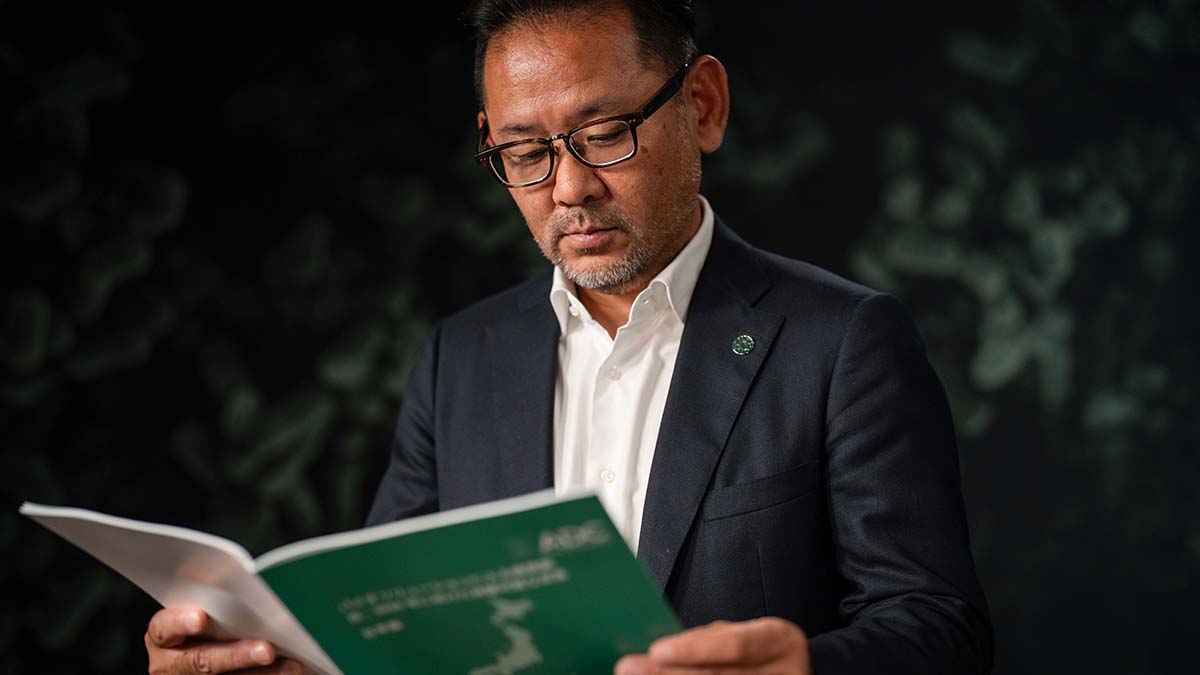
Japan is strategically important to Novonesis not only as a market, but also as a source of scientific expertise, technological capabilities and ideas with global potential. Sano explained that these strengths make the country an important contributor to Novonesis’ wider innovation and development efforts.
The company’s outlook runs in parallel with Japan’s objective to build a stronger biotech economy (bio-economy), with government policy increasingly focused on translating scientific capabilities into commercial applications.
Novonesis’ recent report, “Value of Biosolutions: Growth and Prosperity to 2035 — Japan Edition,” estimates that the value of Japan’s biosolutions-related industries could reach ¥4.79 trillion by 2035. At the same time, the number of jobs supported by the industry and its value chains could more than double and grow from 65,000 to 167,000.
Realizing that potential, however, will require more than technological advances, Sano said. Policy, investment, regulation, infrastructure and public understanding will all be important in moving innovations from laboratories into the marketplace.
“By establishing the right conditions for innovation and for scaling-up, Japan can strengthen its economy and create employment, while addressing important societal challenges,” he said.
Among the areas with potential for significant impact, Sano highlighted energy security and early-life nutrition. More broadly, he sees biosolutions as a means of diversifying how Japan uses resources while strengthening its industrial capabilities. The challenge is creating an environment in which promising technologies can be developed and deployed at a commercial scale.
“The key is connecting science, industry and public policy in a way that enables promising technologies to move from research into practical, scalable solutions,” Sano said.
“Biosolutions can play a profound role in shaping Japan’s future. They can help us rethink how food is produced, how resources are managed, how health is supported and how industries respond to environmental pressures.”
Hirokazu Sano, Representative Director and President of Novonesis Japan
Industry, he added, plays a central role in that process through investment — in scale-ups, resilient supply chains and cross-sector partnerships. Such collaboration could help Japan translate its scientific strengths into economic opportunities while addressing longer-term pressures on food, energy and resources.
For Novonesis, the next stage of its Japanese operations also comes at an important point in its own history. The company was formed through the combination of Novozymes and Chr. Hansen in 2024, bringing together more than a century of experience in biological innovation. Novonesis Japan Ltd. was registered on Sept. 1. The combination of Novozymes and Chr. Hansen has expanded the company’s capabilities in microbes, enzymes and other proteins, which Sano believes can play a growing role in how industries operate.
“Biosolutions can play a profound role in shaping Japan’s future,” he said. “They can help us rethink how food is produced, how resources are managed, how health is supported and how industries respond to environmental pressures.”
Looking beyond 2035, Novonesis sees biology becoming increasingly integrated into everyday products and industrial processes. Its ambition is to develop solutions that can minimize waste, conserve energy and water and reduce reliance on fossil resources.
For Sano, Japan’s next chapter in biotechnology represents an opportunity to build on decades of collaboration while applying biological innovation to some of the country’s most pressing challenges.
“By combining Japanese expertise with Novonesis’ global capabilities, we see tremendous potential to advance biosolutions and contribute to a healthier and more sustainable future. Japan has the scientific capabilities, industrial base and innovation ecosystem to become a global leader in biosolutions. With the right conditions in place, biology can help strengthen competitiveness, create jobs and support long-term prosperity. To fully realize the opportunity, Japan will need policies that support increased investment, create predictable regulatory pathways and help biosolutions move more quickly from research to commercial deployment,” he said.
www.thevalueofbiosolutions.com/japan-edition