
For decades, Denmark and Japan have traded comfortably and predictably. But something has changed: Japanese companies are no longer just buying into the Danish market, they are building inside it, setting up regional headquarters, backing startups, and building manufacturing plants on Danish soil.

The clearest evidence sits in Hillerød, north of Copenhagen, where Fujifilm is investing DKK 11 billion to expand its biopharmaceutical manufacturing site, the largest foreign direct investment in Danish history. Copenhagen Capacity helped bring the project to Denmark, and for Oliver Hall, the organisation’s Head of Tech Investments – Europe & Japan, it marks something bigger than one company’s decision. “This is the largest foreign direct investment in Danish history, which Copenhagen Capacity was delighted to have supported,” he says. It’s a sign, he believes, that Japanese firms increasingly see Denmark as a base to build from, not just a market to sell into.
That confidence shows up in quieter ways too: Daiichi Sankyo picked Copenhagen for its Nordic oncology headquarters, and Astellas consolidated its Nordic and Baltic functions there. What surprises people most, Hall says, is how far this reaches beyond the household names. Specialist Japanese investors have started backing early-stage Danish biotech directly, usually alongside Danish co-investors. Medical Incubator Japan co-led financing for HOBA Therapeutics, developing chronic pain and hearing-loss treatments; Corundum Systems Biology joined Freya Biosciences’ $38 million Series A for reproductive immunotherapies. Neither deal made headlines, but together they show something Hall sees as more telling than any flagship investment: Japanese capital is willing to take early, specialist bets on Danish science, not just acquire it once proven.
“Denmark does not lack scientific or commercial substance. The challenge is to make the ecosystem more visible, accessible and navigable for Japanese decision-makers.”
Oliver Hall, Head of Tech Investments – Europe & Japan, Copenhagen Capacity
That appetite maps onto three areas of Danish strength: oncology and precision medicine; cardiometabolic disease, where decades of research have built a global reputation in diabetes and obesity; and the human microbiome, particularly women’s health. Underneath sits infrastructure few countries can match, from advanced biomanufacturing to Denmark’s Gefion supercomputer and its developing Magne quantum project.
The harder problem, in Hall’s telling, isn’t scientific. “Denmark does not lack scientific or commercial substance,” he says. “The challenge is to make the ecosystem more visible, accessible and navigable for Japanese decision-makers.” His answer is a repeatable route: a company enters through a specific challenge, meets a chosen set of universities, hospitals and companies, and builds a small footprint before moving toward joint research, licensing or investment. Speed is rarely the goal; Japanese partners move deliberately, and stay once they commit.
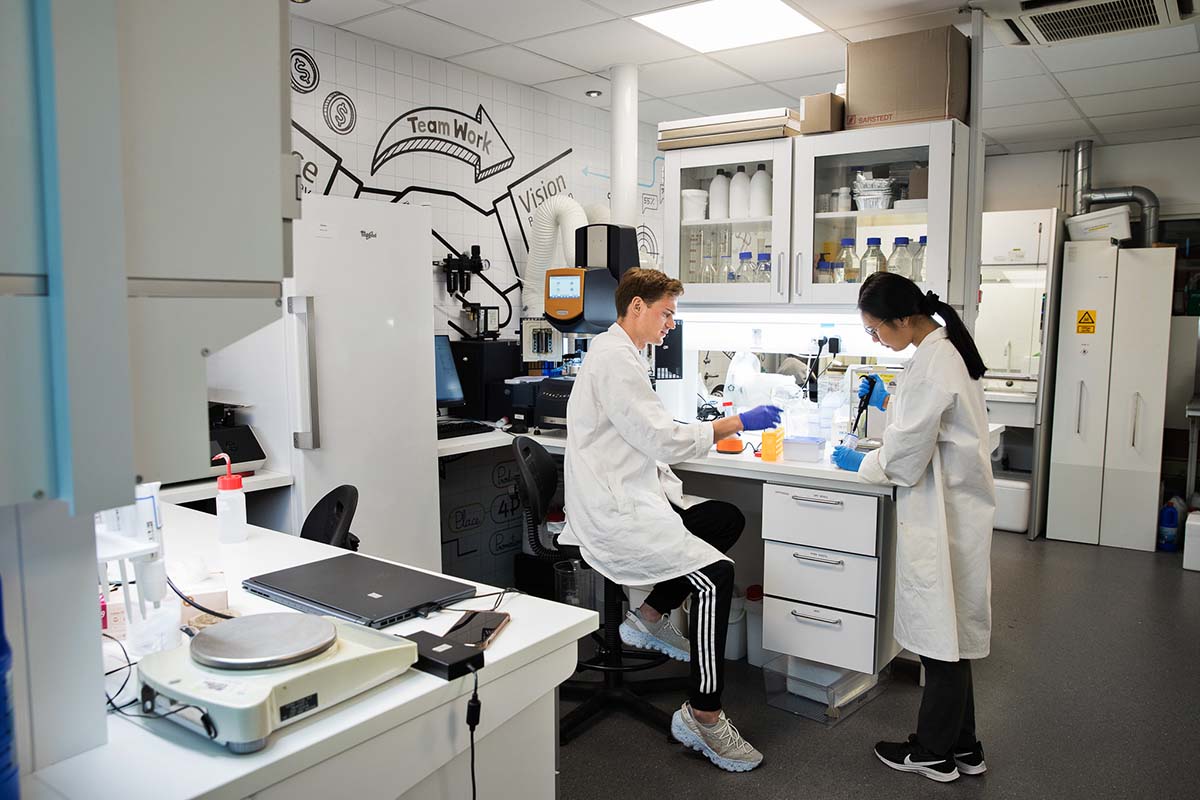
That groundwork can start small, sometimes with one or two people scouting technologies and feeding findings back to Tokyo. The case for relocating isn’t purely professional, either: Copenhagen has an established Japanese school, an active expatriate community, and a 2026 ranking as the world’s most liveable city.
Japan’s association with the EU’s Horizon Europe programme from 2026 opens another way in, letting eligible Japanese organisations join, and sometimes lead, European research consortia. Copenhagen Capacity itself, which Hall describes as the front door to Denmark’s ecosystem, offers a free, confidential service connecting Japanese companies with the partners they need, from first contact through long-term integration.

The story is no longer simply about Japanese companies investing in Denmark. It is about whether those investments can become lasting connections between two life-science ecosystems. For Copenhagen Capacity, that means helping Japanese companies move from discovering Denmark to becoming part of it.