
In 1919, architect Walter Gropius founded the Bauhaus in Weimar with an ambitious idea: bring art, craft, architecture, and design into the same conversation. The school would go on to become one of the most influential design movements of the 20th century, but its reach was never confined to Germany.
Japan was part of that spread surprisingly early.
The relationship was not simply a matter of German ideas being exported to Japan. Japanese artists and designers traveled to Europe, studied at the Bauhaus, brought its methods and objects home, and helped introduce them to a new generation of Japanese designers. At the same time, Japanese art and architecture had already attracted considerable interest among European avant-garde circles.
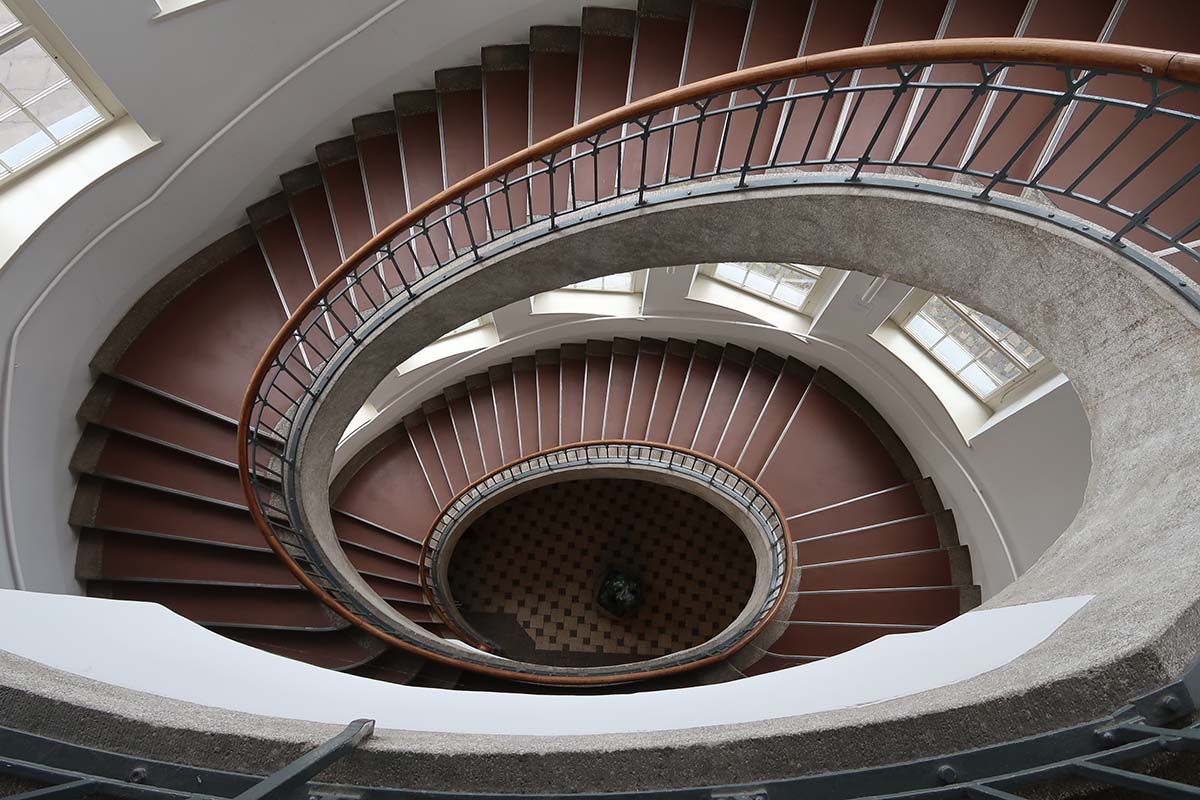
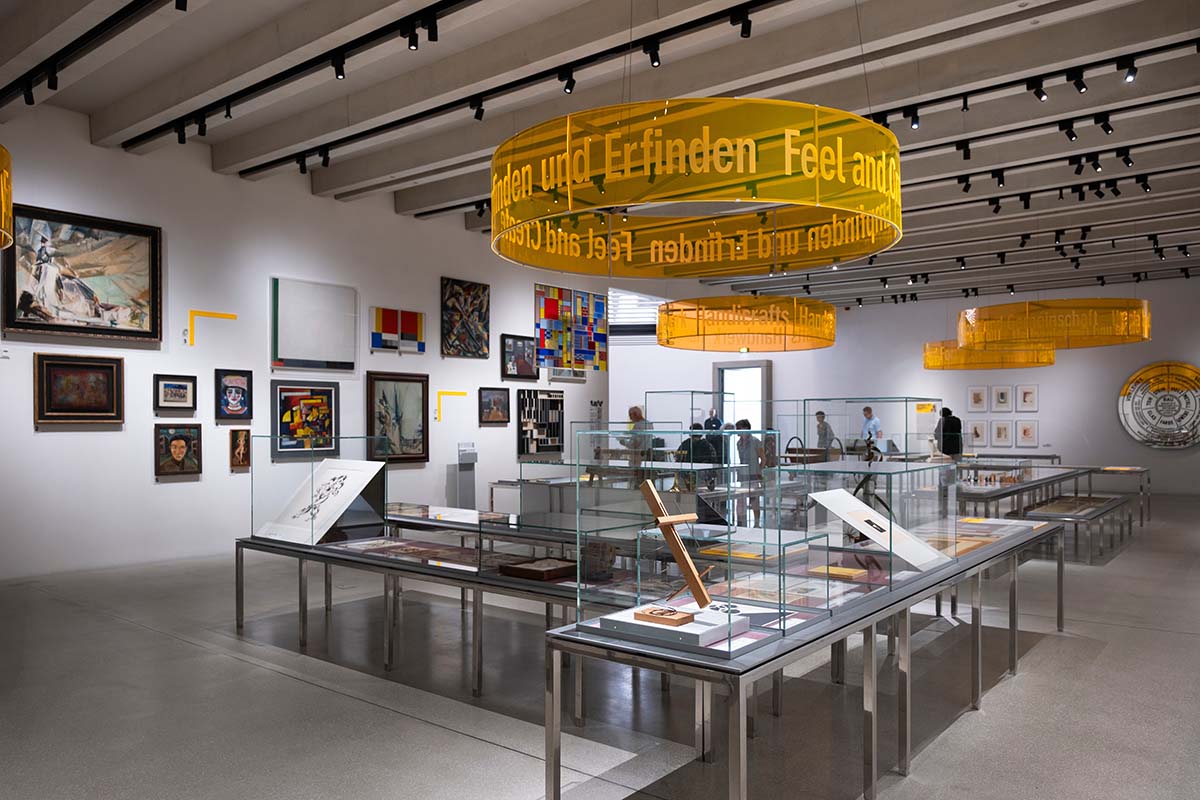
By the 1920s and early 1930s, the exchange had become very real, with people carrying ideas in both directions. Today, many of those design ideas are housed at the Bauhaus Museum in Weimar.
The first Japanese visitor to the Bauhaus in Weimar was Nakada Sadanosuke, a painter and critic living in Berlin, who visited in 1922. The first Japanese student at the Bauhaus was painter Takehiko Mizutani, who arrived at the Dessau school in 1927. He studied in the preliminary course, then worked in the furniture workshop and building department before leaving in 1929 and returning to Japan.
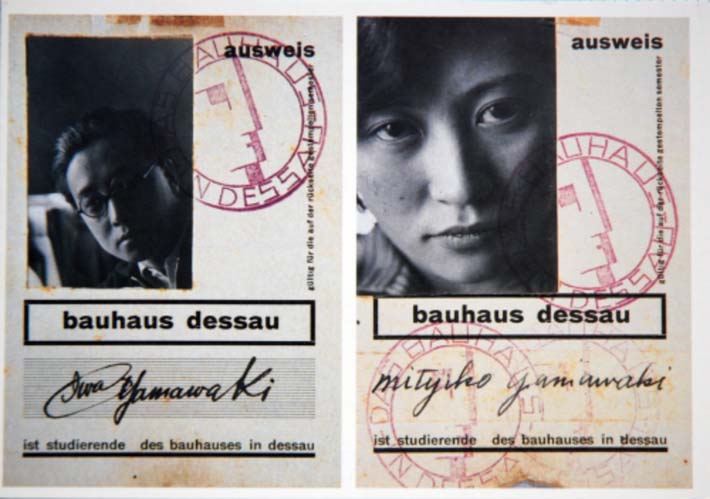
Then came Iwao and Michiko Yamawaki. The couple traveled to Germany in 1930 and studied at the Bauhaus Dessau until 1932, when mounting political pressure led to the school’s closure there. Iwao, who’d already trained in architecture at the Tokyo School of Arts, studied architecture under Ludwig Mies van der Rohe and Ludwig Hilberseimer before turning increasingly to photography, attending classes with Walter Peterhans. Michiko studied in the weaving workshop under Gunta Stölzl and Anni Albers.
Like Mizutani, their time at the Bauhaus was brief, but long enough for its aesthetic influence to take firm hold.
Taking Bauhaus home
When the Yamawakis returned to Japan, they didn’t come back empty-handed. Their luggage included Bauhaus works, books, furniture, and two looms, which Michiko later used in her Tokyo studio. Their apartment in Ginza became something of a living Bauhaus reference library, with the objects they had brought home serving as study material and inspiration for Japanese designers.
That makes their story truly fascinating. The Bauhaus didn’t remain an abstract European design philosophy for them. They physically brought pieces of the school back to Tokyo.
Michiko went on to write articles, give lectures, and teach, helping introduce Bauhaus teaching methods to Japanese students. She later wrote about the parallels she saw between the Bauhaus and the Japanese tea ceremony, specifically in their attention to materials, simplicity, and the relationship between objects and everyday life. The book, entitled Bauhausu to Chanoyu (バウハウスと茶の湯 / Bauhaus and Tea Ceremony) was published in 1995 and contains her core essays comparing the spiritual, minimalist nature of chado to the modernist curriculum of the Bauhaus.
There was also a wider network carrying those ideas forward. In Japan, architect and educator Kawakita Renshichirō helped establish schools that introduced Bauhaus-influenced approaches to a new generation of artists, architects, and designers. Mizutani and the Yamawakis were among those involved in teaching.
The exchange, in other words, did not stop at the German border—it kept moving.
Two design cultures, plenty to talk about
The particularly interesting part is that Bauhaus and traditional Japanese design were never identical philosophies. Pretending otherwise would make for a tidy story, but not a very accurate one. They did, however, have points of recognition.
The Bauhaus placed enormous importance on materials, function, craftsmanship, and the relationship between design and everyday life. Japanese design traditions had their own long-established appreciation for simplicity, proportion, natural materials, and objects designed with purpose.
Japanese aesthetics had also been influencing European art and design well before the Bauhaus opened its doors. The European fascination with Japanese art, often described through the broader phenomenon of Japonisme, had already made its mark on the avant-garde. Even within the Bauhaus, individual objects show evidence of that interest, including Theodor Bogler’s 1923 combination teapot, whose side handle was modeled on a Japanese-style teapot.
So the relationship was less about one culture discovering the other and more about designers finding unexpected points of connection. And Japan did not simply copy what it encountered in Dessau.
The Yamawakis are an especially good example. Iwao later combined modern forms with traditional Japanese interiors in his own architectural work, while Michiko continued to work with textiles, teaching, writing, and design. Their Bauhaus experience became part of their Japanese practice—it didn’t replace it.
The beauty of less
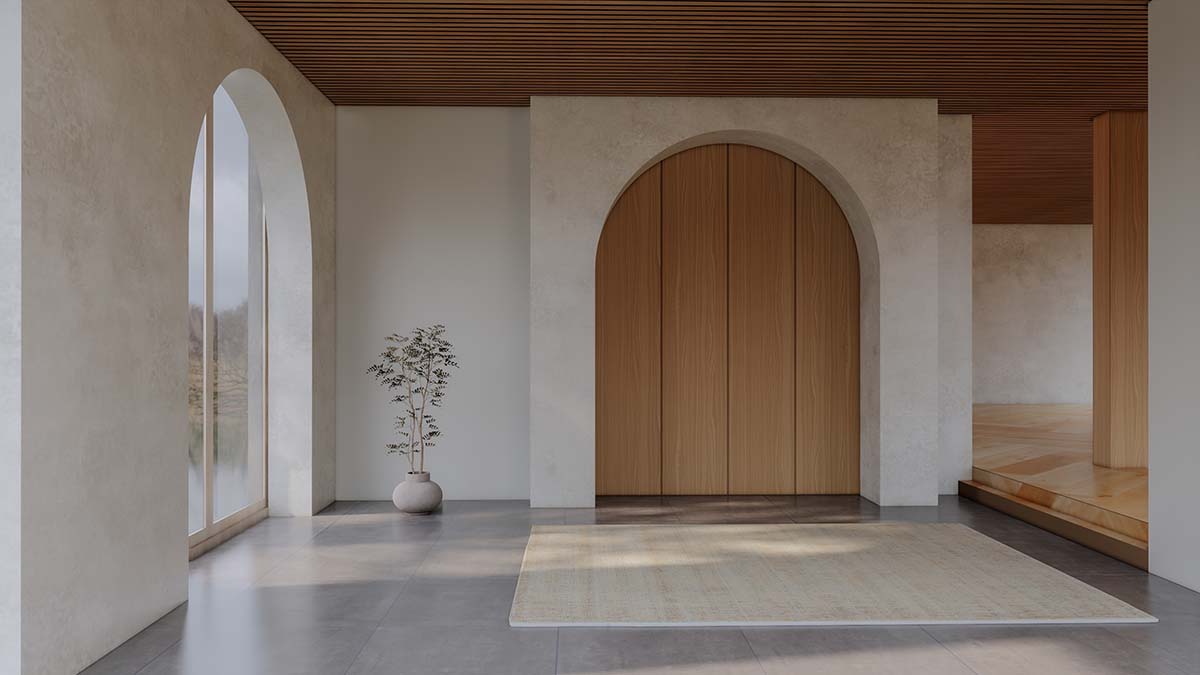
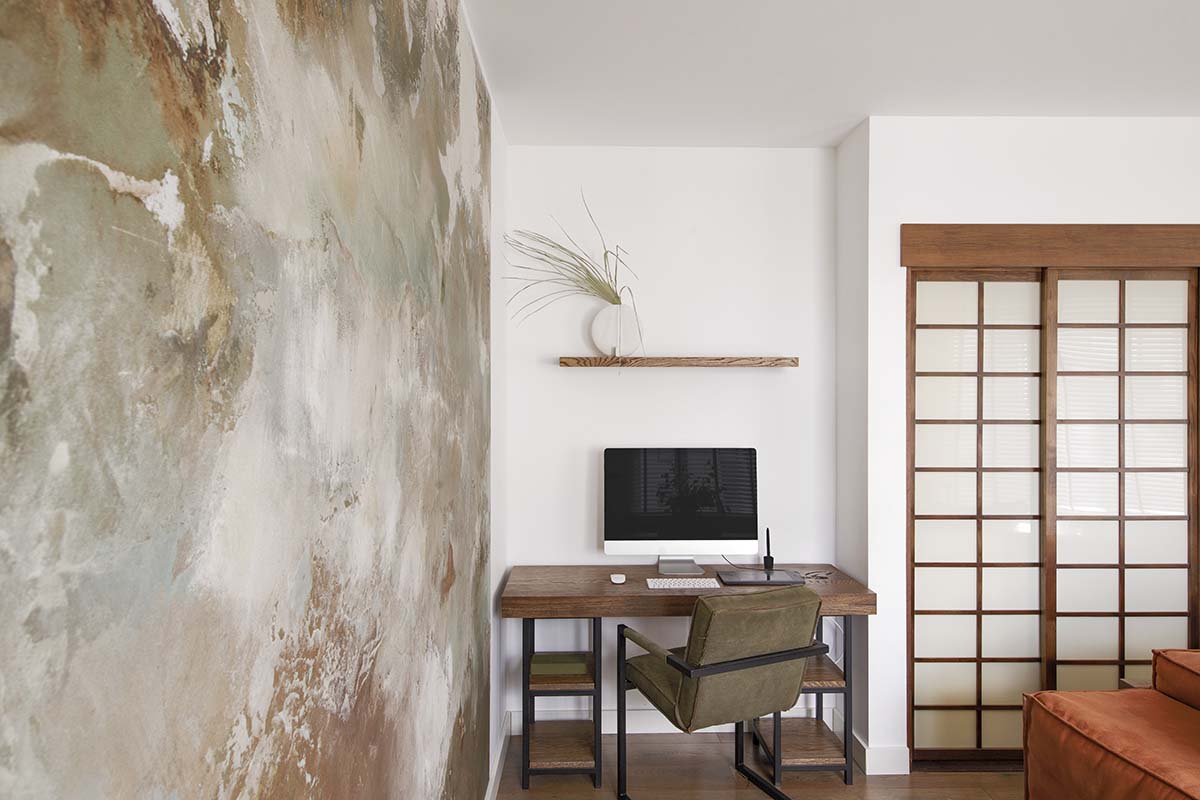
This is a cross-cultural conversation that still feels remarkably current. Walk into a contemporary Japanese interior and you may encounter many of the qualities associated with modernist design: clean lines, functional furniture, an absence of unnecessary ornamentation, and an appreciation for materials that are allowed to speak for themselves.
But calling all of this “Bauhaus” would be too easy. Japanese design has its own deep history, and its modern expressions emerged from many influences, including traditional architecture, craftsmanship, industrialization, and international modernism. The Bauhaus was an important part of that larger conversation, not the sole author of it.
This is also where the much-used term Japandi enters the picture. A blend of Japanese and Scandinavian design, Japandi pairs Japanese restraint with Scandinavian warmth. Natural materials, simple forms, functionality, muted interiors, and a deliberate lack of clutter give the style its distinctive look. Yet its appeal goes beyond aesthetics. Both traditions place value on thoughtful objects, good craftsmanship, and spaces that feel calm without feeling sterile.
That combination has made Japandi notably relevant to contemporary interiors, where the appetite for fewer, better things has grown alongside a renewed interest in craftsmanship and natural materials.
It is worth noting, though, that Japandi is not a direct descendant of the Bauhaus. Scandinavian design is one half of the equation, and its history developed along its own path. What makes Japandi relevant here is the larger idea it represents: design traditions rarely remain neatly contained within national borders. They travel, mingle, and acquire new meanings along the way.
The Bauhaus placed enormous importance on materials, function, craftsmanship, and the relationship between design and everyday life. Japanese design traditions had their own long-established appreciation for simplicity, proportion, natural materials, and objects designed with purpose.
In that sense, the story comes back to the same question that followed the Japanese students who crossed paths with the Bauhaus nearly a century ago: what happens when one design culture encounters another? Sometimes, it produces a new style. Sometimes, it simply changes the way people think about a chair, a room, or an everyday object. Either way, the conversation continues.
A conversation that continues
Indeed, the most compelling part of the Bauhaus-Japan story may be that it was never really about a style. It was about what happens when people travel, learn something somewhere else, and then take that knowledge home.
Mizutani went to Dessau in Germany and returned to Japan. The Yamawakis did the same, bringing back not only what they had learned, but physical reminders of the school itself. They taught, wrote, designed, and helped those ideas circulate in Japan.
What came back was not Bauhaus preserved in amber. It was Bauhaus encountered through Japanese eyes, absorbed into a different design culture, and given room to evolve.
That may be the more interesting way to look at the relationship between Japan and Germany. Not as a one-way transfer of ideas, but as a long exchange in which designers borrowed, adapted, questioned, and reinterpreted what they found.
More than a century after the Bauhaus opened in Germany, that exchange still feels surprisingly alive.
In the furniture we choose. In the spaces we inhabit. In the objects we keep because they are useful, beautiful, or both. After all, the best ideas rarely stay where they started—they travel, pick up new influences, and become something neither place could have created alone.