
Denmark has emerged as one of Europe’s leading life sciences hubs, built on more than the strength of its globally recognised companies. Its competitive proposition lies in the connections between research institutions, hospitals, industry, government and a highly skilled workforce, a model that allows ideas to move from discovery and clinical research toward commercialisation and real-world impact.
As the sector enters a new phase shaped by personalised medicine, health data, artificial intelligence and advanced manufacturing, Denmark is looking to build on that foundation while deepening its international partnerships. Japan, with its world-class life sciences industry, technological capabilities and shared focus on resilient and sustainable healthcare, represents a particularly complementary partner.
In this Q&A with Bridges Magazine, Ulrik Eversbusch, Director at Invest in Denmark, discusses the strengths behind Denmark’s life sciences ecosystem, the role of public–private collaboration and clinical research, and the opportunities for Denmark and Japan to move from investment and exchange toward deeper innovation and co-development.
Bridges: Denmark has established itself as one of Europe’s leading life sciences destinations, supported by world-class research institutions, a strong innovation ecosystem and globally recognized companies. From the Ministry’s perspective, what are the key factors that continue to make Denmark an attractive destination for international investment in life sciences, and how do you see that competitive advantage evolving in the years ahead?
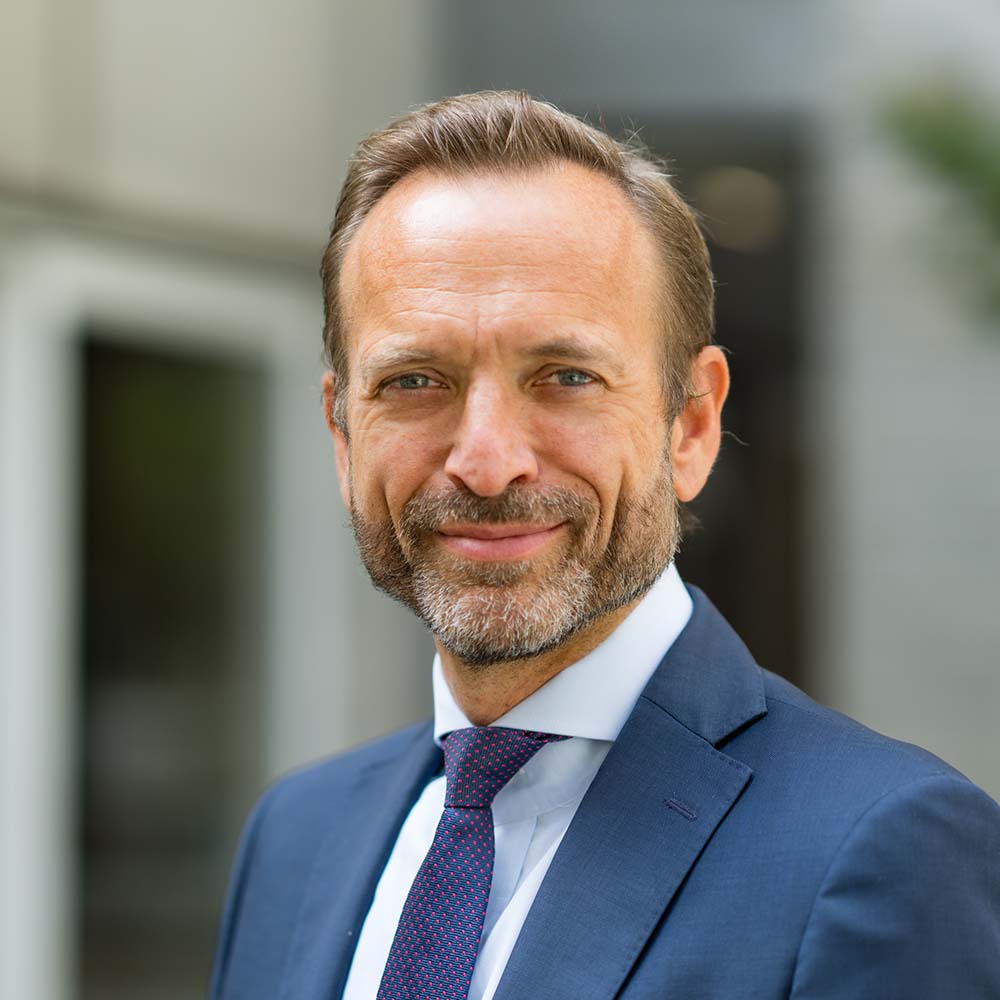
Eversbusch: Life Sciences are one of the defining strengths of the Danish economy. The sector is not only internationally recognised, it has become one of Denmark’s most dynamic and productive industries. In 2023 the Life Science industry in Denmark had a value added of EUR 24 billion, that is an increase of 169% over the last 10 years, and an increase of 35% just since 2022. The sector is also one of the most export-intensive, with Life Science related exports making up more than a fifth of Denmark’s total exports.
What I find particularly significant from an investment perspective is the sector’s degree of internationalisation. Foreign direct investment in Danish Life Science reached EUR 13.6 billion in 2025, and more than a quarter of employees in the sector work for foreign-owned companies. This tells us that international companies are not simply observing the Danish ecosystem from the outside; they are already an integral part of it.
But the numbers only tell part of the story. The real Danish advantage is the connectivity of the ecosystem. Within a relatively compact geography, companies can access strong universities and research environments, world-class hospitals and clinical research, highly specialised talent, established pharmaceutical and biotech companies, and a sophisticated network of suppliers and partners. This creates a relatively seamless pathway from early-stage research through clinical development and manufacturing to commercialisation.
We also have some distinctive structural advantages. Denmark’s industrial foundation model provides a long-term ownership perspective that has been important to the development of some of our largest Life Science and MedTech companies, and our broader research ecosystem. It creates the patience for long-term investment in R&D that is particularly valuable in an industry where scientific breakthroughs and commercial returns often take many years.
The broader Danish business environment reinforces this. Denmark consistently ranks among the world’s most competitive economies. Our flexicurity model provides companies with a flexible labour market while maintaining a strong social safety net, and Denmark offers excellent connectivity to both the Nordic and wider European markets. Just as importantly, we offer a stable, transparent and trust-based business environment that helps companies establish and develop long-term operations.
Looking ahead, I believe Denmark’s competitive advantage will increasingly come from the convergence of Life Science with new technologies and new models of healthcare. We are seeing growing opportunities at the intersection of biotechnology, MedTech, digital health, AI, personalised medicine and advanced manufacturing. Our ambition through the Life Science Strategy Towards 2030 is therefore not simply to protect the strengths we have built, but to develop the conditions for the next generation of innovation and investment.
And this is where our collaborative model becomes particularly important. The strategy itself is the product of cooperation across government, healthcare, academia, industry and patient organisations. That is representative of how we approach Life Science more broadly.
When we speak to international companies already operating in Denmark, they consistently point to the same factors: a highly skilled workforce, a stable policy environment, efficient regulation, strong research and clinical capabilities, and above all, the ability to form meaningful partnerships across sectors. For me, that is the essence of Denmark’s Life Science proposition: it is not one individual strength, but the ability to connect many strengths in one ecosystem.
“Denmark offers companies access to the entire value chain within a relatively compact ecosystem: strong universities and research institutions, highly specialized hospitals, clinical research capabilities, health data, innovative companies and public authorities.”
Ulrik Eversbusch, Director at Invest in Denmark
Denmark is often recognized for its close collaboration between government, academia, healthcare providers and industry. How have these public–private partnerships contributed to the country’s success in life sciences and healthcare innovation, and why do you believe this collaborative model has become one of Denmark’s greatest competitive strengths?
Denmark’s strength within Life Sciences is not based on one single asset. It is the combination of research excellence, a highly digitalized healthcare system, strong companies, skilled talent and, importantly, a culture of collaboration across the public and private sectors. I would argue that collaboration is one of Denmark’s most important competitive advantages – not because collaboration is unique in itself, but because in Denmark it is deeply embedded in the way our healthcare, research and business ecosystems function.
Healthcare innovation rarely happens within the boundaries of a single organisation. A promising scientific discovery needs researchers, clinicians, companies, regulators, investors and, ultimately, patients to move from an idea to a solution that can be implemented at scale. Denmark has spent decades building the relationships and institutions that make these connections relatively easy to establish.
This is particularly important in Life Sciences because the pathway from discovery to commercialization is long and complex. Denmark offers companies access to the entire value chain within a relatively compact ecosystem: strong universities and research institutions, highly specialized hospitals, clinical research capabilities, health data, innovative companies and public authorities. This allows knowledge to move between research and practice, and enables companies to engage with the healthcare system at an early stage of development.
A good example is the National Life Science Council, which brings together representatives from industry, academia, healthcare, patient organisations and government. Its recommendations have contributed to the Government’s Life Science Strategy Towards 2030, which is a cross-government effort to strengthen research, innovation, clinical trials, health data, talent and the framework conditions for the industry.
What makes this model particularly valuable is that the public and private sectors are not necessarily pursuing different objectives. Companies want to develop better products and reach patients; healthcare providers want better outcomes and more efficient care; researchers want to translate scientific discoveries into impact; and government wants a resilient healthcare system and a competitive economy. Public-private partnerships create mechanisms for bringing these interests together around shared challenges.
There is also a strong element of trust behind the model. Denmark has a long tradition of cooperation between institutions, and we generally have a high level of trust between citizens, businesses and public authorities. That makes a unique opportunity to share knowledge, establish partnerships, and experiment with new solutions.
For international companies, this has a very practical value. It can reduce the distance between an innovation and its real-world application. A company developing a new diagnostic technology, for example, can potentially connect with researchers, clinicians and patients, generate evidence and explore implementation within the same ecosystem. That is increasingly important as healthcare becomes more personalised, data-driven and technology-intensive.
Looking ahead, I believe this collaborative model will become even more important. The major healthcare challenges we face – ageing populations, workforce shortages, chronic disease, the increasing complexity of treatments and the need for more resilient healthcare systems – cannot be solved by government, industry or academia alone.
Our ambition is therefore to make Denmark not just a place where companies can establish an operation, but a place where they can find the partners needed to develop the next generation of healthcare solutions. For international investors, that ability to connect across sectors may ultimately be one of Denmark’s most distinct competitive advantages.
Denmark has built an international reputation for excellence in clinical research, supported by an integrated healthcare system, strong patient registries and one of the highest rates of clinical trials per capita in Europe. As medical innovation becomes increasingly data-driven and personalized, how is Denmark strengthening its clinical research ecosystem to remain at the forefront of global healthcare innovation?
Clinical research is one of the areas where Denmark’s combination of healthcare, research and data infrastructure creates a particularly strong proposition for international companies. We have a universal nationwide healthcare system, a long tradition of population-based health research and extensive experience conducting clinical trials, currently ranking first in EU in clinical trials per capita.
But the competitive landscape is changing. We therefore cannot rely on our existing strengths; we have to keep improving the ecosystem.
One important advantage is Denmark’s ability to connect clinical research with high-quality health data. Our national health registries, biobanks and digital health infrastructure provide researchers with an unusually strong foundation for understanding disease, identifying patient populations and generating real-world evidence. Combined with a population that is highly digitally connected, this creates opportunities to develop and validate new approaches to prevention, diagnosis and treatment.
To remain in front, the government continues to strengthen the conditions for companies to conduct clinical trials in Denmark through the public-private partnership Trial Nation. Trial Nation brings together the Danish regions, hospitals, patient organisations, medical societies and life science companies, providing a national one-stop entry point for international companies and helps connect them with Danish hospitals, researchers and relevant clinical environments.
The regulatory environment is another important part of this equation. The Danish Medicines Agency has introduced an expedited assessment process for relevant early-phase clinical trials, with a 14-day assessment target for Phase I and certain Phase I–II trials. This is an example of how we are working to make Denmark more responsive to the needs of companies developing innovative therapies.
In parallel, Denmark is investing in the research areas that will shape the next generation of medicine. Personalized medicine, genomics, advanced medical therapies (ATMPs), and AI-enabled healthcare are becoming increasingly important and the government’s Life Science Strategy Towards 2030 places stronger emphasis on precisely these areas. The strategy also aims to improve the use of health data for research and innovation while maintaining strong standards for security and responsible data use. The creation of a new national gateway to health data for research and innovation – along with a new national analysis platform – will make conducting research and developing health solutions using Denmark’s health data easier and require fewer resources.
For international companies, this combination is particularly valuable. The opportunity is not simply to run a clinical trial in Denmark, it is to access an ecosystem where clinical research, health data, researchers, hospitals, and companies are closely connected. An ecosystem that can support everything from early-stage research and patient identification to clinical development and real-world evidence.
Our goal is therefore to make Denmark an attractive place not only to test the medicines and technologies of today, but to develop the healthcare solutions of tomorrow. For international companies working with personalised medicine, ATMP, diagnostics, MedTech and AI in healthcare, that creates opportunities to become part of an ecosystem that is increasingly designed around the transition from research to real-world impact.

Japanese Life Science companies continue to expand their presence in Denmark through research, manufacturing and biopharmaceutical production, while both governments recently strengthened cooperation through a Letter of Intent on public–private partnerships in life sciences. Looking ahead, where do you see the greatest opportunities for Denmark and Japan to deepen collaboration, and how can this partnership help drive the next generation of healthcare innovation and sustainable growth?
I see the relationship between Denmark and Japan as a partnership between two countries with highly complementary strengths and a shared ambition to develop more sustainable and resilient healthcare systems.
Japanese companies are already an important part of Denmark’s Life Science ecosystem, and their investments demonstrate that the relationship is moving well beyond trade towards long-term industrial and research collaboration. Companies such as FUJIFILM Biotechnologies and AGC Biologics have established significant biopharmaceutical manufacturing activities in Denmark. Their presence is important not only because of the scale of the investments, but because they demonstrate that Denmark can serve as a European base for highly specialised, knowledge-intensive production.
Another area with significant potential is clinical research and personalised medicine. Denmark’s healthcare data, clinical infrastructure and strong public-private research environment complement Japan’s scientific and industrial capabilities. As treatments become increasingly targeted and data-driven, there is significant potential for Danish and Japanese companies and researchers to collaborate on the development and validation of new therapies and diagnostics.
I also see strong potential in MedTech, digital health and medical AI. Denmark has a highly digitalised healthcare system that provides an interesting environment for testing technologies in real-world clinical settings. Japan, meanwhile, has state of the art technological expertise and is confronting many of the same structural challenges as Denmark, particularly an ageing population, chronic disease and pressure on the healthcare workforce. This creates a natural basis for developing solutions that can eventually be scaled internationally.
“Ultimately, I see Denmark and Japan as complementary innovation partners.”
The Letter of Intent on public-private partnerships in Life Sciences (signed by Japan’s Minister of Economy, Trade and Industry, and Minister for Industry, Business and Financial Affairs of the Kingdom of Denmark in 2025) provides an important framework for strengthening the Denmark-Japan collaboration. What is particularly valuable is its focus on connecting companies, knowledge institutions and public-sector actors rather than limiting cooperation to government-to-government dialogue.
I believe that should be the direction for the next phase of the relationship: moving from exchange towards co-development. Rather than simply asking how Danish companies can enter Japan or Japanese companies can enter Denmark, we should ask how companies, researchers, hospitals and public institutions from both countries can work together to solve common healthcare challenges.
There is also a strong sustainability dimension. Both Denmark and Japan are looking at how healthcare and pharmaceutical production can become more resource-efficient while maintaining high standards of quality and resilience. Denmark’s Life Science industry has already reduced its greenhouse gas emissions by 20 percent between 2010 and 2022, while the sector is one of the country’s most productive industries. Combining Danish expertise in sustainable production and renewable energy with Japanese technological and manufacturing capabilities could create opportunities well beyond the two domestic markets.
Ultimately, I see Denmark and Japan as complementary innovation partners. Japan brings world-class technology, manufacturing expertise and a major Life Sciences industry; Denmark brings a highly connected research, clinical and healthcare ecosystem and a strong platform for European market access. If we connect these strengths more systematically, the result can be more than increased investment between our two countries—it can be a platform for developing healthcare solutions that truly address global challenges.
For Denmark, the next chapter of life sciences is not simply about attracting more investment. It is about creating an ecosystem in which international companies, researchers, healthcare providers and public institutions can work together to develop and scale solutions to some of healthcare’s most pressing challenges.
That ambition also gives Denmark–Japan cooperation a broader significance. With complementary strengths across research, technology, manufacturing, healthcare and sustainability, the two countries have an opportunity to build partnerships that extend beyond their respective markets.
As Eversbusch puts it, the opportunity is to move “from exchange towards co-development”, connecting Danish and Japanese capabilities to create healthcare solutions with relevance well beyond either country.