

When you think of Lunar New Year, you probably picture bustling streets lined with red lanterns, dragon dances, and mountains of dumplings being devoured as fireworks light up the sky. While this is a quintessential image of Chinese New Year, it’s not just China where this festive energy takes hold. In Japan, Lunar New Year once played a major role in shaping the rhythm of the calendar—and some of its echoes still remain today.
But here’s a fun twist: Japan’s modern New Year traditions didn’t just come out of nowhere. They were influenced by China, via centuries-old cultural exchange. While Japan no longer celebrates Lunar New Year in the way it once did, the old traditions still run deep, having been adapted and folded into the culture, sometimes without us even realizing it.
So, how did China’s Lunar New Year shape Japan’s own New Year customs, and what traces of it linger in today’s celebrations? Let’s dive in!
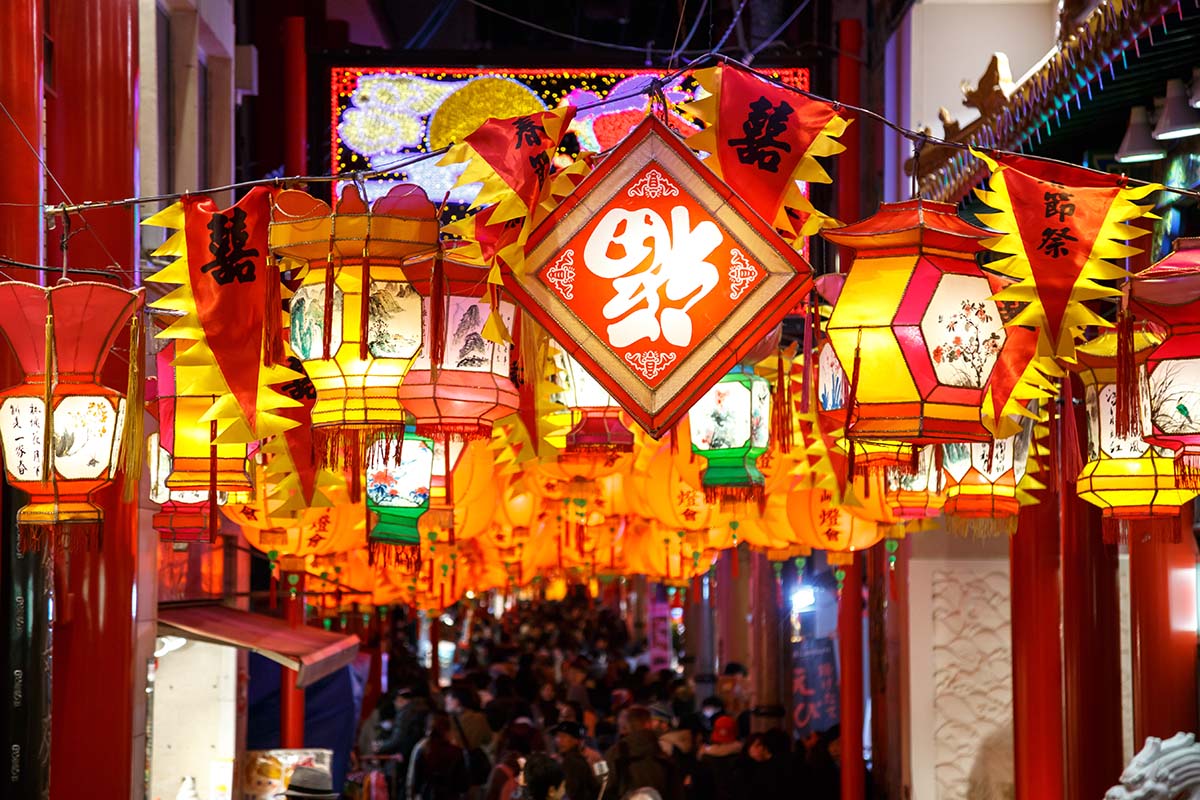
The calendar that kept time – and the holiday that kept tradition
Japan didn’t always celebrate New Year on January 1. In fact, up until the Meiji era (1873), Japan followed the lunisolar calendar, the same system that China uses for its traditional New Year celebrations. This meant that both countries once ushered in the New Year on similar dates, aligning them for centuries. In those times, the start of the lunar year was celebrated with grand feasts, prayers for good fortune, and a slew of customs that are still surprisingly alive in Japan’s New Year today.
However, Japan made the shift to the Gregorian calendar in 1873, aligning with the Western world and bringing New Year to January 1. Despite this shift, some deeply ingrained traditions tied to the Lunar New Year stuck around, blending seamlessly into Japan’s modern observance of the New Year.
What’s on the plate?
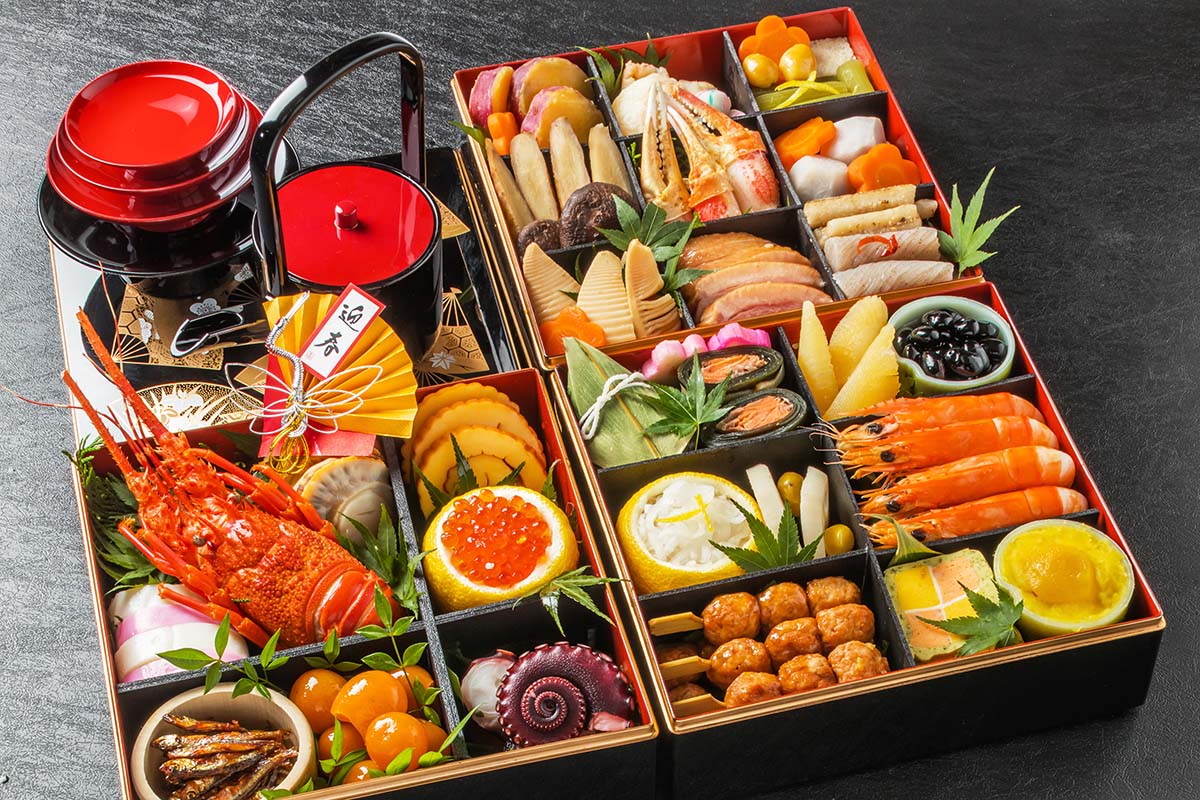
One of the most obvious remnants of Lunar New Year in Japan today is the famous osechi ryōri. This traditional New Year feast is not only delicious but full of symbolism, with each dish representing different hopes for the upcoming year, such as prosperity, happiness, and longevity.
Interestingly, many of the foods found in osechi are rooted in older Chinese customs related to CNY. The idea of eating certain foods for luck can be traced back to Chinese practices surrounding Lunar New Year, where each food item carries a specific symbolic meaning. In both China and Japan, the goal was to mark the first day of the year with foods that were not just tasty but symbolically powerful.
In Japan, osechi is served in tiered lacquer boxes, but over time, it has evolved into something distinctly Japanese. You’ll find items like black beans (for health), kazunoko (herring roe, symbolizing fertility), and kuromame (sweet black beans, for hard work and perseverance). Each of these foods has ties to the ancient wish-making culture that also existed in China’s Lunar New Year traditions.
FUN FACT
In China, dumplings are a classic CNY dish, symbolizing wealth and prosperity due to their shape resembling gold ingots. In Japan, osechi ryōri replaces dumplings with symbolic foods that have their own deep meaning.
The first temple visit of the year
New Year’s Day in Japan isn’t just about eating—it’s also about spiritual renewal. In a custom called hatsumōde, people visit temples and shrines to pray for good fortune. While this tradition isn’t directly tied to Lunar New Year, the idea of visiting a temple to start the year with good energy is a theme that runs through many East Asian cultures, including China.
From the symbolic foods to the spiritual customs, much of Japan’s modern New Year celebration is shaped by centuries of cultural exchange.
Though the temples in Japan may look quieter than the vibrant temple fairs during CNY in China, there’s a similar sense of intention—an ancient practice of making wishes as the New Year dawns. This quiet reflection is distinctly Japanese, maintaining a formality that contrasts with the larger-than-life celebrations typically seen in China.
PRO TIP
If you’re ever in Japan for the holidays, don’t miss out on hatsumōde at popular shrines like Meiji and Asakusa Shrines in Tokyo or Fushimi Inari-taisha in Kyoto. It’s a deeply peaceful and introspective experience, far removed from the usual hustle and bustle of New Year’s Eve in the West.
Seishi Bosatsu and the spirit of renewal
For the Year of the Horse in 2026, Japan acknowledges the symbolic power of the horse through its own traditions. In Japan, the horse is represented by Seishi Bosatsu or Daiseishi, a bodhisattva believed to possess both spiritual strength and deep wisdom, and revered as the protector or guardian deity of people born in the Year of the Horse. As a “Fire Horse” year, it amplifies themes of passion, ambition, and energy, which resonate strongly within Japan’s cultural framework. The Fire Horse in Japan is often associated with fierce determination and prosperity—values that are deeply intertwined with Japan’s Shōgatsu traditions of renewal and fortune.
During this time, spiritual practices like hatsumōde carry even more significance. The year’s energetic and fiery essence influences the prayers and wishes made at temples, with people hoping for success, vitality, and the courage to achieve their goals in the year ahead. The horse’s symbolism of movement and forward momentum adds a layer of excitement to this reflective, introspective period. Just as the horse charges forward with strength, so too does the seishin (spirit) of the New Year in Japan call people to channel their energy toward positive change and growth.
Bringing good luck to the doorstep
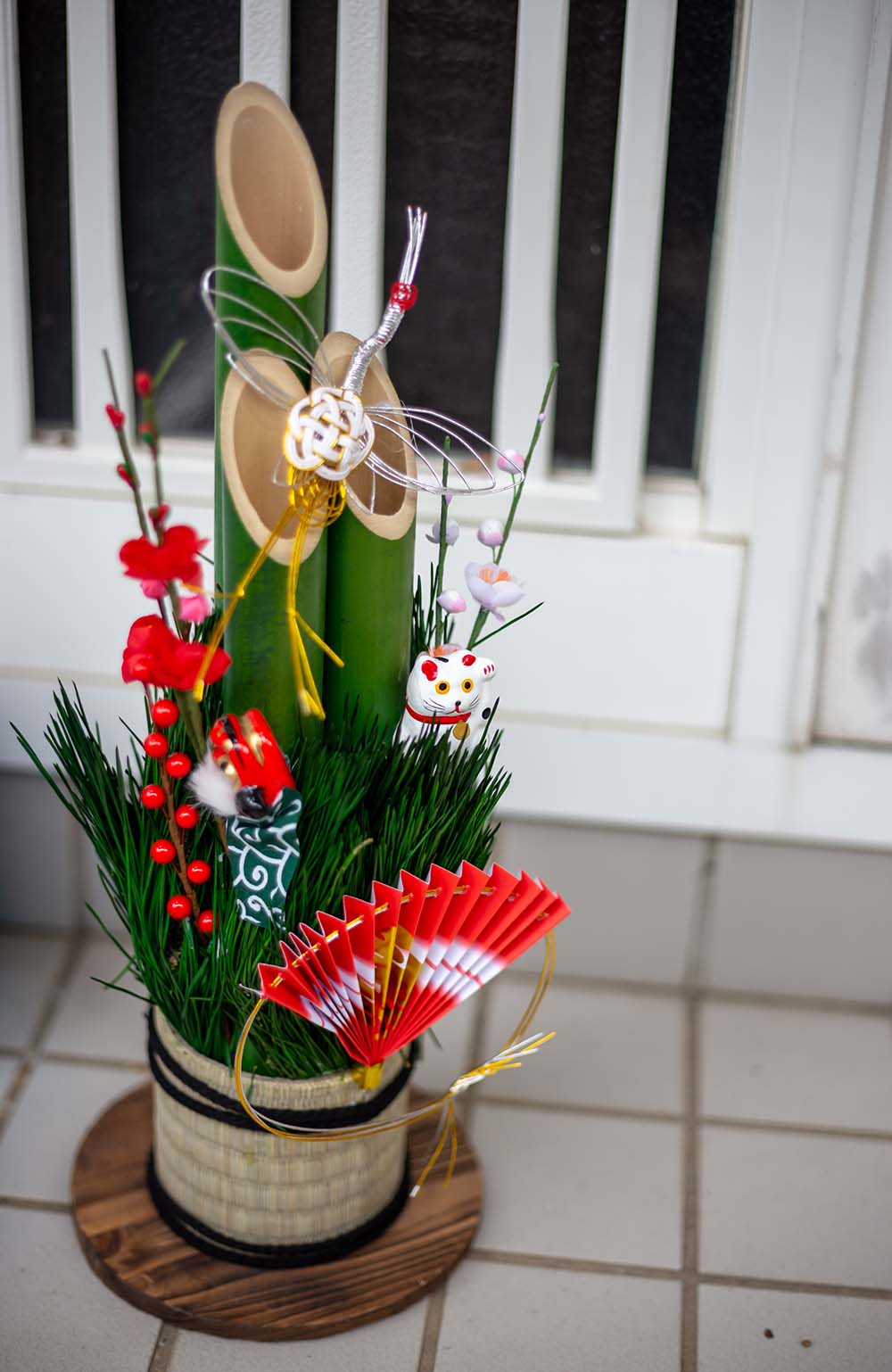
You might have spotted them outside homes during the New Year season—kadomatsu, those traditional pine and bamboo decorations. They’re placed at doorways to invite prosperity and ward off evil spirits. This custom is connected to Lunar New Year practices in China, where homes are decorated with auspicious symbols and flowers to ensure a fresh, lucky start.
Kadomatsu’s bamboo represents strength, pine symbolizes longevity, and the plum branch signifies new beginnings. While these exact symbols are more common in Japan’s New Year traditions, their roots trace back to shared East Asian beliefs about the lunar year’s power to reset the cycle of life.
A shift from lunar to solar
While the Lunar New Year is still celebrated in Japan, especially within Chinatowns or among Japanese Chinese communities, the country’s official New Year celebrations have gone through a rebranding over the years. Japan adopted the solar calendar for business, education, and government efficiency, and with that shift, the grand Lunar New Year festival quietly slipped into the background.
QUICK TIP
If you’re planning to decorate with kadomatsu next time the New Year comes around, be sure to place them facing your front door to ensure good luck comes straight into your home. But be quick—kadomatsu should be taken down by January 7 to ensure you don’t accidentally trap the spirits of the old year inside.
Today, the Japanese observe shōgatsu, their modern New Year holiday, with a quieter, more restrained flair than the raucous, vibrant celebrations of China’s Lunar New Year. Think family gatherings, New Year’s cards (called nengajō), and the consumption of osechi, rather than the dramatic fireworks and lion dances seen in China.
Here’s an interesting fact—in China, New Year’s celebrations go on for up to 15 days, with each day marked by a different custom. In contrast, Japan’s shōgatsu is a three-day affair, traditionally focused on reflection, family, and resetting for the year ahead.
The lingering influence of Lunar New Year
Even as Japan moves forward with its solar-based New Year, the legacy of China’s Lunar New Year can still be felt. From the symbolic foods to the spiritual customs, much of Japan’s modern New Year celebration is shaped by centuries of cultural exchange. And while fireworks and dragon dances may be absent, Japan’s quieter, more introspective traditions tell a different kind of story—one that celebrates cultural adaptation, resilience, and renewal.
So next time you’re in Japan during the New Year, whether you’re enjoying osechi ryōri or paying a visit to a shrine, take a moment to appreciate how far these traditions have traveled—and how they’ve transformed along the way.