
Universities are sometimes spoken of as though they are transformed in moments — by one strategic shift, one breakthrough initiative, one year of especially favourable results. In truth, institutions are shaped more quietly than that. They are built through conviction, continuity, and the discipline of making choices whose value may only become visible some years later.
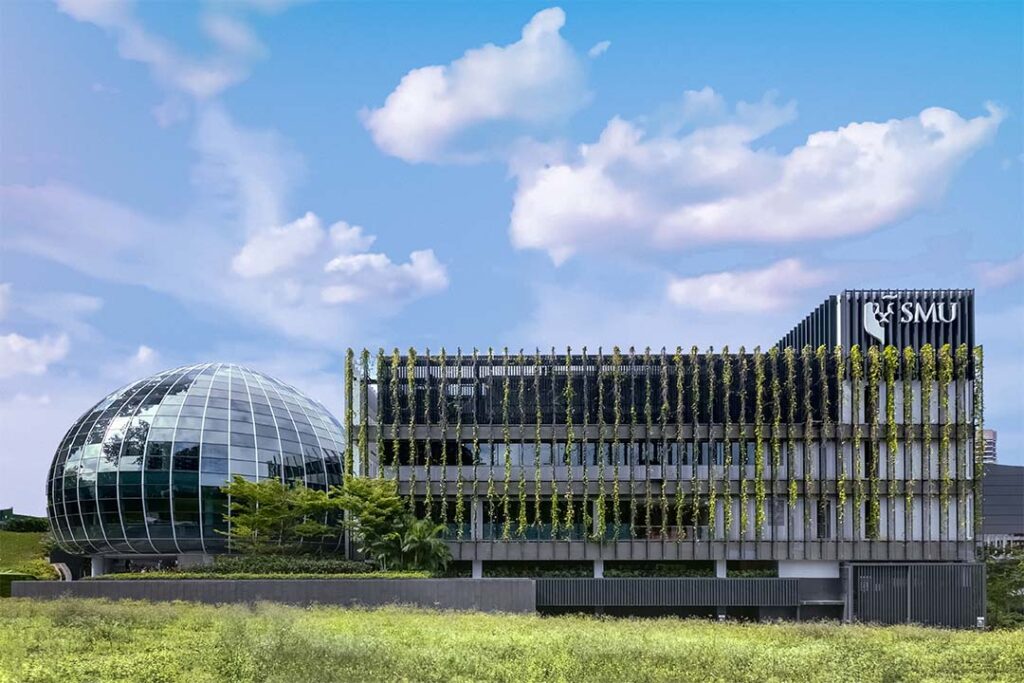
When Singapore Management University was recognised as the World’s Most Improved University in the QS World University Rankings by Subject 2026 in March this year, we received it as both a milestone and a moment of confirmation. It makes visible, in a way that is legible to the outside world, the cumulative effect of years of careful institutional work — in the way we educate, build scholarship, and position ourselves in relation to the wider world. That is the story worth telling.
This year, 80 per cent of SMU’s ranked subjects climbed globally, and 90 per cent are now placed within Asia’s Top 20. That breadth of improvement is significant precisely because it is not confined to one or two disciplines. It points instead to broad-based progress across the academic portfolio. But rankings, useful though they are, remain only indicators.
Education built for consequence, not comfort
At SMU, we have long believed that a university must do more than perform well by conventional measures. It must remain alive to the needs of the world around it. It must educate students not only to know, but also to think, discern and act. It must generate scholarship that advances understanding but also speaks to practice and policy. And it must contribute, in ways both direct and indirect, to the societies it serves. Impact does not happen by accident. It must be pursued with intention.
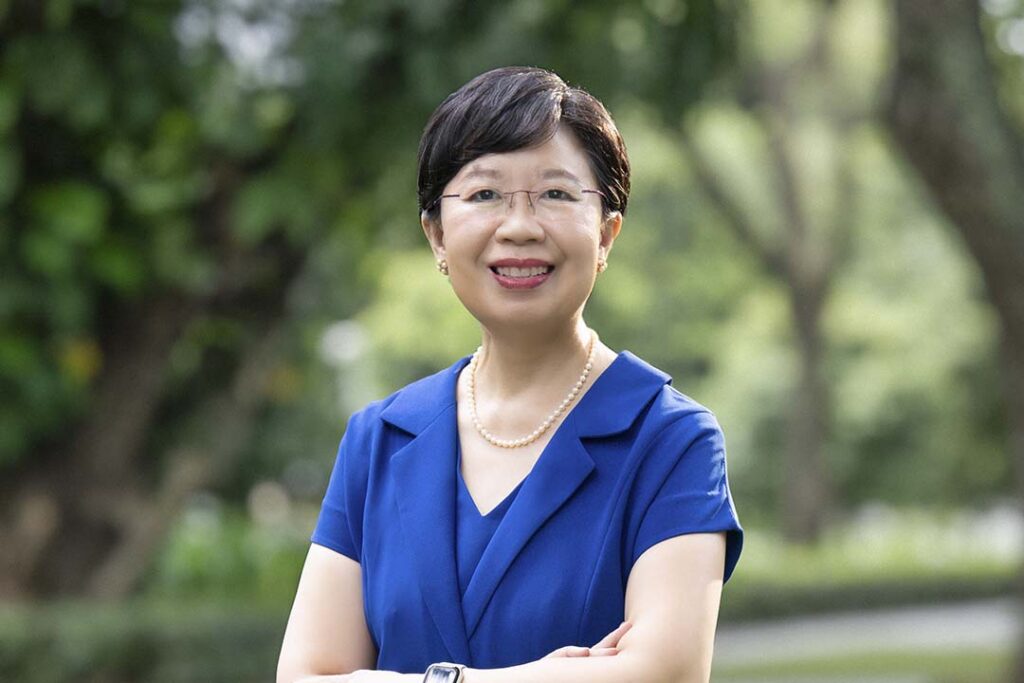
“At SMU, we have long believed that a university must do more than perform well by conventional measures. It must remain alive to the needs of the world around it.
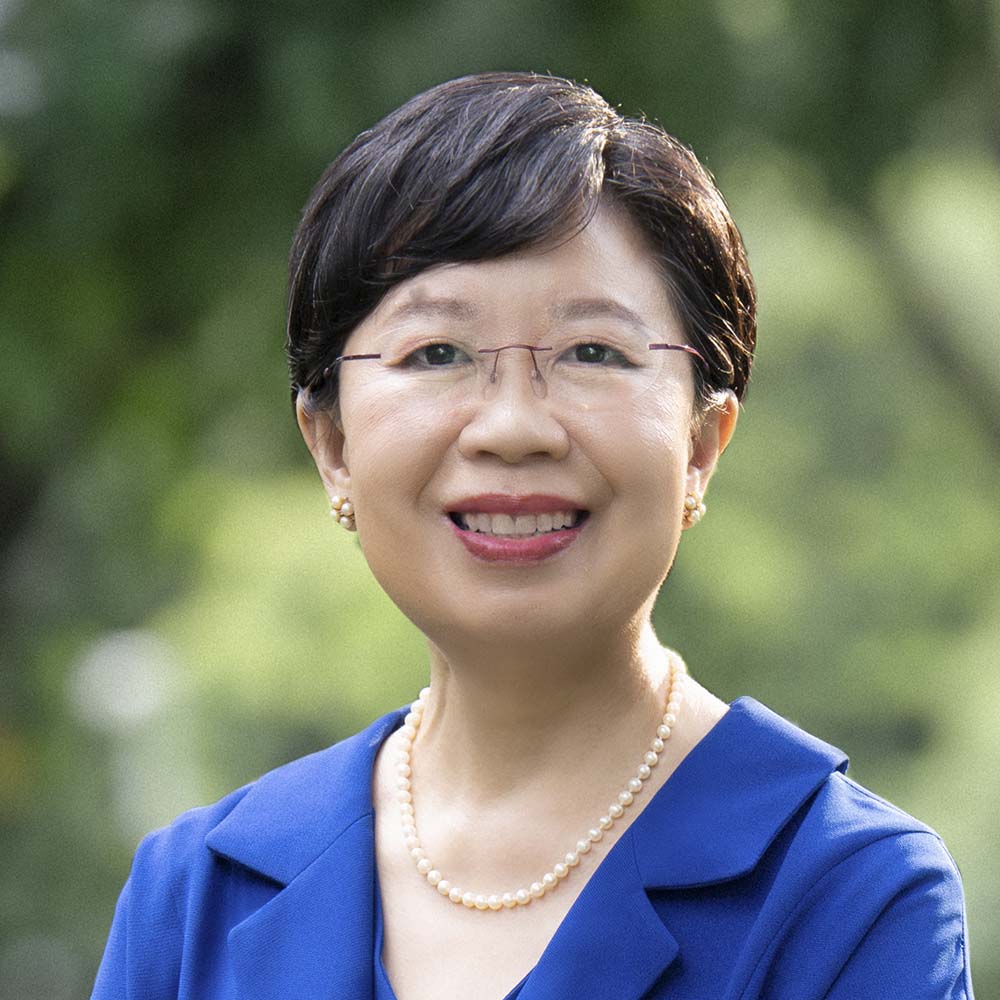
Professor Lily Kong, BBM, PBM, FBA, President of Singapore Management University
SMU was founded with a distinctive educational philosophy: broad-based, interactive, interdisciplinary and closely connected to life beyond the classroom. Seminar-style pedagogy, mandatory internships, community service requirements and global exposure were never just decorative features. They expressed a particular conviction about what a university education should accomplish – not merely the transmission of knowledge, but the formation of graduates who are articulate, adaptable and equipped to thrive in complexity.
That conviction has not changed. But the world has, and we have responded with seriousness. In recent years, we strengthened our core curriculum, expanded industry-linked learning and work-study pathways, and introduced programmes in areas of acute emerging need, including Business AI and Generative AI. We believe that to remain relevant, a university must equip its students not only for the world as it was, but for the world as it is becoming.
Central to this has been our commitment to experiential learning. Through SMU-X, students, faculty and organisations work together on real-world challenges — embodying the belief that knowledge should be tested and refined in engagement with actual problems and real communities, not kept within the confines of the academy.
One tangible signal that this approach is working: in 2025, 91.4 per cent of our graduates secured employment in a cautious job market – the highest full-time employment rate among the six Autonomous Universities in Singapore. On graduate salaries, the results are equally telling. SMU graduates command one of the highest mean starting salaries in Singapore. These figures are significant not merely as measures of employability, but as evidence that employers respond to graduates who bring both intellectual rigour and practical judgement, and who can work across disciplines and contribute meaningfully from the outset.
Knowledge that travels
No university builds enduring standing on education alone. A second part of our journey has been the steady strengthening of our research foundation.
Faculty strength is critical in this endeavour and we are on a journey to bring in additional top faculty, 150 to be precise. We introduced the Presidential Early Career Professorships to attract and retain outstanding young scholars to build depth in areas where we have real and growing strength.
The results are beginning to show. The number of SMU professors and researchers recognised in Stanford University’s list of the world’s top two per cent of scientists has grown steadily — from 24 in 2022 to 41 in 2025, our highest tally to date. That consistent upward trajectory reflects a scholarly community that is deepening in quality and earning its standing among peers year on year.
More telling still is where our research is travelling. The Financial Times Research Insights Ranking 2025 placed SMU’s Lee Kong Chian School of Business third in Asia and 23rd globally for influential research for decision-makers in business and government. The Case Centre Impact Index 2025 placed us 18th globally. What these figures point to is something that matters deeply to us: that our scholarship does not stop at the university’s walls. It is informing practice, shaping policy conversations, and contributing to decisions that affect organisations and communities well beyond our campus.
Ideas made visible
A third factor has been our growing intentionality in communicating our strengths — and here I want to be direct about something universities sometimes treat with unnecessary discomfort.
Good work does not cease to be good because it is made known. On the contrary, if scholarship is to influence policy, if ideas are to shape practice, and if institutional strengths are to be recognised by the students, employers and partners we seek to serve, they must first be clearly articulated. Reputation must be cultivated with care and consistency.
Over recent years, SMU has strengthened its presence in Singapore and in key markets including Indonesia, Thailand and Vietnam — through overseas representative offices, thought-leadership platforms and strategic partnerships. In March 2026, we launched our “Bold Ideas, Big Impact” brand campaign to express more clearly what we stand for: the conviction that ideas matter most when they are translated into consequential outcomes through education, research and collaboration. That bold ideas should not remain confined to the classroom, research paper or boardroom, but lead to action and outcomes that improve lives and address real-world challenges.
Progress must continue to be earned
For a university as young as SMU — founded in 2000, still early in the arc of institutional maturation — this recognition is genuinely encouraging.
The same discipline that brought us here must carry us forward, and it is precisely this that animates SMU2030, our strategic roadmap for the next five years. At its heart is a deceptively simple but demanding aspiration: to shape impact and transform lives. Not as a slogan, but as an organising commitment that runs through everything we do: how we design our programmes, how we direct our research, how we build our partnerships, and how we measure what we have actually contributed to the world.
We are fortunate to be building at a moment when Singapore and the broader Asia-Pacific sit at the centre of consequential global shifts — in technology, finance, sustainability and governance. For SMU, that context is the very terrain in which our work must matter.
To be named the world’s most improved university is a prompt for renewed commitment to that larger purpose: to create knowledge, prepare people, and contribute to societies whose futures we help to shape. SMU2030 is our answer to that prompt. And this recognition, at its best, is a reminder of why that work is worth doing well.