
The story of Japanese migration, a city built on fiber, and a connection that endures.
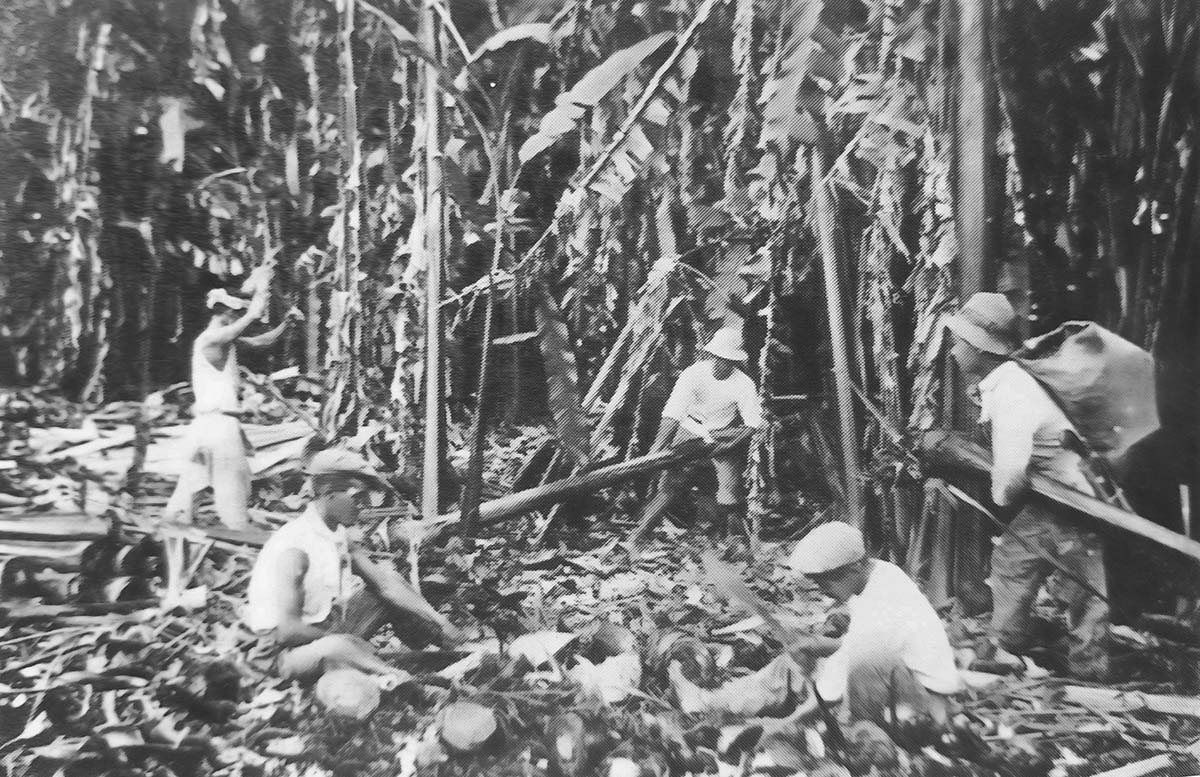
In April 1903, a group of contract laborers from Kagoshima arrived at the mouth of the Davao River and stepped onto a frontier. What awaited them was jungle, equatorial heat, and a plant they had been contracted to cultivate: abaca, the fiber the world then knew as Manila hemp. They were among the first of what would become one of the largest Japanese communities in Southeast Asia outside Japan itself.
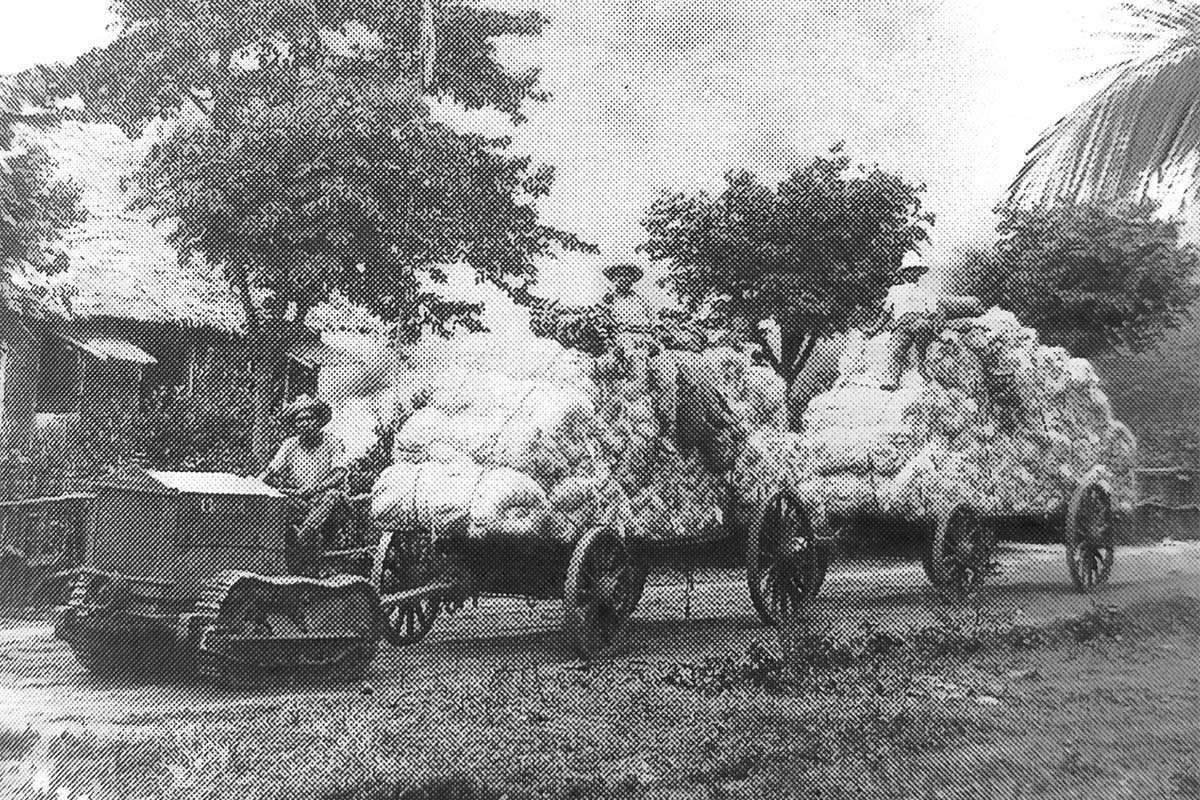
The man who built that community into an economic force was Ohta Kyozaburo, a Japanese entrepreneur born in Hyogo in 1876, who established the Ohta Development Company in 1907 — the first Japanese abaca company in the Philippines. Known today as the Father of Davao Development, Ohta transformed a scattered workforce into a structured agricultural industry. By the late 1930s, approximately 20,000 Japanese immigrants were living alongside the local population — contributing to Davao’s roads, railways, ports, schools, and one of the most modern hospitals in the pre-war Philippines. By 1939, Japanese settlers accounted for 58 percent of municipal tax payments in Davao province. The abaca plant — coarse, fibrous, stubborn — was the foundation on which all of it was built.
More than eight decades on, the fiber endures. It is in the banknotes passing between Japanese hands, in the tea bags steeping in Japanese kitchens, in the coffee filters and food casings that supply Japanese supermarkets. The plant that brought Japanese settlers to Mindanao still quietly flows between the two countries, in forms most people never think to trace back to their origin.
What Calinan Keeps
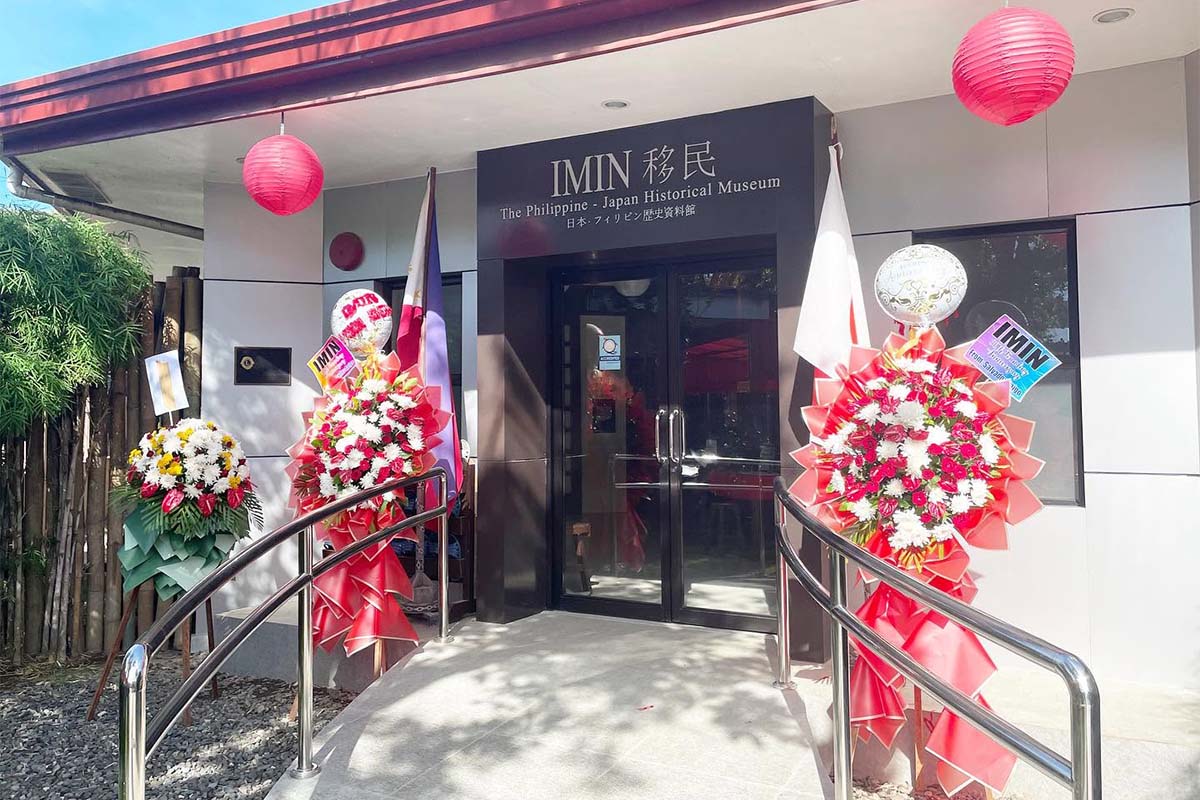
The IMIN Philippine-Japan Historical Museum sits in Calinan, a district at the edge of Davao City where the road begins to climb toward the mountains. A custodian of photographs and artifacts, of hagutan machines and plantation ledgers, of personal testimonies from men and women now in their eighties who carry memories no archive can fully hold, it occupies a quiet but essential place in Davao’s collective memory.
Karina Melissa Yoshida Cadiogan, its Head Curator, is a fourth-generation Nikkeijin. She grew up between two identities that Philippine history had made complicated, and has spent her professional life making the case that this complexity is itself the story worth telling.
What surprises visitors most, she says, is the sheer scale of what was built — and how little of it is commonly known. “Many visitors are surprised to learn that in 1939, Japanese settlers accounted for 58% of the municipal tax payments in Davao province — a reflection of their significant role in the city’s development. Visitors leave with a greater appreciation that Filipinos and Japanese lived, worked, and built communities together. They shared neighborhoods, businesses, and aspirations, and together shaped the Davao we know today.”
“The Nikkeijin community represents something that no bilateral summit or economic agreement can fully capture: the human dimension of international relations.”
Dr. Ines Yamanouchi P. Mallari, President of the Philippine Nikkei Jin Rengokai
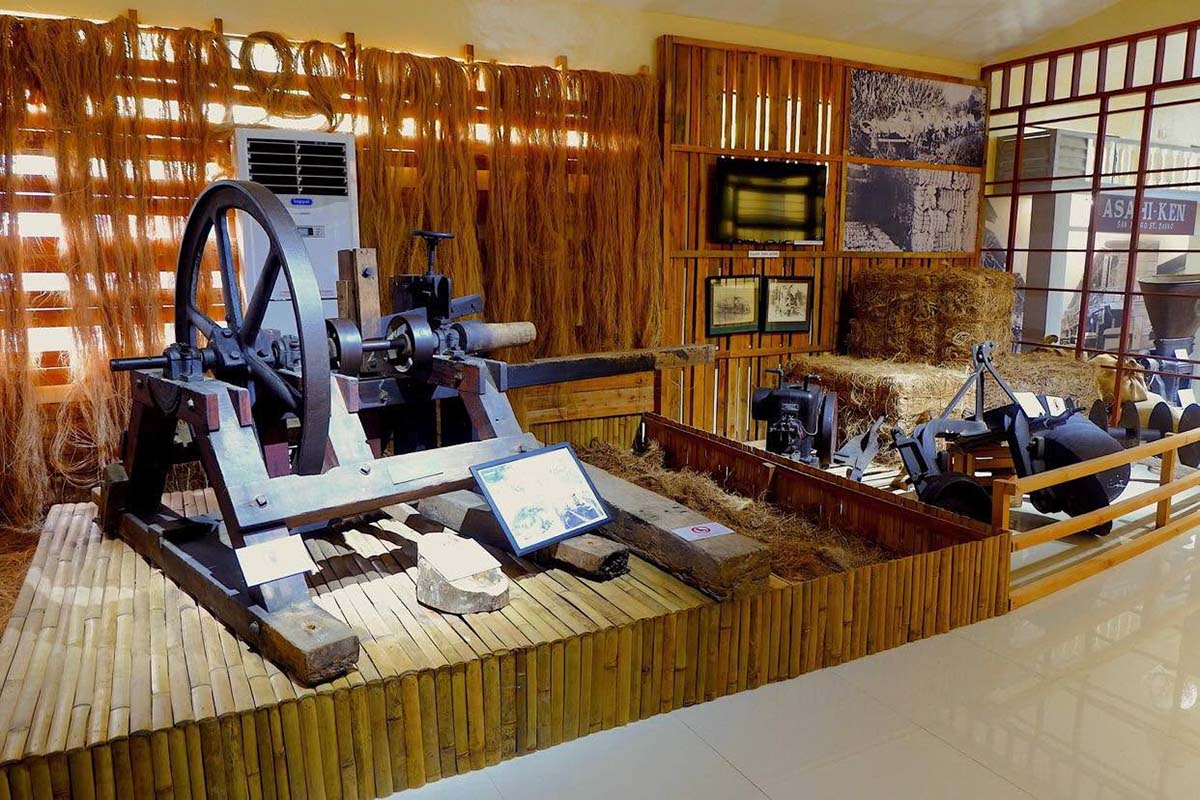
One of the museum’s most visited exhibits is the hagutan — the abaca-stripping machine that Japanese settlers refined and improved, increasing the speed of fiber production by nearly four times. The innovation sounds technical; its consequences were civilizational. As fiber production scaled, the prosperity it generated funded the infrastructure that turned Davao from a clearing in the forest into a city. “The connection between abaca and the Japanese community becomes clearer when visitors experience the museum,” Cadiogan says. “Many are surprised to learn that abaca was the foundation of the Japanese presence in Davao.”
For many Nikkeijin, that connection runs through family memory. “Abaca represents a cherished chapter in their family history,” Cadiogan explains. “It reminds them of a time when their parents or grandparents helped cultivate the land, build livelihoods, and contribute to Davao’s remarkable growth. For many Nikkeijin, the continued use of abaca in various products creates a living connection between the past and present — a reminder that the work of their forebears continues to be appreciated and that the bond between Davao and Japan endures.”
IMIN is now part of Davao City’s Furusato tourism circuit — Tracing Davao’s Little Tokyo — a route that winds through the old plantation districts to sites where the Japanese community once built its schools, hospitals, and shrines. “Here, history comes alive through family photographs, heirlooms, letters, and personal memories,” Cadiogan says. “Visitors see how the relationship between Japan and the Philippines was built not only through diplomacy, but also through everyday lives — people who came to Davao, raised families, contributed to its development, and continued to nurture friendships across generations.”
The Community That Rebuilt Itself
The decades that followed the pre-war years were difficult ones for the Nikkeijin community. Many families concealed their Japanese roots and rebuilt their lives quietly, in circumstances that made identity a complicated inheritance. The abaca plantations gave way to banana cultivation, and an entire chapter of Davao’s history went largely unspoken for a generation.
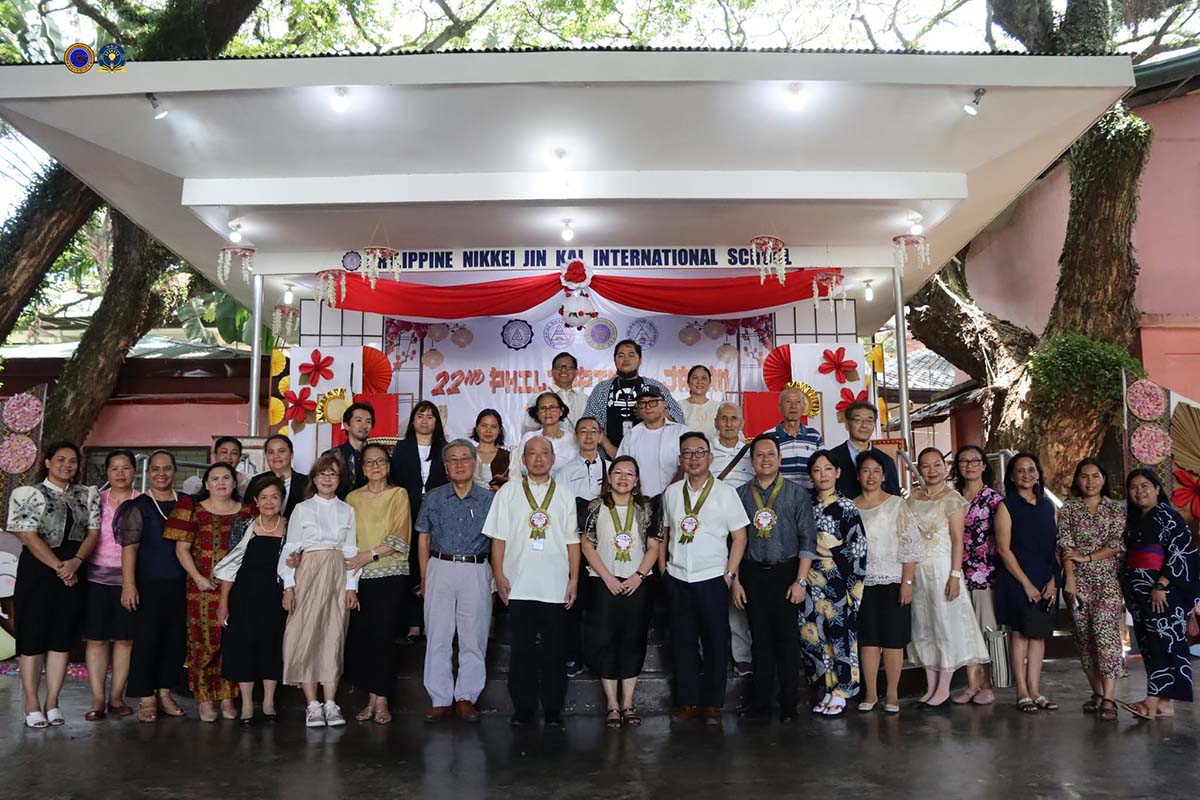
A turning point came in 1980 with the establishment of the Philippine Nikkei Jin Kai. Through the vision of Davao-born Japanese leaders — among them the late Dr. Sadashi Hirahara, Mr. Tatsuo Uchida, and Mr. Shiromi Furukawa — the community began offering weekend Nihongo classes. Initially intended to teach third-generation Nikkeijin the language of their ancestors, the program soon attracted Filipino children as well. Those modest weekend classes eventually became the PNJK School of Davao in 1992, and eventually the Mindanao Kokusai Daigaku — a full university that today educates students in both Philippine and Japanese traditions.
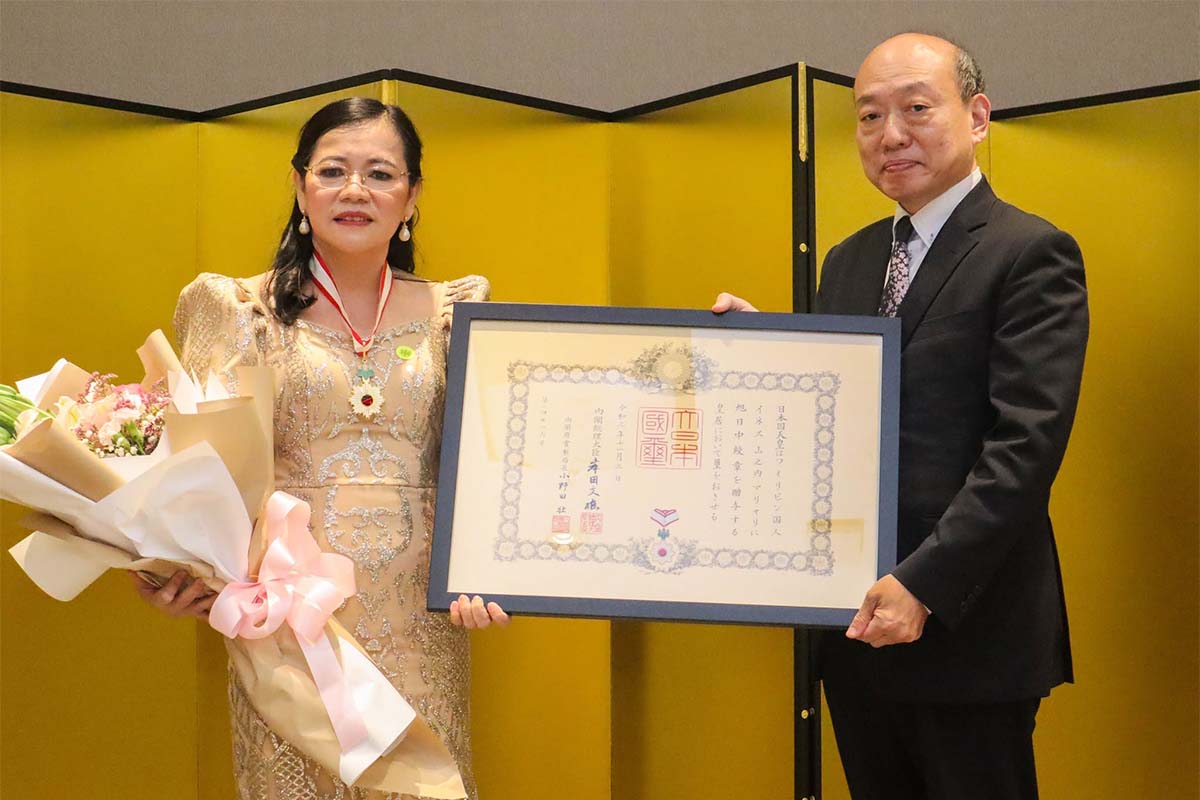
Dr. Ines Yamanouchi P. Mallari, President of the Philippine Nikkei Jin Rengokai and the PNJK institutions, has presided over much of that rebuilding. She speaks of the second-generation Japanese descendants who were denied education in the difficult post-war years — and who were determined that succeeding generations would not endure the same hardships. “They envisioned an institution that would empower young people through education, prepare them to become responsible leaders and productive members of society, and inspire them to preserve the enduring friendship, mutual understanding, and peace between their two beloved homelands — the Philippines and Japan.”
In 2019, Dr. Mallari was personally invited to the enthronement of Emperor Naruhito as the representative of the Nikkeijin in the Philippines — the first time the association had been accorded that distinction. “I accepted the invitation not only as a personal honor but, more importantly, as a tribute to the generations of Japanese descendants in the Philippines whose stories, sacrifices, and contributions have become an integral part of the enduring friendship between Japan and the Philippines,” she reflects.
The 70-year anniversary of formal Japan-Philippines relations marks the beginning of diplomacy, not the beginning of the relationship itself. That relationship is a century old. “The Nikkeijin community represents something that no bilateral summit or economic agreement can fully capture: the human dimension of international relations,” Dr. Mallari says. “We are living bridges between two nations — carrying within us the memories of migration, the resilience of survival, and the enduring hope for reconciliation. The strongest foundations of diplomacy are not built solely by governments, but by families, communities, educators, and ordinary citizens who continue to foster mutual understanding, trust, and friendship across generations.”
The Fiber That Never Left
In Bicol, four hundred kilometers north of Davao, the abaca story continues in an industrial register. ALINDECO — the Albay Agro-Industrial Development Corporation — has been producing and exporting abaca pulp since 1974, with Japan as its primary market from the beginning. Its products end up in places most consumers never trace: the paper of the Japanese yen banknote, coffee filters in Osaka, tea bags on desks in Tokyo, food casings in Japanese supermarkets, and electrolytic capacitors in electronic components. “Being a part of daily Japanese life means that we are a bridge between Philippine agriculture and Japanese innovation,” the company says.
In January 2026, representatives from Japan’s National Printing Bureau visited ALINDECO’s facility in Malinao, Albay — a routine call in a relationship built over five decades, and a signal of the partnership’s durability. The connection that began in Mintal over a century ago now runs through one of Japan’s most trusted institutions.
What the Fiber Carries
Kenneth Cobonpue did not grow up in the abaca industry. He grew up in Cebu, studied design in New York, Hamburg, and Pasadena, and built a studio whose work now sits in homes, hotels, and design collections from Manila to Milan. His clientele has included royalty, heads of state, and some of the world’s most discerning collectors of contemporary furniture. He works primarily with rattan, abaca, and organic Philippine fiber — materials that carry the same history running through Davao’s old plantations and Bicol’s pulp mills.
Japan has been a constant in his creative life. He has received five Japan Good Design Awards — one of the most rigorous design recognitions in the world, judged against criteria that prize restraint, material honesty, and functional intelligence. The piece he returns to most often when asked about those awards is Yoda — one of his earliest works, a chair inspired by a bundle of gathered reeds swaying in the wind, which transforms humble rattan into a sculptural form that feels both playful and alive.
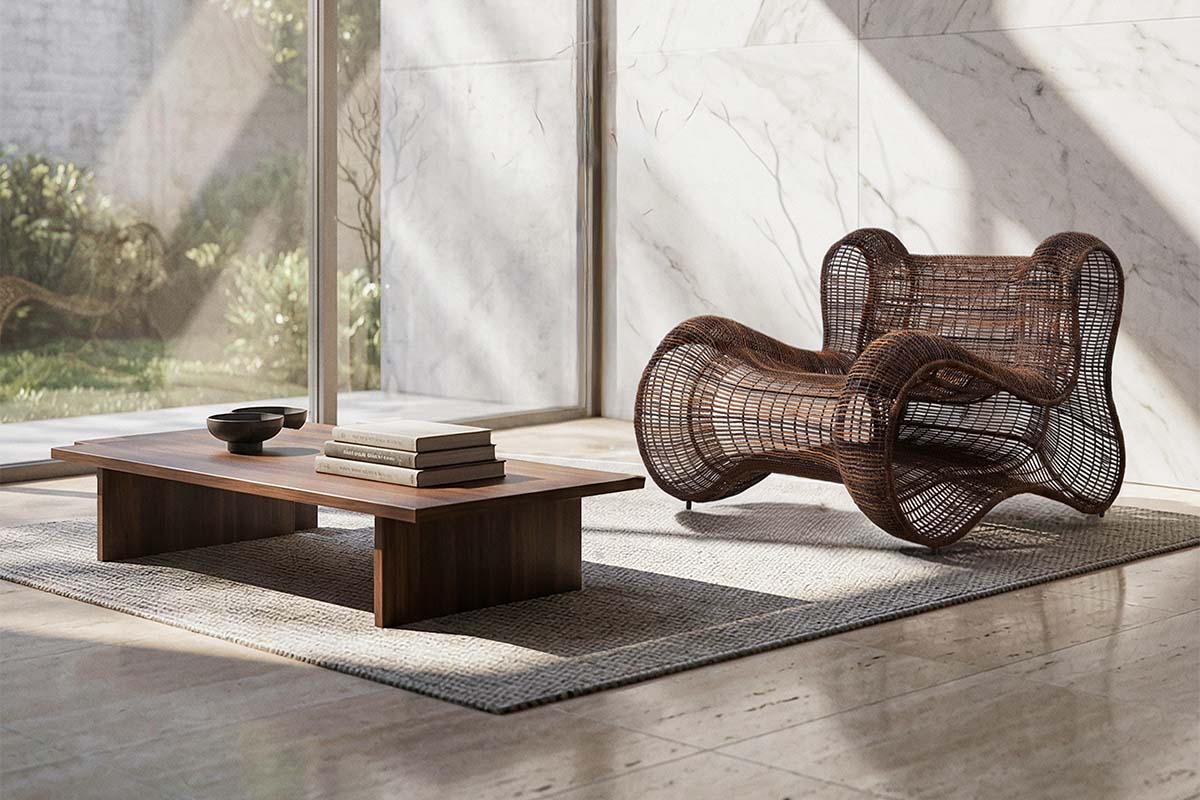
“Each award has been meaningful because it recognized not just a product, but a way of thinking about design,” he says. “If I had to choose one, it would be Yoda. It was one of the earliest pieces that truly embodied my belief that furniture can evoke emotion, tell stories, and surprise people. It showed that something playful could also be sophisticated, and that design rooted in craftsmanship could have universal appeal.”
That Japan recognized his work carries a specific weight for him. “Japanese design culture has always valued restraint, honesty in materials, precision, and the pursuit of quiet perfection. To have my work appreciated through that lens was deeply affirming because those are values I also aspire to, even if my expression is more organic and expressive. It reminded me that good design transcends geography. When an object is made with sincerity, purpose, and respect for craft, people recognize it regardless of where it comes from.”
When he works with natural materials — and particularly with abaca — he is conscious of the history embedded in the fiber itself. “Materials always carry memory,” he says.
“They carry the landscapes they come from, the communities that cultivate them, and the generations of knowledge behind them. Abaca is a wonderful example of how cultures become interconnected through material. Its history reflects the exchange between the Philippines and Japan, but also the resilience and ingenuity of the Filipino communities who have continued to grow, harvest, and transform it over generations.”
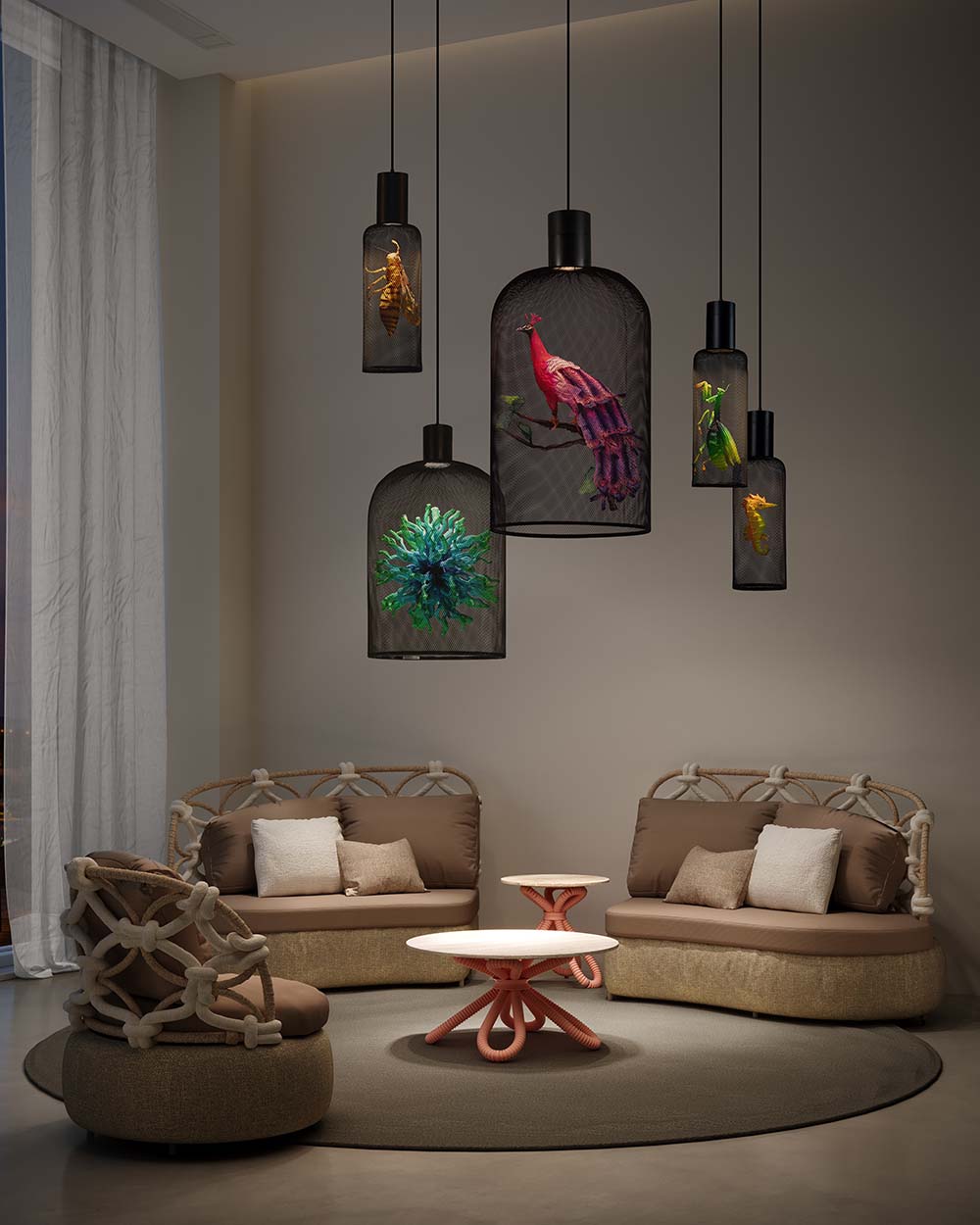
What natural fiber offers that no synthetic material can replicate, he says, is something that resists precise definition but is immediately felt. “Natural fibers are never completely predictable. Every strand has its own character. Every weave reveals the hand of the artisan. That subtle imperfection is what gives a piece warmth and authenticity. Natural fibers age beautifully. They invite touch. They connect us to nature in a way that feels instinctive rather than manufactured. My role as a designer is to reveal and celebrate those qualities.”
He sees in the Japanese relationship with craft a mirror of something he recognizes in his own artisans. “In Japan, making is not simply a means of production — it is a lifelong practice of refinement. There is dignity in mastering a skill, no matter how humble it may seem. I see a similar spirit in Filipino artisans. The difference is often not in the quality of the craftsmanship, but in how it is recognized and celebrated. Our weavers, woodworkers, and craftsmen possess extraordinary knowledge that has been passed down through generations. Their understanding of material is intuitive because they have lived with it for so long.”
Innovation, he argues, is not about abandoning what came before. “My role has always been to create a dialogue between tradition and contemporary design — to give these skills new relevance in today’s world without losing their essence. I believe that is something Japan has done exceptionally well, and it is something we in the Philippines continue to build upon.
Both cultures understand that innovation does not come from abandoning tradition; it comes from respecting it enough to let it evolve.”
The Living Thread
Back in Calinan, the Iresai ceremony still brings Japanese visitors to Mintal Cemetery every August — men and women returning to a city their parents or grandparents once called home. “You can truly see the emotion on their faces: gratitude, nostalgia, and above all, a deep love for Davao, which they still consider home despite having built their lives elsewhere,” Cadiogan says.
The abaca plant knew the depth of this relationship before the diplomats did. It has been making the crossing for over a century — from Mindanao’s volcanic soil to Japan’s most trusted institutions — quietly, without ceremony, in forms most people never think to question.
It is still flowing.