

How humility and a lifelong education in Japanese principles won a family its first Toyota dealership.
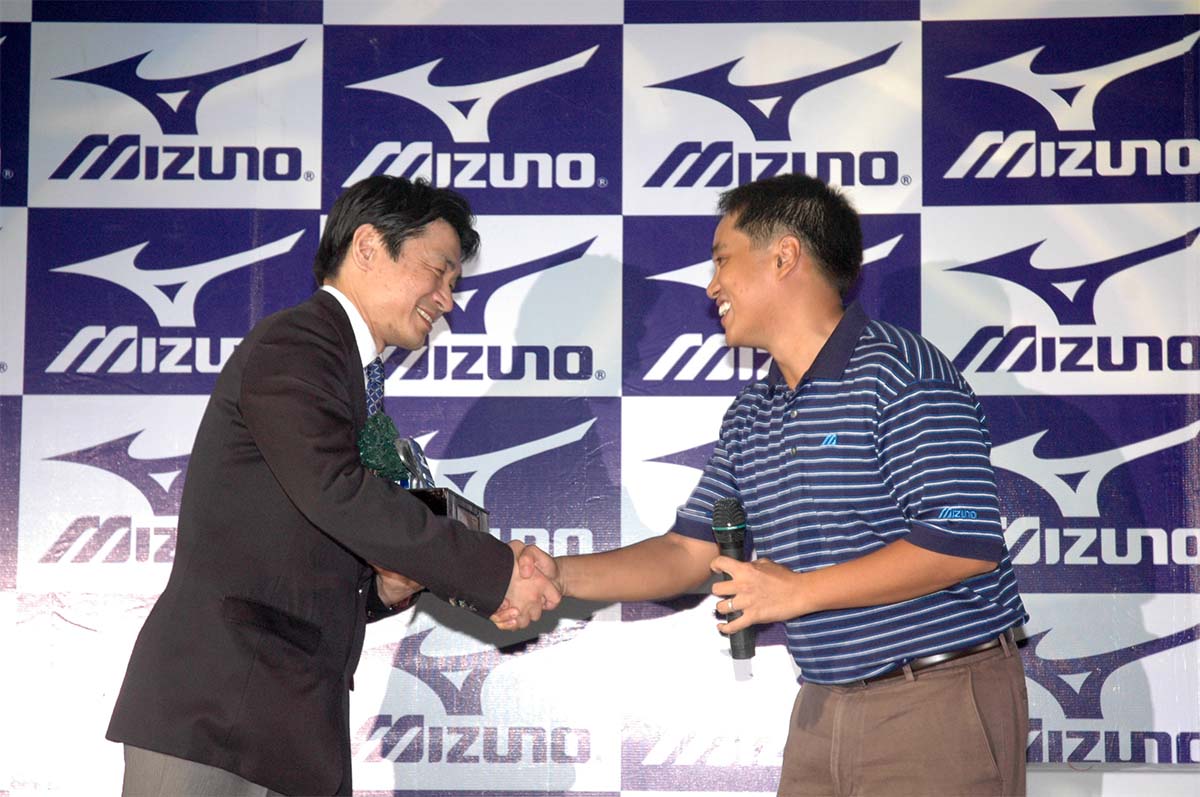
In our household, Mizuno was a daily education in Japanese philosophy — one that wasn’t inherently obvious to us kids. Our family embraced values such as Trust (shinrai), Long-term devotion (the monozukuri mindset), and deep relational bonds (kizuna). These were key family values we learned from our interaction with my father’s Japanese principal. It was 1979 when my father, Benny, was invited by a good friend to explore a business opportunity to bring in sporting goods — golf equipment in particular — for distribution in the Philippines. At that time, my father didn’t know a thing about golf. He was a mechanical engineer selling heavy equipment machinery and automotive parts. Long story short, they flew to Osaka, learned the game of golf in the hotel room the day before the meeting, listened to the pitch, got invited to play golf, broke a factory window as his ball went astray, and bagged the opportunity to bring in an unknown brand to the Philippines.
It was in my youth that I had the opportunity to interact with the Mizuno folk. They provided me my first golf set at age six — I keenly remember the representative’s name, Kobayashi-san. This set me up to get into the game early on. It was through the sport that I realized we weren’t just selling golf gear — we were representing a Japanese brand that had pride, precision, and a pursuit of perfection in their products. Mizuno’s philosophy of contribution to society was inherent in product value and respect for the customer.
“It was through the opportunity of working in my father’s business that I learned the philosophy of ShuHaRi. I learned to be an observer, asking questions to satisfy my curiosity.”
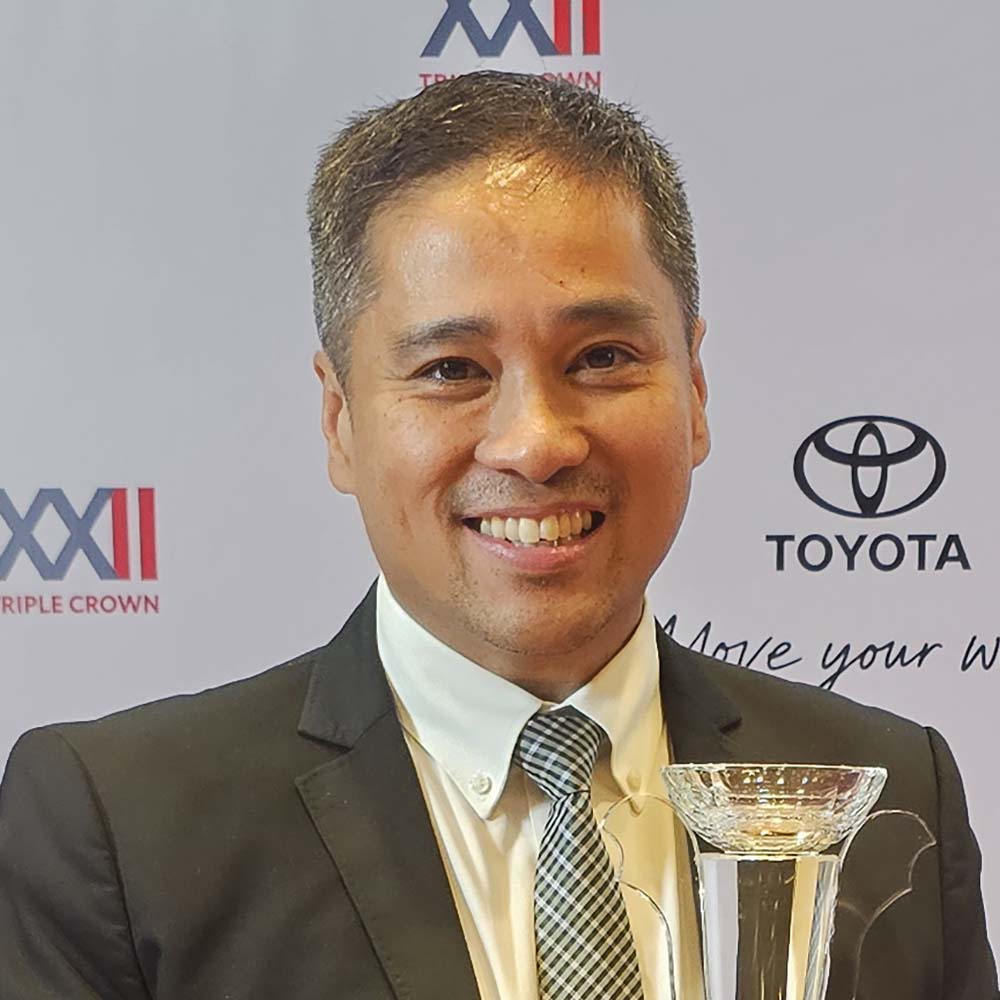
Lovell B. Gopez, President and General Manager of Toyota Silang Cavite
It was through the opportunity of working in my father’s business that I learned the philosophy of ShuHaRi. I learned to be an observer, asking questions to satisfy my curiosity. Running the operations the way my hardworking father exemplified. Then letting me run the course myself, fumbling and making the mistakes any kouhai does.
Years forward, as I worked for fifteen years in the family business, I married into a family that was then deep in Japanese industrial ties. There was immediate familiarity, similar pace, same values. Just as Japanese partnerships are not bound by contracts alone, they are built on trust, respect, honor. I wasn’t just educated philosophically and theologically by Jesuit education. I grew up in a household that made me learn professional Japanese business ethics. Getting into a family that shared the same values anchored that understanding into my personal life.

My father-in-law, Egmidio Cesar S. Jose — later conferred the Order of the Rising Sun, Gold Rays with Neck Ribbon by the Government of Japan in recognition of his role in strengthening Japan-Philippines economic ties — was tied to Japanese partners and customers through their manufacturing business. He was interested in pursuing an automotive dealership, but his background was solely in manufacturing automotive parts — an industry he later led as President of the Philippine Parts Maker Association — not retail, and being granted one proved difficult. After several attempts, he asked to involve me in the application, given my exposure to retail and my customer-facing background.
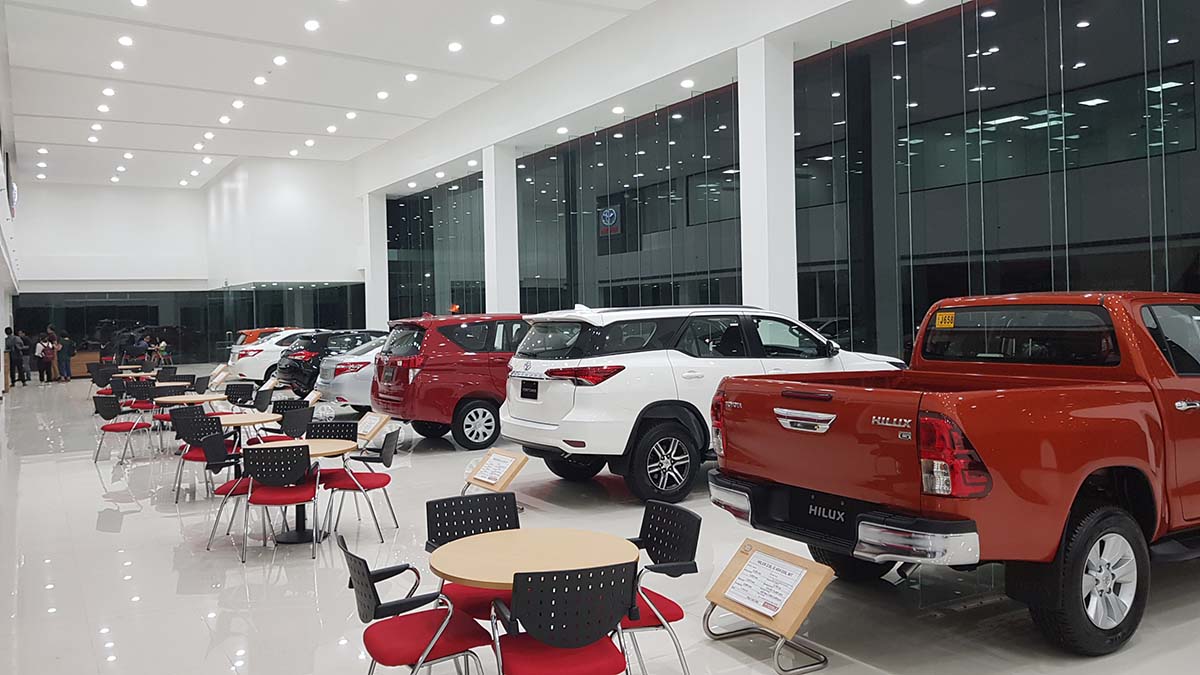
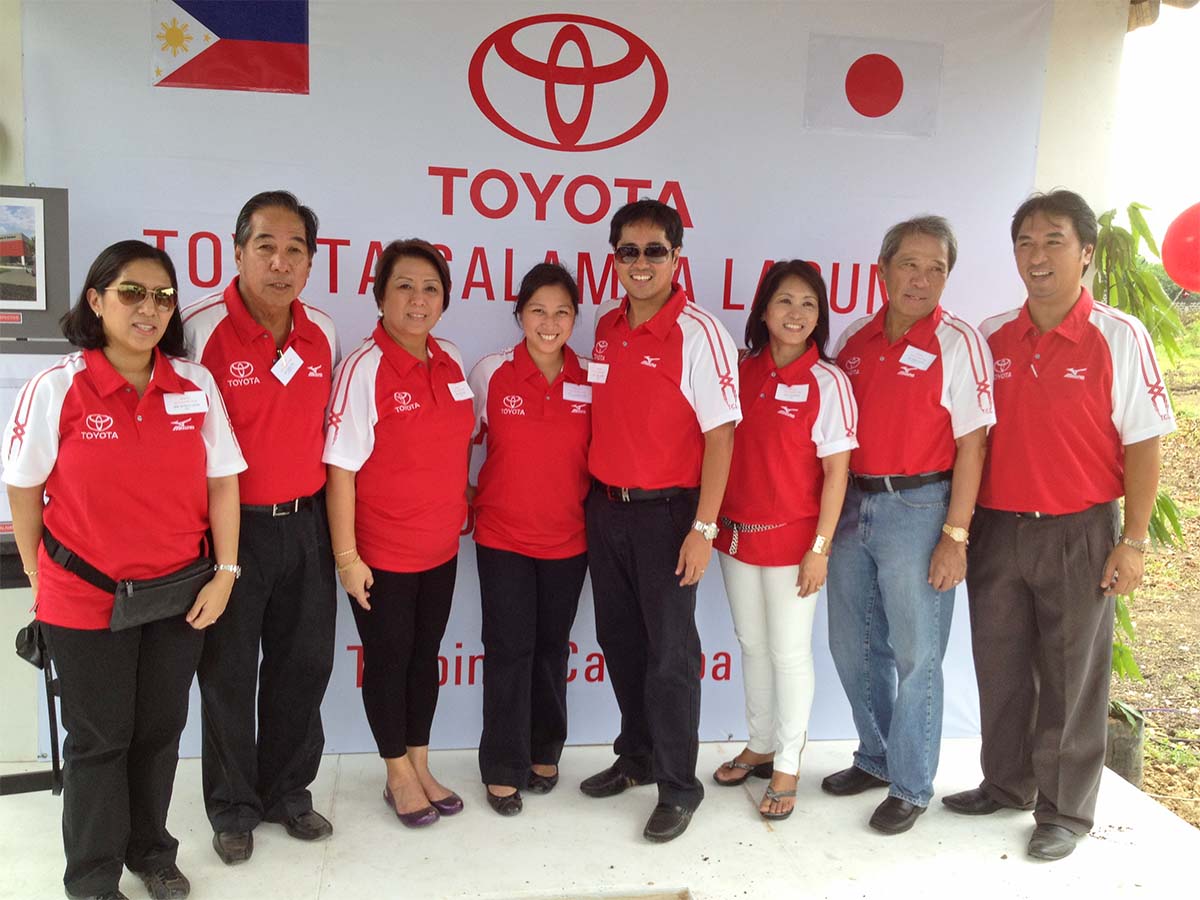
Pivoting to Toyota, it felt entirely natural. The scale was larger, but the discipline was identical. Business was not transactional, but an honorable stewardship passed down through generations, strengthened by family ties. At the core of Toyota was respect for people and continuous improvement. I recall sitting in a room with a dozen individuals, including several Japanese professionals, during what was undoubtedly the most intimidating interview I have ever experienced — the interview that would help Toyota Motor Philippines decide whether we were fit to become their franchise dealer. I was asked about customer service and how I could relate to the scale of the business, given my experience was just on ₱5,000 shoes while an automobile costs a hundred times more. Thankfully, the Japanese in the room were golfers. One of them recognized me and said, “I remember you. You were at the Tagaytay Highlands tournament, at the giveaway booth, on your knees, fitting a demanding old lady with a new pair of golf shoes. I asked the Mizuno staff who you were, since you weren’t in uniform like them. They said you were their president.” It was at this moment that I acknowledged it with a little smile. God helped me out with that interview. I responded, “Yes sir. I was on my knees for a measly ₱5,000 golf shoe for someone who demanded attention and care. There was no ego in me. There was just the dedication to service, aligned with the brand’s philosophy.” It was through my Japanese business experience — being one of the oldest distributors in Asia — that the legacy of stewardship showed itself. And this, modesty aside, most likely helped us get awarded the family’s first dealership, Toyota Calamba Laguna. My guess is they weren’t merely looking for a business partner to sell in volume — they were choosing a partner with a deep understanding of stewardship and responsibly adhering to the same philosophies. Six years later, another dealership was granted, Toyota Silang Cavite.
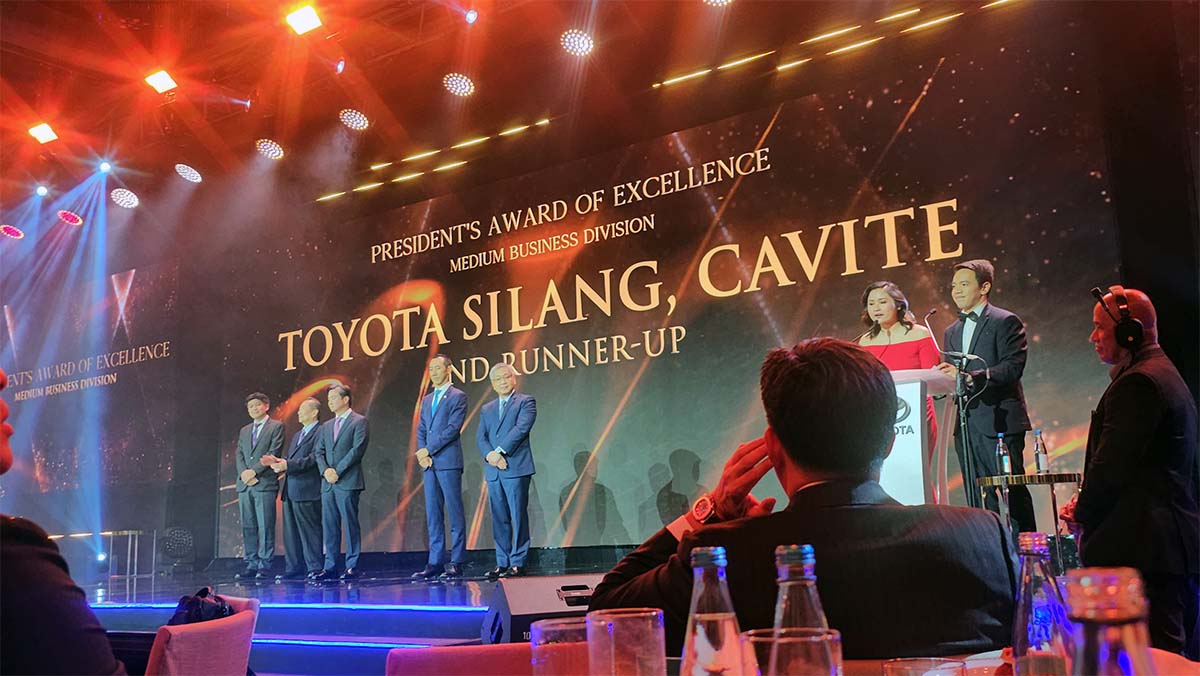
Although I lost the Mizuno distributorship as they transitioned out of the Osaka office and now operate out of the region’s Singapore office, respect for the brand and the people I worked with still runs deep.
Business is inherently personal. It is always about people and relations. This is what is most admired when working with the Japanese. I have had the opportunity to work with other nationalities in other businesses — Australians, Americans, Spaniards, Koreans, Singaporeans, Chinese, Indian-Malay. With many of our global partners, business is always structured around a contract. With the Japanese, it transcends contracts, as there is always a promise of trust, a shared journey, and shared responsibility. This is what makes it truly special.