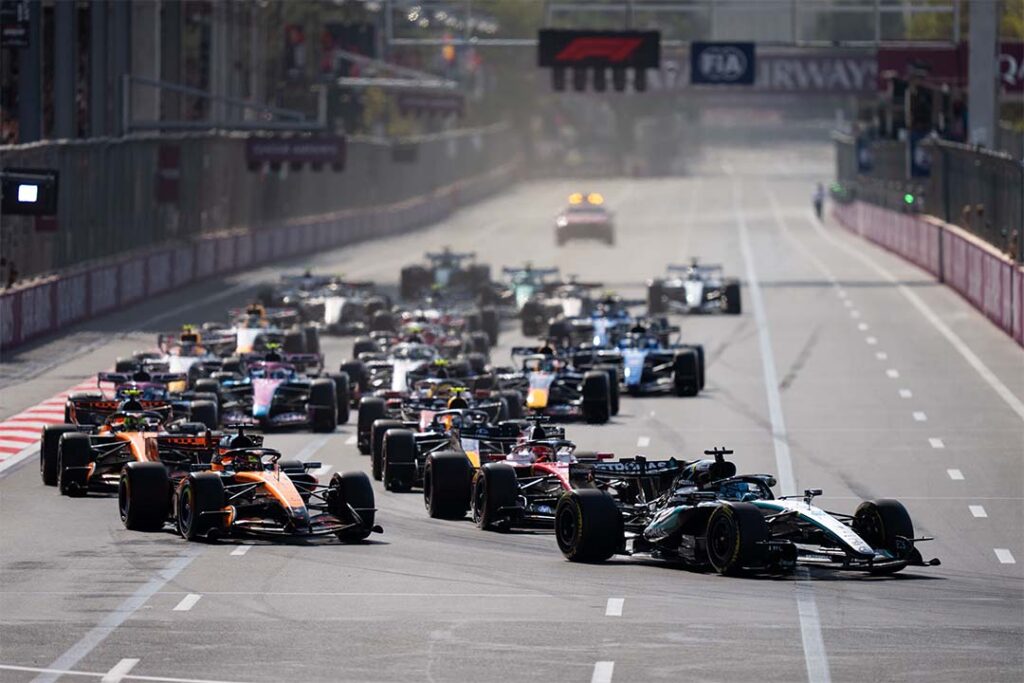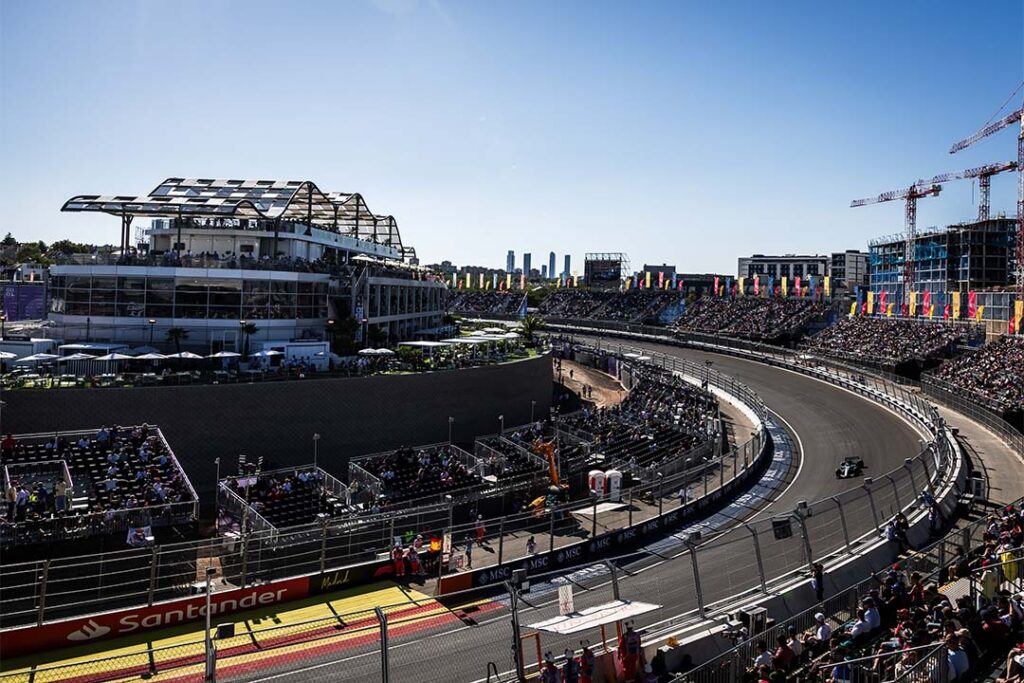

Ferrari looked set to dominate the Australian Grand Prix — until a perfectly timed Mercedes strategy flipped the race on its head. From George Russell’s breakthrough victory to the rise of Andrea Kimi Antonelli, Melbourne offered a glimpse into a new era for the Silver Arrows and the global machinery powering Formula 1.
The Prancing Horse vs. the Silver Arrows
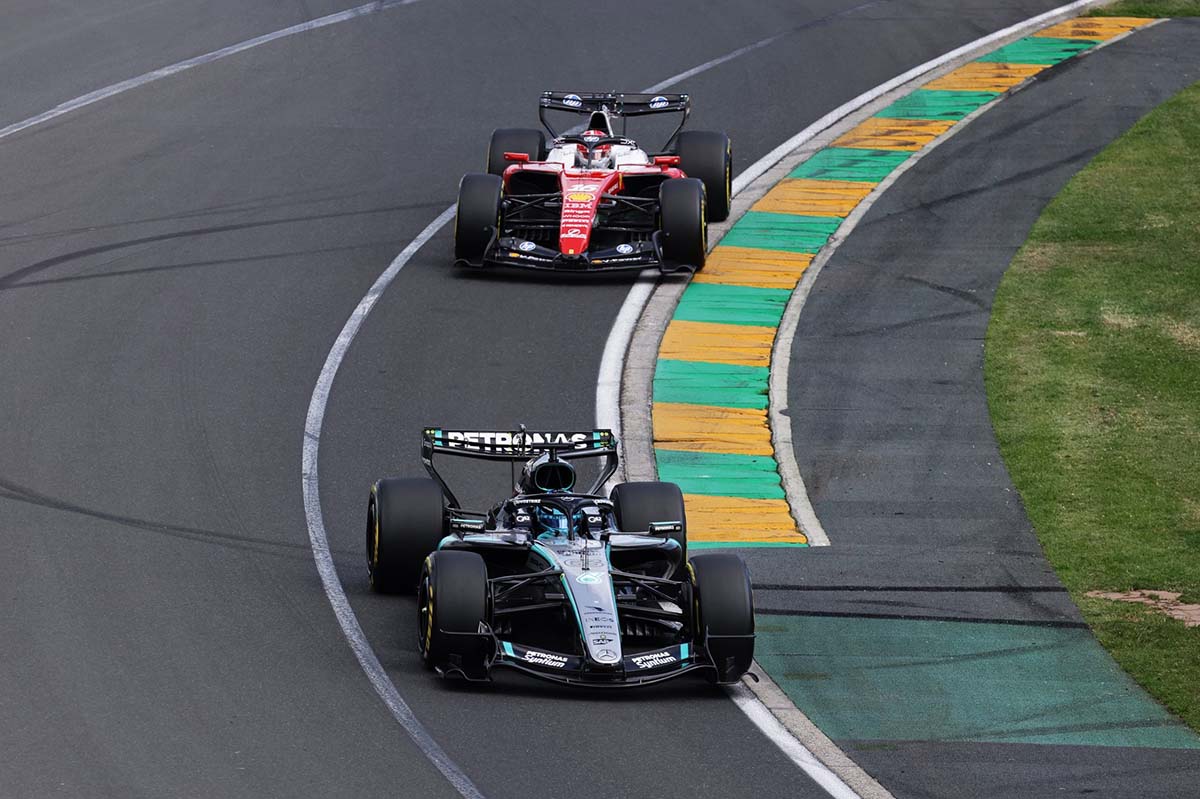
For the first few laps in Melbourne, it looked like Ferrari’s race to lose.
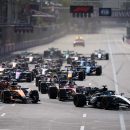
Charles Leclerc launched off the line from P4 and swept into the lead by the first corner — a classic opening move that instantly tilted momentum toward the Scuderia. By lap 13, both Ferraris were running one-two, the Prancing Horse seemingly in control of the Australian Grand Prix.
Then Formula 1 did what it does best: it turned everything on its head.
When a Virtual Safety Car (VSC) was deployed, the strategic chess match began. Ferrari chose to keep their cars out on track, while their rivals at Mercedes made the decisive call to “box” both cars for fresh tyres. The move effectively committed the Silver Arrows to a one-stop strategy — and, crucially, handed them track position once Ferrari eventually needed to pit.
From that moment on, the race’s balance shifted.
What had begun as a Ferrari showcase evolved into a Mercedes masterclass in timing and execution. When the chequered flag finally dropped, it was a commanding one-two finish for the Silver Arrows. The victory went to the British driver from King’s Lynn, George Russell, claiming the Australian Grand Prix and, for the first time in his career, taking the lead in the Formula 1 World Drivers’ Championship.
Right behind him was his teammate — the young Italian Andrea Kimi Antonelli — securing P2 and his fourth podium in Formula 1 in just his second season.
For Mercedes, Melbourne wasn’t just a win. It felt like a statement.
The return of Mercedes?
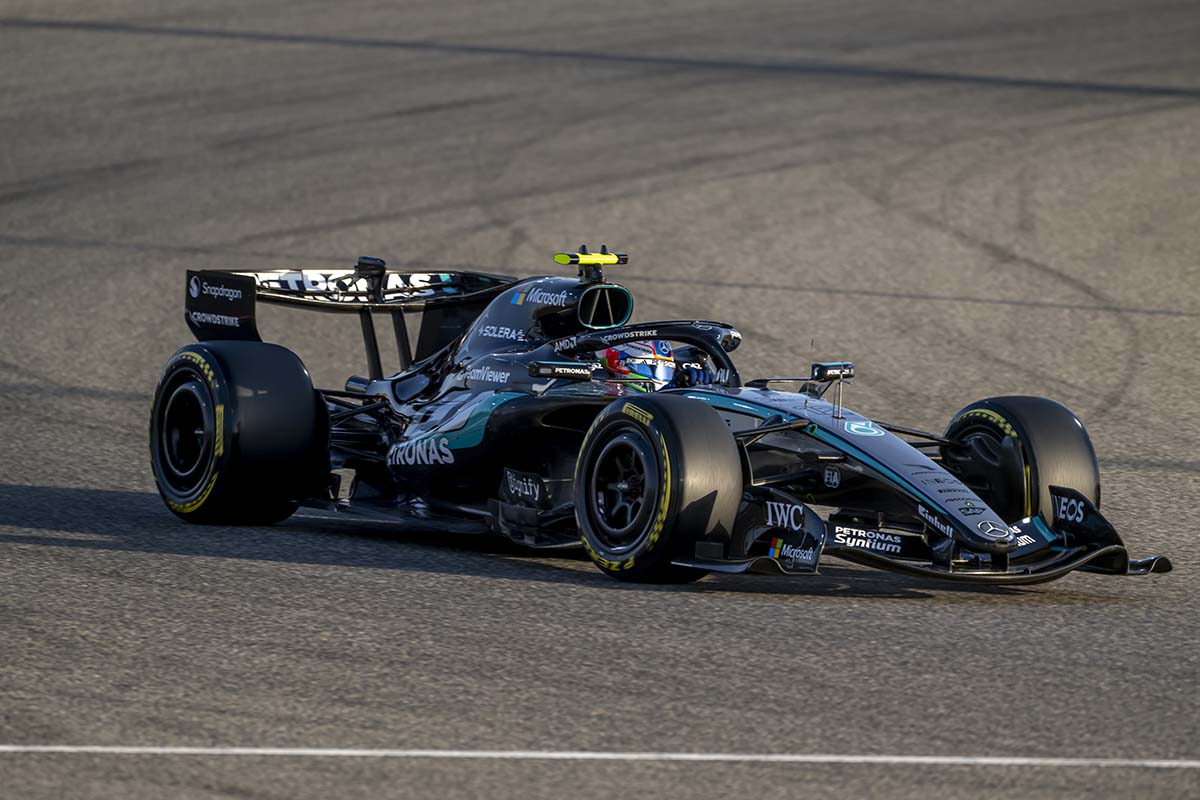
For much of the past four seasons, Mercedes had been searching for answers.
The sweeping regulation changes introduced in 2022 — the beginning of Formula 1’s modern ground-effect era — fundamentally reshaped the competitive order. While rivals adapted quickly, Mercedes struggled to fully unlock the concept. The once-dominant team that had captured eight consecutive Constructors’ Championships from 2014 to 2021 suddenly found itself chasing the front rather than defining it.
There were flashes of the old brilliance — occasional wins, scattered podiums — but nothing that resembled the relentless dominance of their previous dynasty.
The 2026 season, however, brought another seismic shift. A major reset in regulations promised a clean slate across the grid. For engineers, strategists, and drivers alike, it meant stepping into the unknown.
And perhaps that uncertainty is exactly where Mercedes thrives.
As Austrian team principal and CEO Toto Wolff reflected after the race: “We were going into the unknown this weekend, but I think F1 put on a good show with some exciting racing today.”
That show, in many ways, was the product of something bigger than a single team.
Behind every modern Formula 1 car lies a network of global collaboration. Mercedes’ performance in Melbourne is the result of an ecosystem that stretches across continents: Malaysian energy giant Petronas supplying specialized fuel and fluid technologies designed to maximize efficiency; American technology powerhouse Microsoft providing cloud computing and AI-driven simulation tools; cybersecurity firm CrowdStrike safeguarding the team’s digital infrastructure; and British chemical conglomerate Ineos contributing advanced materials and applied science expertise to improve everything from aerodynamics to rapid prototyping.
When those global partnerships converge under the banner of a German automotive icon like Mercedes-Benz, the result is Formula 1 at its most modern — a sport where innovation is built through international cooperation.
And in Melbourne, that machinery appeared to be working.
Behind the visor — the Brit or the Italian?
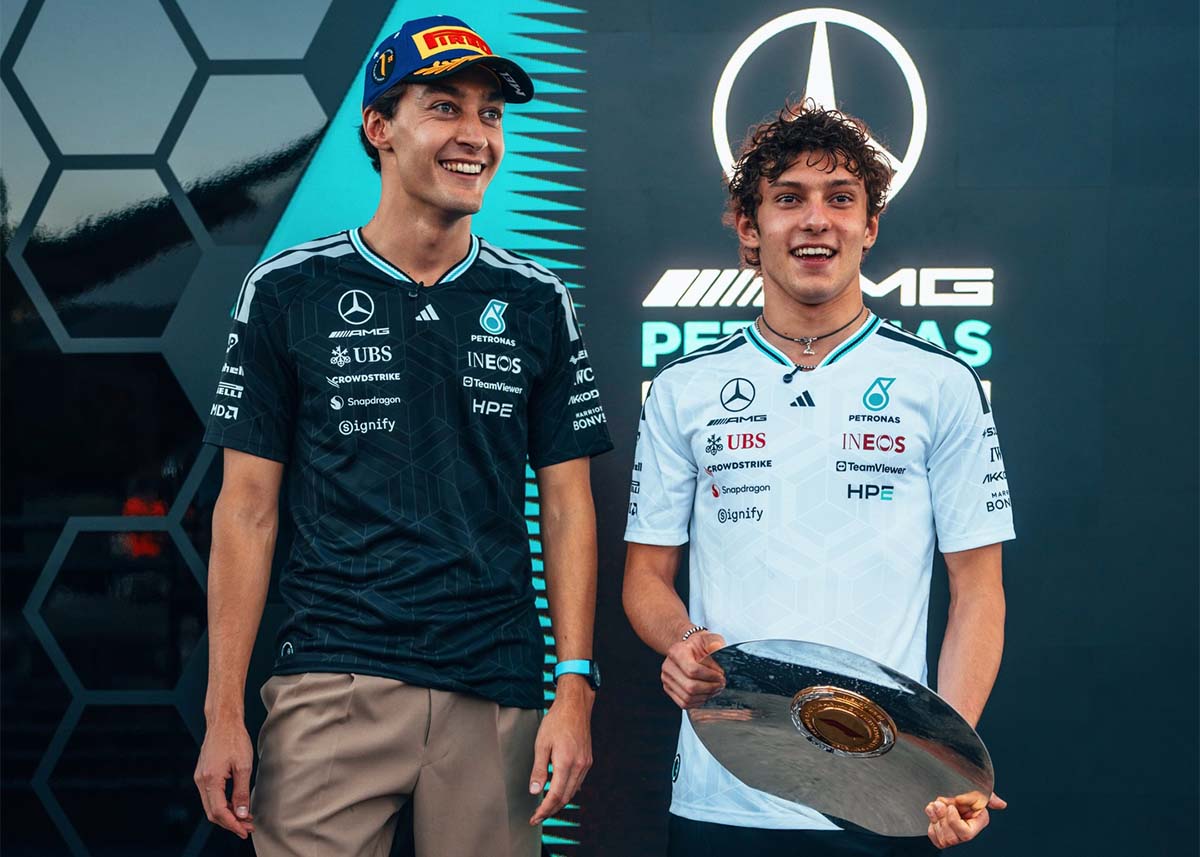
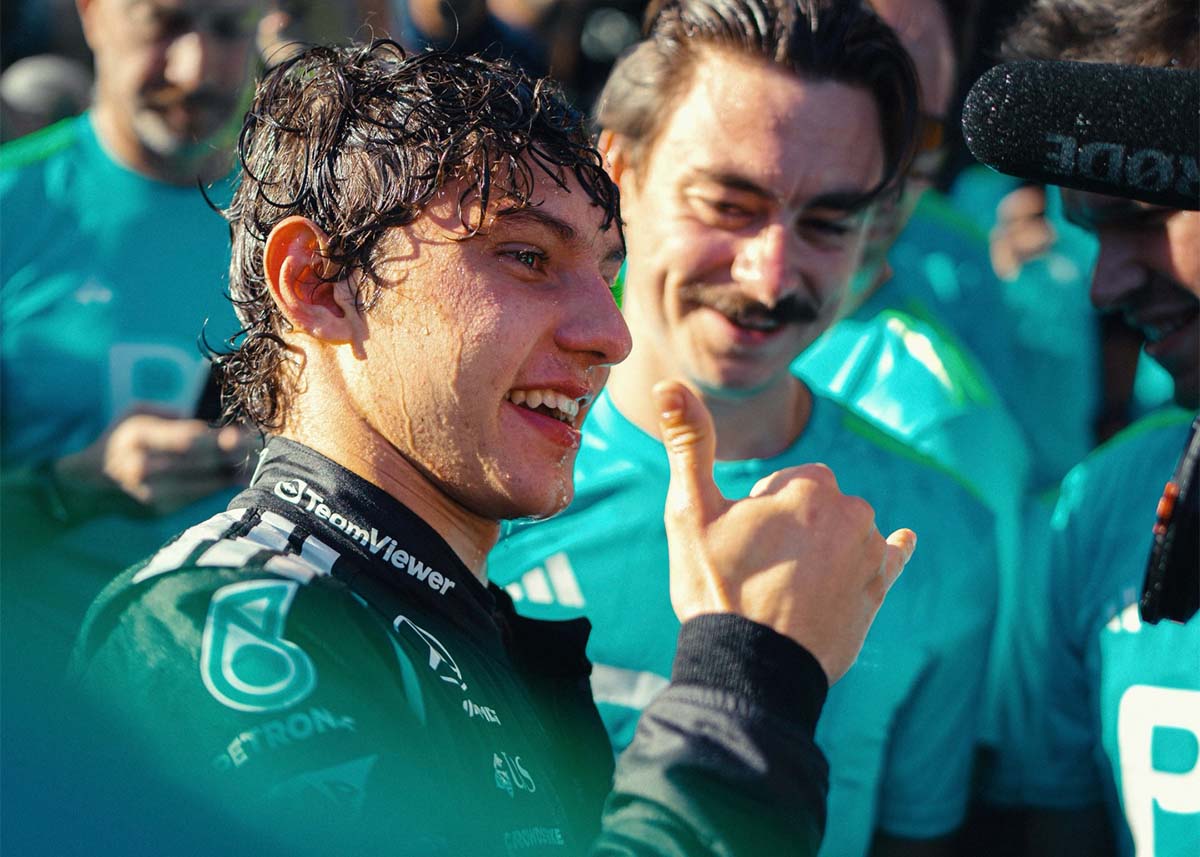
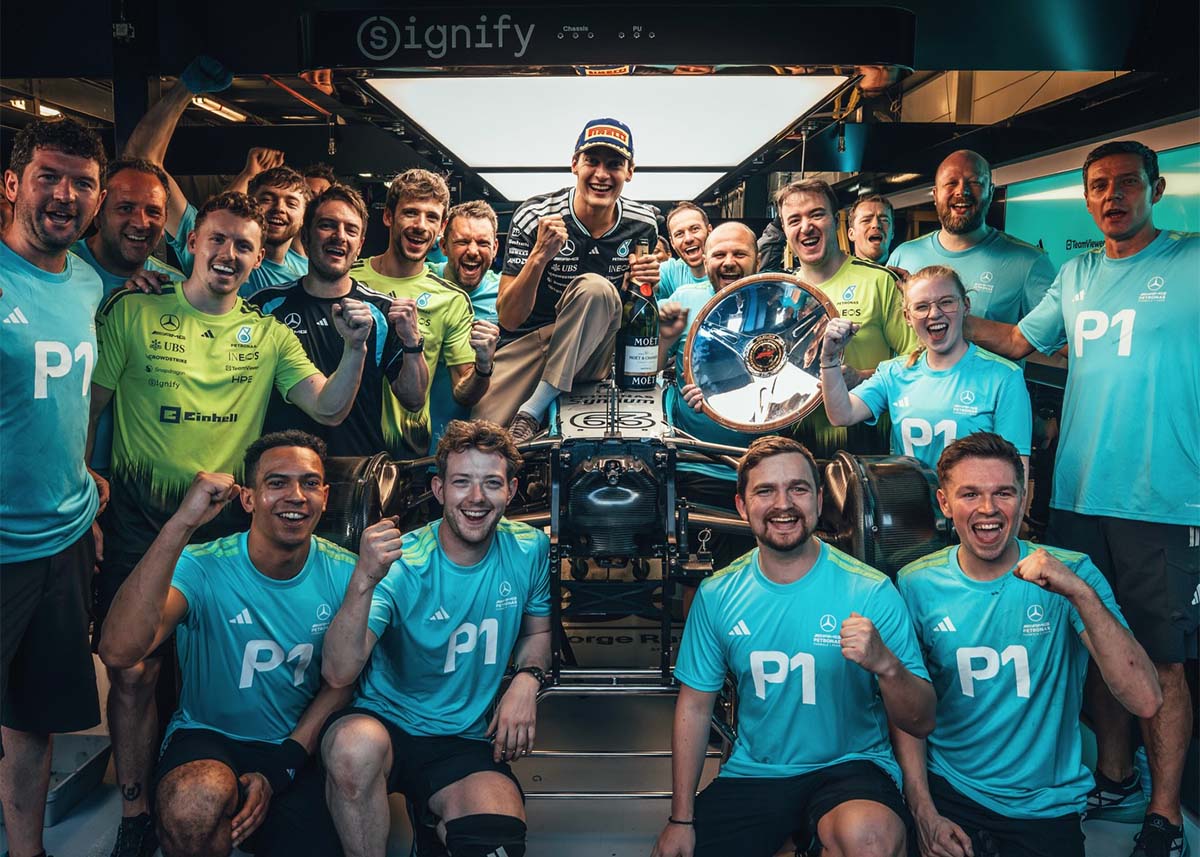
The Mercedes duo, Russell and Antonelli, mark a weekend of triumph with a double podium. | Image credit: Mercedes-AMG Petronas F1 Team /Facebook
Mercedes’ one-two finish also highlighted a compelling dynamic within the team itself: two drivers, two generations, and potentially two championship contenders.
George Russell’s journey to this moment has been anything but straightforward. After a stellar junior career that culminated in the 2018 Formula 2 championship, the British driver entered Formula 1 with Williams in 2019. The team was struggling at the time, and podium opportunities were virtually nonexistent — Russell would wait until his final season with Williams in 2021 to score his first.
When he joined Mercedes the following year, expectations were enormous. But the team’s struggles during the ground-effect era meant Russell never quite had the machinery to consistently demonstrate the championship-winning potential many predicted during his junior career.
Now, with a race victory in Melbourne and the championship lead for the first time, the question begins to surface again: could this finally be George Russell’s year?
Yet the biggest challenge to that dream might be sitting in the other Mercedes cockpit.
Andrea Kimi Antonelli has long been considered one of the sport’s most exciting prospects. Often described as Toto Wolff’s personal project — sometimes even dubbed his “Project Verstappen” — Antonelli has been under Mercedes’ wing since he was just eleven years old.
From George Russell’s breakthrough victory to the rise of Andrea Kimi Antonelli, Melbourne offered a glimpse into a new era for the Silver Arrows and the global machinery powering Formula 1.
The Italian’s path to Formula 1 was anything but conventional. Backed by the team’s confidence in his extraordinary talent, he skipped the traditional FIA Formula 3 step entirely, jumping from Formula 4 to Formula 2 before making the leap to Formula 1 — ultimately filling the seat once occupied by seven-time world champion Lewis Hamilton.
Now in just his second season, Antonelli is beginning to justify that faith. His P2 finish in Australia not only secured another podium but also sent a clear message across the garage: he isn’t here merely to develop.
He’s here to compete.
As Antonelli reflected after the race: “There is a lot we’ve learned about our car and how to operate within these new regulations this weekend. Whilst we were the strongest team in Melbourne, we are going to have to work really hard to stay ahead. I’m now looking forward to China and seeing what we can do in Shanghai.”
Whether the championship battle ultimately becomes a duel between the polished British contender and the fearless Italian prodigy remains to be seen. What is clear, however, is that Mercedes may once again possess something every championship team needs — two drivers capable of fighting at the front.
Only time will tell whether the Silver Arrows can sustain this momentum, whether Russell or Antonelli will emerge as the team’s leading title challenger, or whether another rival will disrupt the narrative entirely.
Beyond the checkered flag
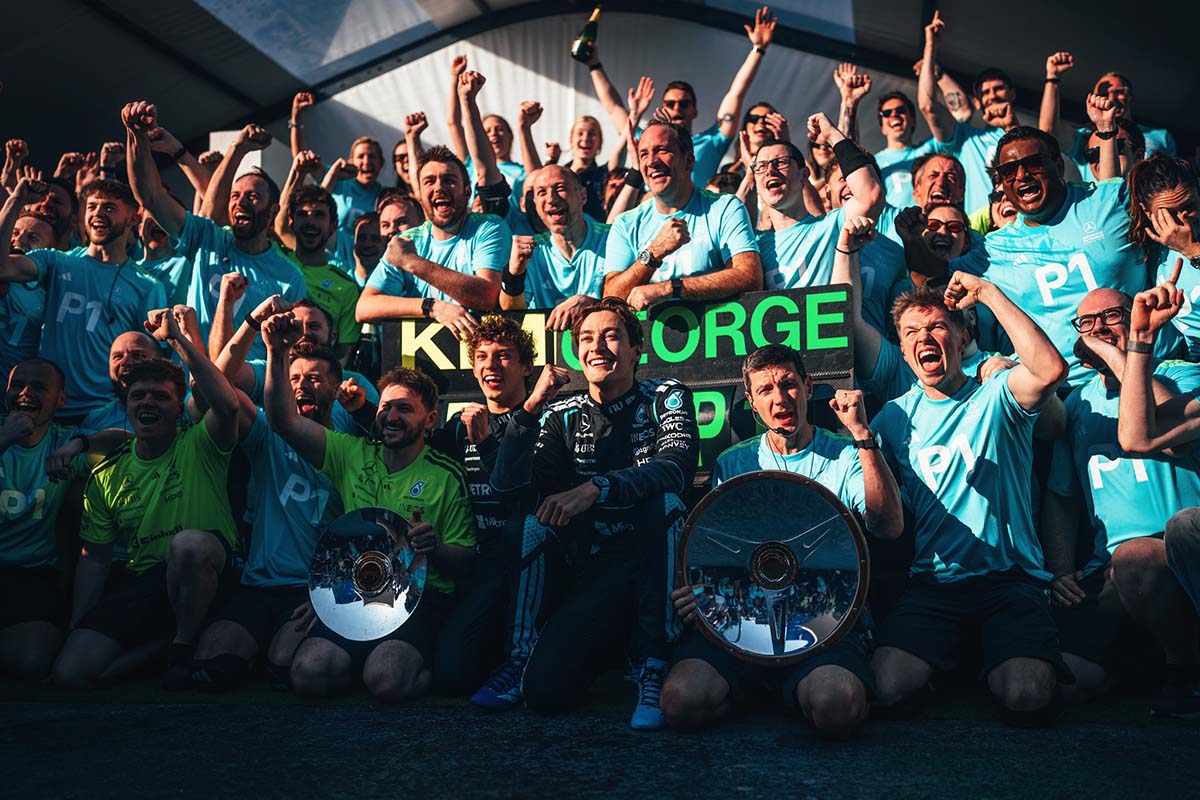
If Melbourne reminded us of anything, it’s that Formula 1 has never been just about what happens between lights out and the checkered flag. Beneath the helmets and carbon fibre lies something far more global: a sport powered by international collaboration, cultural exchange, and shared ambition.
A British driver leading a German team, guided by an Austrian team principal, racing with an Italian teammate, supported by Malaysian energy innovation, American cloud computing, British materials science, and fans watching from every continent — Formula 1 moves at 300 km/h, but its true engine is connection.
In that sense, Mercedes’ resurgence in Australia represents more than a strong start to the 2026 season. It’s another reminder that modern motorsport is a global ecosystem — one where technology, talent, and teamwork cross borders as easily as the championship itself travels the world.
Because in Formula 1, every race is local.
But the story is always global.