
A chaotic Chinese Grand Prix delivered retirements, milestones, and the arrival of Formula 1’s next star. At just 19, Kimi Antonelli claimed his maiden victory — a moment that signals both Mercedes’ future and the global machinery behind modern F1.
The race
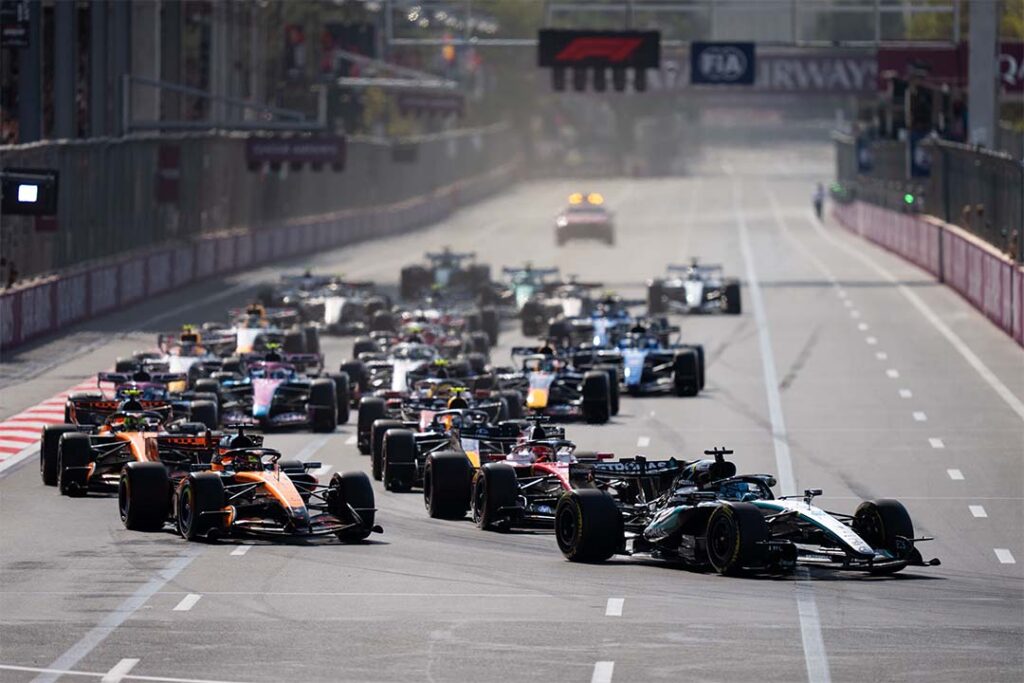
Before the race had even begun, chaos struck.
Both McLaren drivers were unable to start the Grand Prix. Audi’s Brazilian racer Gabriel Bortoleto also failed to make the grid, while Thailand’s Alex Albon was forced to withdraw his Williams before lights out. It’s been some time since Formula 1 has seen several drivers unable to even begin a race — but in a season shaped by sweeping regulation changes and technical unknowns, perhaps unpredictability is simply part of the new normal.
The drama didn’t stop there.
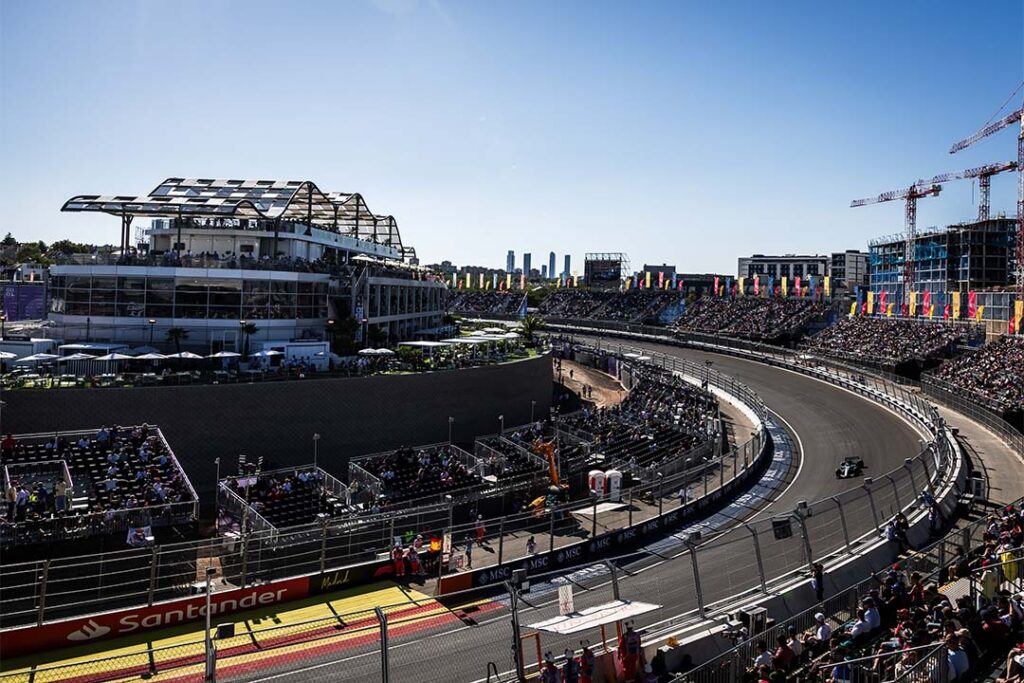
As the Chinese Grand Prix unfolded in Shanghai, reliability became the story of the afternoon. Teams are still learning the limits of the new generation of Formula 1 cars, and the attrition reflected that reality.
Aston Martin’s Canadian driver Lance Stroll retired after just nine laps. His teammate, two-time world champion Fernando Alonso, followed on lap 32. Then came one of the biggest shocks of the race: four-time world champion Max Verstappen forced to retire his Red Bull after 45 laps.
Yet amid the retirements, there were also milestones.
For the first time ever, Kimi Antonelli is a Formula 1 race winner. After critics said he was too young to be placed in such a big team as Mercedes, the 19-year-old Italian proved that the next generation of F1 is here to make a statement.
Lewis Hamilton secured his first podium for Scuderia Ferrari HP — an early highlight in his ongoing chapter with the historic Italian team. London-born Oliver “Ollie” Bearman delivered an impressive P5 for the American Haas squad, while Alpine celebrated a double-points finish thanks to French driver Pierre Gasly in P6 and Argentina’s Franco Colapinto in P10.
But the defining moment of the day belonged to one driver.
Kimi Antonelli.
Over the team radio moments after crossing the finish line, the young Italian summed up the moment simply: “Thank you so much! You made me achieve one of my dreams.”
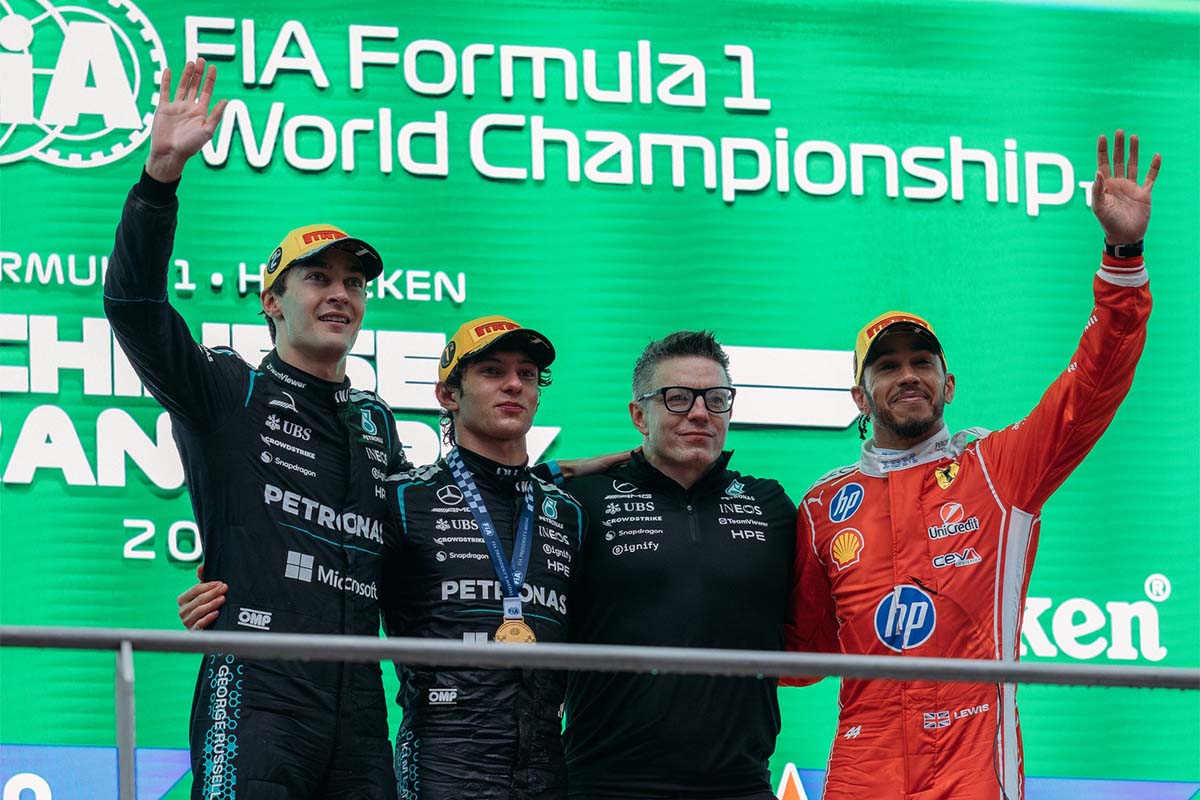
The young Italian stood atop the podium for the first time in his Formula 1 career, claiming a maiden Grand Prix victory that signaled the arrival of a new generation.
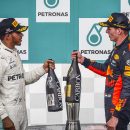
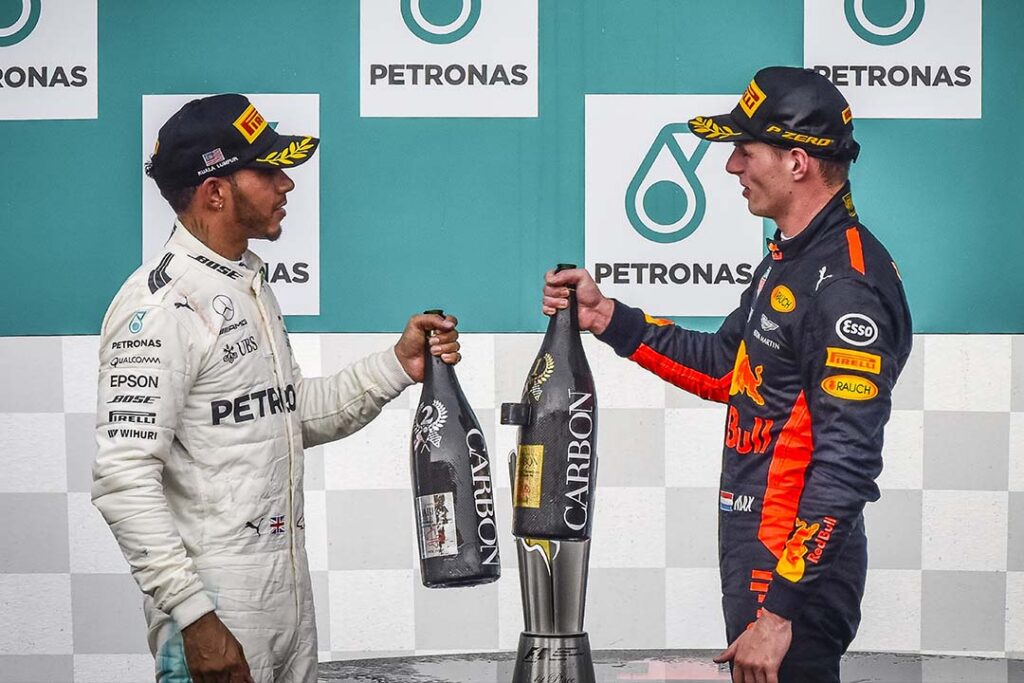
And the podium itself felt symbolic. Antonelli represented the future of Mercedes. George Russell — the British driver currently leading the team — represented the present. And Lewis Hamilton, the man who won six world championships with Mercedes, stood there as the past.
Three eras of the team. One moment.
Victory
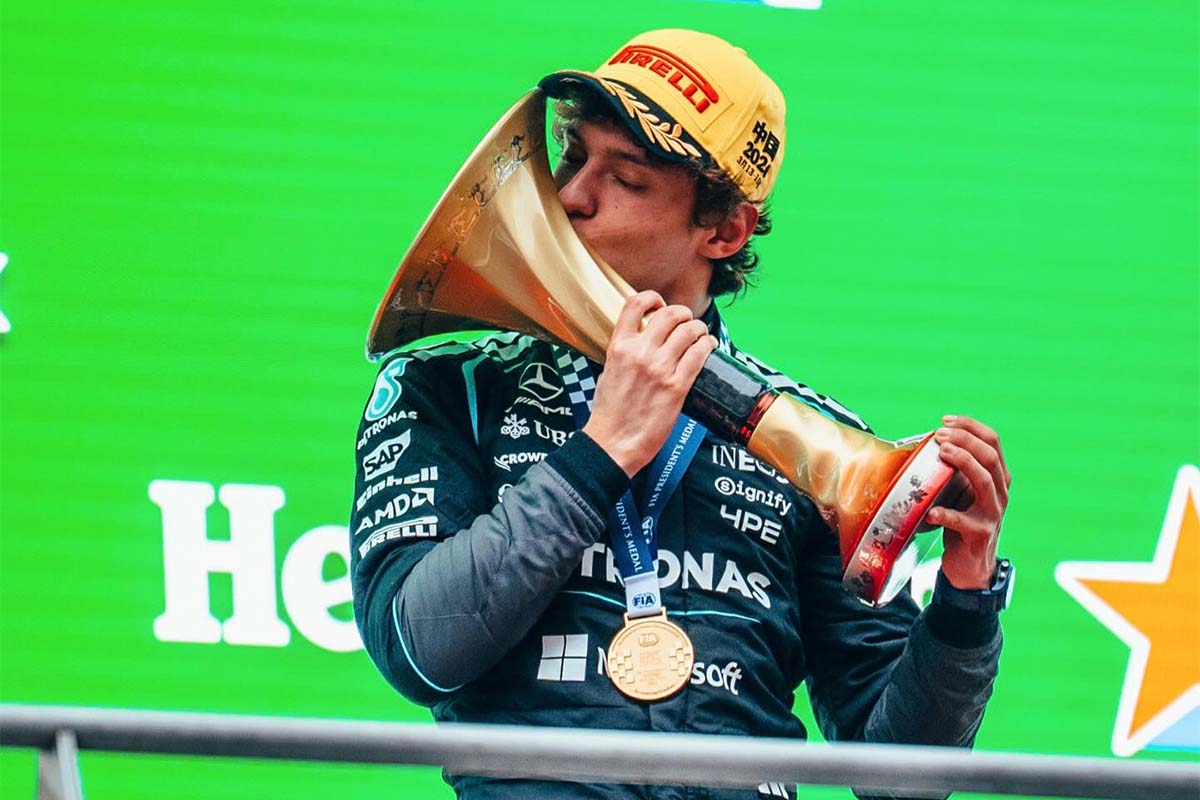
For the first time ever, Kimi Antonelli is a Formula 1 race winner. After critics said he was too young to be placed in such a big team as Mercedes, the 19-year-old Italian proved that the next generation of F1 is here to make a statement.
“It’s been a while since I’ve been in F1 but that podium now was probably one of the best moments I’ve had in F1,” Wolff, Mercedes-AMG F1 Team Principal, told Sky Sports F1.
In just his second season in Formula 1, the Bologna-born driver claimed his maiden victory at the Chinese Grand Prix — a moment that may mark the beginning of a much larger career.
Antonelli’s rise through the junior ranks has been remarkable. In 2022, he dominated the Italian Formula 4 Championship and the ADAC Formula 4 title. A year later, he won both the Formula Regional Middle East and European Championships, cementing his status as one of motorsport’s brightest young talents.
In 2024 he jumped straight into Formula 2 with PREMA Racing, backed by the Mercedes Junior Team. The team had been investing in him long before his F1 debut — signing him at just twelve. Even earlier, from age seven when he began karting, Antonelli had shown the pace and racecraft that caught scouts’ attention across Europe.
Inside Mercedes, many had long believed he represented the team’s future. In Shanghai, that future took its first victory.
The future of Mercedes-AMG PETRONAS F1 Team
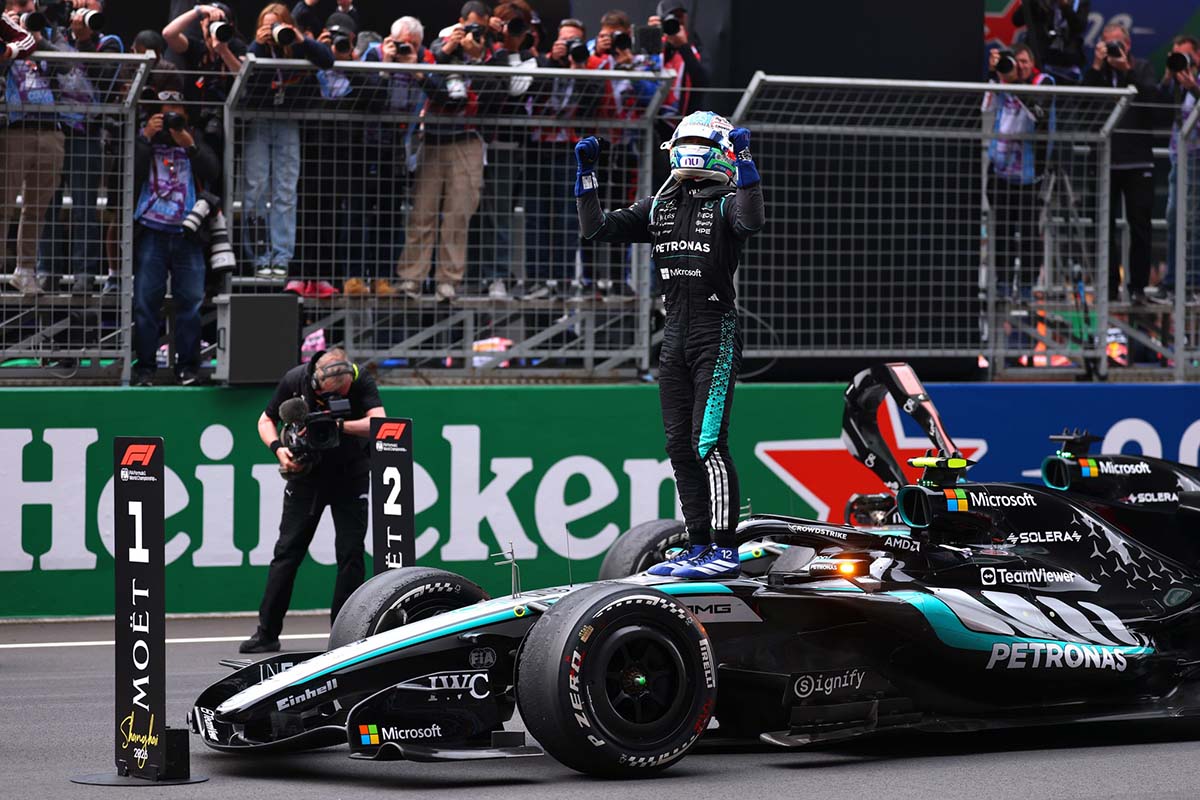
Antonelli’s win also highlights something larger than a single driver: the machine behind him.
Mercedes has competed in Formula 1 across two defining eras. The first came in the 1950s, when Juan Manuel Fangio secured back-to-back Drivers’ Championships in 1954 and 1955 before the manufacturer withdrew from motorsport.
The modern era began in 2010, when the team returned as Mercedes GP Petronas Formula One Team.
What followed was one of the most dominant dynasties in Formula 1 history. Between 2014 and 2021, Mercedes captured eight consecutive Constructors’ Championships while their drivers secured seven Drivers’ titles.
At the heart of that success has been the partnership between Mercedes-Benz and PETRONAS.
The Malaysian energy company serves as both Title and Technical Partner, supplying highly specialized Fluid Technology Solutions™ — advanced fuels, lubricants, and functional fluids developed specifically for Mercedes power units. Since 2010, PETRONAS engineers have worked directly with Mercedes-Benz High Performance Powertrains to maximize efficiency and reliability.
In Formula 1, those microscopic performance gains often determine the difference between victory and defeat.
And in 2026, they matter more than ever.
With the sport introducing a major shift toward sustainable fuels, every team has been challenged to rethink the chemistry powering its cars. Fuel suppliers now play a critical role in both performance and sustainability.
In Shanghai, it appears Mercedes and PETRONAS may have found the right formula.
Beyond the checkered flag
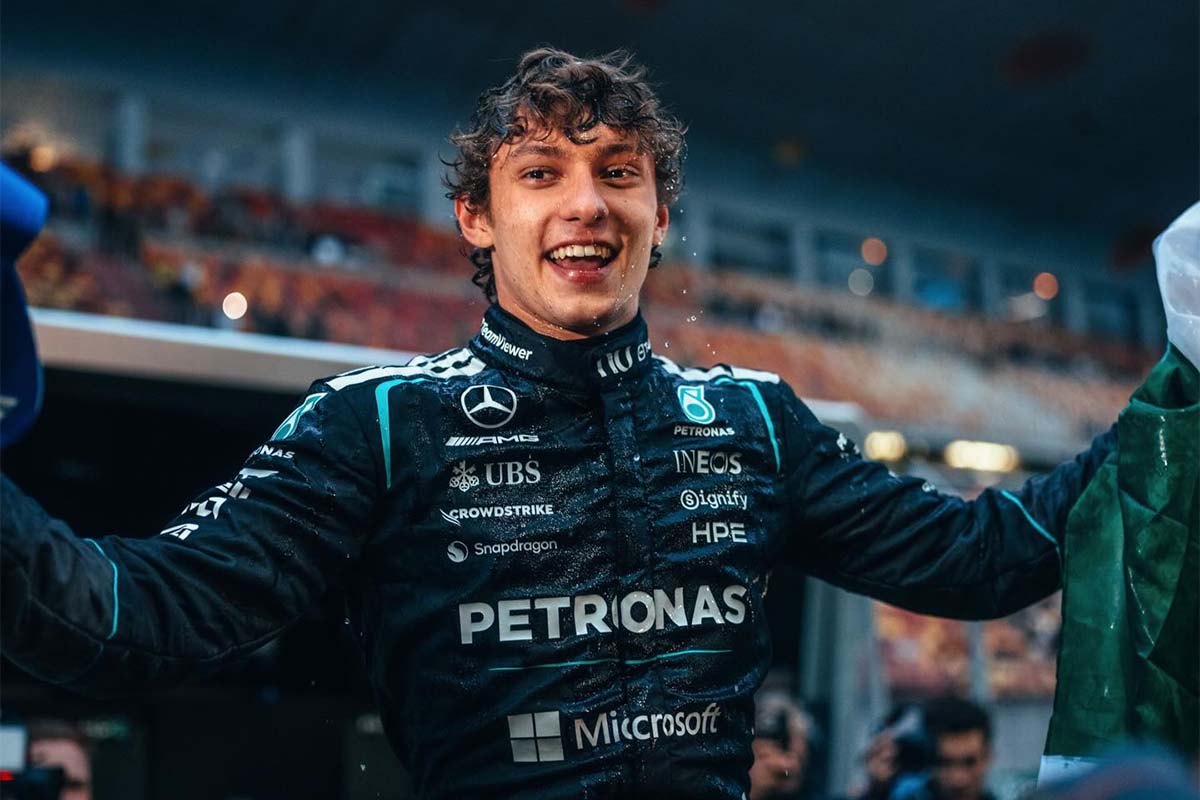
Kimi Antonelli’s first Formula 1 victory is about more than a single race result.
A nineteen-year-old Italian winning in Shanghai, driving for a German team powered by Malaysian fuel innovation, racing against drivers from across Europe, Asia, and the Americas — Formula 1 has always been a sport defined by global collaboration.
From Bologna to Brackley, Kuala Lumpur to Shanghai, the sport connects engineers, cultures, and generations in pursuit of speed.
And as Antonelli lifted his first winner’s trophy in China, it felt less like the end of a race — and more like the start of Formula 1’s next global chapter.