
At a circuit built on history and passion, 19-year-old Kimi Antonelli delivered a statement victory that connected generations of Formula 1, united cultures across the paddock, and signaled the arrival of a new global superstar.
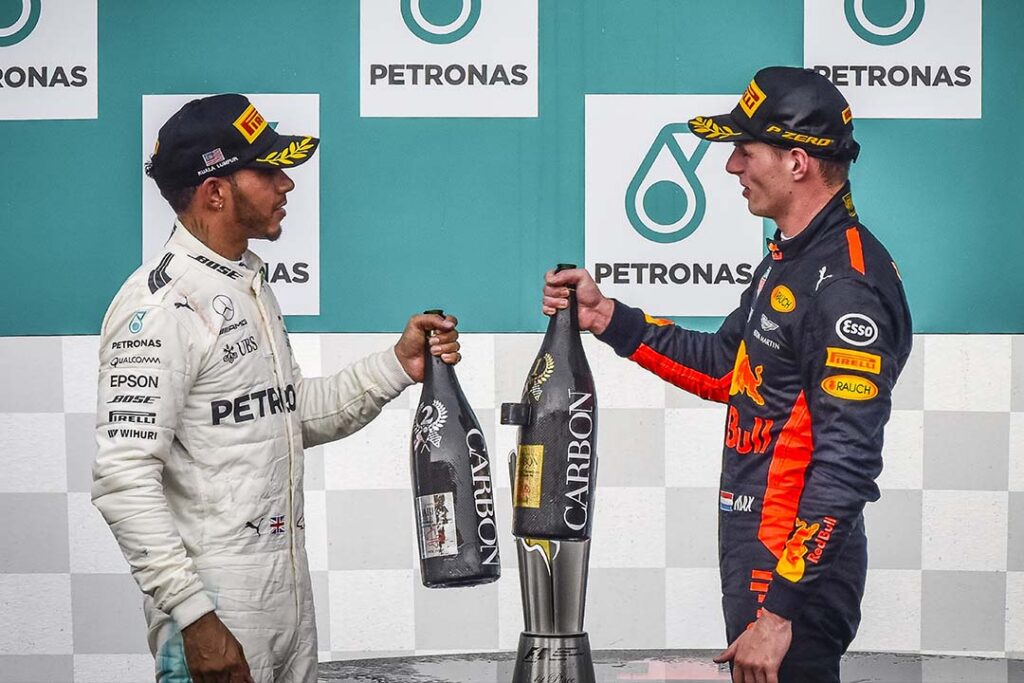
A podium that captured Formula 1’s changing generations: Lewis Hamilton lifting Kimi Antonelli after his Canadian Grand Prix victory, with Max Verstappen alongside them.
Montreal’s chaos, legacy, and the return of racing
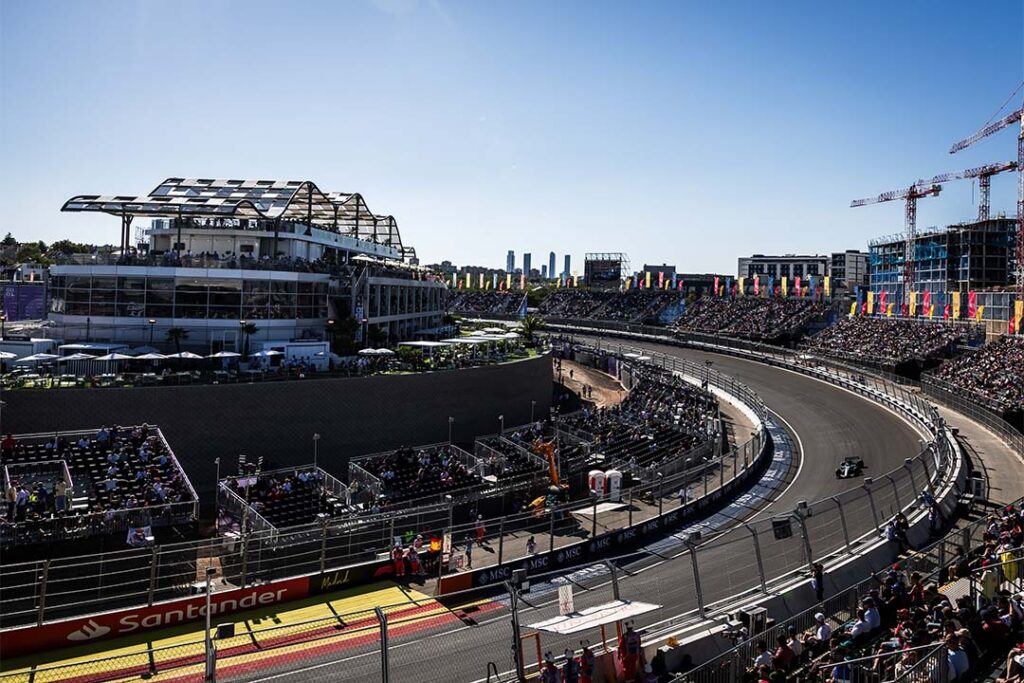
A circuit where legends have raced and records have been broken, Circuit Gilles Villeneuve feels like the perfect home for Formula 1. Located in one of Canada’s most bilingual and multicultural cities, Montreal reflects the sport itself: global, intense, and constantly evolving.
This year’s Canadian Grand Prix delivered exactly that.
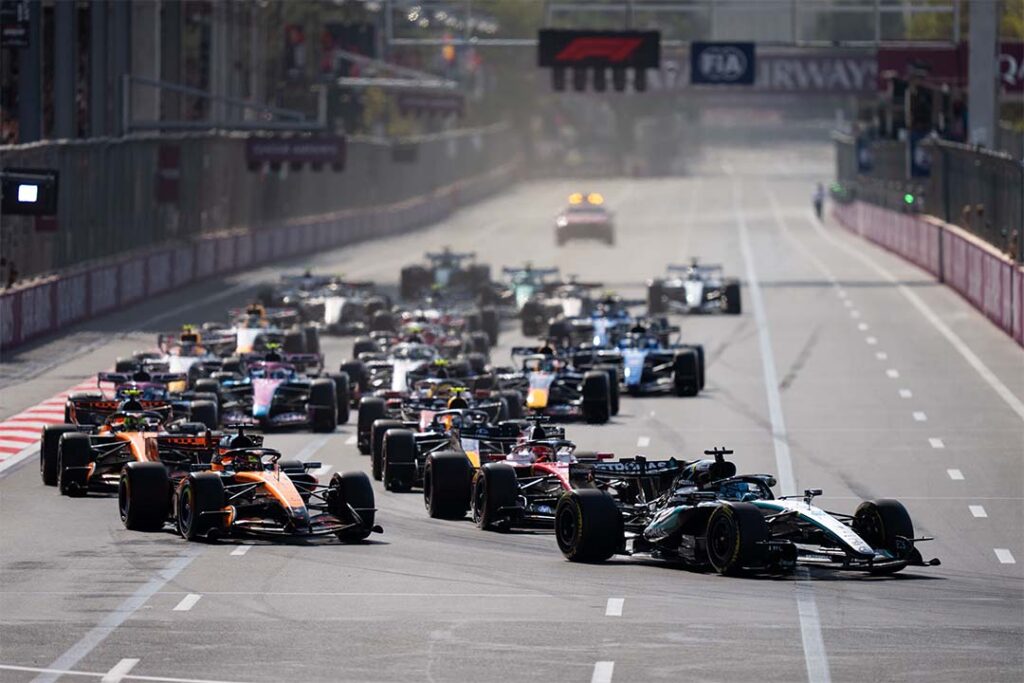
For the first time ever, Montreal hosted a Sprint weekend, and the 2026 Canadian GP brought back a feeling many fans felt had faded under the new regulations: hard racing. After tweaks from F1 and the FIA last month, the racing finally began to click again. Canada became proof of it, with drivers battling wheel-to-wheel throughout the field.
Chaos arrived before the race even started. Arvid Lindblad’s stalled Racing Bulls forced extra formation laps, reducing the race distance from 70 laps to 68. Then came McLaren’s risky tyre gamble amid mixed weather conditions. Both cars started on Intermediates while most of the grid committed to slicks. For a moment it looked promising when Lando Norris jumped into the lead at Turn 1, but the track was already almost completely dry, something the McLaren drivers had pointed out during the extra formation laps. The strategy quickly unraveled, forcing an early pit stop that heavily compromised McLaren’s race and completely shook up the order.
That opened the door for the defining battle of the afternoon.
George Russell and Kimi Antonelli fought intensely for the lead, swapping positions several times in a tense Mercedes intra-team battle. Then Russell’s power unit suddenly failed, forcing him out of the race and handing Antonelli a clear path to victory.
Behind them, Lewis Hamilton and Max Verstappen battled for P2 in a fight that echoed the intensity of the 2021 season. By the chequered flag, Hamilton finished second and Verstappen third, creating an iconic podium with 11 World Drivers’ Championships standing beside a teenager who may soon define Formula 1’s next era.
Because while Montreal delivered spectacle, one name stood above the rest: Kimi Antonelli.
Kimi Antonelli celebrates his Canadian Grand Prix victory with the Italian flag in hand, a moment that carried the weight of a nation waiting decades for its next title contender.
The teenager carrying Italy’s future
For months, Formula 1 has felt the momentum building around a young Italian driver rewriting the sport’s history books — and in Montreal, it finally felt undeniable.
Kimi Antonelli is no longer simply “the future.” He is shaping the present.
His victory in Canada marked his fourth consecutive Grand Prix win, following triumphs in China, Japan, and Miami. No driver in Formula 1 history has ever taken their first four Grand Prix victories consecutively. At just 19 years old, Antonelli also remains the youngest championship leader the sport has ever seen, now sitting 43 points ahead of his closest rival, teammate George Russell.
With 17 races still left in the season, the possibility is becoming impossible to ignore. If Mercedes can maintain reliability and consistency, Formula 1 could witness the youngest-ever World Champion in its history.
For Italy, the weight of that possibility runs even deeper.
Formula 1 in Italy is not just a sport, it’s passion, devotion, and emotion woven into generations of culture. And when an Italian driver rises through the ranks, the entire country pays attention. Antonelli isn’t only representing Formula 1’s next generation, he’s carrying the hopes of a nation that has waited decades to see one of their own consistently fighting at the very front again.
No Italian driver has won a World Championship since Alberto Ascari in 1953 with Ferrari. Italy, one of motorsport’s spiritual homes, hasn’t had a consistent title-contending Italian driver in generations. At just 19 years old, the pressure on Antonelli’s shoulders is immense. Yet with every victory, he looks more comfortable carrying it.
And for Antonelli, that journey toward becoming Italy’s next great hope started long before Formula 1.
A young Kimi Antonelli in the karting years, long before Formula 1 came calling. His father later described this moment simply: “when I realized that Kimi was born to drive.”
From Bologna to Formula 1
Kimi Antonelli’s connection to racing runs deep within his family. Born and raised in Bologna, Italy, at the heart of the country’s famed “Motor Valley,” he grew up surrounded by a culture defined by engines, heritage, and speed. His father, Marco Antonelli, is a racer himself and the team principal of AKM Motorsport, the family-founded team where Kimi was immersed in motorsport from an early age.
Mercedes spotted his talent early, bringing Antonelli into the Junior Programme in 2019 when he was just 12 years old. From there, he quickly established himself as the academy’s standout prospect.
What followed was one of the fastest rises modern Formula 1 has seen.
After an incredibly successful karting and Formula Regional European Championship (FRECA) career, Antonelli skipped Formula 3 entirely, an almost unheard-of step in today’s Formula series ladder system. He moved directly into Formula 2, spent only one season there, before securing a Formula 1 seat.
And not just any seat — he replaced 7x WDC Lewis Hamilton at Mercedes.
That made the Montreal podium feel almost symbolic: Antonelli standing beside Hamilton, the very driver whose seat he inherited. One generation beside another.
It also captures why Antonelli has become such a fascinating figure in modern Formula 1. An Italian leading a German team, racing in a Canadian city named after a Ferrari legend, supported by fans from around the world. His story reflects how international Formula 1 has become, where talent, culture, and identity constantly intersect.
Surrounded by cameras and celebration, Kimi Antonelli’s Canadian Grand Prix victory marked another historic step in the rise of Formula 1’s newest star.
Montreal, Mercedes, and Formula 1’s global identity
One of the more quietly heartwarming moments of the weekend may not have even happened on track. As the Italian national anthem played for Antonelli’s victory, even Ferrari mechanics in the pitlane were seen singing along. In a sport defined by rivalry and division, that moment carried quiet weight.
Antonelli has created something rare. Italian fans are known for their devotion to Ferrari above all else, yet Kimi’s rise has added nuance to that identity. He represents national pride that extends beyond team colours, drawing in a new generation of fans across borders, languages, and cultures.
And perhaps there was no better place for that moment than Montreal.
Circuit Gilles Villeneuve carries the romance of Formula 1’s past. The city itself reflects dual identities, French and English, local and international, historic and modern. For Antonelli to dominate here, driving for Mercedes while carrying the hopes of Italy, felt symbolic of what Formula 1 has become in 2026: a sport where technology, culture, business, and identity constantly collide.
Beyond the strategy chaos and an iconic podium featuring Verstappen, Hamilton, and Antonelli, Montreal showed how Formula 1 continues to connect people across generations and nations. A teenage driver from Bologna, racing under a German banner in Canada, managed to unite old-school tifosi, new-gen fans, rival mechanics, and a global audience watching from every corner of the world.
In a season already full of change, Kimi Antonelli is becoming the bridge between Formula 1’s history and its future.