

The Japan International Cooperation Agency (JICA) has been a cornerstone of Japan–Thailand development cooperation which has a history of more than seven decades, supporting Thailand’s development through infrastructure, human capital and regional initiatives. As the partnership evolves from traditional development assistance to a more equal, forward-looking collaboration, JICA continues to play a central role in addressing shared regional and global challenges. In this interview, Shunsuke Sakudo, Chief Representative of JICA Thailand, discusses the evolution of Japan–Thailand cooperation, highlights key projects, and outlines priorities as the two countries approach the 140th anniversary of diplomatic relations.
On the evolution of Japan–Thailand cooperation and priorities toward the 140th anniversary

Shunsuke Sakudo:
Japan has been Thailand’s largest bilateral official development assistance donor, with cooperation dating back to 1954. Over the past 70 years, Japan’s ODA has supported not only Thailand’s economic growth but also improvements in quality of life, including health, education and overall well-being.
In the early decades, particularly until the 1980s, our cooperation was mainly through grant aid to support economic and social infrastructure as well as for capacity development of institutions and human capital. As Thailand experienced rapid growth and transitioned into an upper-middle-income country in the 1990s, the modality of cooperation has been expanded to Japanese ODA loans, offered under highly concessional terms.
These yen loans supported the development of major public infrastructure projects across Bangkok and other cities. For example, about 70 percent of Bangkok’s tap water comes from water treatment plants supported by Japanese ODA. Fourteen out of the 20 bridges crossing the Chao Phraya River were developed with Japanese support, significantly improving mobility and economic activity in the metropolitan area.
Japanese ODA has also contributed to around 25 percent of Bangkok’s urban railways and about 20 percent of its highways owned by Expressway Authority of Thailand (EXAT). Both Suvarnabhumi Airport and Don Mueang International Airport, now key hubs supporting Thailand’s role as a regional aviation and tourism centre, were also developed with Japanese support.

Today, as Thailand’s economy and society have matured, our relationship is shifting from traditional aid toward a more equal, partnership-based cooperation. This reflects a broader evolution in Japan’s development cooperation policy, particularly following the revision of Japan’s Development Cooperation Charter in 2023. ODA is no longer viewed solely as assistance to developing countries, but increasingly as a tool to promote regional stability and global public good.
On JICA’s current role in supporting Thailand’s development
JICA’s role in Thailand today reflects the country’s evolving needs as an upper-middle-income economy and its growing importance within ASEAN. Thailand`s development challenges today are getting more complex and interconnected issues that require policy-oriented, forward-looking, and innovative support.
On the economic side, JICA supports Thailand’s efforts to move beyond the middle-income trap by promoting a shift toward a higher value-added and more resilient economic structure. This includes support for industrial upgrading, digital technologies, innovation, and the transition toward decarbonization and climate action. At the same time, JICA places strong emphasis on human capital development—particularly industrial and R&D talent—to underpin these structural transformations, as well as on addressing urban challenges and strengthening social and economic infrastructure.

JICA also works closely with Thailand to promote inclusive growth and ensure that no one is left behind. Issues such as income disparities, unequal access to public services, ageing society and support for vulnerable populations are critical for Thailand’s social stability. Through cooperation in areas such as health, social protection, and community development, JICA supports balanced growth that benefits all segments of society.
Japan–Thailand relations have been built on strong economic ties, particularly through long-standing investment by Japanese companies and the development of closely linked industrial value chains. However, as Thailand faces economic head winds and the middle-income trap, business conditions for private sector, including Japanese companies, in Thailand have also become more challenging.
Against this backdrop, one of the focus areas today is supporting Thailand’s industrial diversification and upgrading. Japan’s ODA has a strong track record in improving Thailand’s investment environment, and going forward, cooperation that strengthens industrial competitiveness will also help revitalize private-sector business ties between the two countries.
“Over the past 70 years, Japan’s ODA has supported not only Thailand’s economic growth but also improvements in quality of life, including health, education and overall well-being.”
Shunsuke Sakudo, Chief Representative of JICA Thailand
One prominent example is cooperation in human resource development for advanced industries. Thailand faces a shortage of skilled engineers, and Japan is supporting the introduction of the KOSEN education model through Japanese ODA loan project, helping to establish practice-oriented engineering education aligned with industry needs. This contributes to strengthening Thailand’s industrial competitiveness and building a stronger foundation for Japan–Thailand industrial cooperation.
Another increasingly important area is cooperation on shared social challenges, such as population ageing and regional revitalization in the context of demographic decline. Thailand is now facing an aging society and a declining population, issues Japan has grappled with for decades.
Since 2007, JICA has supported Thailand’s elderly care system which contributed to improve registration systems, financing mechanisms, caregiver training, etc.. At the same time, Japan has learned from Thailand’s innovative approaches, such as community- and family-based care models and the use of information and communication technology in elder care.
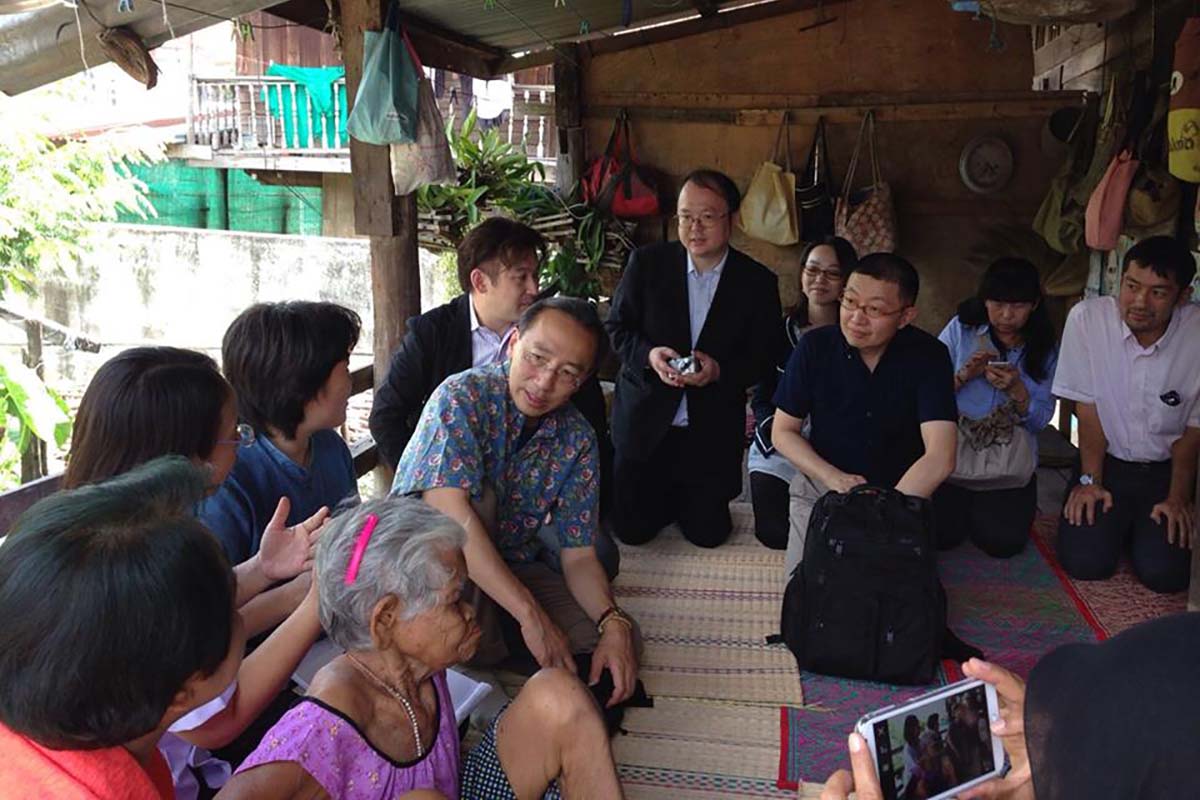
These initiatives increasingly take the form of mutual learning projects rather than one-way technical transfers. Similar exchanges are also taking place around local revitalization, where Japanese local governments and Thai pilot cities share experiences on revitalizing depopulated communities.
On regional cooperation and ASEAN connectivity
Regional cooperation has become one of the main pillars of Japan–Thailand collaboration.
Thailand itself plays an active role in supporting neighboring countries, particularly in the Mekong subregion, and Japan works closely with Thailand on cooperation for third countries. One example is support for customs systems and procedures in Thailand and its neighboring countries, aimed at improving efficiency and capacity for cross-border trade. These efforts benefit Thailand while also supporting regional value chains involving Japan and other ASEAN partners.
Cybersecurity is another emerging area of cooperation. In collaboration with Thailand’s National Cyber Security Agency, Japan and Thailand jointly support technical cooperation projects to strengthen cybersecurity capacity across ASEAN. Through the ASEAN-Japan Cybersecurity Capacity Building Center, government officials from across the region receive training and participate in exercises designed to enhance cyber resilience and build trust in the region’s digital environment.
Public health is another key area. Following lessons learned from the COVID-19 pandemic, ASEAN started its effort to establish the ASEAN Centre for Public Health Emergencies. Japan committed strong support to this initiative, and JICA is currently assisting the establishment of the centre, helping improve regional preparedness for future health emergencies.
As Japan and Thailand approach the 140th anniversary of diplomatic relations, cooperation is becoming deeper, more reciprocal and more regionally oriented.
Through these initiatives, Japan–Thailand cooperation contributes to addressing cross-border challenges while reinforcing Thailand’s leadership role in ASEAN and the wider region.
On “co-creation”, private sector engagement and “innovation”
A growing priority for JICA — in Thailand and globally — is what we call “co-creation.” Against the backdrop of increasing private capital flows to developing countries, with a constrained aid environment, development challenges can no longer be addressed by public assistance alone.
By “co-creation”, we work together with private companies, universities and other relevant institutions alongside ODA to tackle shared challenges such as climate change, health and nutrition, and disaster risk management.
Thailand provides a strong foundation for this approach. The country is home to more than 6,000 Japanese companies and nearly 50 overseas offices of Japanese universities, particularly in Bangkok.
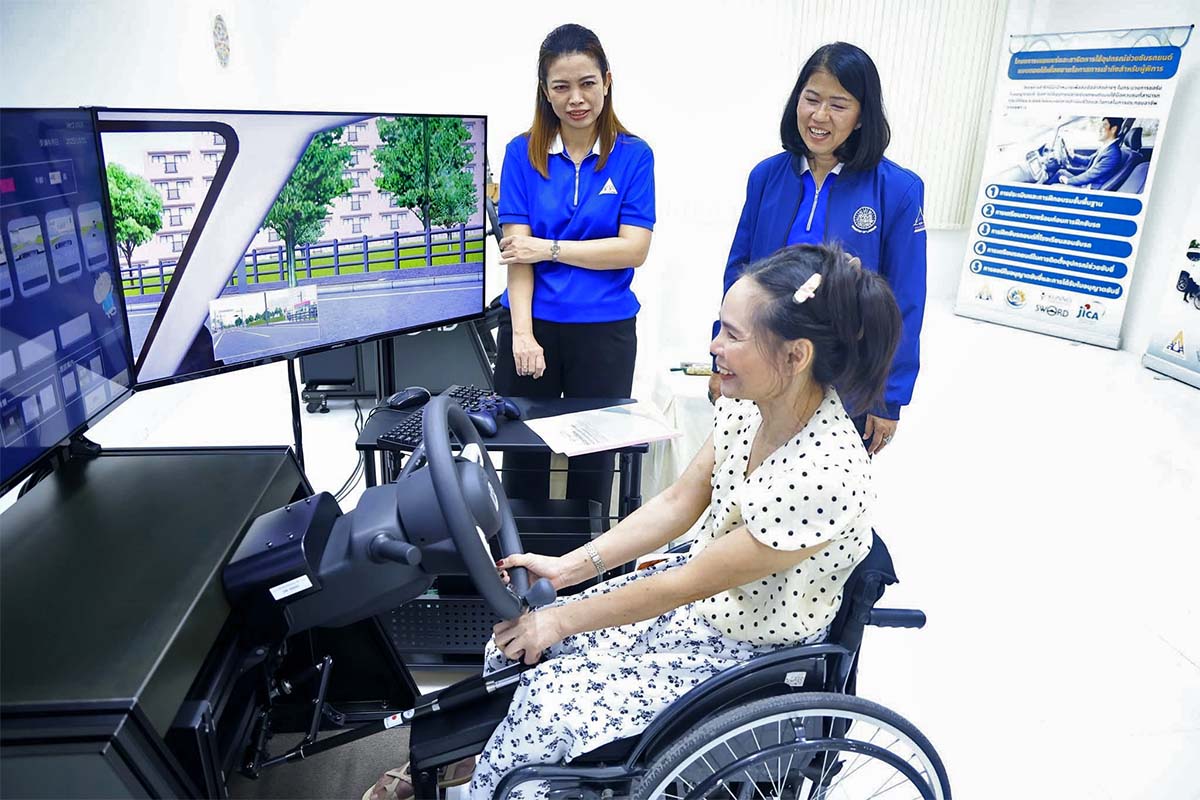
Under this approach, JICA operates a scheme supporting Japanese private sector activities that contribute to solving social issues in Thailand. One example involves a Tokyo-based company that developed a driving assistance device enabling people with lower-limb disabilities to drive independently using only their hands. JICA supported pilot and trial activities in Thailand, helping expand mobility, employment opportunities and quality of life for people with disabilities.
As social issues in Thailand grow more complex and multifaceted, the role of “innovation” in our cooperation has become increasingly critical. Science and Technology Research Partnership for Sustainable Development (SATREPS) is one of the tool to promote innovation by facilitating Thai and Japanese experts jointly conduct research to develop new technologies and solutions for resolving emerging global issues such as climate change, disaster prevention, and infectious diseases.
One example is a project on lifetime management of roads and bridges, led by Chulalongkorn University, Kasetsart University and Thailand’s Department of Highways on the Thai side, and Waseda University on the Japanese side. The project focuses on developing time and cost saving assessment methods for aging roads and bridges affected by deterioration, salt damage and other factors. It also explores low-cost technologies and materials to extend infrastructure life and improve resilience. These challenges are shared by both Thailand and Japan, making mutual learning on improving the resilience of public infrastructure.

Looking ahead
As Japan and Thailand approach the 140th anniversary of diplomatic relations, cooperation is becoming deeper, more reciprocal and more regionally oriented. By combining infrastructure development, human capital, innovation and co-creation, Japan–Thailand collaboration is increasingly positioned to contribute not only to Thailand’s continued development, but also to ASEAN connectivity, regional stability and global public goods.