
Sake Manila began during the pandemic as a series of online Sake Sessions organized by Philippine Wine Merchants, when in-person gatherings weren’t possible and sake education had to move online. What started as a stopgap grew into something far more enduring: Filipino audiences weren’t just curious about tasting sake—they wanted to understand it: where it comes from, how it’s made, and what distinguishes one style from another.
That shift—from drinking to understanding—became the foundation for everything that followed.
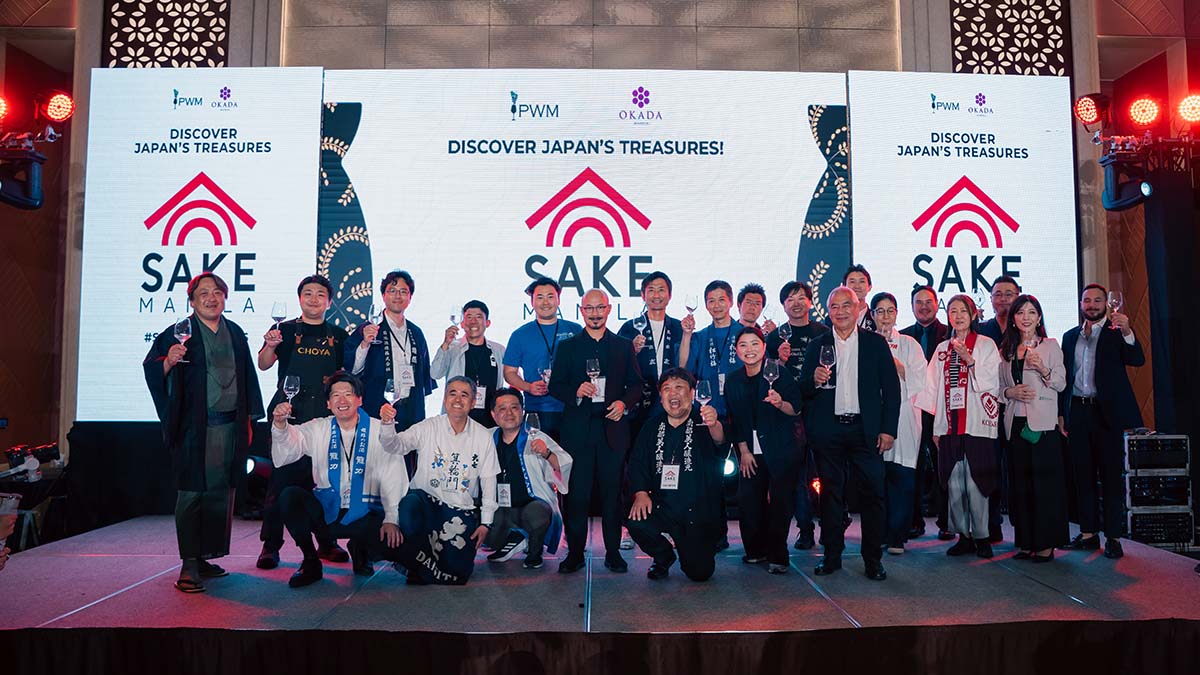
By its third physical edition in 2026, Sake Manila had settled into Okada Manila’s Grand Ballroom. The event drew over 1,200 guests, reaching full capacity, with hundreds more turned away. It’s now firmly in that “get your tickets early or you’re out” category of premium events. Sake Manila’s standing in Manila’s lifestyle and business calendar is defined by exclusivity: limited entry, rare imports, curated selections. Globally recognized breweries mingle with smaller producers—a cross-section of Japan’s brewing ecosystem rarely seen outside its borders.
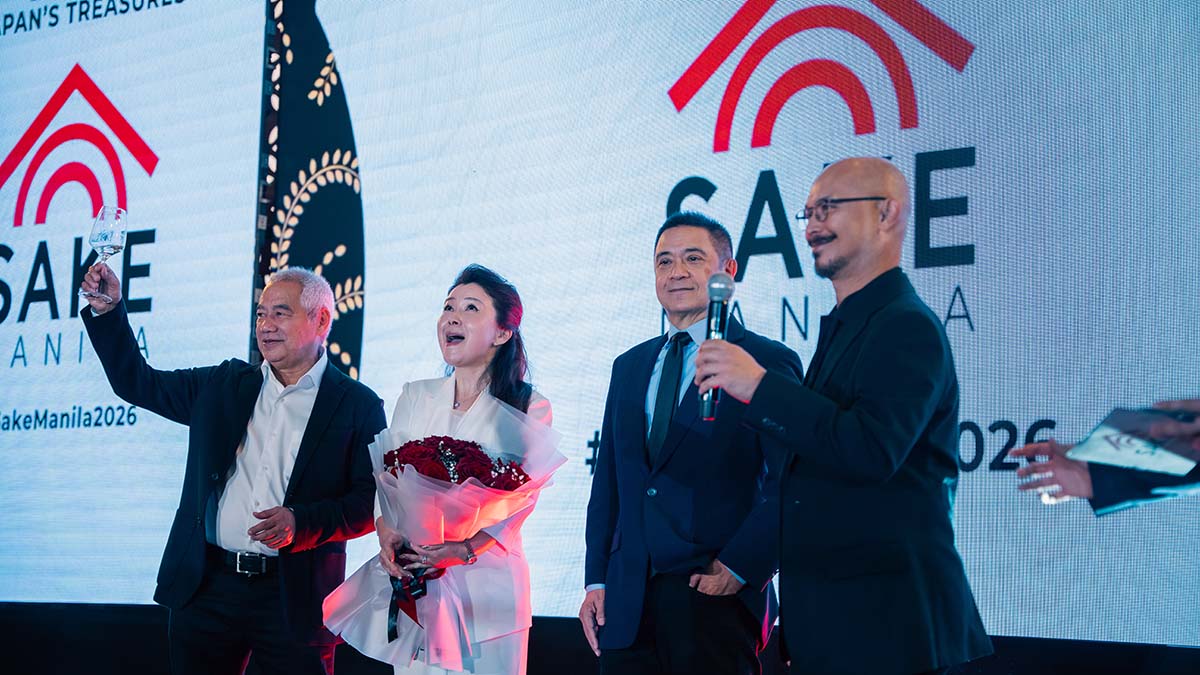
A subtler but equally important influence behind the event’s continued direction is Takako Okada, Okada Manila’s vice chairperson, whose long-standing support of Japanese culture has helped keep the program authentic as it has grown.
A room structured around exploration
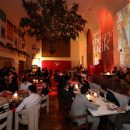
Inside the Grand Ballroom at this year’s installment, the layout set the tone. Food occupied the center, while sake, whisky, shochu, beer, and other Japanese drinks radiated outward. There was no fixed route—people drifted, circled back, and followed whatever caught their attention, tasting and comparing as they went.
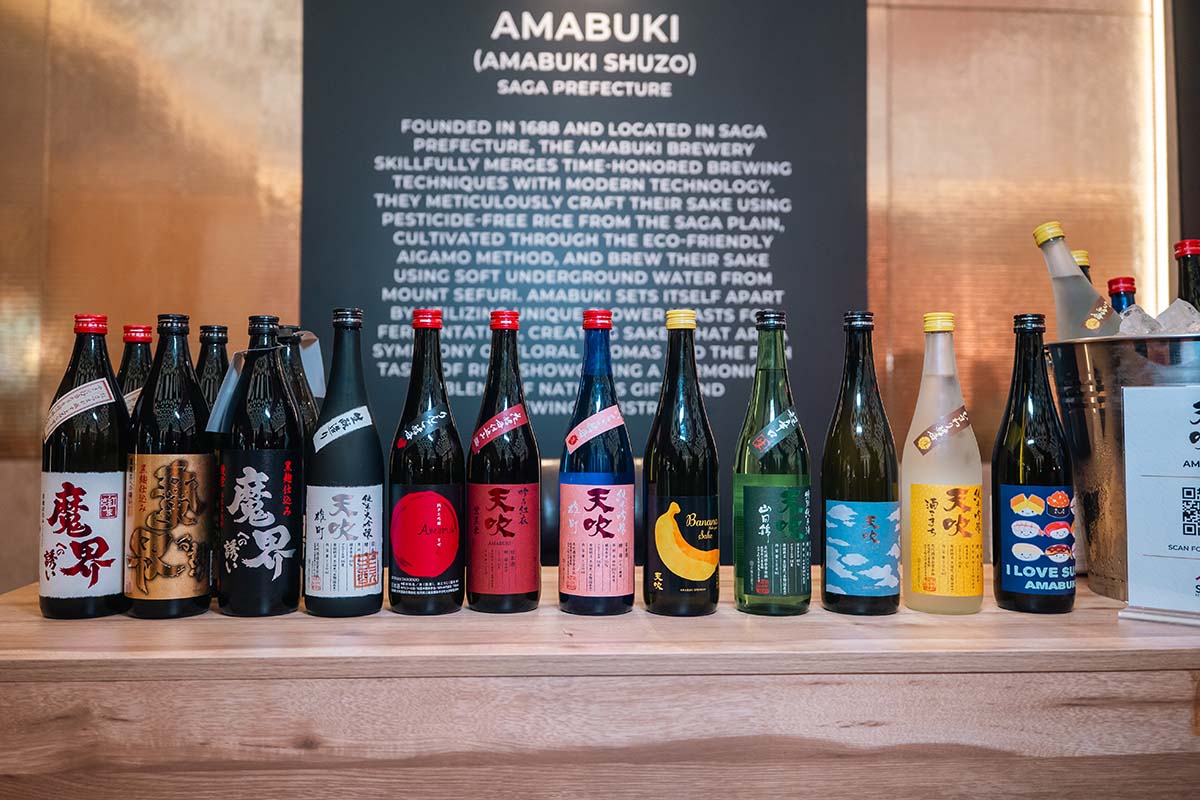
More than 200 bottles from over 50 Japanese producers filled the room. Familiar names like Dassai, Hakkaisan, and Gekkeikan drew early attention, especially from guests first introduced to sake in restaurants or retail. As attendees ventured deeper, labels like Chiebijin, Suigei, Masumi, Amabuki, Urakasumi, and Hyakujuro invited slower, more deliberate engagement, with differences in brewing style, texture, and regional identity becoming clear through side-by-side tasting. Sampling became comparison, and comparison sparked conversation. Koshino Kanbai and Nanbu Bijin drew returning attendees approaching sake with greater familiarity.
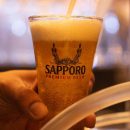
The lineup extended beyond sake. Mars Whisky and Amahagan sat alongside Choya Umeshu and Mori Izo. Coedo Beer and Sapporo added familiar comfort—Sapporo, fun fact, has been Japan’s oldest beer brand still in production since 1876. Koji no Amazake rounded out the selection, acting as a gentle reset between heavier pours.
At a press conference, Raymond Joseph, Director of Sales and Marketing at Philippine Wine Merchants, described the expanded lineup: “This year, we’re bringing in exciting new labels such as Daisichi, Nanbubijin, Suegei, Koshino Kanbai, and more—giving our guests even more reasons to explore and discover the depth and diversity of sake.” Robi Joseph of PWM followed up, calling the event “a fusion of tradition, flavor, and festivity—an experience carefully curated to leave a lasting impression.”
On the floor, these labels didn’t just sit there as announcements. They became landmarks, guiding guests from one dish or drink to the next, helping them navigate, compare, and figure out what they actually liked.
The rhythm of tasting
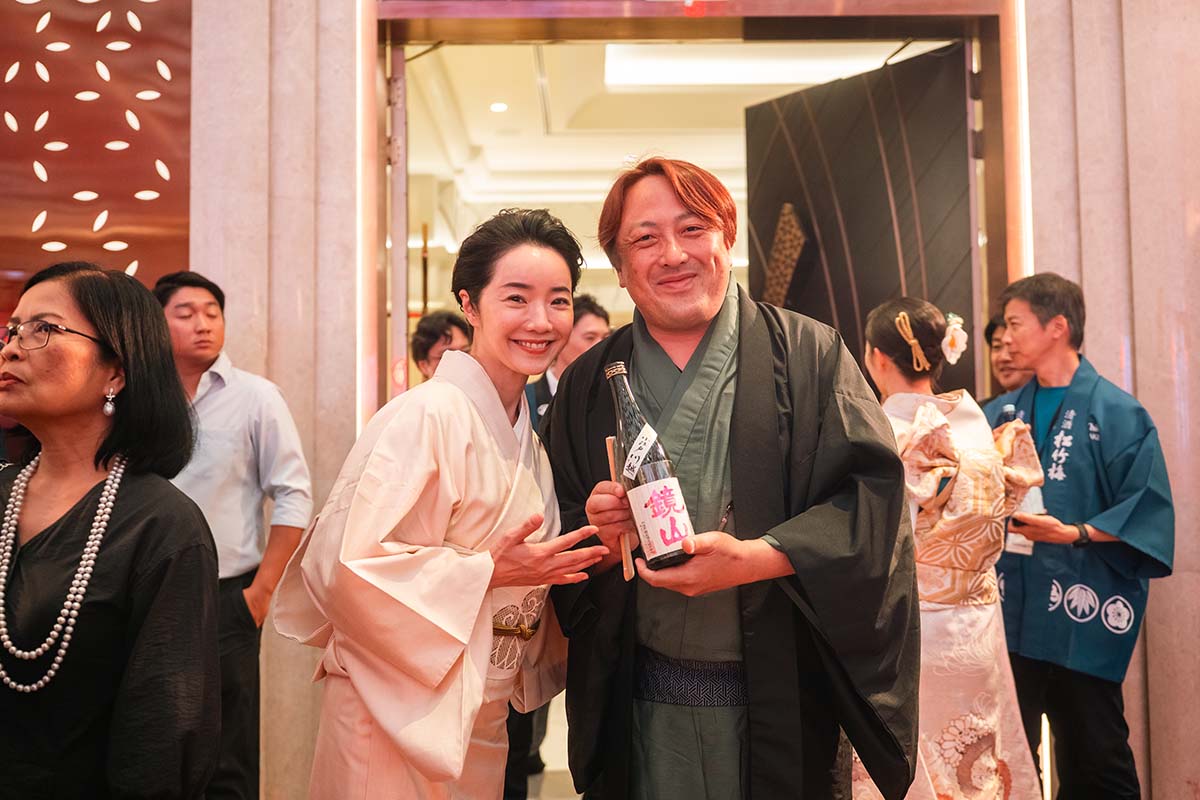
Regulars know Sake Manila is never a linear tasting. Guests sip, sample, savor, and circle back. Different styles pull people in at different moments: nama sake grabs attention early with its fresh, expressive edge; sparkling sake offers an easy entry point; crisp ginjo styles appeal to those seeking fragrance and precision; richer junmai pours satisfy those looking for depth; and warm premium sake slows the pace, revealing new layers of flavor. Over time, guests stop thinking in terms of stations and move with the space naturally.
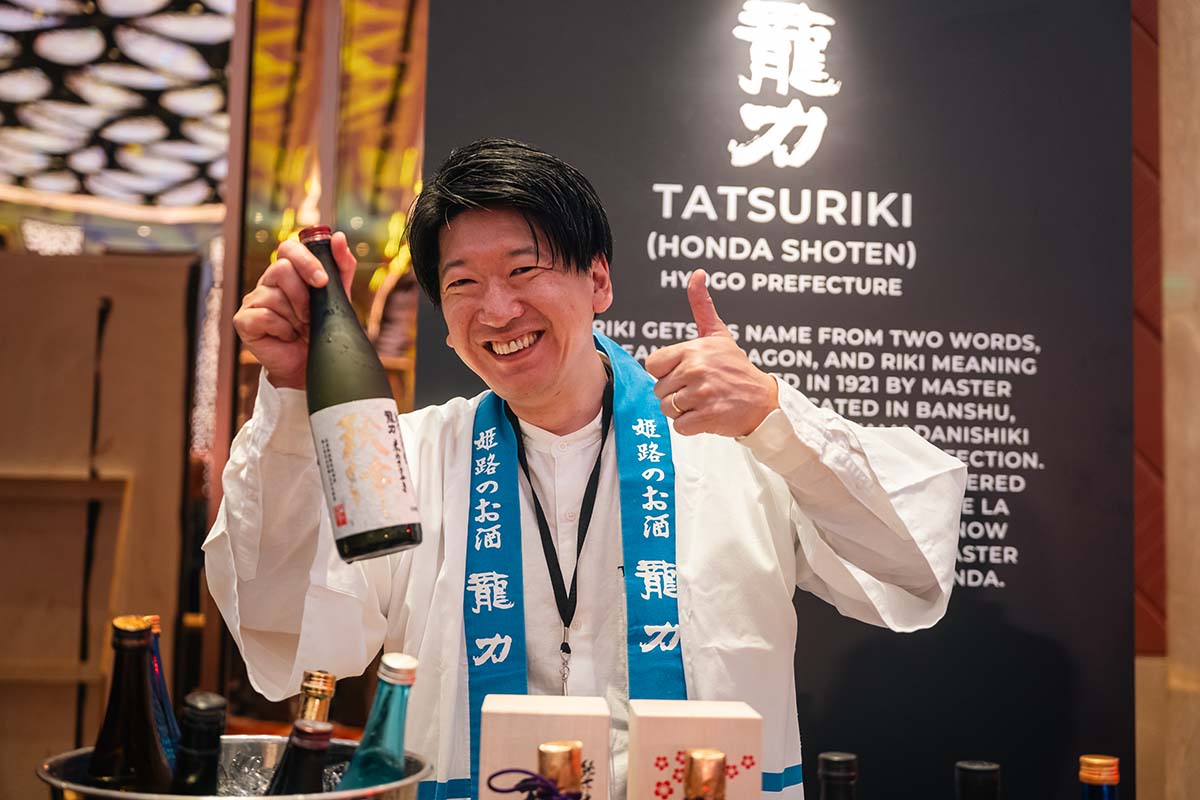
What adds character isn’t just what’s poured—it’s who pours it. Visiting brewers engage directly with guests, turning corners of the ballroom into informal classrooms on rice varieties, fermentation, and regional distinctions. Brewers don’t just pour—they teach, show photos of their breweries, explain rice polishing, and even share actual grain samples. It’s informal, a little improvised, and that’s what makes it memorable.
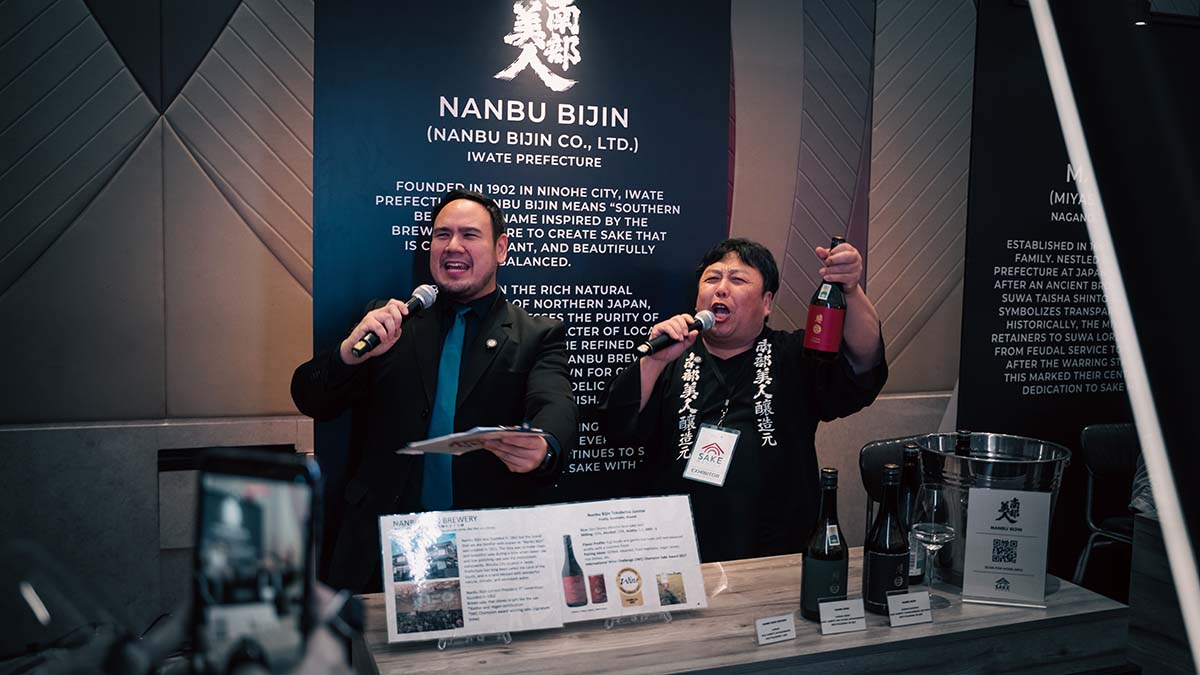
Entertainment enhanced the evening without engulfing it. Taiko drumming marked energy shifts, DJs provided a steady soundtrack, and dance performances offered bursts of color and choreography—all without interrupting tasting and conversation. Guests found their own rhythms: moving between stations, revisiting favorites, pausing to talk, and letting impressions accumulate.
The culinary track
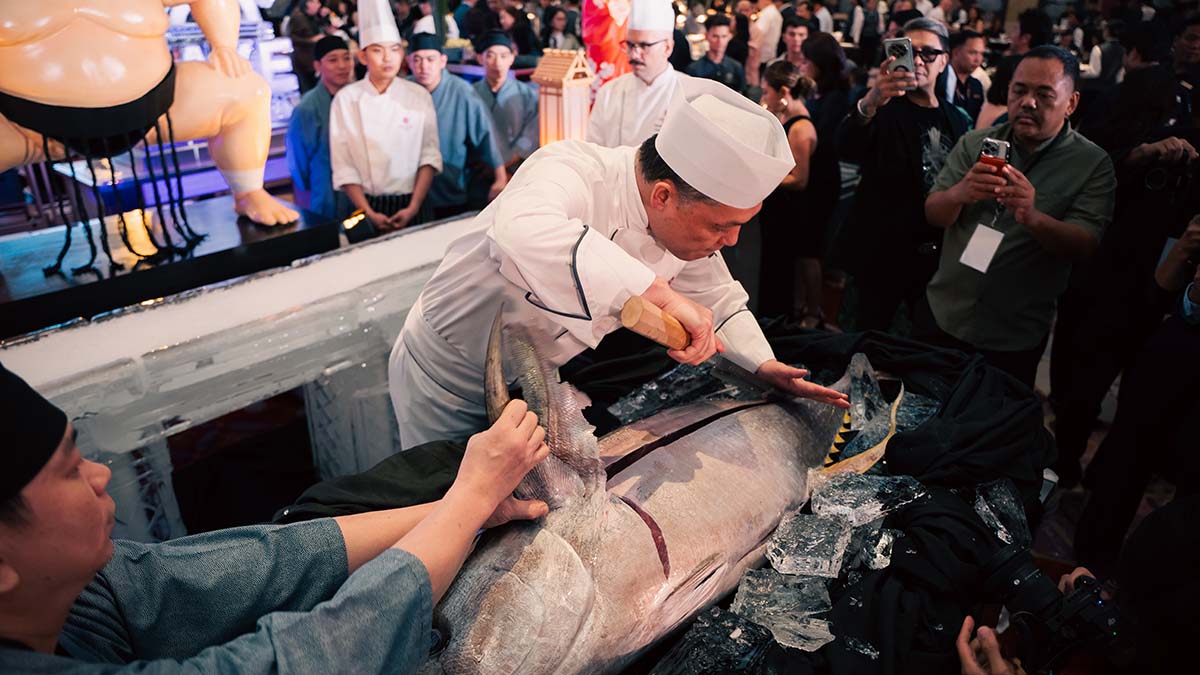
Food wasn’t just a side note—it was its own track in the experience. The night opened with the Tuna Parade, a traditional highlight where chefs carve a whole tuna with ceremony and skill. The ritual transforms a single ingredient into a performance, honoring Japanese technique and setting the bar for culinary flair. The caliber of the food was every bit as impressive as the sake selection, with Okada Manila going the extra mouthwatering mile at every station.
Chef Josef Teuschler, Culinary Director of Okada Manila, put it simply: “Every dish has been specially created for Sake Manila—designed not just to complement the beverages, but to exist as part of this one-night-only experience.”
The menu flowed seamlessly between Japanese favorites and international fare. Sparkling sake appeared next to fermented dairy; fuller junmai stood up to grilled meats and umami-rich dishes. But there wasn’t really a fixed script. Guests mixed, matched, and experimented, finding their own pairings—people mixed, matched, went back, changed their minds. Half the fun was figuring out what worked, not following what was “supposed” to work.
An emerging cultural vocabulary
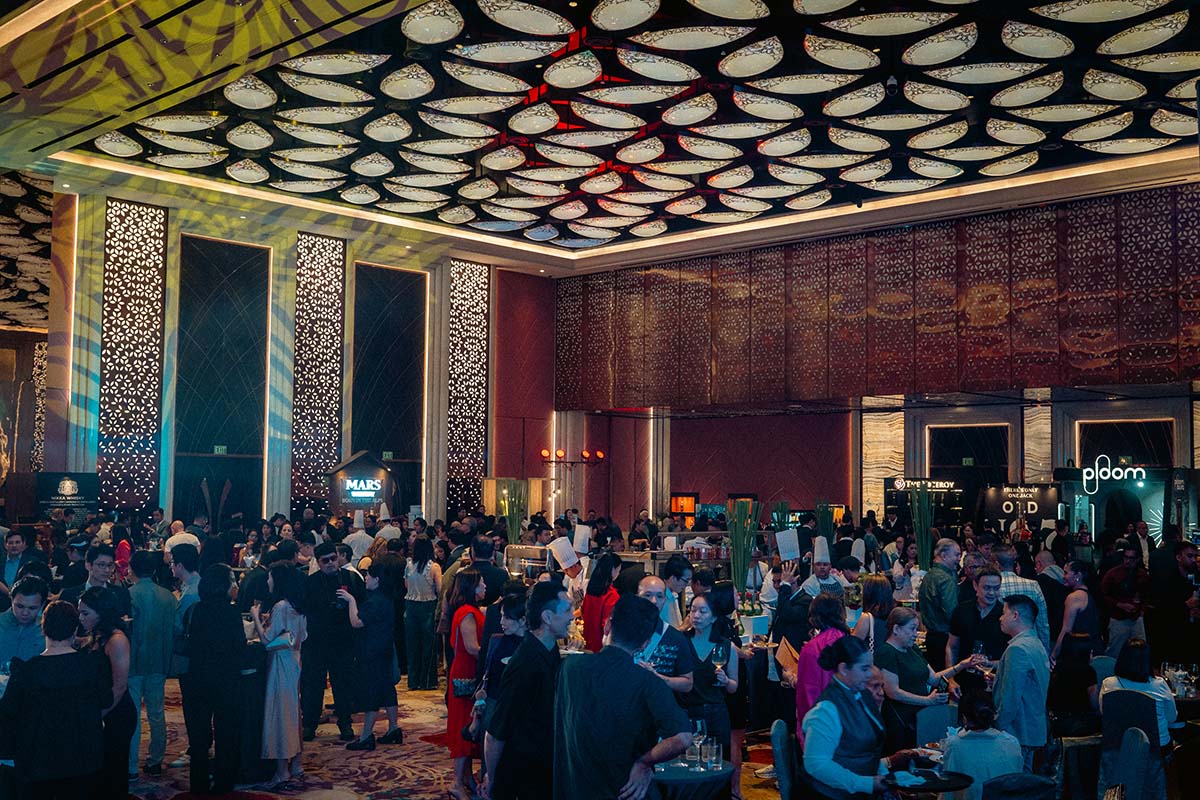
By the evening’s later stages, tasting had shifted into something more deliberate. Guests distinguished junmai, daiginjo, nama, sparkling, and warm sake as the night trained their palates. Sampling became classification, and Japanese drinking culture—often flattened abroad—emerged in its fuller form.
Raymond Joseph framed the essence of the evening: “Sake Manila is about bringing Japan’s finest closer to Manila—creating an experience people can truly enjoy, appreciate, and remember.”
“Sake Manila is about bringing Japan’s finest closer to Manila—creating an experience people can truly enjoy, appreciate, and remember.”
Raymond Joseph, Director of Sales and Marketing at Philippine Wine Merchants
The takeaway from Sake Manila 2026 isn’t just the memory of the event—it’s a shift in how the city sees sake. No longer a novelty, it has become part of Manila’s cultural conversation, something to be explored, debated, and enjoyed with growing familiarity. Sake isn’t just what people drink because it “feels Japanese.” It’s what they’re starting to drink with intent—because they know what they like, and they’re beginning to say so.