
Welcome to the coffin meditation experience: where contemplation and relaxation are so not what you thought they would be.
If you think meditation is just about finding your zen on a yoga mat, you’ve clearly never signed up for Japan’s coffin meditation experience. Yep, you read that right—coffin. As in the wooden box where you’re supposed to rest in peace, not exactly where you’d expect to find inner peace. But that’s exactly the point of coffin meditation, a bizarre yet oddly profound trend gaining steam in Japan. Popularized by the Kajiya Honten funeral home in Futtsu, Chiba Prefecture, this ‘coffin-lying’ trend invites people to lie down in actual coffins and contemplate their own mortality. Talk about thinking outside the box (while INSIDE the box), right?
The experience goes a little something like this: You enter a 120-year-old funeral home, and on the first floor, instead of flowers or incense, you’ll find—well, you. Lying down inside a casket. The whole setup is designed to simulate what it might feel like to be at the end of your journey. It’s surreal, it’s weird, and yes, it’s meant to get you to reflect on life in the most “I’m not sure if I’m dreaming or dead” way possible. Think of the coffin as a sleek, serene meditation pod, if you will, only far more minimalist and primal.
“While we want people to take pictures and have a lively experience, we also want people who are down or have hit a wall in their lives to enter the coffins. Coming out of them means that you have been reborn and your life has been reset. I want them to feel that they can start their lives anew,” Kajiya Honten funeral home’s president, Kiyotaka Hirano, Hirano said in an interview with Japanese daily The Mainichi.
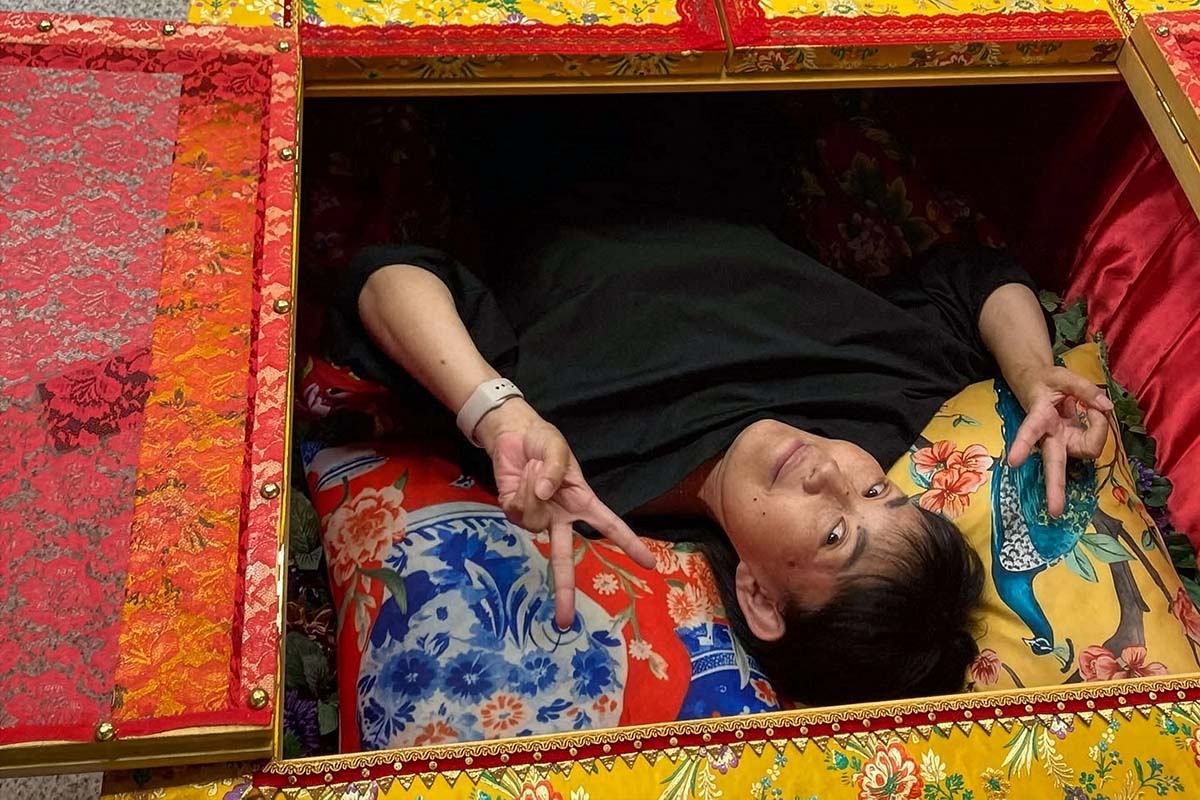
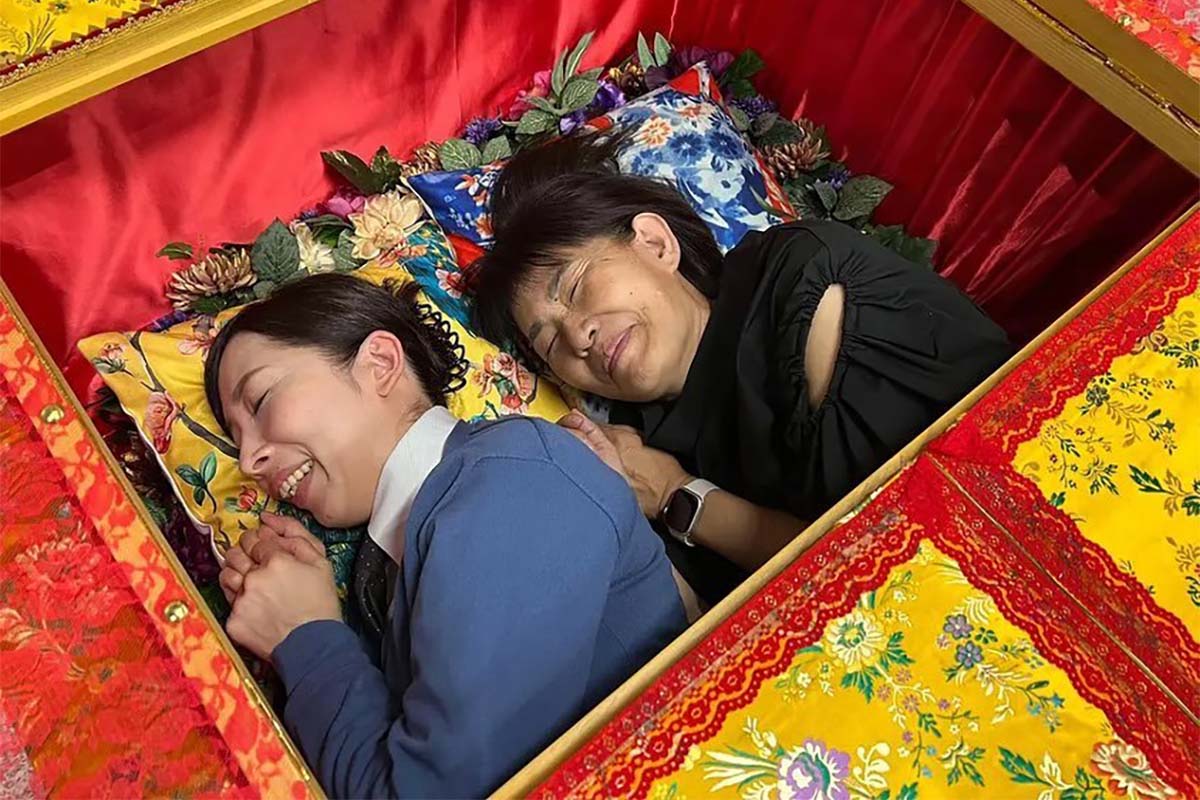
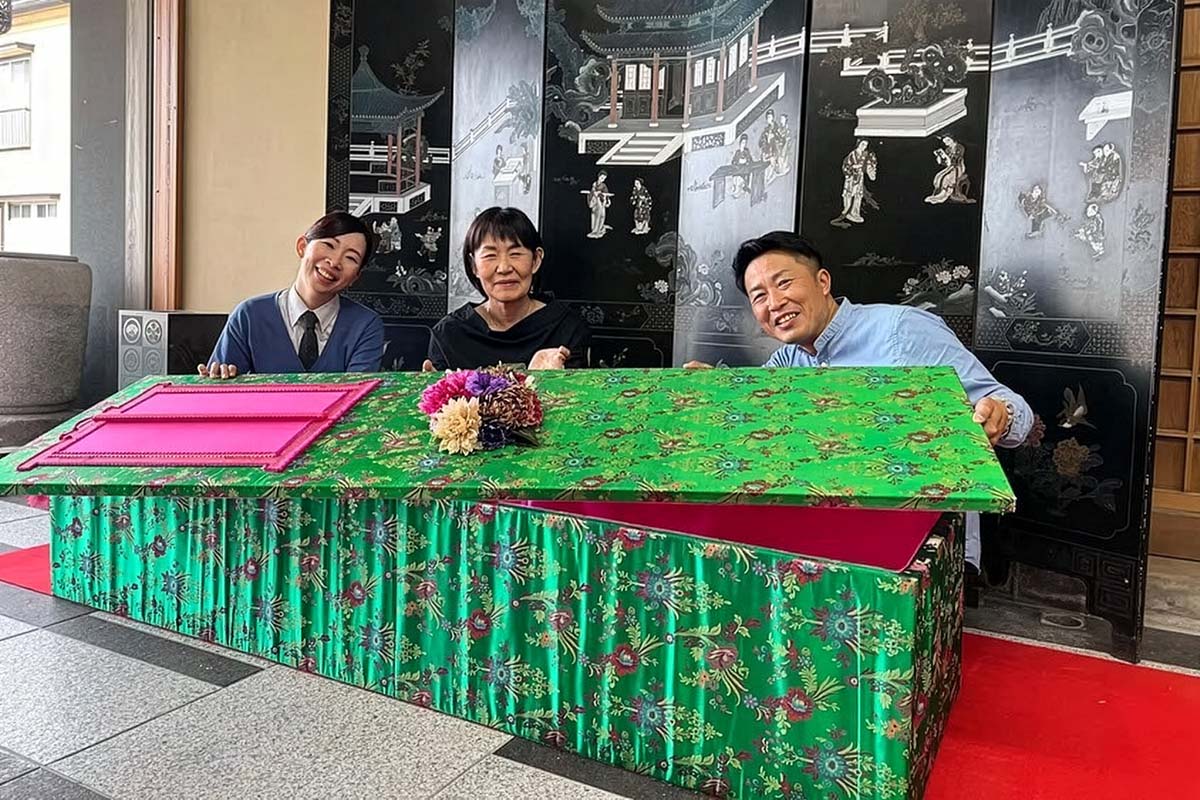
Visitors experience the unique ‘coffin-lying’ service at Kajiya Honten, a 120-year-old funeral home in Futtsu. Guests lie in one of three beautifully floral-printed coffins, in vibrant colors like gold, green, and yellow, for a reflective meditation on life and mortality.
Photos by Kaija Honten
More recently, Meiso Kukan Kanoke-in (kanoke being the Japanese word for coffin) opened in Tokyo’s Takadanobaba neighborhood. This new spa offers “a meditation experience where you can gaze at life through being conscious of death,” and (you guessed it) this meditation takes place in a coffin. Each session (which costs 2,000 yen) runs for 30 minutes, offering you the freedom to dive as deeply or abstractly into your thoughts as you wish—or, if you prefer, to simply unplug from any thoughts altogether. During this time, calming music fills the space, and serene imagery dances across the ceiling, creating a tranquil atmosphere for reflection or quiet relaxation.
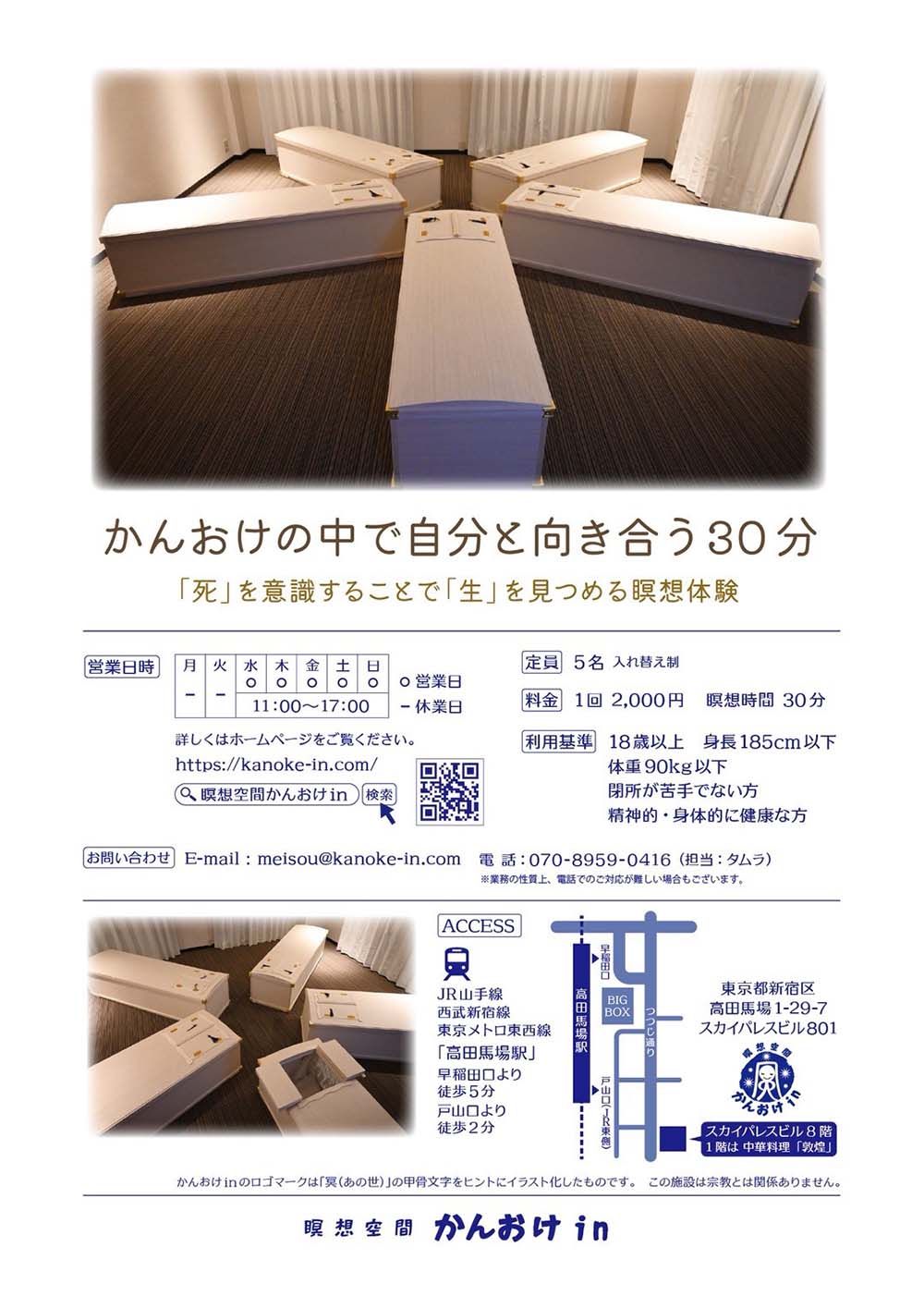
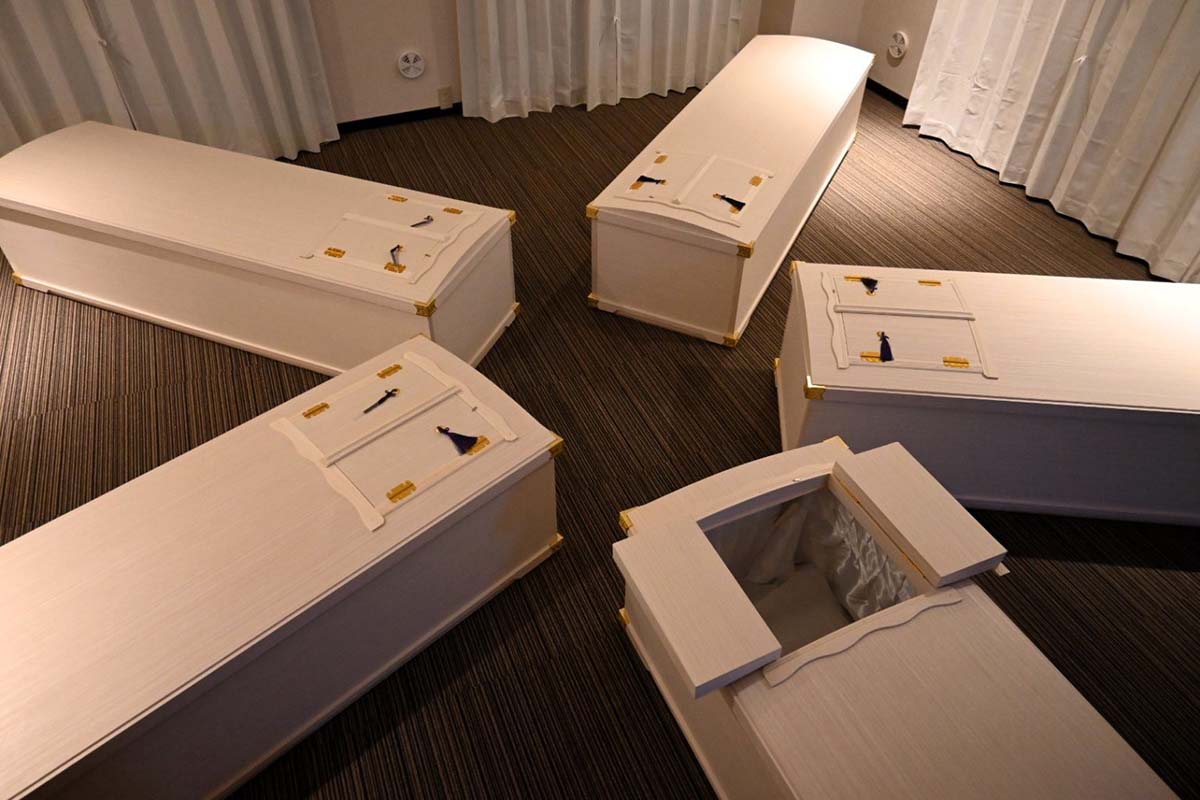
Meiso Kukan Kanoke-in’s coffin meditation experience. Located in the Takadanobaba neighborhood, this innovative concept allows guests to experience peace and introspection through an unconventional approach to mindfulness.
Photos by Meiso Kukan Kanoke-in
The “why” behind coffin meditation: death doesn’t have to be scary
Now, you might be thinking, “Why on Earth would anyone want to meditate in a coffin?” Fair question. It’s certainly not your typical self-care session. But, here’s the thing—this whole coffin meditation trend is about confronting one of life’s big, uncomfortable truths: we’re all going to die. Shocking, right? But, here’s the kicker: this experience isn’t about doom and gloom, it’s about giving people a chance to make peace with their mortality and reflect on how they’re living.
The concept is simple: we don’t spend nearly enough time thinking about death, but we all know it’s the one thing that’s guaranteed. So, the idea is that by contemplating it in such a direct (albeit bizarre) way, you can come out the other side appreciating life just a little bit more. In a world that’s always moving, always rushing to the next thing, this is a pause button for your existence. A chance to stop and reflect on who you are, what you’re doing, and whether you’re making the most of your time on Earth. It’s like a mini existential crisis… only less depressing because you can sit up and grab a coffee afterward.
FUN FACT : While you might expect coffin meditation to be a fresh idea, it’s actually inspired by the Buddhist tradition of kuyō, where people hold rituals or ceremonies to reflect on the impermanence of life. So, coffin meditation is like a modern, slightly more comfortable take on ancient practices.
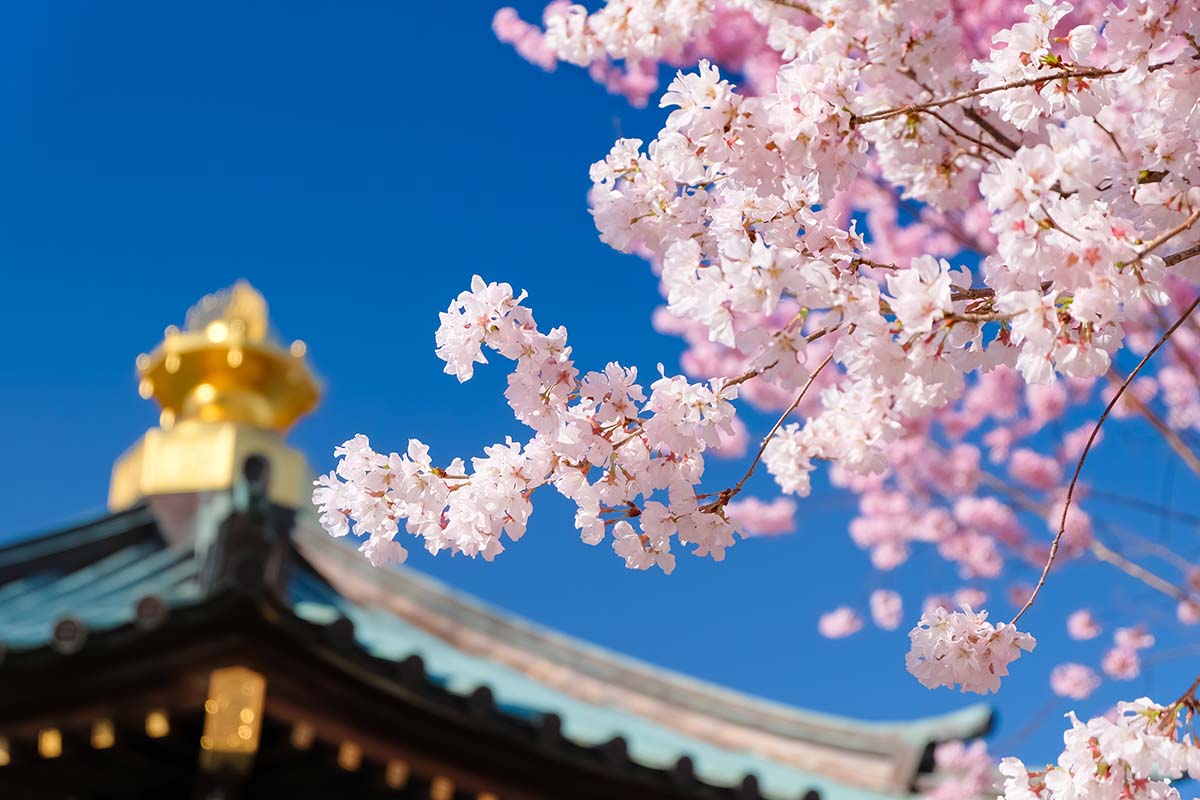
Let’s get philosophical: life’s fleeting, but how about a coffee afterward?
Coffin meditation taps into one of Japan’s long-standing cultural values: mono no aware, the awareness of life’s fleeting nature. This concept, deeply rooted in Japanese thought, celebrates impermanence as something beautiful. Think cherry blossoms. They’re gorgeous, but they only bloom for a short time, so they’re appreciated even more for their brevity.
Now, instead of just reflecting on this fleeting beauty while watching petals fall, you get to lie down in a coffin to get your mind in the right place. A little extra? Maybe. But in Japan, where everything from tea ceremonies to cherry blossom viewing is an art form, this seems like just another creative, meditative practice to help people slow down and be more present. In this sense, coffin meditation is a form of what the Japanese like to call shukyo jikan—a reflective, often meditative, period of time for spiritual self-awareness. Just swap out the incense for a slightly claustrophobic box and, well, that’s your afternoon.
And if that doesn’t quite feel like your thing, after all is said and done, don’t worry—afterward, you can still grab a cup of coffee and chat about life, death, and whether you’ll ever really be able to shake that “coffin nap” vibe.
PRO TIP : For a truly authentic coffin meditation experience, try closing your eyes and imagining the sound of rain on the roof of the coffin. Seriously, it’s like a lullaby for your soul. But if you’re claustrophobic, maybe go for the “open casket” option (yes, that’s a thing).
Why coffin meditation might actually change you
Here’s the kicker: people are actually signing up for this. Not as some freaky fad or ghastly gimmick, but as a way to genuinely reflect on what’s truly important. The coffin isn’t just a prop. It’s a tool for introspection, a moment to get real with yourself about life, death, and everything in between. Because at the end of the day, if we’re all going to end up in one of these boxes, we might as well take a few minutes to appreciate the life we’ve got before we do.
Coffin meditation isn’t about scaring you—it’s about helping you reflect on what matters.
Look, we all know the world is a chaotic place, and sometimes, a little perspective is all we need to get back on track. Coffin meditation isn’t about scaring you—it’s about helping you reflect on what matters. It’s about slowing down, confronting the uncomfortable, and maybe, just maybe, gaining a little more clarity on your own life. Plus, it’s not every day that you get to experience something as out there as lying in a coffin and coming out feeling…enlightened? Hopefully.
FUN FACT : In Japan, coffin meditation is becoming so popular that some funeral homes are offering it as a regular part of their services. Hey, if you’re going to reflect on life and death, you might as well do it where the pros hang out, right?
It’s not as new as you think—death contemplation is a global pastime
While coffin meditation might be getting the spotlight right now, the idea of meditating on death isn’t exactly new. In fact, it’s been practiced in various forms across cultures for centuries. From Mexico’s Day of the Dead to Spain’s La Muerte traditions, people have long found ways to celebrate and reflect on life through the lens of death. In Japan, you’ve got Obon, the Buddhist tradition of honoring ancestors. During this time, people reflect on those who have passed and the impermanence of life. So, coffin meditation isn’t exactly a wild departure—it’s just a more modern, slightly creepier way of doing something that’s been part of Japanese culture for centuries.
Meanwhile, in India, the underlying concept of mindfulness of death and impermanence is a central and fundamental teaching in Buddhism and part of the core principle of anicca—a reminder that everything, even life itself, is temporary. In many Buddhist traditions, meditating on death is seen as a way to strip away attachment to material things and encourage a deeper connection with the present moment. It’s a practice that isn’t focused on fear or sorrow, but instead on acceptance and understanding of life’s natural ebb and flow.
Even in the West, practices like Death Cafés—safe spaces to talk about all aspects of death, dying and bereavement, which have been popping up across Europe and North America—encourage people to gather over tea and discuss death openly. These gatherings allow individuals to confront what is often considered a taboo subject and explore their feelings about death, dying, and their legacies.
Whether it’s through a symbolic coffin experience or a lively conversation over coffee, humanity is finding new, healthier ways to integrate death into the story of life.
In a nutshell: while coffin meditation might be niche trending in Japan, it’s not out of step with a broader, global movement. More and more people are beginning to understand that death—rather than something to fear—can serve as a source of wisdom and reflection. Whether it’s through a symbolic coffin experience or a lively conversation over coffee, humanity is finding new, healthier ways to integrate death into the story of life.
Is coffin meditation the next self-care thing, then?
Time for the big question: is coffin meditation just a quirky trend, or is it the next big thing in self-care? It’s definitely unusual, but maybe that’s what makes it so powerful. The coffin is a stark reminder of what we all face—our own mortality. But it’s also a reminder that we’re alive, right now, and that’s something worth reflecting on.
Will it change your life? Maybe. Will it make you think about your life in a different way? Definitely. And if nothing else, you’ll get some great Instagram content to show off at your next dinner party. So, the next time you’re in Japan, thinking about trying something totally different (and, while maybe a tad morbid, is also super reflective), why not lie down in a coffin and see what happens? You never know—maybe it’ll be the most “alive” you’ve felt in a while.
Whether you come out of it feeling enlightened or just relieved that you didn’t accidentally fall asleep in a coffin, one thing’s for sure: coffin meditation isn’t just about death—it’s about living.