
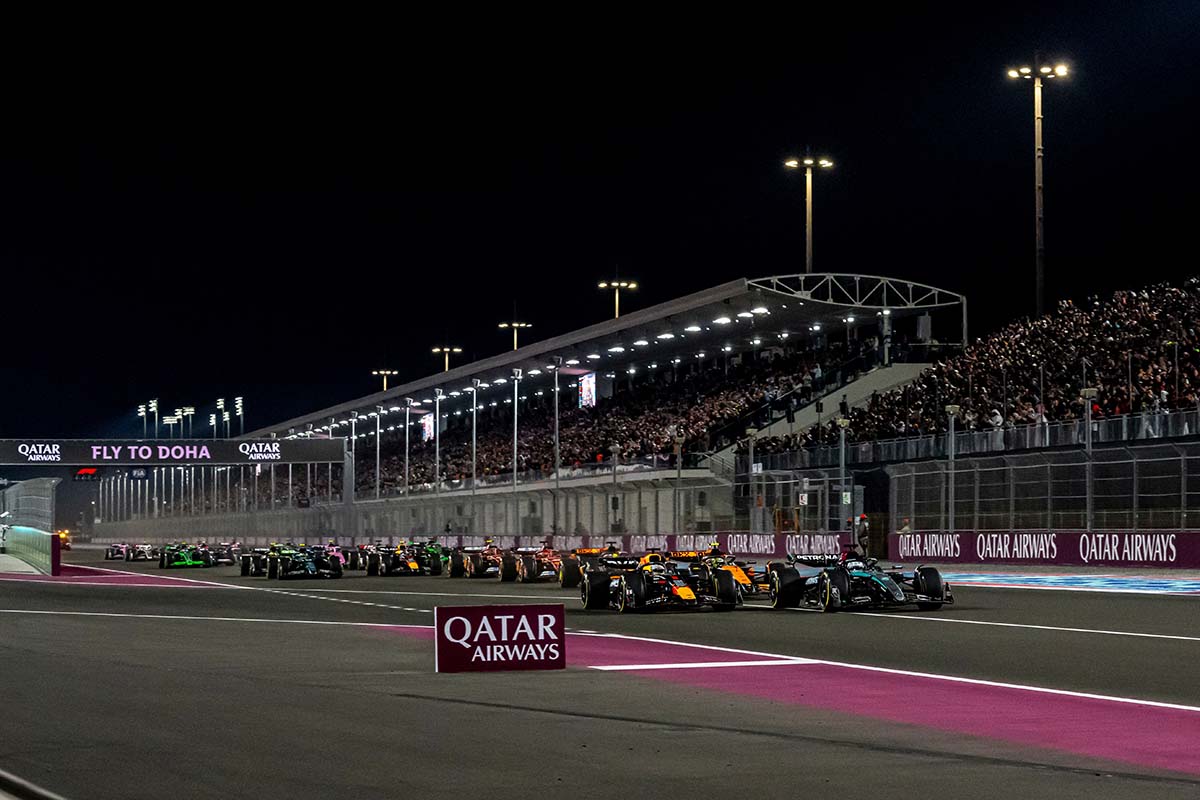
The Qatar Grand Prix marked the penultimate round of the 2025 Formula 1 season — and it delivered the intensity worthy of a title fight that has simmered all year. Under Lusail’s floodlights, with the championship gap razor-thin and a weekend that offered sprint points as well as strategic uncertainty, Qatar became the perfect stage for a season-defining showdown. And in a race no one expected him to win, Max Verstappen reminded the world why he’s a three-time Qatar victor and still the benchmark when everything is on the line.
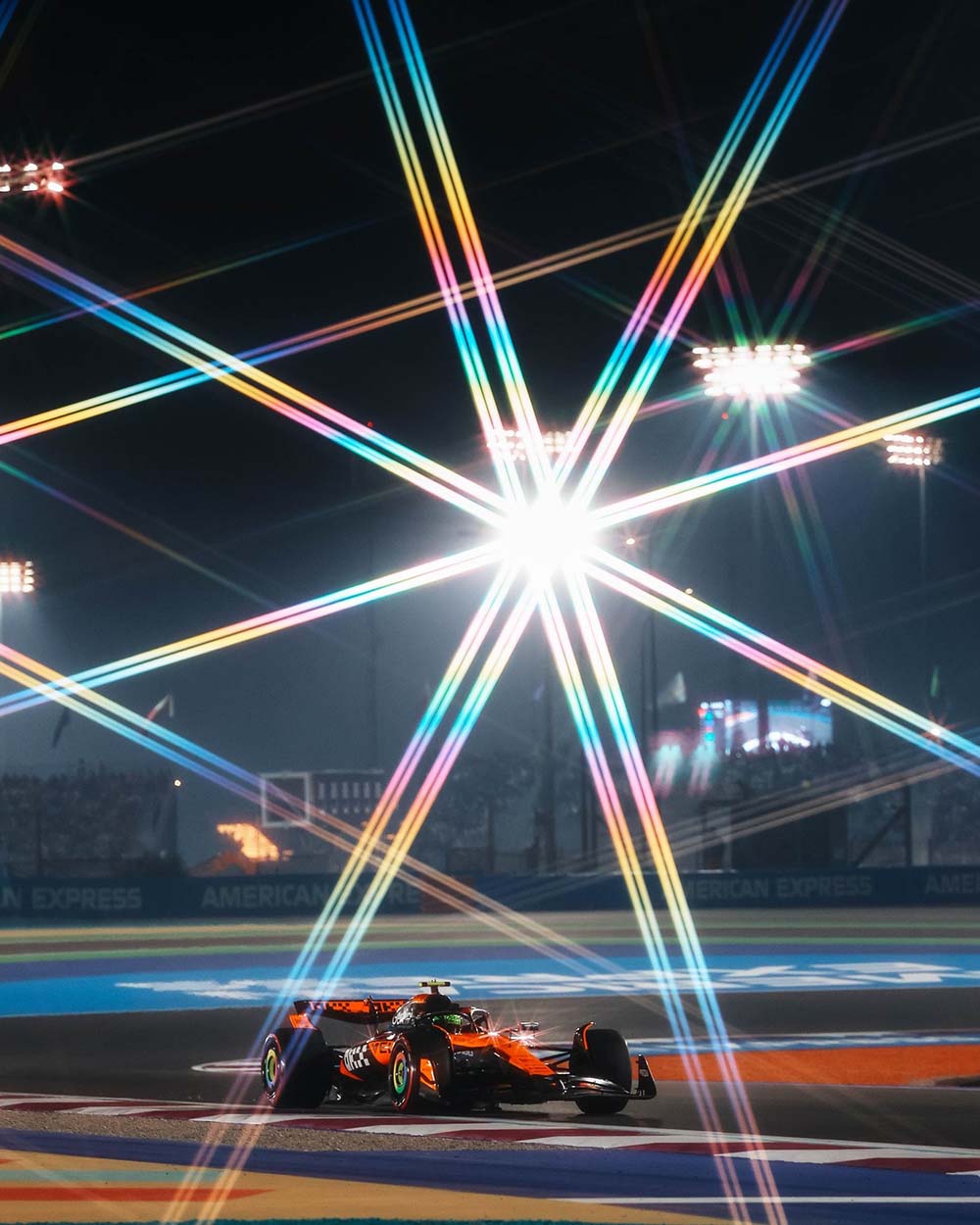
A night race built for drama
Although Qatar’s F1 tenure only began in 2021, the Lusail International Circuit has already carved out a distinctive place on the calendar. Known as the fourth full-night race in Formula 1 — following Singapore, Bahrain, and the one-off Sakhir Grand Prix — Lusail has transformed from a MotoGP purpose-built venue into a modern desert arena for open-wheel racing.
Completed in just over a year ahead of Qatar’s first MotoGP event in 2004, Lusail’s layout remains deeply influenced by two-wheel philosophy: a fast, flowing 5.4-kilometre circuit defined by medium- and high-speed corners, and a colossal kilometre-long main straight that funnels the grid into a heavy-braking Turn 1. Drivers love the rhythm; engineers dread the tire stress. Even Max Verstappen commented back in 2021 during the inaugural Qatar GP: “I’ve had a lot of fun driving today, I think it’s a really cool track.”
Qatar’s identity as a Grand Prix is now unmistakable: a spectacular floodlit night race, physically brutal because of the heat and humidity, demanding on tires due to relentless speed, and consistently pushing teams to the edge of strategic creativity. And in a season this tight, Lusail’s characteristics were always going to shape this crucial chapter of the title fight.
Piastri’s pace, McLaren’s misstep, Verstappen’s revival
Arriving in Doha, the stakes were absurdly high. Lando Norris led the championship by just 24 points, with Max Verstappen and Oscar Piastri tied behind him. After McLaren’s double disqualification in Las Vegas — due to a breach of technical regulations relating to plank wear — the title race reset itself entirely. Two rounds left. Three drivers in contention. And a sprint weekend to raise the temperature.
Oscar Piastri looked untouchable from the moment FP1 began: fastest in practice, pole for the sprint, winner of the sprint, and then pole again for Sunday’s Grand Prix. It had the feeling of a weekend that would reshape the championship in McLaren’s favour.
But Lusail rarely follows the script. An early Safety Car on lap 7 triggered a wave of pit stops — except for both McLarens. In a race governed by the strict 25-lap maximum stint rule on each set of tires, track position was temporary at best; timing was everything. And this time, McLaren blinked.
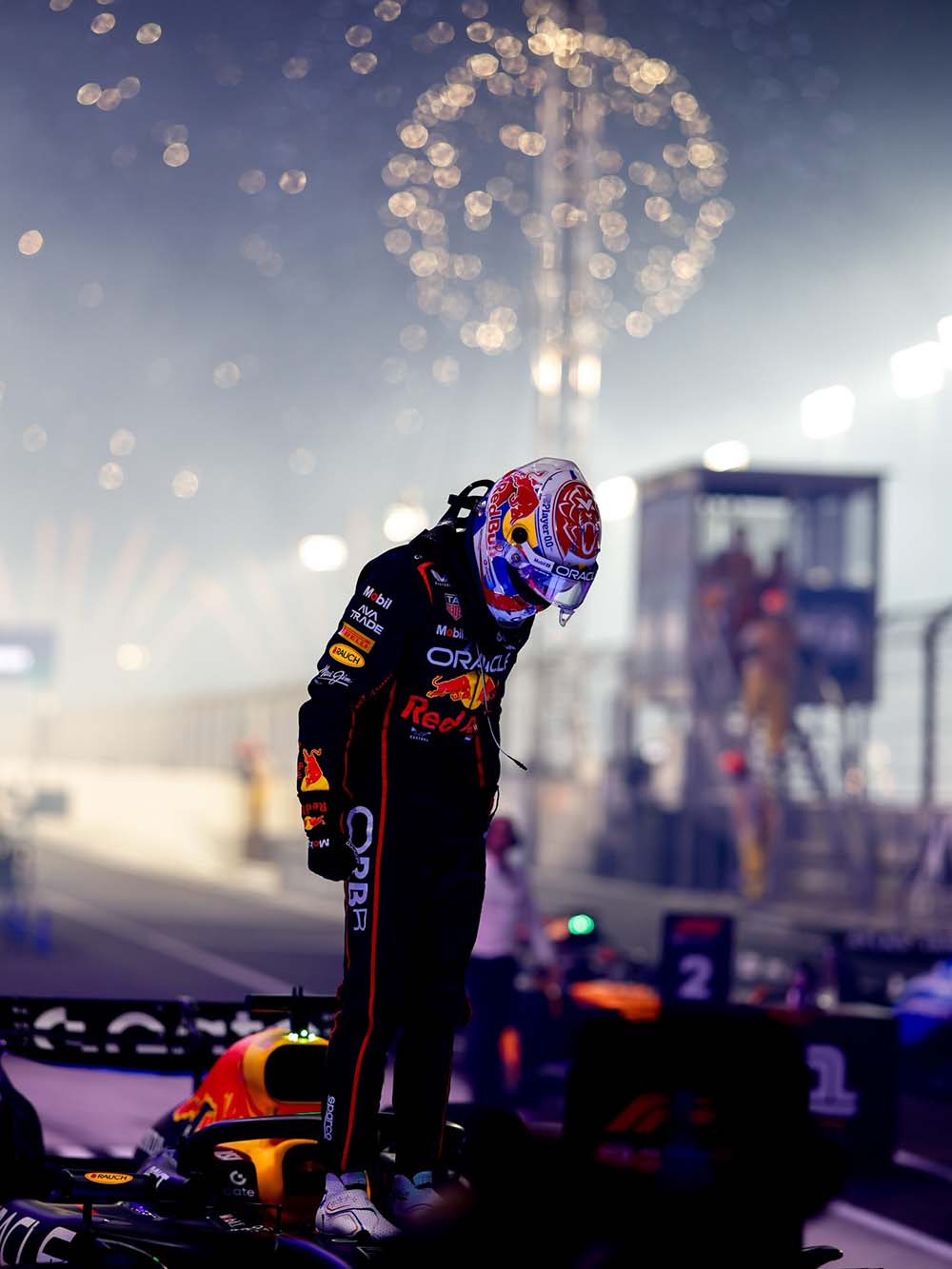
Verstappen didn’t. Red Bull executed the strategy perfectly, maximizing tire life, controlling degradation, and putting their champion in clean air when it mattered. Verstappen’s drive was clinical — a performance built on patience, precision, and an unflinching feel for the race’s shifting rhythm. Against pre-race expectations, he won. Piastri finished second. Reflecting on the result, he said: “Clearly we didn’t get it right tonight, I drove the best race I could and there was nothing left out there. In hindsight it’s pretty obvious what we should have done, but we’ll discuss it as a team. It’s not all bad [in the championship] but obviously tough to swallow at the moment.” Carlos Sainz delivered Williams their second podium of the year, and championship leader Lando Norris crossed the line fourth, his margin now slashed to just 12 points.
From camels to carbon fiber: Qatar’s unexpected motorsport soul
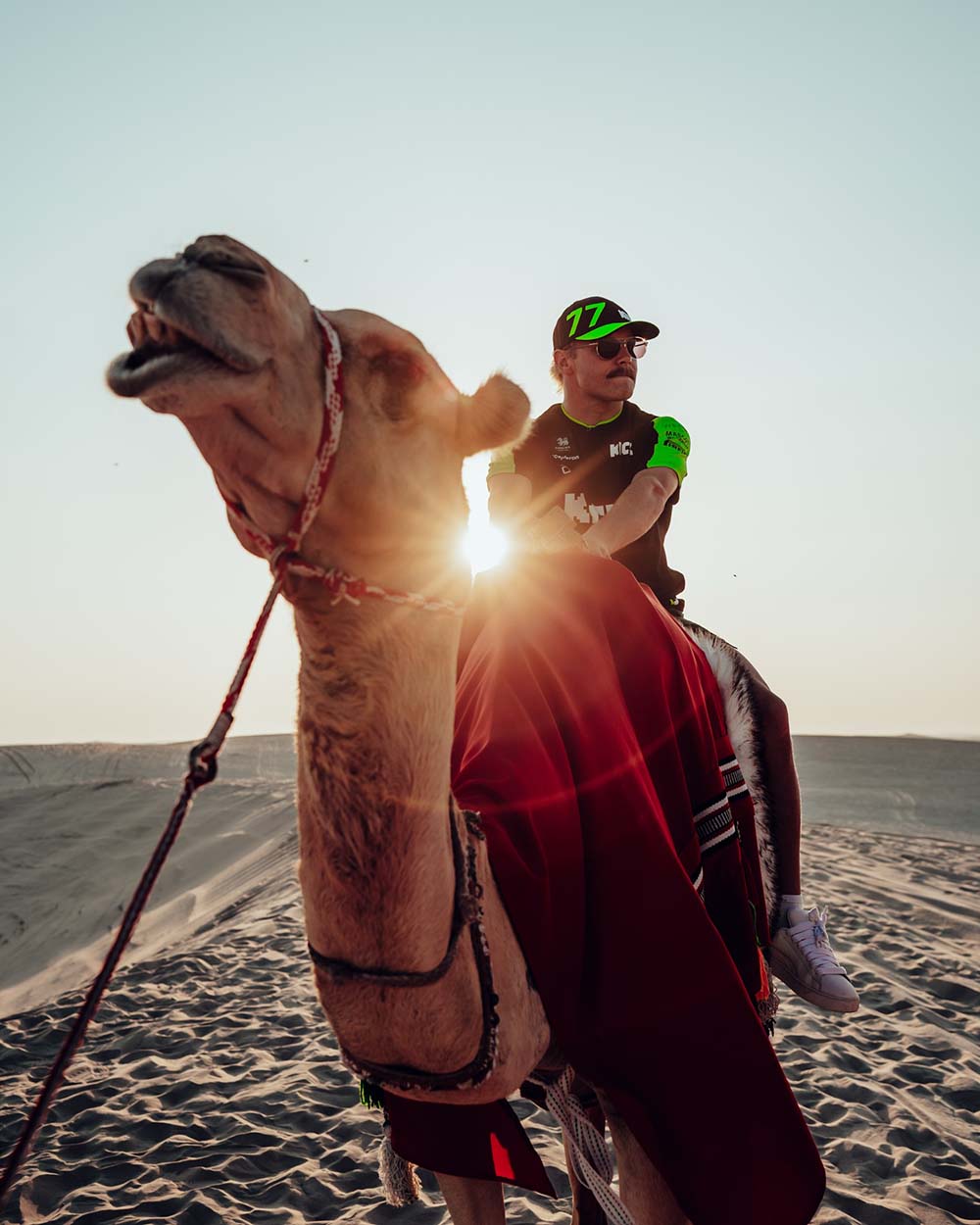
Part of what made this weekend so electric was where it happened. Qatar isn’t traditionally a motorsport nation — not in the way Bahrain pioneered F1 in the Gulf, or the UAE forged a luxury motorsport ecosystem. Instead, Qatar’s racing scene grew from the ground up: MotoGP roots, karting communities, grassroots clubs, and a vibrant blend of expats and young Qataris forming a subculture in real time.
Lusail’s atmosphere reflects that identity. It feels global but intimate — families attending their first ever race, fans travelling from across the Gulf region, locals mingling with long-time paddock veterans. The night setting only amplifies it: the desert air cooling as the lights snap on, grandstands filling with a multicultural crowd that treats the circuit like a festival.
Against this backdrop, the high-stakes title fight took on a special charge. Qatar may not have decades of F1 history, but it has rapidly become one of the most atmospheric and emotionally rich stops on the calendar — the perfect canvas for a championship fight decided by the slimmest of margins.
Under Lusail’s floodlights, with the championship gap razor-thin and a weekend that offered sprint points as well as strategic uncertainty, Qatar became the perfect stage for a season-defining showdown.
Next stop: Abu Dhabi. one race. one crown.
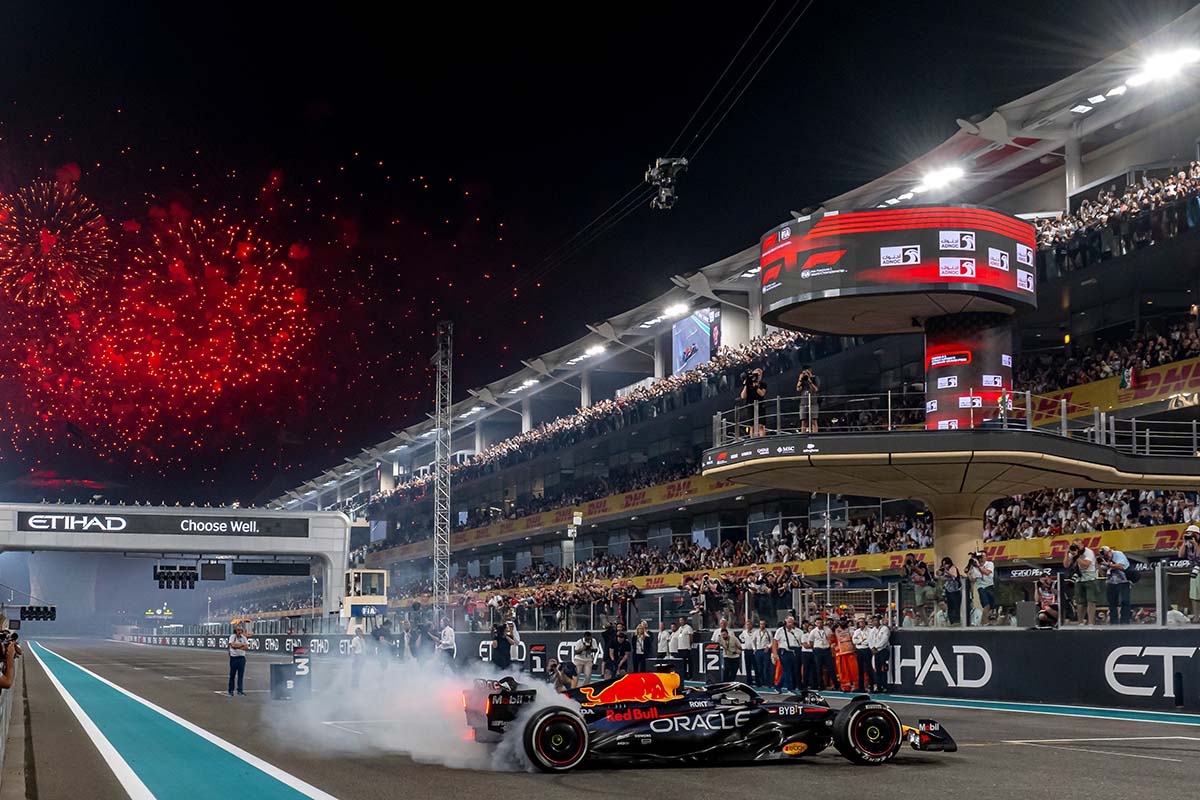
And now, the fight rolls just a pit stop away to Yas Marina. One race left — 25 points up for grabs. Norris leads by 12 points, but Verstappen and Piastri are right in the mix — anything can happen in the championship’s final showdown. Qatar’s night race was intense and unpredictable, a reminder of how championship weekends push every contender to their limits.
Everything comes down to Yas Marina, a finale where every point, every move, and every moment counts in the fight for the crown.