
For more than half a century, Mitsubishi Power has been part of Indonesia’s power sector, supporting the country with around 19 GW of power generation systems across gas turbine combined cycle (GTCC), geothermal, and high-efficiency coal-fired power.

As Indonesia’s electricity needs continue to grow, Nobuhiro Kawai, president director of Mitsubishi Power Indonesia, sees an opportunity to build on this long-standing partnership. He also highlights a growing need to plan early for the power infrastructure the country will need in the years ahead.
“We are eager to support Indonesia’s next phase of growth,” Kawai said. “With demand growing at this pace, planning is critical. By aligning early on when power assets are needed, we can work more closely with our partners and be ready to act when new capacity is required.”
The pace of growth evident on the Java-Bali grid, where demand is increasing by around 1.5 GW to 2.0 GW each year to support the country’s economic needs. Meeting this requires significant new generation capacity, with Indonesia’s 2025-2034 Power Supply Business Plan (RUPTL) setting out plans for 69.5 GW of additional generation and energy storage capacity over the next decade.
The RUPTL includes major expansion of renewable energy and storage, alongside around 10 GW of new gas-fired capacity. Indonesia has also set out ambitions to develop 100 GW of solar power over the longer term. As this renewable capacity is built out, Kawai highlighted that dependable and flexible baseload generation assets are needed to balance variable power sources.
“Indonesia is progressing rapidly, and we deeply value the trust our partners have placed in Mitsubishi Power to support its growth over the years. As the country’s energy needs evolve, we look forward to working together to shape a reliable and resilient energy future.”
Nobuhiro Kawai, President Director of Mitsubishi Power Indonesia

“Indonesia’s energy transition has to be phased and practical,” Kawai said. “We need reliable power to support economic growth today, while making sure the infrastructure we build can adapt as the energy mix changes.”
High-efficiency GTCC is particularly suited to this role, with flexibility to ramp generation up or down as power demand and renewable output change. Mitsubishi Power has decades of experience in gas-fired generation in Indonesia, including the 500 MW Muara Karang Power Plant Block 3 expansion in Jakarta. As Indonesia’s power needs grow, improving generation efficiency can also deliver more electricity while reducing fuel consumption and emissions.
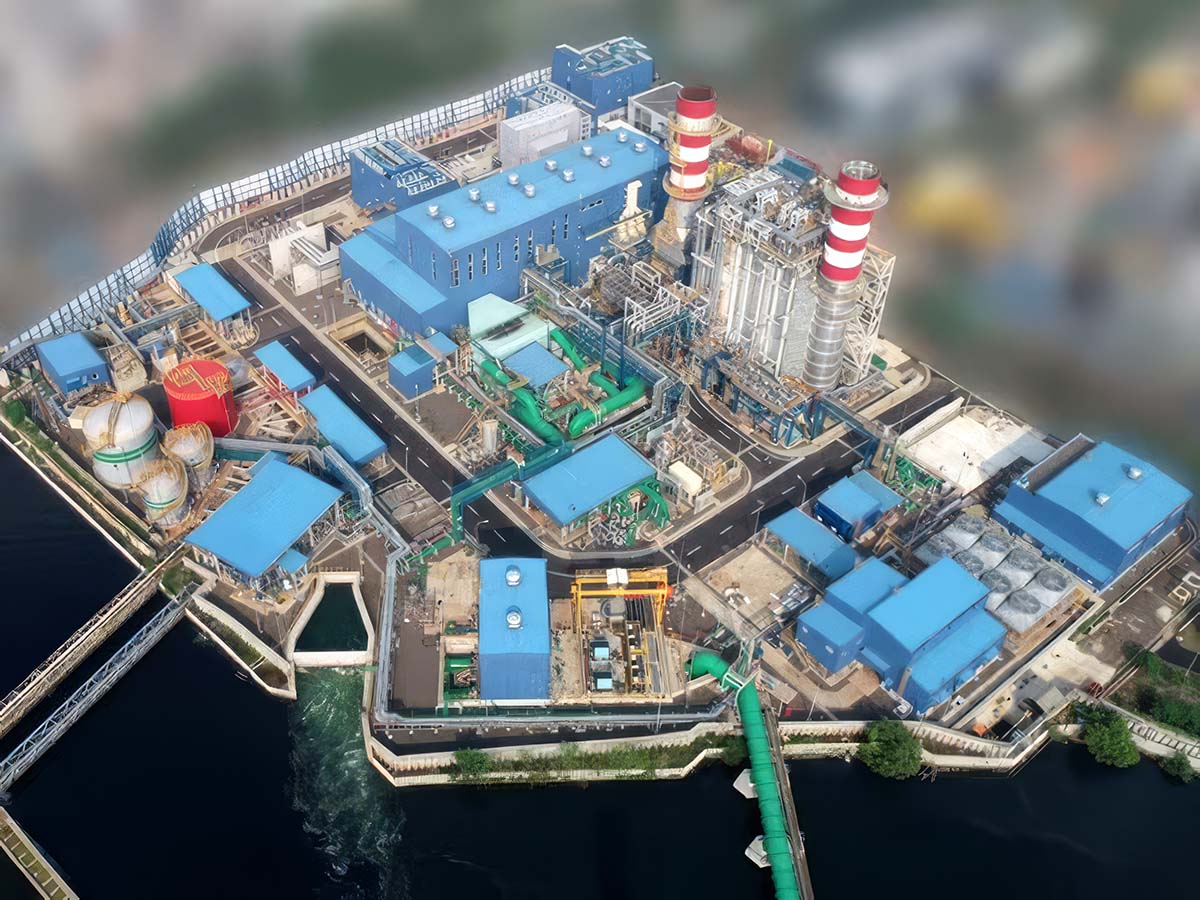
Its latest air-cooled J-series Air Cooled (JAC) gas turbines can achieve combined-cycle efficiency of more than 64% and support 30% hydrogen co-firing today, with research and validation underway toward 100% hydrogen firing. The company also has a long-term partnership with Institut Teknologi Bandung to advance research into hydrogen and ammonia-based clean power.
Geothermal can also play a role by providing stable, around-the-clock renewable power. Mitsubishi Power has supported Indonesia’s geothermal sector through projects including the Darajat Geothermal Power Plant and the Lumut Balai Unit 2 geothermal power plant.
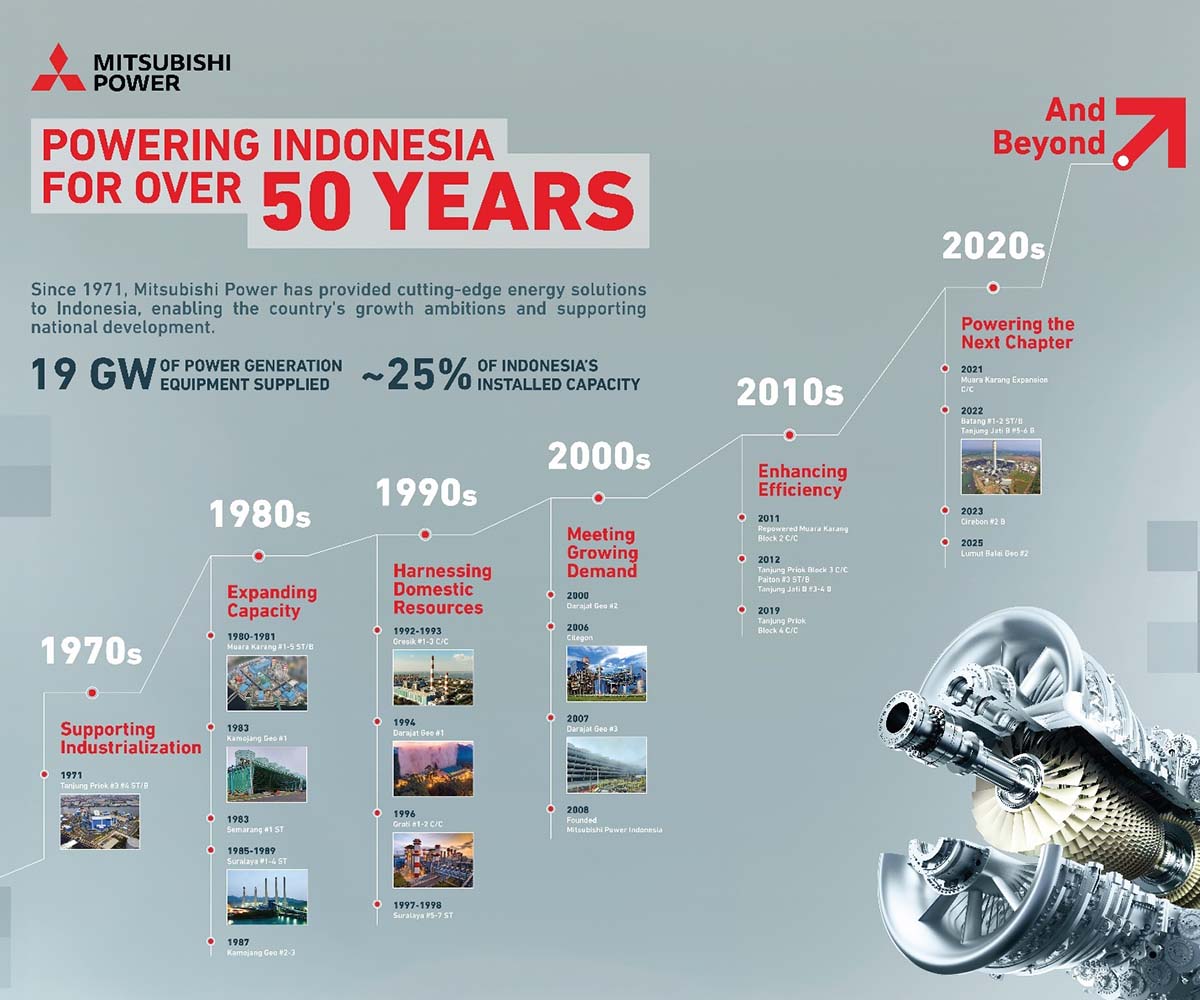
Beyond supplying technology, Mitsubishi Power has also established a local service presence through PT Power Systems Service Indonesia (POSSI), which provides technical assistance and engineering services for gas turbines and steam power plants throughout the operating life of power plants. This plays the critical role of optimizing and ensuring longevity of these assets.
For Kawai, local presence reflects Mitsubishi Power’s commitment to working closely with customers and partners in Indonesia.
“Indonesia is progressing rapidly, and we deeply value the trust our partners have placed in Mitsubishi Power to support its growth over the years,” Kawai said. “As the country’s energy needs evolve, we look forward to working together to shape a reliable and resilient energy future.”