

From the fairways of London to the hills above Clark, how Tim Neil ended up building Asia’s next great golfing destination.

Tim Neil credits golf, not business school, with teaching him how to lead. Discipline. Humility. The slow, unglamorous pursuit of getting one percent better. He picked up his first club at five years old in London, turned that childhood obsession into a career as a PGA Professional, then took an unlikely detour into law (a Master’s in International Business Law, to be precise) before finding his way back to the fairway through hospitality and course development across Europe, the Middle East and Korea.
It is, he admits, an unusual route to becoming General Manager of one of the most ambitious golf resorts under construction in Asia. But Neil doesn’t describe it as a detour so much as an apprenticeship.
“It gave me a broader perspective on leadership, commercial strategy and building organizations with long-term sustainability,” he says of his legal training, the kind of grounding, he suggests, that matters more once a project reaches the scale of Hann Reserve, the 450-hectare development taking shape in Clark, Pampanga.
What ultimately pulled him in, however, wasn’t the size of the site. It was the man behind it.
“The potential has always been here. Now it’s about realizing it.”
Tim Neil, General Manager of Hann Reserve Golf
“It wasn’t simply the scale of the project that impressed me, it was his clarity of vision, his passion and, perhaps most importantly, his courage,” Neil says of his first meeting with owner Mr. Han, a moment he calls the defining one in his decision to join. “Creating a destination of this ambition requires someone willing to think beyond convention and invest in something that will stand the test of time,” he says. When he first walked the property itself, mountains, valleys, terrain that seemed to fold in on itself in every direction, the decision was obvious. “The Philippines is one of the most beautiful countries I have ever experienced, and I genuinely believe this landscape deserves to be showcased on the world stage.”
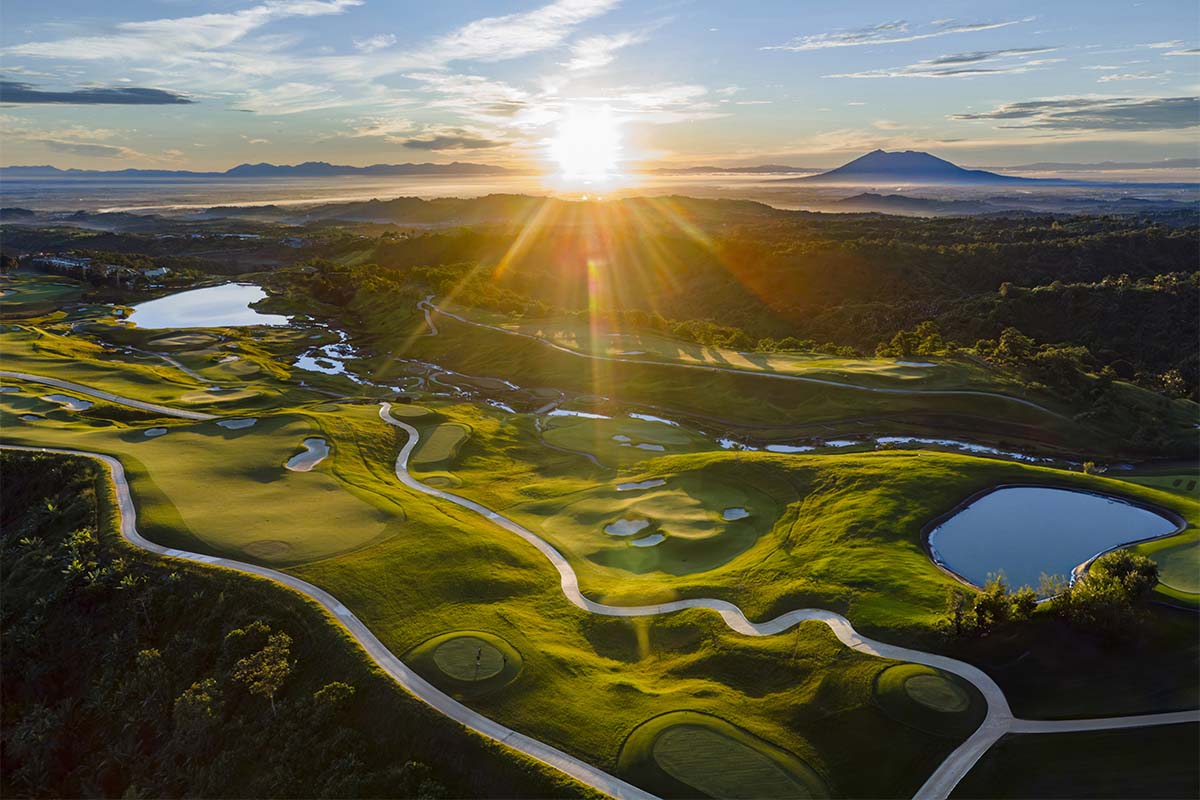
For all its natural beauty, Clark remains a hard sell to golfers who’ve never heard of it, particularly those in Tokyo or Manila who have plenty of closer options. Neil’s pitch is disarmingly simple.
“Come once, and you’ll understand.”
He leans on the practical case as much as the romantic one: ten minutes from Clark International Airport to championship golf, without the gridlock that trails most major golf cities. For Japanese travelers especially, he argues, the appeal is logistical as much as scenic, with easy international connections, efficient movement once on the ground, and everything from dining to wellness within close reach.
“What also makes Clark unique is that it remains relatively undiscovered,” Neil says. “There is a sense of exploration that many established golf destinations have inevitably lost.”
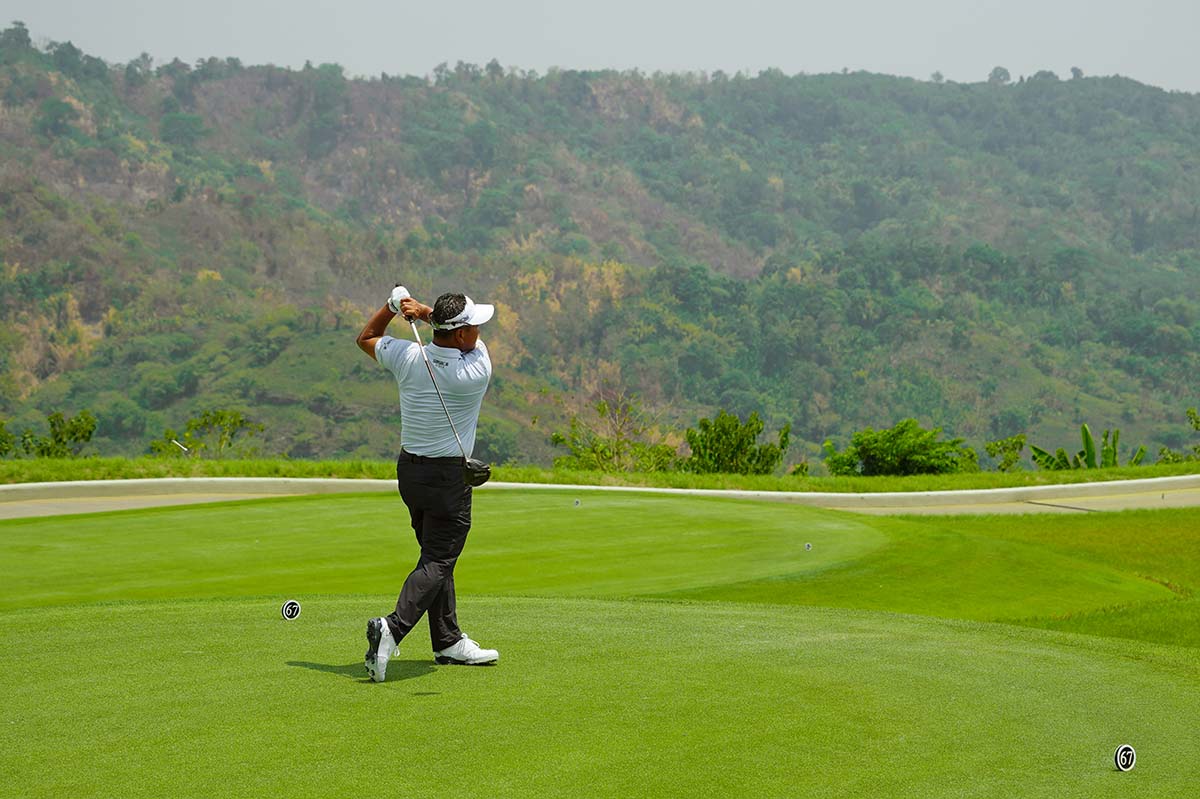
Visitors this year will find Dragon’s Landing fully open, the Nicklaus Design mountain course that Neil says was “designed to deliver memorable golf from the very first tee shot,” paired with a clubhouse, locker rooms and dining built to a standard he wants held up against the best in Asia.
The rest of the site is still very much under construction, and Neil is candid about the timeline rather than oversell it. Six Moons, the K.J. Choi-designed parkland course, is targeting its first nine holes for later this year, with the remaining nine following in 2027, timed to align with the property’s PGA of America Performance Institute. Caverns Deep, the Sir Nick Faldo valley course threading through natural waterways and waterfalls, is in its final planning stages.
“Rather than rushing the process, we are focused on ensuring each course matures to the highest possible standard before opening,” Neil says. “Every course should be capable of standing on its own as a world-class golf experience.”
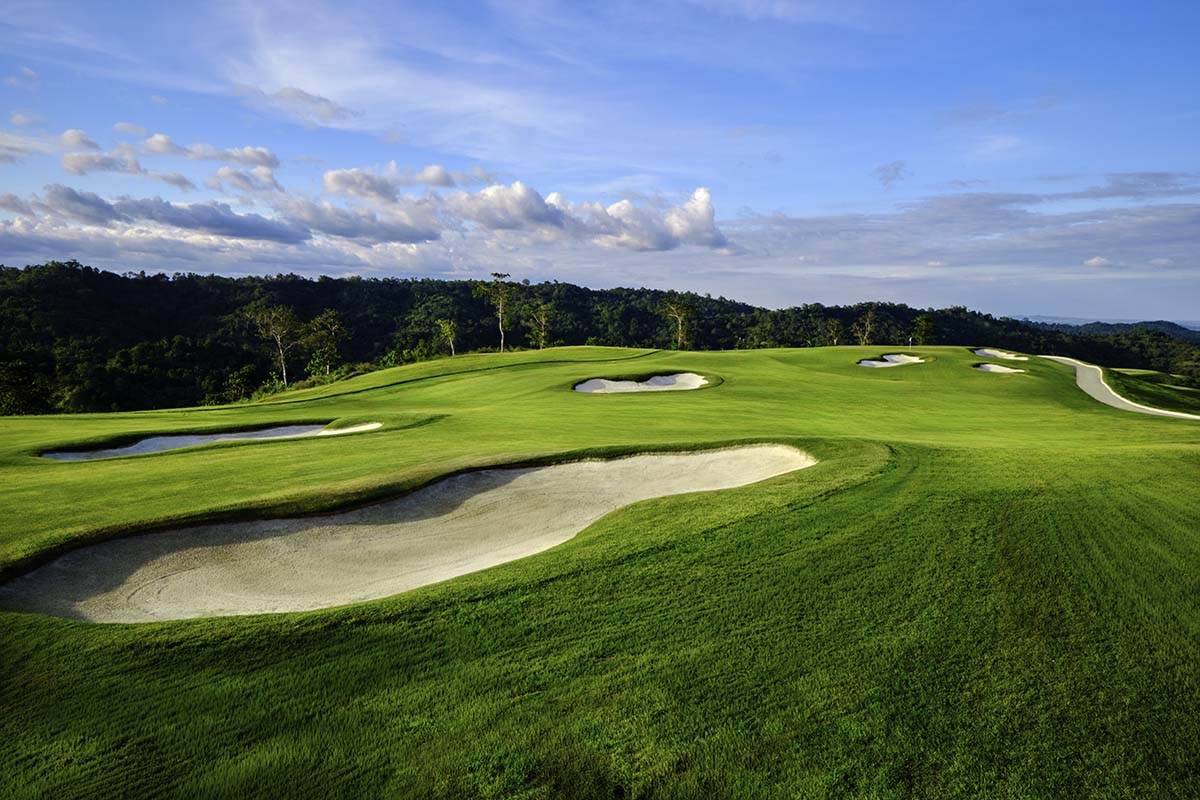

Having built golf operations in both Korea and the Middle East, Neil is well placed to say what Hann Reserve is not trying to be. Korea, he notes, built its reputation on operational precision; the Middle East, on bold capital and hospitality at scale. Hann Reserve, he insists, isn’t chasing either template.
“Very few destinations can offer three championship courses by Nicklaus Design, K.J. Choi and Sir Nick Faldo across one continuous property,” Neil says, pointing also to the resort’s exclusive relationship with the PGA of America. “Every course has its own identity because the land naturally gives it one.”
Neil’s read on Philippine golf overall is optimistic, if pointedly unsentimental about what’s held it back. “What it has perhaps lacked historically is global awareness rather than quality,” he says. The raw materials, landscape, hospitality culture, year-round playing conditions, have always been there. What’s missing is consistency, and the international events that build credibility over time.

It’s a case he’s clearly staked his own role on. Through the PGA of America partnership and an eye toward hosting one of the sport’s premier professional tours, Neil frames Hann Reserve’s ambitions as inseparable from the country’s own.
“The potential has always been here,” he says. “Now it’s about realizing it.”