
Japanese-Filipino artist Eri Abe reflects on memory, identity, and the quiet connections that shape
both her life and her art.
The best covers don’t simply illustrate a story. They invite readers into one.
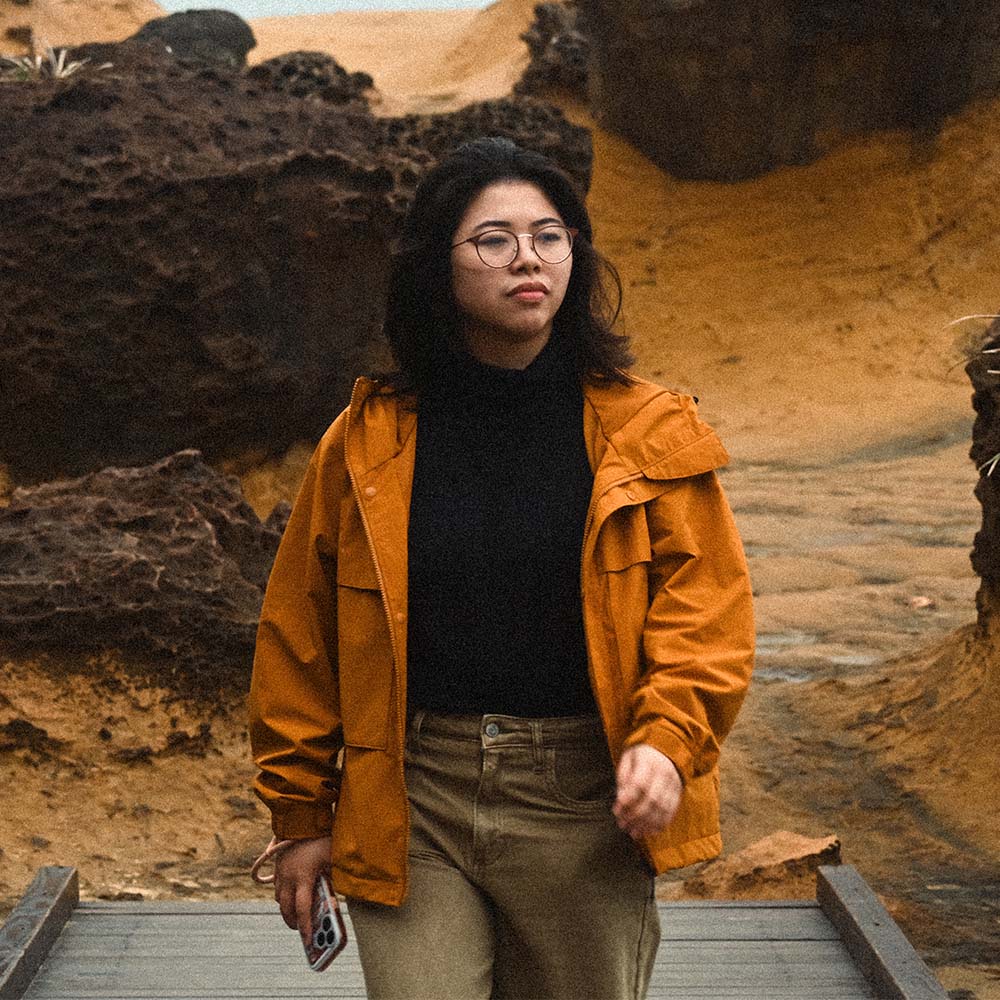
For Japanese-Filipino artist Eri Abe, painting is an act of gathering moments, memories, and perspectives until they settle into something subtle yet whole — like scattered pieces finally recognizing one another and coming together. She brings that same sensibility to the cover of Bridges’ special issue marking 70 years of Philippine-Japan friendship.
Known for delicate watercolor paintings layered with manga collage, Abe creates works that gather seemingly separate moments into compositions where unexpected connections emerge. Her art explores memory, place, and the invisible threads that link people, cultures, and experiences, making her an especially fitting choice for an issue that celebrates a cross-cultural relationship shaped over generations.
With two solo exhibitions under her belt, including one just a few months ago, Abe took on the Bridges commission to translate an unusually wide-ranging editorial brief into a single cover image, weaving together stories of food, infrastructure, family, travel, sport, and shared history while remaining true to her own visual language.
In this conversation, she reflects on growing up between two cultures, embracing uncertainty in her creative process, and why fragments — and the spaces between them — can be just as meaningful as the images themselves.
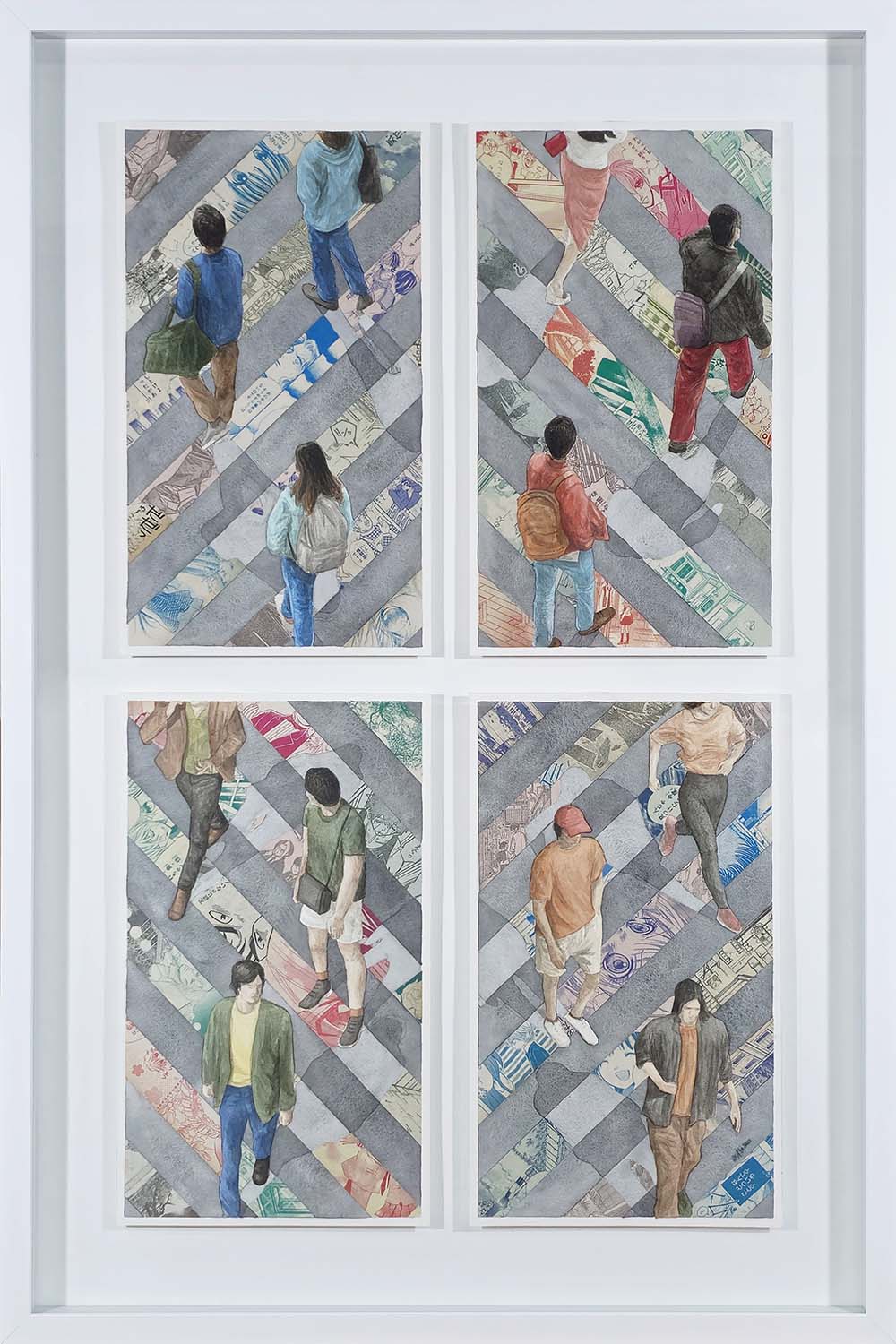
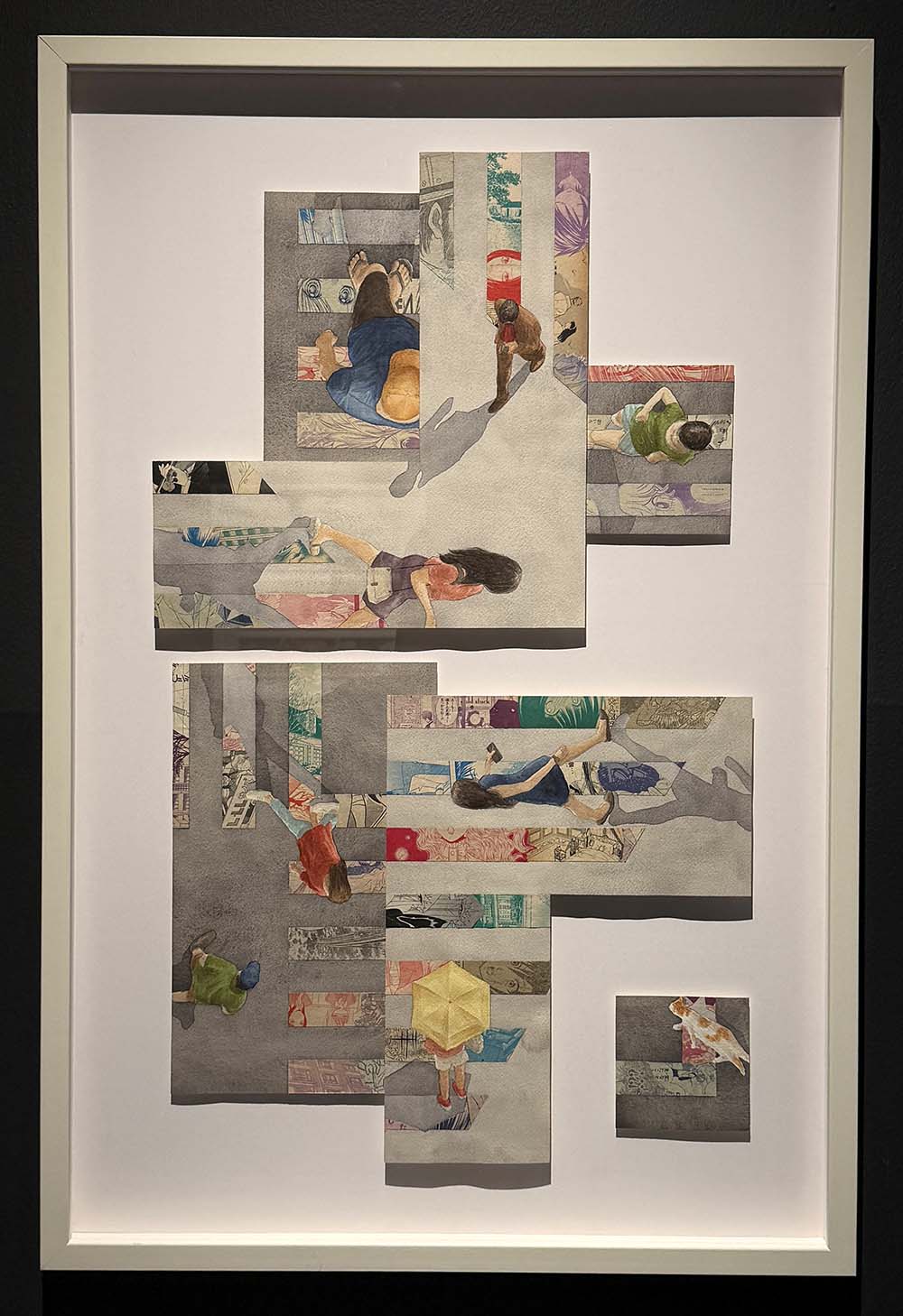
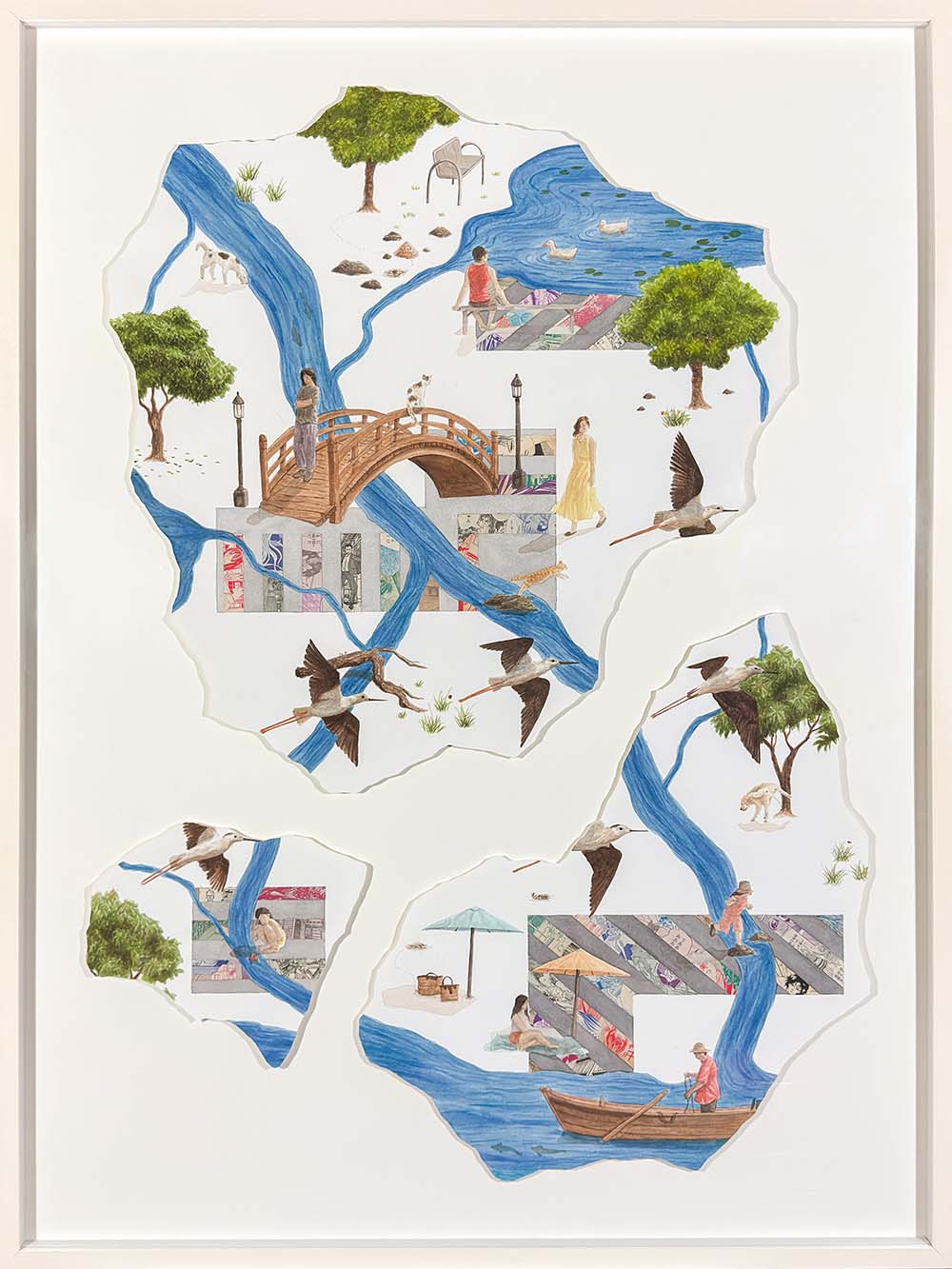
Bridges: Your work explores fragmentation and interconnectedness. How much of that comes from growing up between two cultures, and how does your dual heritage shape the way you see and make art?
EA: An important part of my interest in fragmentation and interconnectedness stems from growing up in a Filipino-Japanese family. While that has undeniably shaped the way I see the world, it is only one of many influences on my practice.
Growing up, my siblings and I often found ourselves apart as we pursued different interests. Even so, I always felt deeply connected to them simply by knowing we existed in the same world. That experience taught me that connection is not always defined by proximity. It can exist across distance in quiet, invisible ways.
“Combining watercolor and collage creates a balance that feels natural to me. Beyond their contrasting processes, they embody the ideas that continue to interest me: fragmentation, interconnectedness, and the narratives that emerge when separate pieces come together.”
Eri Abe
Looking back, I think my background made me more aware of how people experience and understand the same world through different perspectives, traditions, and values. It has made me more attentive to the people, places, and moments around me, each offering a different fragment of a larger whole. It is only when those fragments come together that a fuller picture begins to emerge. That way of seeing carries into my work. I’m interested in bringing together observations, memories, and moments that coexist, allowing connections to emerge instead of presenting a single definitive narrative.
Bridges: You work primarily in watercolor and collage, using manga as both material and inspiration. What draws you to that combination, and how did manga become part of your visual language?
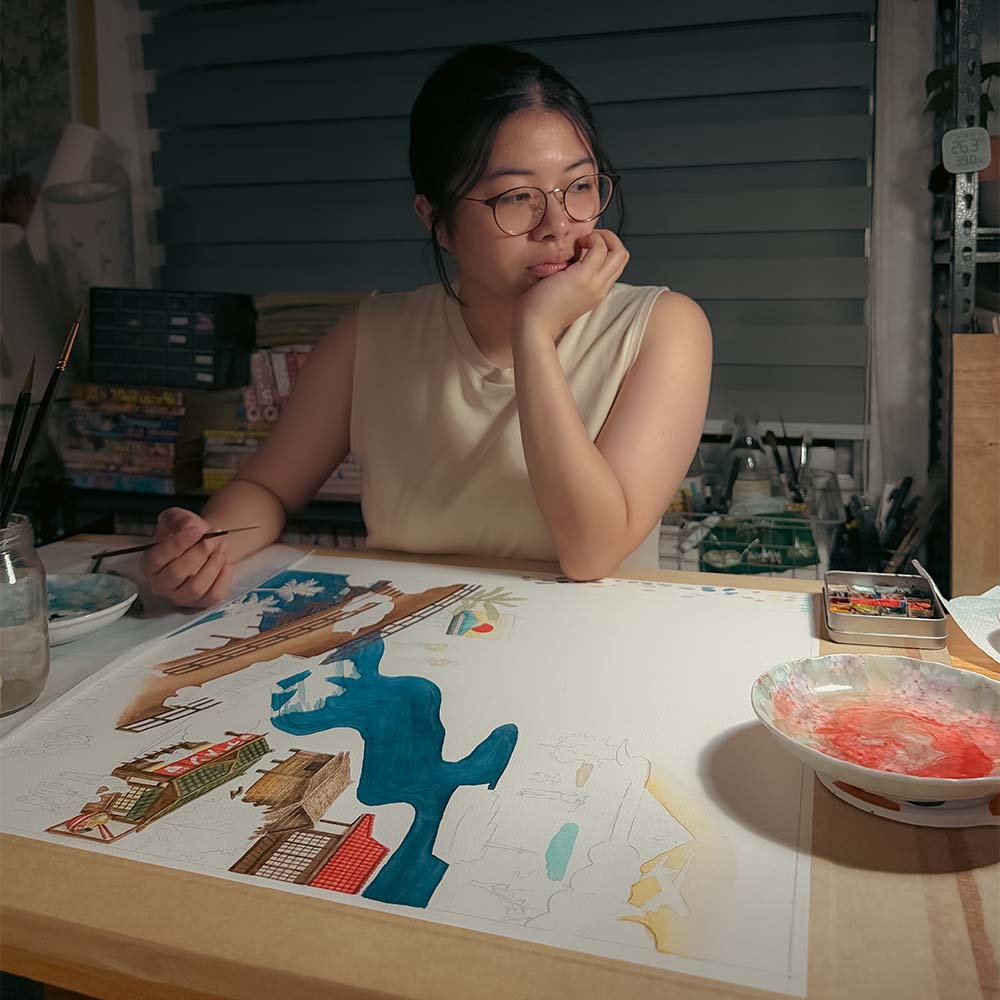
EA: Anime and manga have been part of my life since childhood.
During the uncertainty of the pandemic, I found myself drawn back to them, taking comfort in something familiar. I became fascinated by the way manga panels frame scenes and characters while building narratives through fragments. Each panel holds its own moment, and together they build a world. That resonated with the ideas I wanted to explore and led me to combine watercolor with manga collage.
Working with collage is a negotiation. It allows me to deliberately choose, edit, and juxtapose cutouts while still requiring me to work with the available materials, leaving room for chance.
Watercolor, on the other hand, has always been the more unpredictable medium. Water and pigment settle in ways I don’t expect, and trying to force them often does more harm than good. Over time, I learned to accept that unpredictability. It became a lesson in letting go, controlling what I can, and finding calm when things don’t go as planned.
Combining watercolor and collage creates a balance that feels natural to me. Beyond their contrasting processes, they embody the ideas that continue to interest me: fragmentation, interconnectedness, and the narratives that emerge when separate pieces come together.
Bridges: Your cover had to bring together stories of infrastructure, food, sport, family, and road culture in a single image. How did you approach that challenge, and were there details you were determined to keep true to your own artistic instincts?
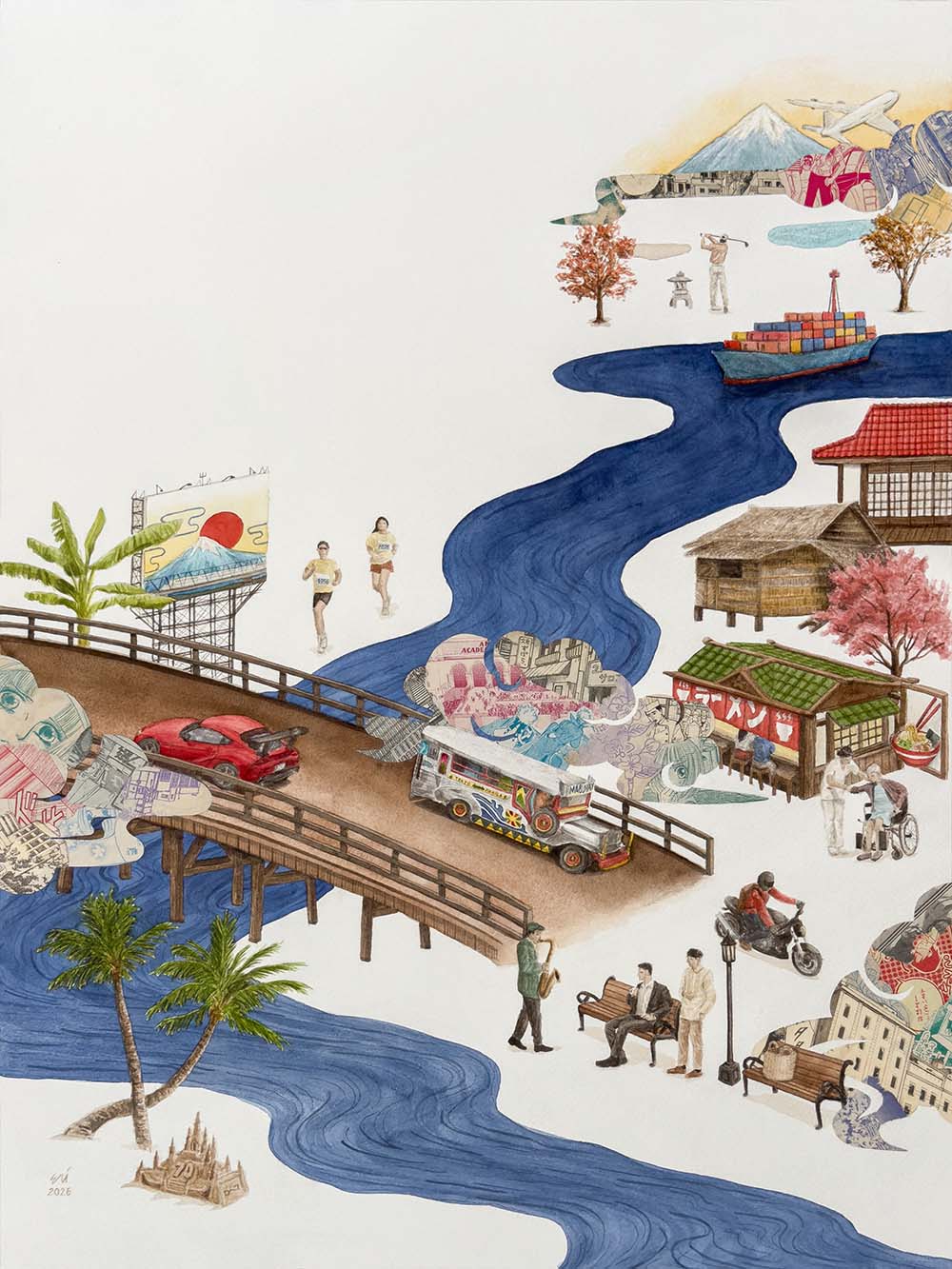
EA: The biggest challenge was finding a way for such a wide range of stories and subjects to feel cohesive within a single visual space. This was the most varied composition I have worked on in terms of subject matter, and I tried to stay true to my usual approach.
Negative space has always been an important element in my work. It helps me organize the placement and relationships between different parts of a composition without losing their individual character. A key consideration was keeping the Filipino and Japanese elements distinct while allowing them to interact. Since I often incorporate a variety of imagery, negative space creates balance and gives the composition room to breathe. That balance also allows me to feel more at ease with the process.
As this was my first magazine cover, the suggestions, advice, and feedback from the Bridges editorial team were invaluable in translating the brief into a single composition while preserving my visual language.
Bridges: You had your first solo exhibition just last year, and this cover marks a different kind of milestone, celebrating 70 years of Philippine-Japan relations. What does that mean to you, and where do you hope to take your art next?
EA: I’m honored to have created a work that marks an important milestone in the relationship between the Philippines and Japan. It holds a special place in my heart because it also celebrates my own Filipino-Japanese heritage.
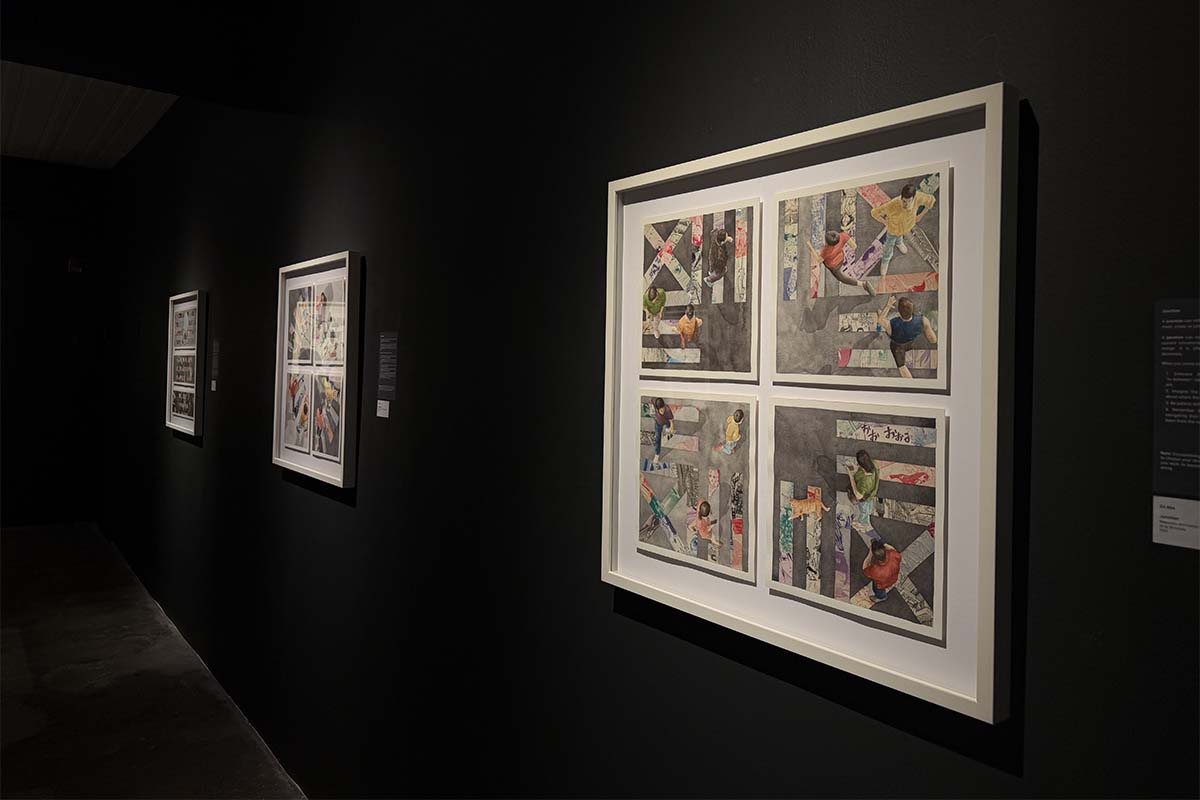
Moving forward, I want to continue creating works that give tangible form to the quiet connections that shape the world around us. I hope to create larger worlds by expanding the scope of my work and deepening my exploration of fragmentation and interconnectedness through relationships between people, cultures, infrastructure, and the natural environment. I’m also interested in examining shared societal experiences through that same lens.