
For nearly three decades, Medicon Valley has demonstrated what can happen when borders become a catalyst for collaboration rather than a barrier to it. Spanning eastern Denmark and southern Sweden, the life sciences cluster brings together universities, hospitals, companies and public-sector organizations in one of Europe’s most dynamic environments for research and innovation.

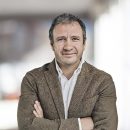
For Anette Steenberg, CEO of Medicon Valley Alliance, the defining strength of the region lies in its ability to connect people, companies and institutions across traditional boundaries.
“One plus one equals three,” she says, describing the value created through cross-border collaboration. Alongside this is what Medicon Valley Alliance calls the “Triple Helix” model: close cooperation between the public and private sectors, universities and hospitals.
Trust and neutrality have also been central to the alliance’s longevity. As a non-profit organization funded by its diverse membership rather than government sources, Medicon Valley Alliance maintains independence from any single national or commercial interest. Today, its membership encompasses more than 330 companies, hospitals and universities.
“The bridge is our symbol,” Steenberg says. “It is a physical bridge between Denmark and Sweden, so it is a true bridge. But it’s also symbolically really the symbol of what we do: we bridge nations and we bridge the public-private sector.”
That collaborative foundation is helping sustain a virtuous circle of innovation, talent and opportunity. The region offers a dense concentration of life sciences employers, making it easier to attract international professionals and giving them multiple career opportunities within close proximity. Its quality of life is another advantage, particularly for talent seeking to balance professional ambitions with family and personal life.
“The bridge is our symbol. It is a physical bridge between Denmark and Sweden, so it is a true bridge. But it’s also symbolically really the symbol of what we do: we bridge nations and we bridge the public-private sector.”
Anette Steenberg, CEO of Medicon Valley Alliance
Yet Medicon Valley is not immune to the challenges facing European life sciences. Steenberg points to a shortage of funding for startups and small and medium-sized companies, particularly in research and development. Europe also faces the challenge of retaining innovative companies when overseas investors acquire promising technologies and businesses.
“We have the capabilities, we have the people, we have the finances, we have the money, but we are regulating ourselves into trouble,” she says.
Against this backdrop, international partnerships are becoming increasingly important. Japan represents a particularly promising partner, both as a market and, more importantly for Medicon Valley, as a source of research and innovation collaboration.
Steenberg is especially enthusiastic about Japan’s participation in the EU’s Horizon Europe program, seeing it as an opportunity to move beyond exchanges and exploratory meetings toward concrete joint projects.
“I really truly hope that we could make some collaboration projects within,” she says. “That would a bit be a dream for me, to have a Horizon project together with Japan.”
One particularly promising area is reproductive health. Medicon Valley has spent 16 years building cross-border expertise in fertility and reproductive health, establishing a strong network of researchers and clinicians across Denmark and Sweden. With both Japan and the Nordic countries facing demographic challenges, the field offers clear potential for mutual learning and cooperation.
Medicon Valley has spent 16 years building cross-border expertise in fertility and reproductive health, establishing a strong network of researchers and clinicians across Denmark and Sweden.
Other opportunities could emerge in areas such as microbiome research and oncology. For Steenberg, the next step is to identify where complementary strengths can translate into practical partnerships.
“As Japan approaches the EU, we will also know more of each other’s strongholds,” she says.
The opportunity, ultimately, is to turn familiarity into action. Rather than simply exchanging visits and maintaining courtesy relationships, Medicon Valley sees the possibility of bringing Japanese and European researchers, hospitals and companies together around shared challenges.
“We might be able to have a meeting also going that one step further,” Steenberg says, “where we say, okay, what can we do together?”
For Medicon Valley and Japan, that question could mark the beginning of a new chapter in life sciences collaboration.