

As global supply chains are tested by mounting global uncertainty, Canada and Japan are emerging as two of the world’s most consequential, and complementary, economic partners. One holds vast reserves of the critical minerals, energy resources, and clean electricity that will power the next industrial era. The other brings decades of manufacturing excellence, capital, and technological sophistication to turn those resources into finished goods.
In this Q&A with Bridges Magazine, Goldy Hyder, President and CEO of the Business Council of Canada, discusses how this relationship is evolving from a conventional trading arrangement into something more ambitious: a strategic partnership built on shared democratic values, mutual economic security, and long-term industrial cooperation. From critical minerals and LNG to nuclear energy and advanced manufacturing, Hyder outlines where the two nations are headed and what it will take to get there.
Bridges: Canada and Japan have long enjoyed strong economic ties, but today the relationship is increasingly defined by shared priorities around energy security, critical minerals and supply-chain resilience. From your perspective, what makes this moment unique in the evolution of Canada–Japan relations, and where do you see the greatest opportunities for deeper cooperation?

Hyder: Canada and Japan have long shared strong values: democracy, the rule of law and a commitment to free and open trade. Today, however, our relationship is being shaped by a shared recognition that economic security and national security are increasingly intertwined.
This is a pivotal moment because both countries have what the other needs. Japan has investment, technology and manufacturing strength that Canada can benefit from. At the same time, it is seeking trusted, reliable partners to strengthen supply chains, secure access to energy and critical minerals, and support its industrial competitiveness.
Canada has those resources, world-class expertise and a renewed determination to become a more reliable trading and investment partner.
The opportunity now is to move beyond individual transactions and build enduring strategic partnerships. That means joint investment, long-term commercial relationships, collaborative innovation and greater integration across our industries.
Canada and Japan have long shared strong values: democracy, the rule of law and a commitment to free and open trade.
Goldy Hyder, President and CEO of the Business Council of Canada
Whether it’s critical minerals, LNG, clean fuels, nuclear energy or advanced manufacturing, Canada and Japan are well positioned to help each other succeed in a much more uncertain world.
The relationship is no longer simply about trade; it is about building long-term resilience and shared prosperity.
From Resource Wealth to Strategic Advantage
Canada possesses many of the critical minerals needed to support the global energy transition, while Japan remains one of the world’s leading advanced manufacturing economies. How can both countries move beyond a traditional supplier-customer relationship to build a more integrated partnership that creates long-term value across the entire critical minerals supply chain?
Canada’s competitive advantage is not simply that we have abundant critical minerals. It is that we have the potential to build complete value chains – from responsible extraction to processing, refining, advanced manufacturing and recycling, in partnership with trusted allies like Japan.
Japan brings decades of global leadership in manufacturing, advanced technologies and precision engineering. Canada brings natural resources, innovation, clean electricity and an increasingly attractive investment environment.
Together, we can create far greater value than either country could alone.
The Canada-Japan partnership is strong. While Japan is one of the top investors in Canada, there are new opportunities to strengthen the partnership even further. Japanese companies investing alongside Canadian companies in projects throughout the supply chain creates greater certainty for investors while strengthening supply-chain security for both countries.
Governments also have an important role in creating the conditions for investment: faster permitting, regulatory certainty, competitive tax policies and modern infrastructure. Businesses are ready to invest, but capital flows where projects can get built.
Energy Security in a More Uncertain World
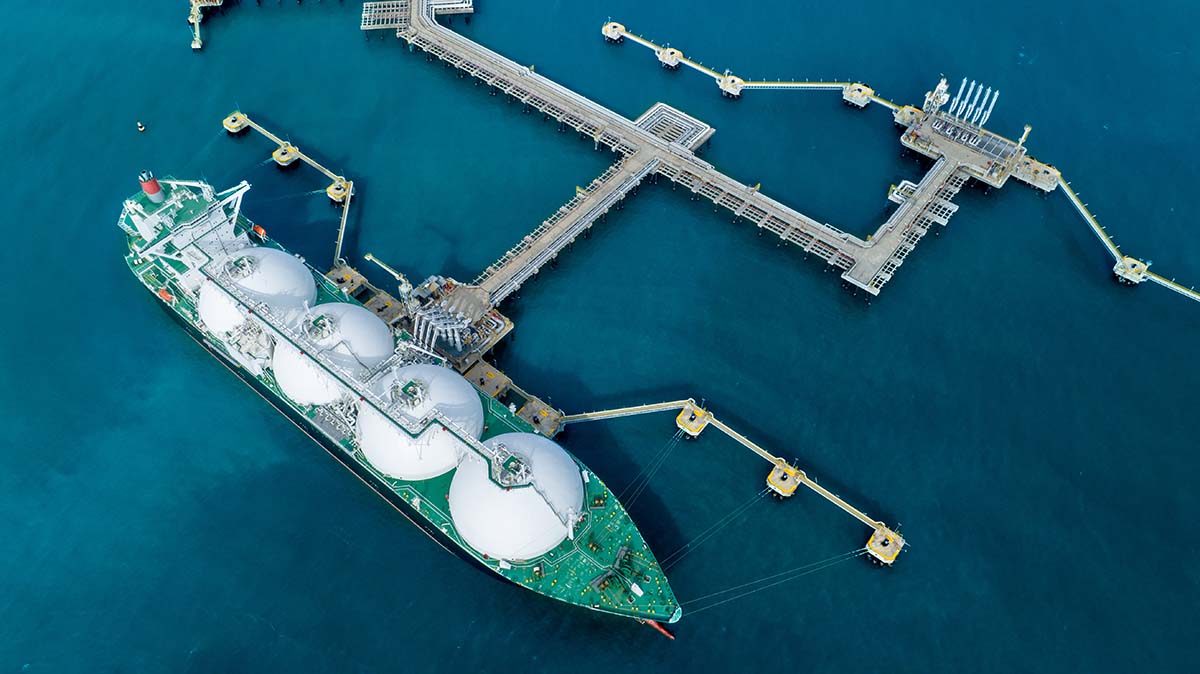
As countries seek to balance decarbonization with economic competitiveness and energy security, Canada and Japan have emerged as natural partners across LNG, hydrogen and other emerging energy pathways. In your view, what role can the private sector play in accelerating these partnerships while ensuring projects remain commercially viable and globally competitive?
The private sector’s role is to innovate, invest and build. But businesses can only move at the speed that policy allows. Governments must provide stable, predictable regulatory frameworks that give investors confidence to commit capital over decades, not election cycles.
Success ultimately depends on competitiveness. Projects must make economic sense, attract global investment and deliver reliable returns while meeting high environmental standards. That is how Canada and Japan can strengthen both energy security and economic growth.
Looking Ahead: Defining Success for the Next Decade
If we look ahead ten years, what would success in Canada–Japan cooperation look like in the areas of mining, critical minerals and energy? More importantly, what actions must governments and industry take today to ensure both countries remain leaders in the industries that will underpin the global economy of the future?
Ten years from now, success would mean that Canada and Japan have built one of the world’s strongest strategic economic partnerships.
We would see Canadian critical minerals powering Japanese manufacturing. Canadian LNG and emerging energy technologies contributing to Japan’s long-term energy security. Joint investments supporting processing facilities, advanced manufacturing, innovation, defence collaboration and new technologies in both countries. We would also see stronger two-way investment, deeper research collaboration and more resilient supply chains that reduce dependence on less reliable partners.
Ten years from now, success would mean that Canada and Japan have built one of the world’s strongest strategic economic partnerships.
Getting there requires action today.
Under PM Carney’s leadership, we’ve seen important movement on major projects. While there remains work to do, Canada is positioning itself to be a reliable partner to help nations with their energy and economic security.
Japan will continue to be an essential investment and technology partner, helping unlock projects that strengthen both countries’ long-term competitiveness.
Most importantly, governments and business must work together with a greater sense of urgency. The global race for investment is already underway. In a world of uncertainty those that can offer certainty stand to win the battle for investment.
Japan and Canada are well positioned to do just that.
The task before us now is execution.
Hyder’s message is ultimately one of urgency wrapped in optimism. The foundations of a deeper Canada-Japan partnership, shared values, complementary strengths, and growing mutual need, are already in place. What remains is the harder work of translating strategic alignment into built projects, signed investments, and functioning supply chains, all against a backdrop of intensifying global competition for capital.
As Hyder makes clear, the countries best positioned to thrive in this new industrial era will be those that can offer partners certainty in an uncertain world. For Canada and Japan, the opportunity is there for the taking. The question now is one of execution.