
Successful market entry in Japan often depends on what happens after the strategy is written. Emma Consulting has built its business around that reality, combining market-entry advice with direct distribution through EMMA Trading and a long-established forest-certification practice.

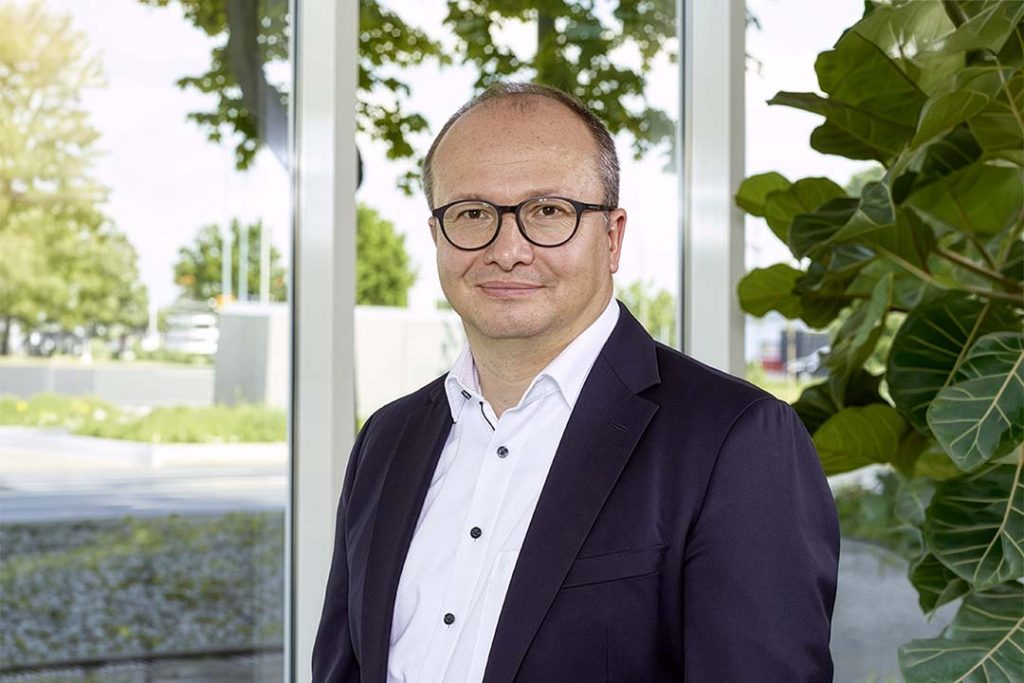
Led by CEO Dirk Ebert, the EMMA Group works with overseas manufacturers across rail, marine, food processing and renewable energy, helping them understand local demand, compete with deeply rooted domestic suppliers and reach Japanese customers. Ebert discusses the group’s hands-on model, unexpected opportunities in food-processing machinery and the changing needs of German and international companies seeking growth in Japan.
Bridges: The company has grown from a market-entry consultancy into an operation that also physically distributes German industrial brands into Japan and advises on forest certification. How would you describe what Emma Consulting does today, in one sentence?
Ebert: EMMA Group today is the one-stop enabler of Japan business for our clients.
You support direct sales of Miba AG bearings and Welland & Tuxhorn AG control valves, with customers ordering from the manufacturers while your team provides technical and commercial support. Through EMMA Trading, you also import and resell HEICO-LOCK, THORDON and LIGNOLOC products, with a trade show presence spanning rail, marine, food processing and renewable energy. What drove the expansion from advisory work into these two ways of supporting sales in Japan?
We have never been a “paper-only” consultancy. Hands-on support of our clients is a founding principle and one of our key value propositions. The dual support of direct business through EMMA Consulting and of indirect business through EMMA Trading suits a multitude of industrial components
Which of these sectors has surprised you most in terms of Japanese demand for German industrial components, and why?
Each of these sectors has very strong domestic competitors, many of which do not appear on the international market but are exceptionally strong leveraging their decades long business ties. The demand from the food machinery industry for oversea components for meat related processing was a surprise – fish processing is almost completely dominated by local suppliers.
“We have never been a ‘paper-only’ consultancy. Hands-on support of our clients is a founding principle and one of our key value propositions.”
Dirk Ebert, CEO of Emma Consulting

Forest certification consulting is a newer line of business. What led you to add it, and how does it connect with the industrial trade work?
Actually, forest certification was the initial service provided by EMMA Consulting LLC before adding agency business at the time of the corporate change. There have been some projects where both areas are involved, for example a project regarding wood processing machinery, but in general, the business areas and customers are quite separated.
With consulting, distribution, and forest certification now running in parallel, how do you see Emma Consulting’s role in the Germany–Japan relationship evolving?
For the agency and distribution business, our initial clients were predominantly from Germany. While there is still a strong German connection, we now also serve clients from other European countries, from Canada and the United States. This is an effect of the economic downturn of Europe and Germany in particular. Of course, we sincerely hope for a recovery of the German industry and would be pleased to support by providing the feedback regarding product and service quality needed for entering the Japanese market and then successfully selling their products to Japanese customers.