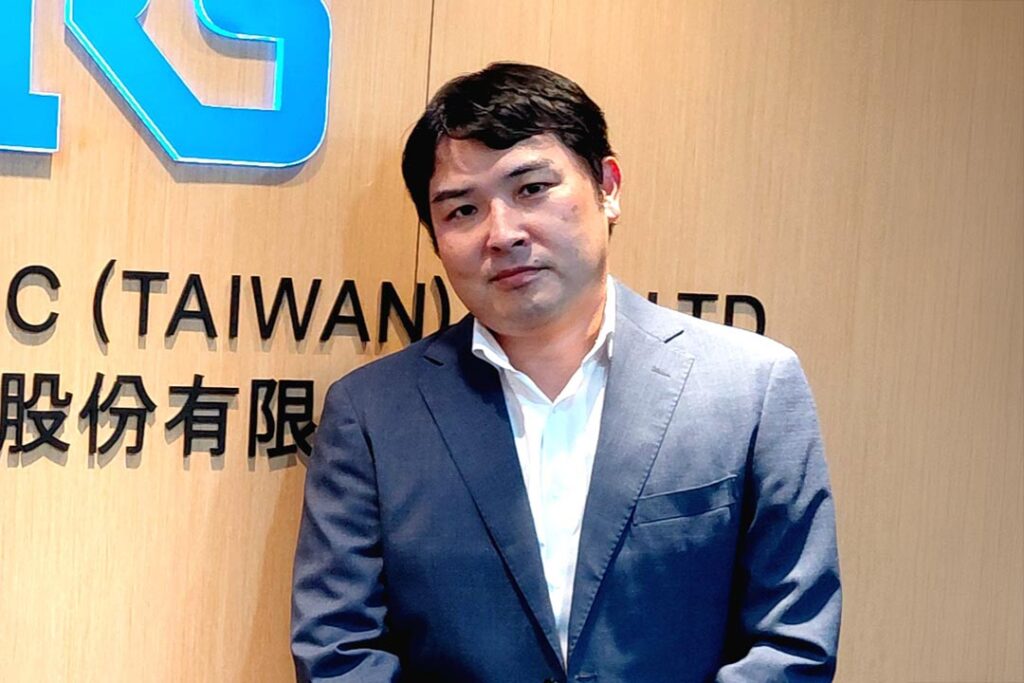

Tsung-Che Wei, Chung-Hua Institution for Economic Research, The Third Research Division, Associate Research Fellow, Taiwan; Visiting Collaborative Researcher, Ritsumeikan University, Japan speaks with Bridges.

“Taiwan–Japan industrial and technological cooperation has evolved into a strategic partnership characterized by strong complementarity and growing co-innovation. Over the past five decades, Japan has focused on advanced R&D, core technologies, and high-value components, while Taiwan has leveraged strengths in cost-efficient manufacturing and system integration. This division of labor has created a highly interdependent relationship, despite Taiwan’s persistent trade deficit driven by reliance on Japanese machinery and semiconductor equipment. In recent years, cooperation has shifted from vertical specialization toward horizontal co-creation and problem-solving innovation, driven by shared challenges such as aging societies, digital transformation (DX), and green transition (GX).
Collaboration is expanding into emerging sectors, including AI, robotics, smart manufacturing, healthcare technologies, and next-generation communications. Taiwan also serves as a strategic gateway for Japanese firms, acting as a test market, localization hub, and bridge to ASEAN markets. Looking ahead, cooperation is increasingly aligned with sovereign technologies and democratic supply chains. Under the influence of “Trump 2.0,” Taiwan’s high-tech industries are accelerating internationalization with democratic partners, raising concerns about domestic industrial hollowing-out.
In response, the policy view could relax restrictions on overseas investment and provide targeted support for firms establishing advanced manufacturing or R&D bases in countries such as the United States and Japan, particularly where projects generate industrial cluster collaboration and technological co-creation. Such strategies would mitigate geopolitical risks, foster cross-border innovation ecosystems, and strengthen Taiwan’s strategic influence within global high-tech supply chains.”
A Resilient Relationship
Over the past half-century, Taiwan and Japan have built one of Asia’s most resilient and mutually beneficial industrial relationships.
What began as a classic division of labor between Japanese technological leadership and Taiwanese manufacturing efficiency has steadily evolved into a deeper form of co-creation—one increasingly focused on shared innovation, supply chain resilience, and solutions to global challenges.
As both economies navigate structural shifts driven by geopolitics, digital transformation, and demographic change, Taiwan–Japan cooperation is entering a new phase: from traditional trade interdependence to strategic, problem-solving partnership.
Divergent but Complementary Economic Structures
At the macroeconomic level, Taiwan and Japan present contrasting but highly complementary profiles. Japan, with a 2024 nominal GDP of approximately USD 4.13 trillion, remains a large, domestically driven economy, with exports accounting for roughly 21.85% of GDP. Taiwan, by contrast, is significantly smaller at USD 0.85 trillion but far more export-oriented, with exports accounting for 63.31% of GDP.
This structural difference has shaped their relationship. Japan tends to generate upstream value—advanced R&D, core technologies, and high-end components—while Taiwan specializes in efficient large-scale manufacturing, system integration, and global commercialization.
Rather than competing, these differences have long formed the basis of industrial synergy.
“Taiwan–Japan industrial and technological cooperation has evolved into a strategic partnership characterized by strong complementarity and growing co-innovation.”
Tsung-Che Wei, Chung-Hua Institution for Economic Research, The Third Research Division, Associate Research Fellow, Taiwan; Visiting Collaborative Researcher, Ritsumeikan University, Japan
Three Stages of Industrial and Technological Cooperation
The Taiwan–Japan partnership has evolved through three distinct stages.
- The first stage was defined by a vertical division of labor, where Japan focused on research, development, and branding, while Taiwan excelled in mass production and system integration.
- The second stage moved toward horizontal co-creation and advanced manufacturing, integrating Japanese design and core technologies with Taiwan’s cost-efficient and highly flexible production ecosystem.
- Today, the relationship is entering a third stage: problem-solving innovation collaboration. This stage is driven less by production efficiency and more by shared global challenges, including aging populations, post-pandemic societal transformation, and carbon neutrality initiatives (GX). Japan contributes strengths in advanced research and social implementation, while Taiwan brings agility, engineering integration, and niche technological innovation.
Deep Trade Interdependence, Persistent Imbalances
The economic ties between the two economies remain deeply intertwined. Japan is Taiwan’s fourth-largest export market and second-largest import source, while Taiwan ranks as Japan’s fourth-largest export destination and seventh-largest import source.
However, this relationship has also produced a persistent trade imbalance. Taiwan continues to run a structural deficit with Japan, largely due to its dependence on imported machinery, semiconductor equipment, and high-value components. In effect, Japan supplies critical upstream inputs, while Taiwan exports intermediate and finished goods to global markets.
This reflects not weakness, but specialization: Japan anchors the high-value innovation layer, while Taiwan drives downstream production and global supply chain execution.
Complementarity in Industrial Structure
The Taiwan–Japan industrial relationship is best understood through complementarity rather than competition. Taiwan’s export strengths lie in electronics, semiconductors, and intermediate components. Japan’s strengths are concentrated in advanced machinery, precision equipment, and cutting-edge materials.
The Taiwan–Japan industrial relationship is best understood through complementarity rather than competition.
This structural alignment reflects a broader ecosystem logic: Japan leads in invention and material science, while Taiwan excels in scaling, integrating, and commercializing technologies at global volume.
From Supply Chains to Innovation Ecosystems
Looking ahead, the next phase of cooperation will extend beyond trade into integrated innovation ecosystems. Key areas include AI-driven manufacturing, robotics, smart healthcare systems, and service-oriented industrial models.
Traditional business-to-business trade is gradually giving way to collaborative ecosystems that combine hardware, software, and services into unified solutions. This transformation is particularly visible in emerging domains such as DX (digital transformation) and GX (green transformation), where industrial boundaries are increasingly blurred.
Investment Evolution and Strategic Realignment
Japanese investment in Taiwan has evolved over several decades. Early investments in the 1960s focused on electronics manufacturing, followed by precision machinery and automotive sectors in the 1980s. The 1990s marked the rise of semiconductor cooperation, while the 2000s saw LCD panel collaboration.
Since the 2010s, investment has shifted toward services, R&D, and high-value technological collaboration. Following 2019, semiconductor supply chain investment has resurged significantly, reflecting global concerns over supply chain resilience.
This trajectory highlights a clear transition: from low-cost production outsourcing to high-value co-development and strategic R&D partnership.
Taiwan as a Regional Bridge
For Japanese companies, Taiwan plays a strategic role beyond manufacturing. It serves as a test market for new services, a localization hub for product adaptation, and a bridge into broader Chinese-speaking and ASEAN markets.
For Japanese companies, Taiwan plays a strategic role beyond manufacturing. It serves as a test market for new services, a localization hub for product adaptation, and a bridge into broader Chinese-speaking and ASEAN markets.
Taiwanese firms provide not only production capabilities but also critical insights into regional consumer behavior, regulatory environments, and operational flexibility—making Taiwan an indispensable partner in regional expansion strategies.
Bridging Differences in Business Culture
Despite strong cooperation, differences in business culture remain. Japanese firms tend to emphasize gradual technology transfer, long-term trust-building, and strong intellectual property protection. Taiwanese firms, by contrast, prioritize speed, flexibility, and rapid commercialization.
These differing approaches are not contradictory but require structured alignment mechanisms. As collaboration deepens, the ability to reconcile these operational philosophies will become increasingly important for successful co-innovation.
Institutional Foundations for Cooperation
The Taiwan–Japan relationship is supported by a growing framework of institutional agreements, including the 2011 Investment Agreement, tax and aviation accords, AEO mutual recognition, R&D cooperation mechanisms, and patent fast-track systems.
These agreements provide the legal and procedural infrastructure necessary for deeper economic integration and innovation collaboration.
Strategic Industrial Priorities
Taiwan’s industrial policy emphasizes “Six Core Strategic Industries” and “Five Trusted Industries,” reflecting its ambition to build a resilient, innovation-driven economy grounded in both technology leadership and national security considerations.
At the same time, Taiwan is actively pursuing “sovereign technology” strategies and diversified supply chain partnerships with democratic economies, including Japan, the United States, and Europe.
This approach reflects a broader shift toward “Taiwan +1” diversification and dual-track supply chain resilience in an increasingly fragmented global environment.
Taiwan–Japan industrial cooperation is undergoing a fundamental transformation. What was once a relationship defined by manufacturing complementarity is evolving into a strategic partnership centered on co-innovation, supply chain resilience, and global problem-solving.
Key Frontiers of Future Collaboration
Several sectors stand out as the next frontiers of Taiwan–Japan cooperation.
- In AI, robotics, and smart manufacturing, Japan’s algorithmic and systems expertise can combine with Taiwan’s manufacturing capabilities to develop globally competitive industrial solutions.
- In energy transition, opportunities include geothermal energy, ammonia co-firing technologies, and smart energy efficiency systems aligned with decarbonization goals. In biomedical and healthcare innovation, collaboration spans medical devices, smart hospitals, regenerative medicine, and elderly care robotics—critical areas for both aging societies.
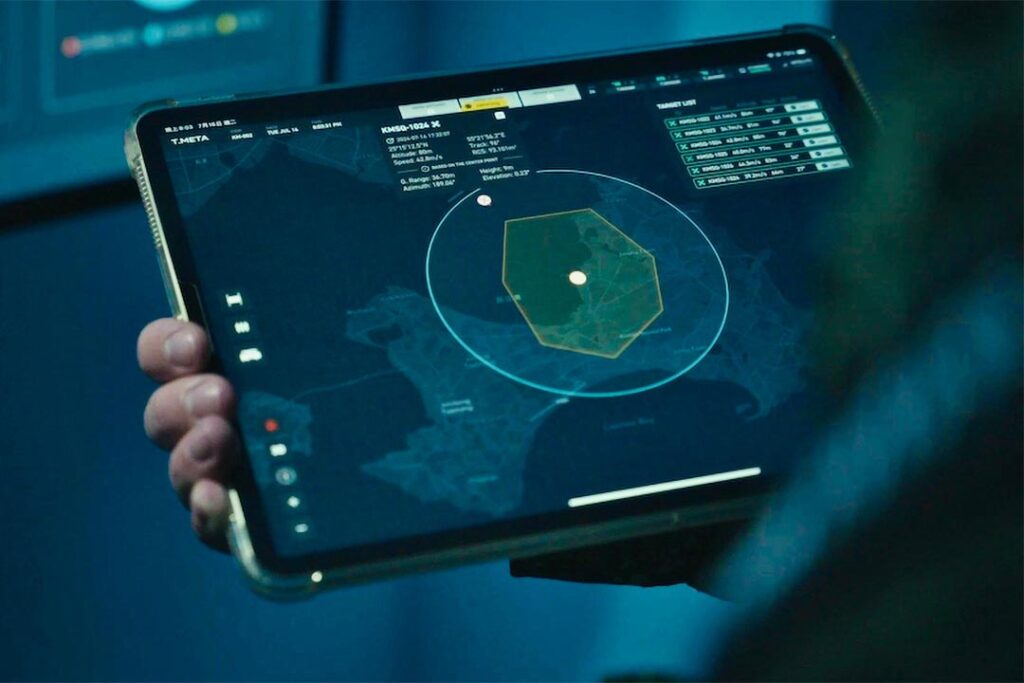
- In drones, communications, and cybersecurity, joint development of UAV systems, 5G/B5G infrastructure, and AI-driven security solutions is increasingly strategic.
- Finally, in the space industry, cooperation around satellite systems, low-earth orbit (LEO) networks, and ground infrastructure presents significant long-term potential, albeit with challenges in commercialization and capability scaling.
Toward Strategic Co-Innovation
Taiwan–Japan industrial cooperation is undergoing a fundamental transformation. What was once a relationship defined by manufacturing complementarity is evolving into a strategic partnership centered on co-innovation, supply chain resilience, and global problem-solving.
In this new phase, Taiwan serves as a critical innovation partner, manufacturing hub, and regional bridge, while Japan contributes deep technological foundations and advanced R&D capabilities.
Together, they are increasingly positioned not just as trading partners, but as co-architects of next-generation industrial ecosystems—capable of shaping the future of technology, sustainability, and economic security across the Indo-Pacific region.