
The 60th anniversary of diplomatic relations between Singapore and Japan is a reminder of how far the partnership has come and how much potential still lies ahead. Through a year of commemorative activities, both countries are underscoring the breadth of their engagement across diplomacy, business, culture and innovation. Ambassador Ong Eng Chuan reflects on how the relationship has matured, what gives it lasting relevance and why its momentum matters in a rapidly changing region.

Bridges: In the spirit of “Co-imagine, Co-create, Co-evolve,” how does the Singapore Embassy envision Singaporean cultural or artistic initiatives that can resonate most with Japanese audiences and build mutual understanding?
Ong: As the theme of the 60th anniversary of Singapore-Japan diplomatic relations (SJ60) “Co-imagine, Co-create, Co-evolve” suggests, the strength of our partnership has always been a joint effort between both countries and our people. It is in this spirit that we held a SJ60 Commemorative Concert “Stories from an Island City” in April. The concert featured the TENG Ensemble, a Singaporean fusion music group that imbues musical influences from the East, West, traditional and contemporary. TENG Ensemble is known for its performances which bridge cultures and eras, creating a captivating experience that reflects Singapore’s rich musical heritage while embracing modern artistry. We are specially delighted that the Ensemble was joined by musicians from Little Creators, a distinguished Tokyo-based non-profit organisation, committed to empowering children from underprivileged backgrounds through the transformative power of the arts. Members of Little Creators started their work 20 years ago during the 40th anniversary of Singapore–Japan ties. They came full circle to join the TENG Ensemble in putting up a unique Singapore-Japan collaboration performance for SJ60.
How is the Singapore Embassy engaging Japanese youth, creatives, and local communities to increase their direct involvement in SJ60, ensuring they feel a shared sense of ownership in this milestone?
At the Singapore Embassy, we believe in the power of engaging and giving back to the local communities, as well as working with youth and creatives. We have a series of events lined up for SJ60. The Commemorative Concert I mentioned above which brings together musicians from both countries is one example. In April, we have a CSR event with Singapore Airlines (SIA) and Narita International Airport Corporation (NAA) where we will bring children from “Sompo No Ie S Nishikojiya Kids Cafeteria” on an exclusive tour of the SIA plane. Apart from getting a chance to interact with crew and experience what it is like to fly with SIA, they will also visit the NAA Ramp Central Tower to learn about the inner workings of the airport from a bird’s eye view, before finishing the day with Singapore’s famous chicken rice, served in the form of an aircraft meal. In May, we will have an Open House to welcome Minato City junior high school students and their families. As our Embassy is based in Minato City, we hope that through the Singapore-themed extravaganza, they can be introduced to Singapore in a fun and memorable way – learning about Singapore history, our childhood games and even savour some authentic Singapore cuisine. We also have a stamp rally planned in the later part of this year which would bring the Merlion mascot, known as Merli, closer to the hearts of the Japanese public, including children and youth. There are also plans to organise a film festival as well as an art exhibition to showcase the softer side of Singapore. Such artistic exchanges help to further deepen the cultural ties between Singapore and Japan and bring our people closer to one another.
From the Singapore Embassy’s perspective, how can SJ60 be used to deepen Singapore–Japan collaboration in emerging areas such as digital innovation and green technology, and what priorities would Singapore most want to advance?
Singapore Prime Minister Lawrence Wong made an official visit to Japan from 17 to 19 March 2026. During his visit, Prime Minister Wong and Japan Prime Minister Takaichi Sanae jointly upgraded Singapore-Japan relations to a Strategic Partnership in conjunction with SJ60. The two leaders affirmed the enduring partnership between both countries, and agreed to deepen cooperation in areas such as the green and digital economies as well as supply chain and economic resilience. This will help both countries better navigate the uncertain geopolitical environment, and deliver benefits for our peoples and businesses. During their meeting, both leaders also agreed on the importance of working together to uphold free and open trade, the rules-based international order, and the open and inclusive regional architecture with ASEAN at its centre. As the country coordinator for ASEAN-Japan relations, Prime Minister Wong committed to work closely with Japan to implement the ASEAN-Japan Comprehensive Strategic Partnership. This includes deepening economic integration and collaborating on digital and green initiatives, such as the ASEAN Power Grid and the Asian Zero Emission Community.
What lasting frameworks or platforms does the Singapore Embassy envision in nurturing sustained bilateral engagement beyond 2026?
More than two decades ago, our relationship entered a major new phase in 2002, with the signing of the Japan-Singapore Economic Partnership Agreement – Singapore’s first free trade agreement with a major economy, and Japan’s very first FTA with any country. This facilitated the expansion of Japanese enterprises into markets across ASEAN and the Asia-Pacific, with Singapore as their base. It also strengthened Singapore’s role as an international business hub, while deepening Japan’s economic ties with the region. Soon after, our economic cooperation expanded further to include the region and beyond. We are both parties to the ASEAN-Japan Comprehensive Economic Partnership, Regional Comprehensive Economic Partnership (RCEP) agreement and the Comprehensive and Progressive Agreement for Trans-Pacific Partnership (CPTPP) – key pillars of the international economic architecture.
“As the theme of the 60th anniversary of Singapore-Japan diplomatic relations (SJ60) ‘Co-imagine, Co-create, Co-evolve’ suggests, the strength of our partnership has always been a joint effort between both countries and our people.”
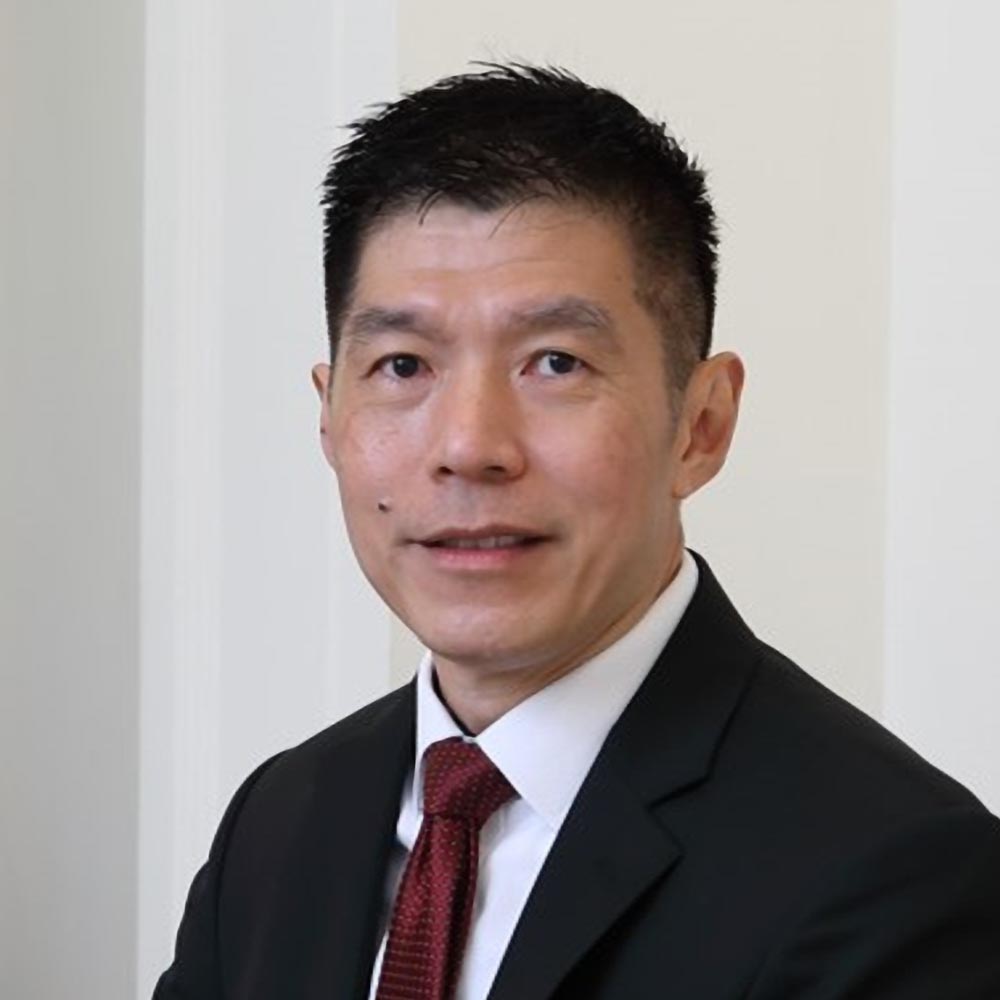
Ong Eng Chuan, Ambassador of Singapore to Japan

Now, we are jointly taking the lead to address critical issues of our time. Take the digitalisation of trade, which is a fact of everyday life. Singapore and Japan facilitated the conclusion of the e-commerce agreement together with Australia, delivering the world’s first baseline rules on e-commerce with the support of 72 co-sponsors. Today, Singapore and Japan face a world marked by intense uncertainty, fragmentation, and disruption. But our six decades of partnership provide firm foundations for navigating this changed world. As like-minded countries with a shared commitment to free trade and rules-based multilateralism, there is much more that we can do together. This includes pursuing new opportunities in the digital economy, including shaping international standards, and collaborating more in frontier areas like artificial intelligence, quantum, and space.
As encapsulated in our newly announced Joint Statement of the Strategic Partnership, the five pillars of our Strategic Partnership – promotion of free trade and economic cooperation; digitalisation and technology; security and defence; green transition and energy cooperation, partnerships and exchanges – provide a framework for us to deepen and expand bilateral cooperation in existing and forward-looking areas, which can serve as pathfinders for broader regional and international cooperation.
At 60, the Singapore-Japan partnership is strong and puts us in a good position to “Co-imagine, Co-create, and Co-evolve” an exciting new chapter of Singapore-Japan ties.