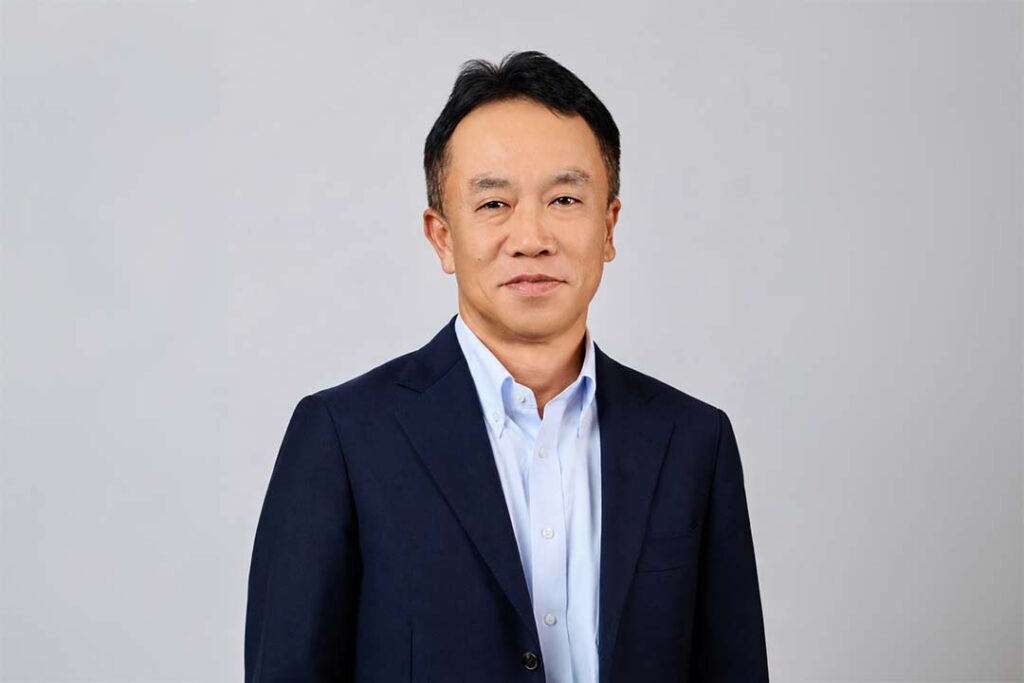

In a milestone year for Japan-Singapore ties, SJ60 stands as both a celebration of 60 years of longstanding friendship and a chance to shape what comes next. Guided by the theme “Co-imagine, Co-create, Co-evolve,” the anniversary highlights the strength of people-to-people ties while opening new possibilities in innovation, culture, education and regional cooperation. Ambassador Hiroshi Ishikawa of Japan outlines what SJ60 represents for Japan and Singapore, the opportunities it creates and the enduring legacy it is meant to leave behind.
Bridges: The SJ60 theme is “Co-imagine, Co-create, Co-evolve.” From your perspective, what would meaningful success look like at the end of SJ60 when it comes to people-to-people ties, and what new forms of exchange or collaboration do you hope this anniversary will encourage between Japanese and Singaporeans?
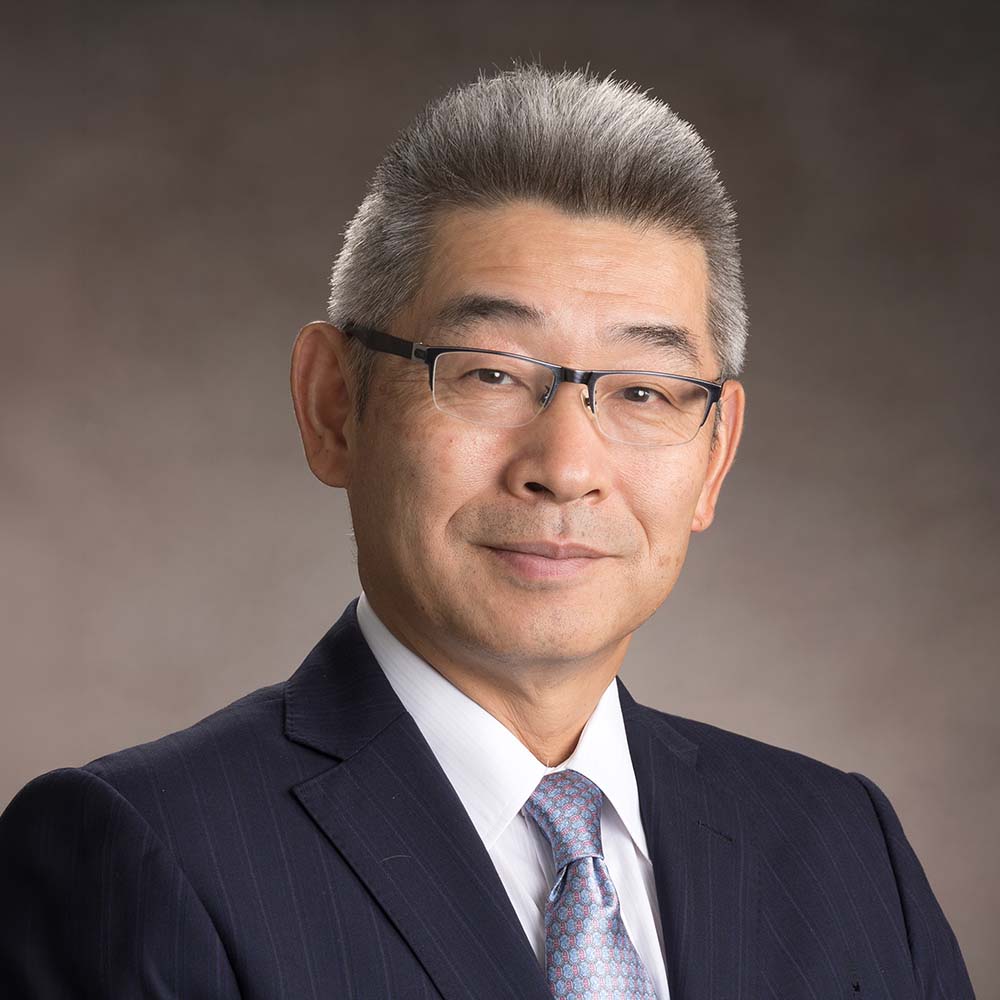
Ambassador Hiroshi Ishikawa: SJ60 is a truly historic milestone, and it is a great honor to serve as Ambassador in this commemorative year. The theme we have chosen — ‘Co-imagine, Co-create, Co-evolve’ — reflects our shared commitment to building a brighter future together, not only for the two countries but also for the rest of the world. Throughout the year, we anticipate hundreds of commemorative events spanning every facet of our partnership: culture, tourism, gastronomy, business and technology. I look forward to engaging with as many people as possible to celebrate our long-standing friendship.
In 1977, Prime Minister Fukuda articulated three principles of Japan’s Southeast Asia policy in Manilla – what are called the Fukuda Doctrine – : (1) Japan would build “heart-to-heart” relationship with ASEAN countries; (2) Japan and ASEAN are equal partners; (3) Japan will not take the path to great military power. Since then, the spirit of “heart-to-heart” exchanges remains at the core of Japan’s approach to Southeast Asia. We must never relent in our efforts to promote such exchanges, particularly among younger generations, based upon a conviction that millions of person-to-person interactions are instrumental in building mutual trust between us.
First, the prominence of our human exchanges always appears in tourism. Last year, more than 720,000 Singaporeans visited Japan — a new record. I would encourage them to venture beyond Tokyo, Osaka, Kyoto and Niseko to discover the charms of individual regions in Japan. At the same time, Singapore has become a popular destination for Japanese junior high school and high school trips. Students are drawn to Singapore’s safety, sophisticated digital infrastructure, and multiculturalism — there is much to learn here. Through these mutual visits, I hope our people will gain deeper understanding and build lasting friendships.
Second, I have been focusing on bilateral cooperation for innovation and prosperity and, here again, strong people-to-people ties have been a key driver. With over 5,000 Japanese companies operating in Singapore, and Singapore standing as Japan’s top Asian investor, our partnership remains robust. I have been hosting a series of business events at my official residence, often in close partnership with JETRO Singapore and other business coordinators that provide opportunities for Singaporean and Japanese business sector, including brilliant startups, to find potential partners, leverage each other’s strengths to develop new business models, and jointly explore third-country markets for mutual profit. I firmly believe that business and innovation are an indispensable component of SJ60, and that an even bigger portion of our bilateral human exchanges will be made by innovative businesses, particularly those conducted by the young generation.
“SJ60 is a truly historic milestone, and it is a great honor to serve as Ambassador in this commemorative year. The theme we have chosen — ‘Co-imagine, Co-create, Co-evolve’ — reflects our shared commitment to building a brighter future together, not only for the two countries but also for the rest of the world.”
Hiroshi Ishikawa, Ambassador of Japan to Singapore
This year is meant to be celebrated with as many people as possible. How is the Embassy engaging youth, creatives, educators and community groups so they can actively shape SJ60 and feel a real sense of ownership alongside the diplomatic and institutional efforts?
Celebrating SJ60 with as many people as possible is at the very heart of our efforts. Beyond diplomatic and institutional activities, we place great importance on fostering a genuine sense of public ownership by ensuring engagement by a wide variety of sectors, groups and individuals.
One example is our open competition for the SJ60 official logo. Through a public call for designs last year, we received 193 entries and selected a winning design by mumooki.co, a Singaporean national residing in Japan, which features a dynamic ’60’ incorporating Singapore’s Lion Head symbol and Japan’s quintessential Sakura motif. What is essential here is its solicitation process itself. The list of those who made submissions covers such a wide spectrum of people, which means a big success in demonstrating the hugeness of interest and friendship we mutually have. I would also like to emphasize that 20 among them were jointly made by the students at a Japanese junior high school and a Singaporean secondary school that have been engaging in annual mutual visits over decades.
To date, over 100 commemorative events of all scales and types have been registered across both countries. Large-scale public events such as “Sakura featuring Sanrio characters” at Gardens by the Bay in March help make SJ60 accessible to the public. The Japanese Association, Singapore, following a major renovation of its clubhouse last year, is expanding its engagement with the local community, transforming into a center of activity for many Singaporean associate members. The Japanese Chamber of Commerce and Industry, Singapore has also been expanding its scope of activities under the banner of SJ60. Meanwhile, organizations such as Singapore chapters of Ikebana and the Way of Tea schools) exemplify how cultural exchange can be rooted in the community through charity activities.
In short, we are already succeeding in ensuring involvement by a variety of stakeholders and believe that the dynamism for expanding the SJ60 network will never stop growing.
While SJ60 celebrates six decades of partnership, it is also a chance to reset priorities. How can Japan and Singapore use this milestone to build a forward-looking agenda for the next decade, particularly in areas such as innovation, sustainability and regional cooperation?
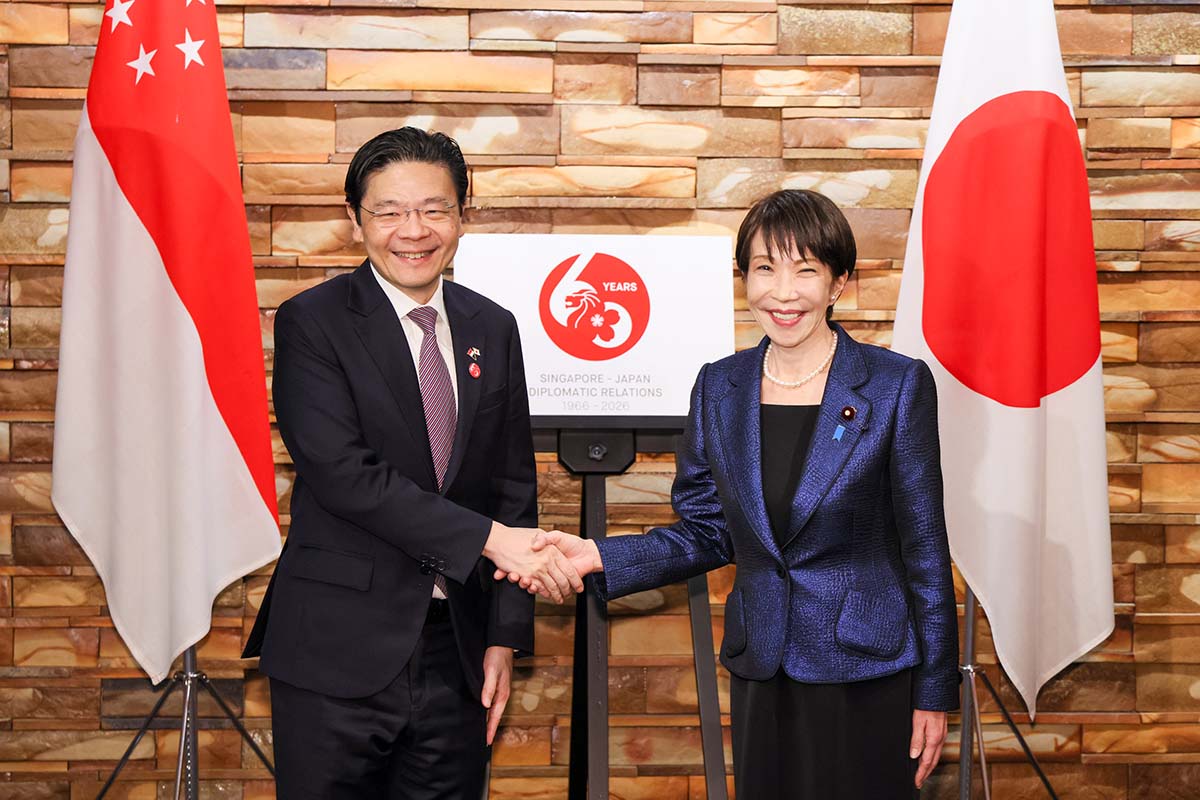
Prime Minister Lawrence Wong’s visit to Japan on 17-19 March — his first as Prime Minister — was a landmark moment. On 18 March, to mark the 60th anniversary, Prime Minister Takaichi and Prime Minister Wong announced the establishment of a Strategic Partnership between Japan and Singapore. This partnership builds on a foundation of shared values: the international order based on the rule of law, a rules-based multilateral trading system, and a free, open, transparent, resilient, inclusive and rules-based regional architecture.
The Strategic Partnership will deepen our substantive and multifaceted relationship while expanding cooperation in forward-looking areas. These include promotion of free trade and economic cooperation, digitalization and technology, security and defense, green transition and energy cooperation, as well as partnerships and exchanges. To reach this monumental document, the governments of Singapore and Japan made an across-the-board review of our past achievements as well as potential areas for future or imminent cooperation. As a result, for example, this joint statement identifies several new technology areas for our bilateral cooperation, represented by AI and quantum technologies. There are also some new initiatives for strengthening the resilience of economic infrastructure and production capabilities, such as submarines, cables and semiconductors. Regarding the latter, please let me draw your special attention to the joint development of advanced semiconductor back-end processing technology between Rapidus — Japan’s newly established semiconductor company aimed at producing next generation, cutting-edge chips — and Singapore’s Agency for Science, Technology and Research (A*STAR).
Japan has been proud of being ASEAN’s most trusted partners over 50 years, and our unwavering support for ASEAN Centrality and the ASEAN Outlook on the Indo-Pacific (AOIP) has contributed to regional peace, stability, and prosperity. We welcome the adoption of the ASEAN-Japan Joint Leaders’ Statement on Further Promotion and Implementation of the AOIP. The Statement highlights the strong synergy between the AOIP and the Free and Open Indo-Pacific, which share fundamental principles. We remain committed to advancing concrete AOIP projects and activities that support a rules-based, free, and open Indo-Pacific.
In this regard, we are having a golden opportunity: Singapore serves as the country coordinator for ASEAN-Japan dialogue relations until the summer of next year; Singapore will assume the ASEAN Chair next year; and 2027 also marks the 50th anniversary of the Fukuda Doctrine. We must take full advantage of this remarkable convergence of ASEAN milestones and SJ60. Japan is determined to build on this momentum to advance not only our bilateral ties, but also Japan-ASEAN cooperation on regional and global issues.
Major cultural events are planned, including the Japanese Festival and the NHK Symphony Orchestra’s return to Singapore. How do you see culture and arts strengthening Japan–Singapore ties by creating connections and understanding that go beyond what formal diplomacy can achieve?
Culture and the arts possess a universal power to connect hearts and minds in ways that formal diplomacy cannot. This year, the NHK Symphony Orchestra — celebrating its 100th anniversary — will perform in Singapore on 29 April for the first time in 24 years. The full orchestra will be preceded by a brass band performance of some Pokémon numbers – a true fusion of classical music and pop culture.
I would also like to highlight the Japanese Film Festival, which has been held here for over 40 years and has become an established pillar of our cultural exchange. International co-productions like ‘Renoir, which opened the festival last year,’ demonstrate the power of film to connect people and nations, symbolizing the growing creative partnership between our two countries. It is also a welcome trend that Japanese pop culture, including anime, is widely accepted in Singapore, especially among young people.
Culture, of course, extends to cuisine. Japanese food is extremely popular in Singapore, and Japan offers a wide variety of high-quality products — wagyu, seafood, matcha, fruits, and sake — that I believe are among the best in the world.
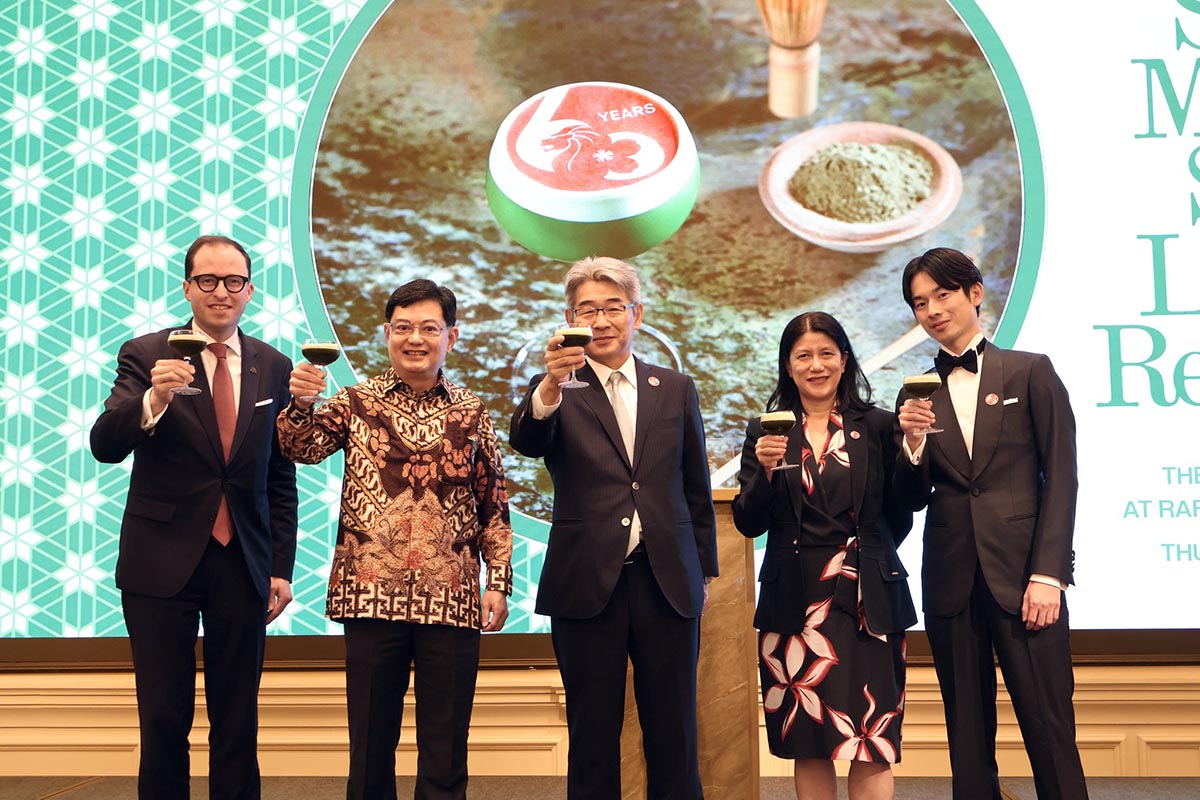
Celebrating SJ60, Raffles Hotel Singapore now serves the “SJ60 Matcha Sling,” featuring premium Kyoto Uji matcha. Inspired by the philosophy of “Ichigo Ichie,” — treasuring every encounter as a once-in-a-lifetime moment. This cocktail also embodies our theme — “Co-Imagine, Co-Create, Co-Evolve” symbolizing our commitment to strengthening the friendship between Japan and Singapore.
Additionally, during this Lunar New Year, we introduced premium Japanese ingredients, particularly sashimi, to Lo Hei — Singapore’s traditional “prosperity toss”. By blending this vibrant local custom with the finest flavors of Japan, the project served as a delicious symbol of our enduring friendship.
“On 18 March, to mark the 60th anniversary, Prime Minister Takaichi and Prime Minister Wong announced the establishment of a Strategic Partnership between Japan and Singapore. This partnership builds on a foundation of shared values: the international order based on the rule of law, a rules-based multilateral trading system, and a free, open, transparent, resilient, inclusive and rules-based regional architecture.”
All these initiatives for cultural and art exchange will culminate at the SJ60 flagship event that will take place in November, where dozens of booths, exhibitions and performances will be provided to showcase all the aspects of Japanese culture and art, including culinary ones. I look forward to sharing with you more details of this event soon and welcoming as many visitors as possible who I assure will enjoy themselves with abundant Japanese contents.
Looking beyond the anniversary year, what kind of legacy would you like these official SJ60 events to leave, especially for younger generations who will shape the next phase of Japan–Singapore relations?
Over the last 60 years, we have advanced common interests, engaged in collaborative learning, and cultivated deep mutual trust. We honor those who built the excellent relationship we enjoy today, and we are determined to make this anniversary year a pivotal milestone in strengthening our ties for the next generation.
Building upon our achievements over the past six decades, it is my sincere hope that this milestone marks the dawn of an even more vibrant partnership for the next 60 years and beyond. To this end, it is critically important for us to develop leaders’ commitments under the Strategic Partnership steadily into tangible initiatives and projects that can bring real benefits for us. The opportunities for exchange created through SJ60 must not be one-off occurrences — we must establish sustainable frameworks and platforms where the next generation can take the lead, bring their own ideas to life, and shape the relationship in their own way.
Our ultimate goal is for younger generations in both countries to recognize one another as their most trusted partners. By deepening these personal bonds and passing down a relationship where they can fearlessly tackle future challenges together, we will create the most precious legacy of SJ60.