
Since 2022, the yen has lost roughly 13 percent of its value against the Philippine peso — and as of 2026, has yet to recover it. For 350,000 Filipino workers in Japan, their salaries stayed the same. What arrives home each month still does not.
There is a quiet arithmetic at the center of the Japan–Philippines relationship. More than 23,000 Filipinos work in Japan’s medical care and welfare sector. They staff the care homes keeping Japan’s elderly population alive and dignified. They are, in a structural sense, indispensable. Japan’s own government projects a shortage of 570,000 care workers by 2040. Its elderly population already accounts for 29.4 percent of total residents — the highest proportion of any major nation on earth — and it is still growing. The job opening-to-applicant ratio for caregiving roles runs at nearly four to one. The facilities that remain open do so, in many cases, because Filipino workers showed up.
What those same workers send home is the other side of that equation. Japan is the fourth-largest source of cash remittances to the Philippines, accounting for five percent of a record USD 35.63 billion total in 2025 — a corridor worth roughly USD 1.78 billion annually, sustaining families across Cebu, Laguna, Batangas, and beyond. The bilateral relationship runs in both directions simultaneously: Filipino labor keeps Japanese care infrastructure functioning, and Filipino remittances keep Philippine household economies afloat. For seventy years, that exchange has deepened. It is being tested still.

Melody Morimoto has watched this from both sides. A former Filipino healthcare worker in Japan, she now runs ReachPrime Training Center Corp. in the Philippines, preparing the next generation for exactly this work. She is precise about what the role demands and what it costs.
“Many of them are carrying two responsibilities at the same time: caring for people in Japan while also caring for their own families from a distance.” — Melody Morimoto, former Japanese healthcare worker, founder of ReachPrime Training Center Corp.

The JPY/PHP rate, which hovered near ₱0.43 to the yen in 2022, fell to an average of ₱0.3786 in 2024, bottoming at ₱0.3607. As of 2026, it remains in that same depressed range — around ₱0.376 — having never recovered the ground it lost. For a worker sending a fixed ¥150,000 each month — a common mid-range figure after rent, food, and transport in Osaka or Nagoya — that erosion still translates to roughly ₱8,000–₱10,500 less arriving home every month compared to 2022. The salary has not changed. The situation has not resolved.
The macro picture, meanwhile, has consistently told a different story. Economists noted approvingly that the weak peso was boosting remittance values. What those observations did not capture was a structural asymmetry hiding inside the aggregate: workers in the United States, Saudi Arabia, and Singapore earn in dollars or dollar-pegged currencies — peso weakness made their transfers worth more at home. Workers in Japan earn in yen. They received none of that upside. They were squeezed from both sides simultaneously, while the headline figures made the whole system look healthy.
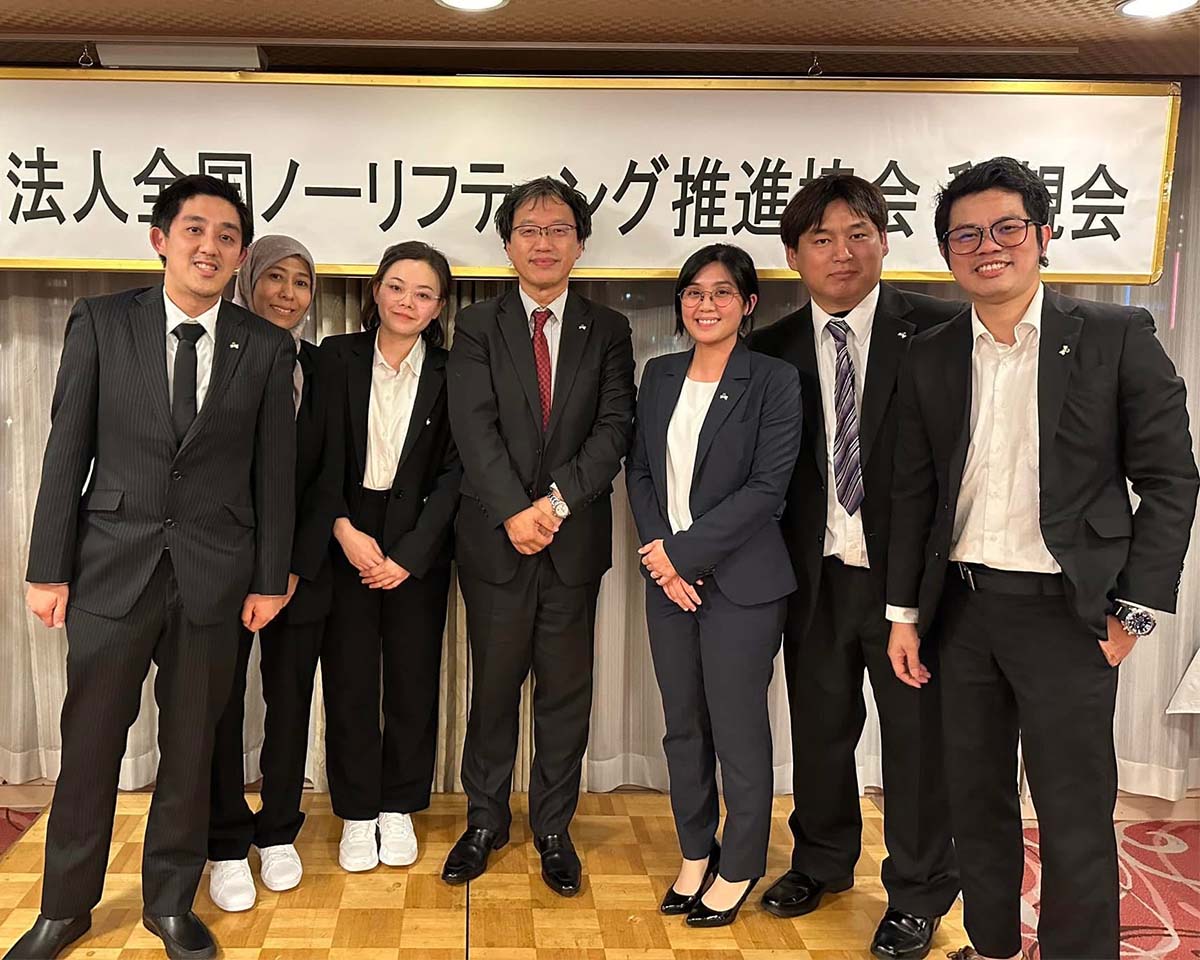
Gabriel Ilano, currently working in Japan’s healthcare and caregiving sector, named the bind precisely.
“While remittance values dropped, domestic inflation in the Philippines also drove up basic living costs there. To maintain the same financial support for family, OFW workers have to send more yen, leaving less for their own savings in Japan.” — Gabriel Ilano, OFW healthcare worker, Japan
He also raised something the remittance data does not capture: the structural ceiling on how workers can respond. Unlike OFWs in other countries who might take a second job to offset a currency loss, many foreign workers in Japan are restricted by visa conditions from supplementary employment unless they hold permanent or long-term residency. The floor drops. The ceiling stays.
“Healthcare and caregiving work wages in Japan are generally below average, so pay raises haven’t always kept pace with rising daily costs — and some foreigners are not allowed to do part-time work freely as they want to earn additional income unless they have a permanent or long-term visa.” — Gabriel Ilano
His concern extends further. With competing destinations — Europe, North America, Australia — offering more lucrative alternatives to Filipino nurses and caregivers, and with proposed measures that would raise visa-related costs for foreign residents in Japan, the question is not simply whether workers can absorb the yen’s volatility. It is whether Japan will retain the workers its care system has come to depend on. That is not a rhetorical question. It is a demographic one, and the answer has consequences for both countries.
Some workers have already reorganized around the new reality. Shiela Augusto, a former caregiver who now lives in Japan full-time, has been watching the yen move for fifteen years.
“The yen has been weak since 2022 as far as I can remember… fifteen years ago it was around 0.50 pesos per ¥1 but it gradually weakened and never recovered until now.” — Shiela Augusto, former caregiver, Japan resident
Her response was not to send less and absorb the loss. It was to restructure entirely.
“Instead of sending all, I saved some in my Japanese bank account and invested them in NISA. I also invested in MP2 in the Philippines so money could still grow.” — Shiela Augusto
“The success of a Filipino worker in Japan should not be measured only by how much money they can send home each month. Success should also mean being able to build a stable career, develop professional skills, communicate confidently in Japanese, save for the future, and eventually have more choices in life.”
Melody Morimoto
What Shiela describes is a dual-track strategy that more Filipino workers in Japan are arriving at independently, through community knowledge rather than any formal guidance. On the Japanese side: NISA, the Nippon Individual Savings Account, is a government-backed tax-exempt investment scheme significantly expanded in January 2024 — made permanent, with annual investment limits raised to ¥3.6 million and a lifetime cap of ¥18 million, with capital gains held within the account kept tax-free indefinitely. Foreign residents are eligible provided they hold a valid residence card and My Number, and can access it through platforms such as SBI Securities and Rakuten Securities — though account opening typically requires a paper application rather than a fully online process. On the Philippine side: MP2, or Modified Pag-IBIG 2, is a voluntary government savings program available to OFWs that typically yields dividends above commercial bank rates, allowing workers to grow peso-denominated savings without active management.
Together, these tools represent something the headline remittance figures have never shown: a community building long-term financial architecture on both sides of the corridor simultaneously, without institutional instruction, largely by sharing information in Facebook groups and community forums in Tagalog.
The platform at the center of this community’s financial life is Smiles Mobile Remittance, built by Digital Wallet Corporation in Tokyo and now Japan’s number one mobile money transfer service. Smiles did not begin as a corporate product looking for a market. It was shaped directly by the Filipino OFW community whose suggestions improved it as it grew, earning the Good Design Award 2021 — the first and only remittance app in Japan to receive the distinction. Its features reflect that origin: a live JPY/PHP rate calculator accessible at any moment, a remittance simulator for planning transfers before committing, Tagalog-language support alongside English and Japanese, and a loyalty points program that can be used to offset transaction fees. More than 85 percent of its customers remit on average more than twice a month — a figure that suggests active rate monitoring rather than passive monthly transfers.
“While remittance values dropped, domestic inflation in the Philippines also drove up basic living costs there. To maintain the same financial support for family, OFW workers have to send more yen, leaving less for their own savings in Japan.”
Gabriel Ilano
What Smiles provides is transparency and timing intelligence: workers can see the rate, run the numbers, and decide whether today is the day to send. What it has not yet built — and what the community is building for itself in its absence — is a layer of structured financial education: guidance on when to hold rather than send, how to use NISA as a complementary vehicle, how to think about currency cycles in the context of a two- or three-year contract. That knowledge exists in the community. It travels through WhatsApp threads and Facebook posts and the accumulated experience of workers like Shiela Augusto, who has been running her own informal financial education for fifteen years simply by living through it.
Japan, for its part, is in the middle of its own national financial literacy reckoning. In April 2024, the Japanese government established J-FLEC — the Japan Financial Literacy and Education Corporation — a public-private body that began full operations in August of the same year. Its mandate is to provide financial education to workplaces, schools, and regional communities across Japan, free from the influence of any particular financial institution. Its existence is an acknowledgment that Japan’s historically low financial literacy — surveys show only around seven percent of people feel they have received adequate financial education — is now a structural problem in a country trying to shift household assets from bank deposits into productive investment.
J-FLEC’s workplace mandate is significant. It means the care homes and factories where Filipino workers are employed are technically within scope of Japan’s national financial education effort. In practice, that outreach has not yet been designed with foreign workers in mind. The language barrier is real. The cultural context of remittance — the obligation to family, the dual-country financial life, the peso-yen calculation running in the background of every spending decision — has no equivalent in the financial literacy framework being built for Japanese citizens. The tools exist. The translation, in every sense, has not happened yet.

Melody Morimoto, building that translation from the Philippine side through her training programs, frames the ambition plainly.
“If we can equip them with strong Japanese-language skills, professional competencies, financial awareness, and a realistic understanding of life in Japan, they will be better prepared not only to earn but also to build a sustainable future.
“The success of a Filipino worker in Japan should not be measured only by how much money they can send home each month. Success should also mean being able to build a stable career, develop professional skills, communicate confidently in Japanese, save for the future, and eventually have more choices in life.” — Melody Morimoto
“The yen has been weak since 2022 as far as I can remember… fifteen years ago it was around 0.50 pesos per ¥1 but it gradually weakened and never recovered until now.”
Shiela Augusto
The Bank of Japan has been raising interest rates since March 2024, moving away from the decade-long ultra-low policy that drove the yen’s decline. It has not been enough. As of 2026, the JPY/PHP rate remains well below its 2022 levels — around ₱0.376, compared to the ₱0.43 that workers remember. The anticipated recovery has been slow and uneven, and for workers calculating how much to send home this month, the arithmetic has not fundamentally changed.
Gabriel Ilano is still watching the Bank of Japan’s rate decisions. He is still calculating whether the wages, the visa restrictions, and the currency risk add up to a future worth building in Japan rather than somewhere else. He has not left. Neither have the tens of thousands like him — not because the conditions are easy, but because the obligations on both sides of this relationship run deeper than any exchange rate. Japan needs the labor. The labor needs the income. That calculus has held for seventy years, and it holds still.
What the next seventy years look like depends, in part, on whether Japanese institutions — financial, governmental, and corporate — begin to see the foreign workers inside their care homes and factories not only as labor supply, but as residents with financial lives, long-term plans, and needs that existing infrastructure was not built to serve. The tools are there. NISA is accessible. J-FLEC’s mandate reaches into workplaces. Smiles already has 177,000 followers on its Philippines-facing Facebook page and the trust of a community that helped build it. The gap between what exists and what the community needs is not wide. It has simply not been crossed yet.
The work goes on. It has always gone on. The question — for policymakers, for employers, and for the fintech companies that have already earned the community’s trust — is whether the conditions that make that work sustainable will finally be treated with the seriousness the numbers demand.