

In Philippine real estate, distinction is rarely loud. It is found in the finer details: the weight of a door handle, the proportions of a hallway, the thoughtfulness of a lobby designed not just to impress on arrival but to serve gracefully for decades. The instinct traces back to founder Tomas Lorenzo, who, studying at the Wharton School in Philadelphia, encountered premium student housing for the first time and returned home determined to build something equivalent. That first building, opened in 2000 at the corner of Taft Avenue and Vito Cruz. It set a standard, and a direction the company has followed ever since.

Having pioneered the country’s first premium university residences, Torre Lorenzo Development Corporation has grown into a full-scale developer with residential, integrated-use, and hospitality projects across Metro Manila, Lipa, and Davao. Yet even as the company has expanded, its reputation has remained rooted not in scale, but in craftsmanship.

That philosophy now enters a new chapter under Cathy Casares-Ko, Torre Lorenzo’s newly appointed CEO and the company’s first female chief executive. As the developer extends its reach beyond Metro Manila, she is determined to prove that growth and precision can coexist, a conviction shaped in part by years of studying how Japan’s most respected companies approach business.
What struck her was not merely the high quality standards Japanese companies bring to any endeavor, but something harder to systematize: a fundamental instinct for stewardship, a tendency to enter any venture with the assumption that the relationship will outlast the transaction. It is a mindset she has worked to instill at Torre Lorenzo, long before the company put it into words.
“There is always a temptation to standardize on processes, materials, and design decisions so that you can move faster and manage costs,” she says. “But our brand is built on a level of attention to detail that cannot be reduced to a checklist.”
For most developers, expansion is measured by geography. For Torre Lorenzo, it is measured by whether its standards go the distance. The company has built its growth strategy around three foundations: rigorous internal quality standards, systems designed to preserve them across projects, and a reliable team. It is an approach she sees mirrored in how successful Japanese companies operate, where consistency is maintained not through individual effort but through institutional process.
“Our commitment as a company is very simple. We build places that stay relevant.”
Cathy Casares-Ko, CEO of Torre Lorenzo Development Corporation
“As we move from Metro Manila to various locations, we seek to amplify our values and not dilute them,” Casares-Ko says. “We want to grow big, but we want to retain our boutique-ness at heart.” The industry has taken note: Torre Lorenzo has been named Best Boutique Developer at the PropertyGuru Philippines Property Awards four times.
As infrastructure investment and urbanization reshape economic activity beyond Metro Manila, the Philippines is drawing renewed attention from regional and international investors. Yet Casares-Ko believes the country’s greatest opportunity lies beyond the traditional metrics of land values, unit sales, and yields. Too often, she observes, investors arrive with a transactional mindset that overlooks the opportunity to create places that solve everyday needs rather than simply generate returns.

“What differentiates the Philippines is the opportunity to build places that solve daily needs, environments with infrastructure and amenities that serve residents and guests,” she says. “We are capable of creating integrated, lifestyle-oriented communities already.”
That long-term perspective shapes every Torre Lorenzo development. “We think beyond the delivery of a product and selling it,” Casares-Ko says. “We design for durability, operational feasibility, and evolving lifestyle needs.”
In practice, that philosophy demands a discipline most buyers never see. On one project with a seven-year construction timeline, the team had to think carefully about its amenity spaces, recognizing that what felt current at the design stage might already feel dated by the time residents moved in. It is the kind of patience she associates with Japanese businesses, which plan in decades rather than quarters. Rather than follow prevailing fashions, they redesigned the spaces for flexibility, building in the capacity to adapt as lifestyles evolved.
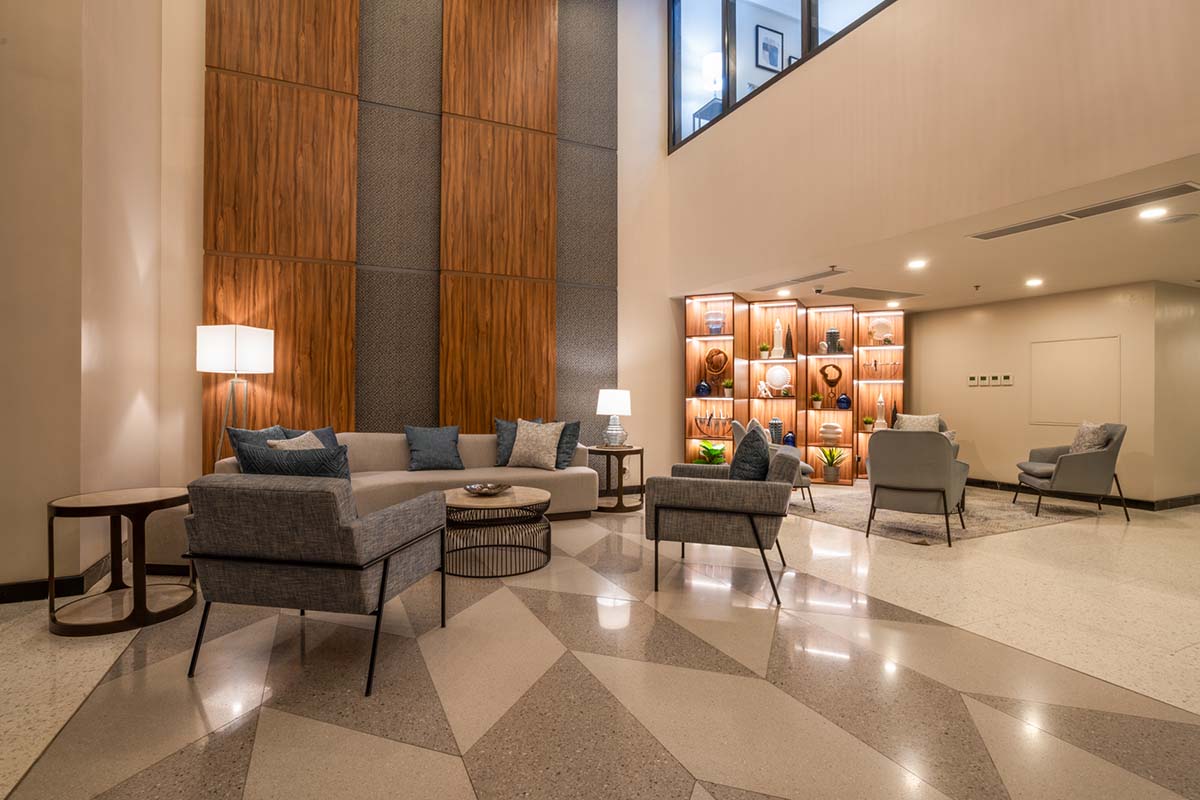
Her scrutiny extends to details that rarely appear in a sales brochure. “I’m very particular about the back of the house,” she says. “If the interior designers go grand, I would think: if I were the building’s maintenance team, how would I manage this? If it’s too intricate to maintain in the future, we rethink.”
The question of whether a building ages with grace or against it is rarely settled at the point of sale. It is settled in decisions like these, made years before the first resident moves in.
That same logic explains why Torre Lorenzo continues managing the properties it develops long after completion. With many projects carrying the family name, stewardship is part of the company’s identity, not a responsibility to be handed off once the last unit is sold. “We always talk about not leaving our buildings after they are sold,” Casares-Ko says.

It is also what draws her to Japanese businesses as potential partners, whose ethos she describes as a natural alignment rather than a strategic calculation. The Japanese concept of omotenashi, hospitality that anticipates rather than merely responds to a guest’s needs, maps closely onto something Torre Lorenzo has practiced since its founding. “You just tweak it a little bit,” she says, “and it’s already our Filipino hospitality concept.”
“Our commitment as a company is very simple,” she says. “We build places that stay relevant.”
The proof is 1Torre Lorenzo itself, completed twenty-six years ago and still fully occupied today. In an industry that moves quickly and forgets faster, Torre Lorenzo is making a quieter argument: that the buildings which endure will ultimately define the cities that do as well.