
Japan’s push to diversify critical mineral supply chains is creating new opportunities for Canadian producers. Among them is E3 Lithium, which controls about 40% of Canada’s total lithium holdings and is positioning itself as a supplier of battery-grade lithium to support Japan’s long-term energy security and a more resilient battery ecosystem.
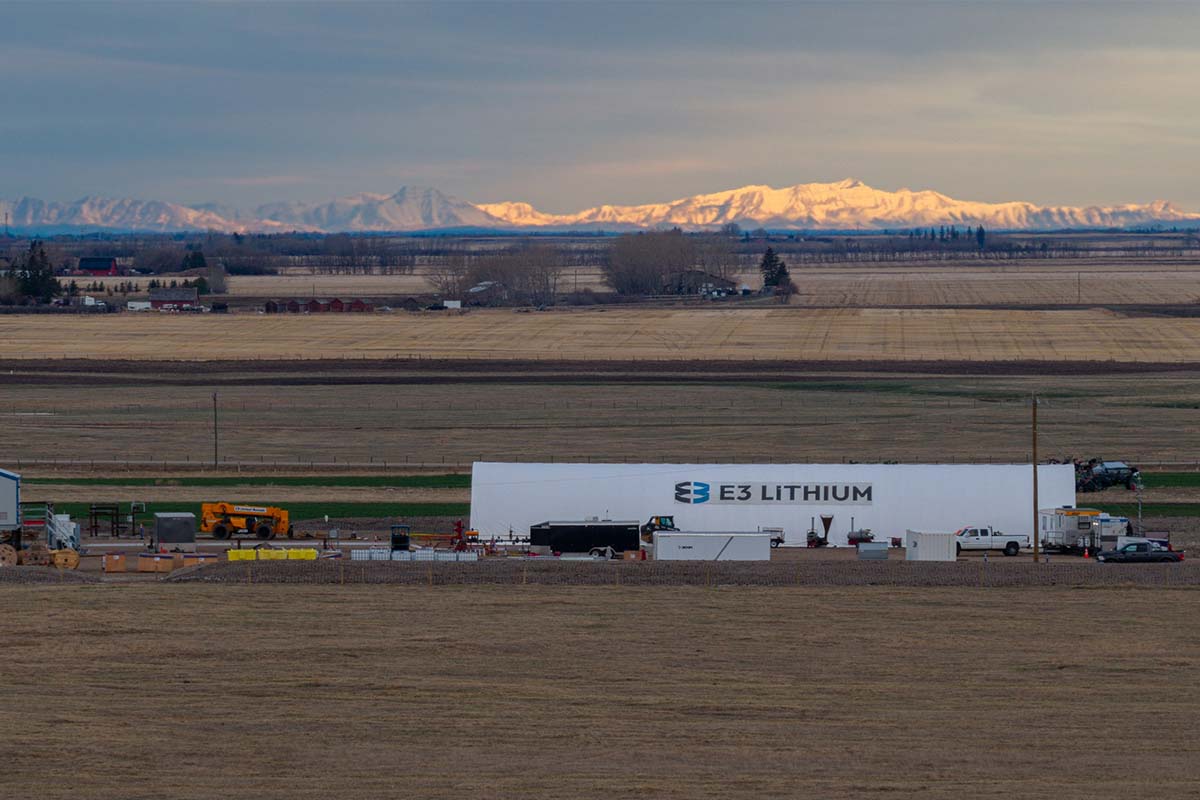
The Calgary-based developer has spent a decade advancing lithium-rich brine resources in Alberta, home to what it says is the world’s third-largest lithium resource base after Bolivia and Argentina. CEO and Chairperson Chris Doornbos said E3’s roots in the province’s oil and gas sector have enabled it to move quickly toward commercial production.
“We produce lithium like an oil and gas company produces oil and gas,” Doornbos said, noting that E3 draws lithium-rich brine from the historic Leduc aquifer, which produced oil for 50 years before being repurposed for lithium. “We don’t mine, actually. We pump,” he said, describing the company’s production method.
E3 is the only Canadian company producing battery-grade lithium salts, shipping a finished product rather than an intermediate material.
“It is a final product ready for the battery industry, which enables us to maneuver the geopolitics a little bit easier,” he said. The company has begun sending demonstration-scale volumes to Japan for qualification testing and is targeting commercial production of 12,000 tons of lithium carbonate annually by 2029.
“We produce lithium like an oil and gas company produces oil and gas. We don’t mine, actually. We pump.”
Chris Doornbos, CEO and Chairperson, E3 Lithium

Doornbos, who recently joined a Canadian trade mission to Japan, said discussions reflected growing confidence among Japanese companies seeking to diversify supply chains. He described “a definitive upbeat pulse” among stakeholders. “This year was very definitive,” he said. “We’re looking for good partners, looking for low geopolitical risk.”
He believes the partnership reflects the complementary strengths of both countries. Japan has deep expertise in batteries and automotive manufacturing but limited domestic resources, while Canada offers abundant critical minerals and, in E3’s case, integrated refining capabilities. With extraction and processing in Alberta, he said, “The full value chain is there.”
Looking ahead, Doornbos pointed to a broader shift toward hard assets, from mining and batteries to power infrastructure supporting everything from electric vehicles to artificial intelligence-driven data centers. “We’re going to start to see a shift back to the hard asset,” he said, arguing that Canada and Japan are well positioned to build that “full ecosystem” together.