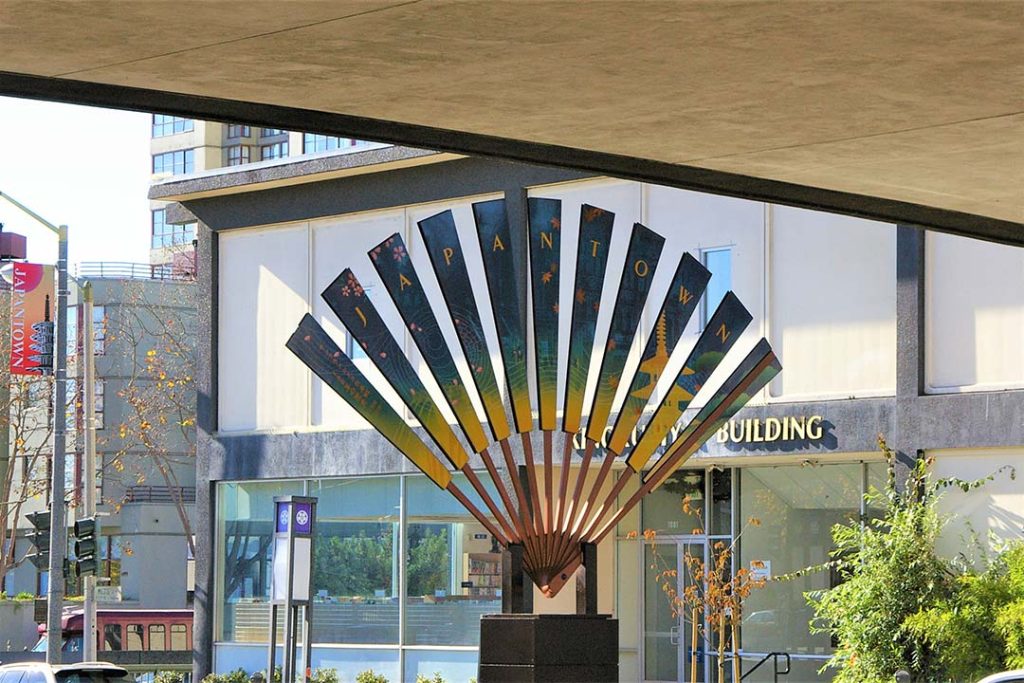

After decades of visiting San Francisco, a walk through its changing downtown revealed a remarkable architectural heritage hiding in plain sight.
I have been visiting San Francisco regularly since 1994, and for much of that time, my attention was fixed straight ahead.

Union Square meant shopping. Market Street meant department stores, window displays and the familiar bustle of downtown. The Financial District was equally familiar. My uncle Ted Baluyut operated two Copyright printing shops, one in the Financial District and another on Kearny Street, so I had been wandering these streets for decades.
Yet I rarely paid much attention to what stood above the storefronts.
On my latest visit, something changed.
San Francisco’s downtown retail scene is still finding its footing. Walking through Union Square, Market Street and the Financial District, I encountered familiar storefronts that had closed, vacant retail spaces and the former Westfield San Francisco Centre, once among the city’s major shopping destinations.
With fewer window displays to distract me, I began noticing the buildings themselves.
For the first time in years, I found myself looking up.
And what a discovery it was.
Above street level stood ornate façades, elaborate stonework, decorative columns and magnificent towers that revealed another San Francisco — one shaped by extraordinary wealth, ambition, catastrophe and reinvention.
A City Built on Gold
San Francisco’s architectural story is inseparable from the California Gold Rush.
The discovery of gold in 1848 transformed a modest settlement into one of the world’s fastest-growing cities. In 1849, fortune seekers arrived in such numbers that they became known as the Forty-Niners.
For anyone wondering where San Francisco’s American football team got its name, there is your answer.
Gold brought merchants, bankers, shipping companies and entrepreneurs. As fortunes accumulated, grand commercial buildings followed. San Francisco became the financial capital of the American West and an increasingly important gateway to Asia.
Then, on April 18, 1906, an earthquake and the devastating fires that followed destroyed much of the city.
The reconstruction was astonishing. Within a few years, new banks, hotels, commercial headquarters and office towers were rising from the ruins. Many of the buildings that caught my attention during this visit were products of that extraordinary rebuilding era.
Newspaper Angle: The Times Square of the West
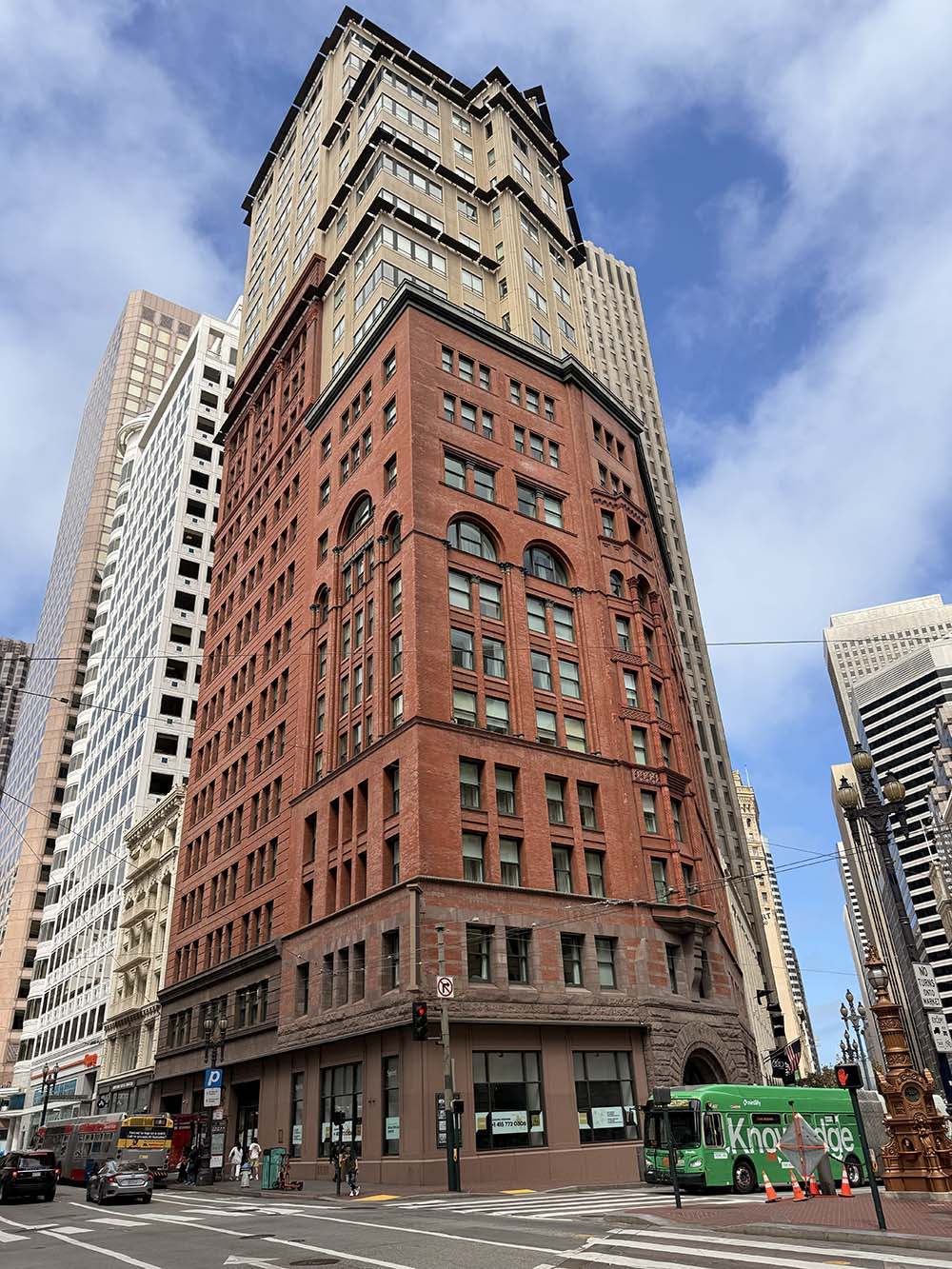
As I continued along Market Street toward the Financial District, I began to appreciate just how much of San Francisco’s history was preserved in buildings I had passed countless times without giving them much thought.
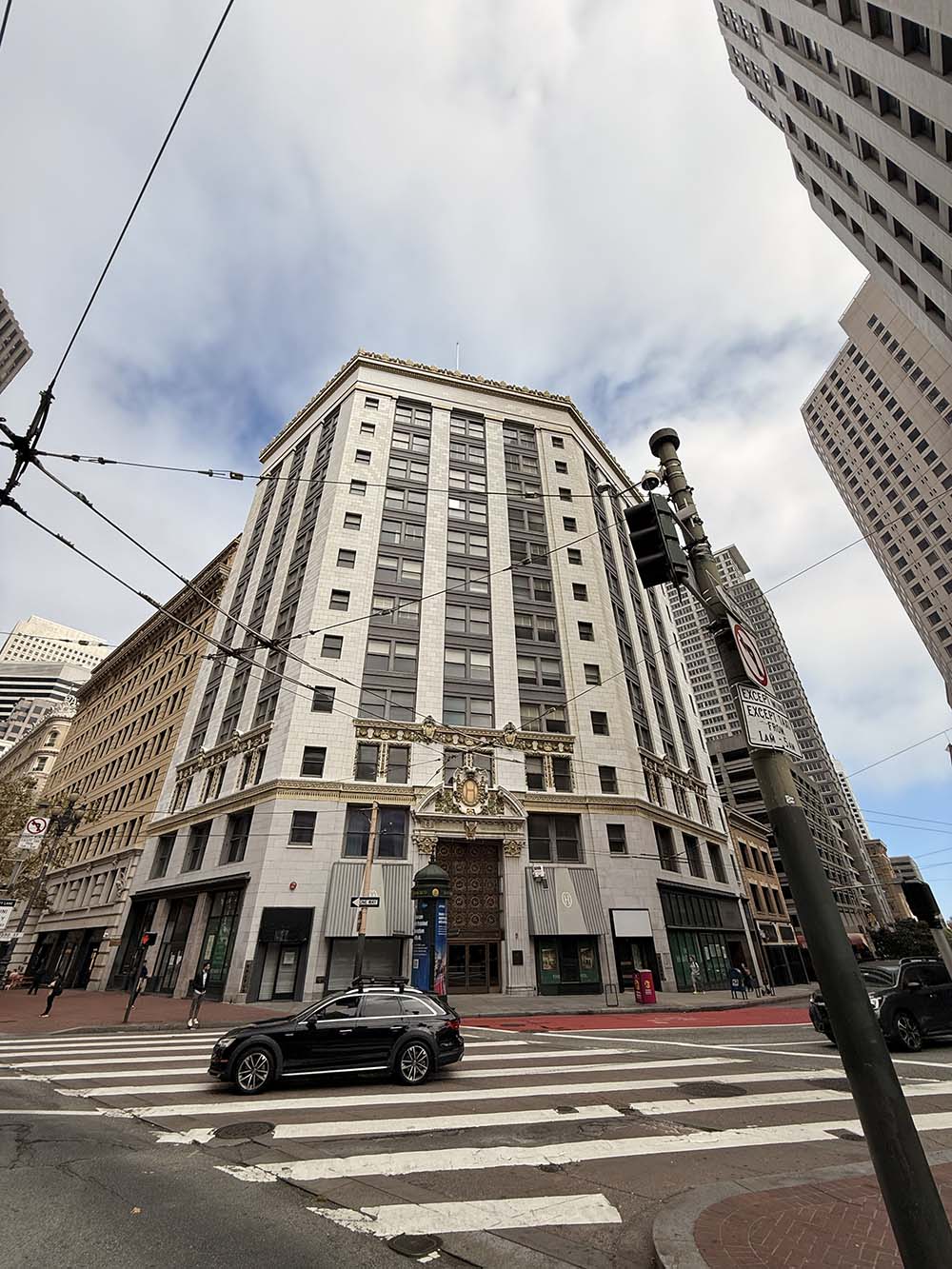
Near the intersection of Market, Third and Kearny streets, I discovered what was once known as “Newspaper Angle,” sometimes described as the “Times Square of the West.”
Long before New York’s Times Square became synonymous with illuminated billboards and entertainment, this corner of San Francisco was home to three powerful newspaper empires: the San Francisco Chronicle, the San Francisco Call and William Randolph Hearst’s San Francisco Examiner.
Their headquarters were architectural statements of wealth, influence and ambition. The original Chronicle Building dates to 1889, the Call Building to 1898, and the Hearst Building to 1911.
Standing among them, I was fascinated by the thought that this intersection was once a battleground for the newspapers that shaped public opinion across the American West.
Wall Street of the West
Farther along, California and Montgomery streets revealed another chapter of the city’s history.
This was the historic heart of San Francisco’s Financial District, where banks, stockbrokers and commercial institutions helped finance California’s extraordinary growth.
Montgomery Street earned its reputation as the “Wall Street of the West,” and the magnificent buildings surrounding the intersection reflected the immense wealth generated by banking, shipping, trade and the Gold Rush.
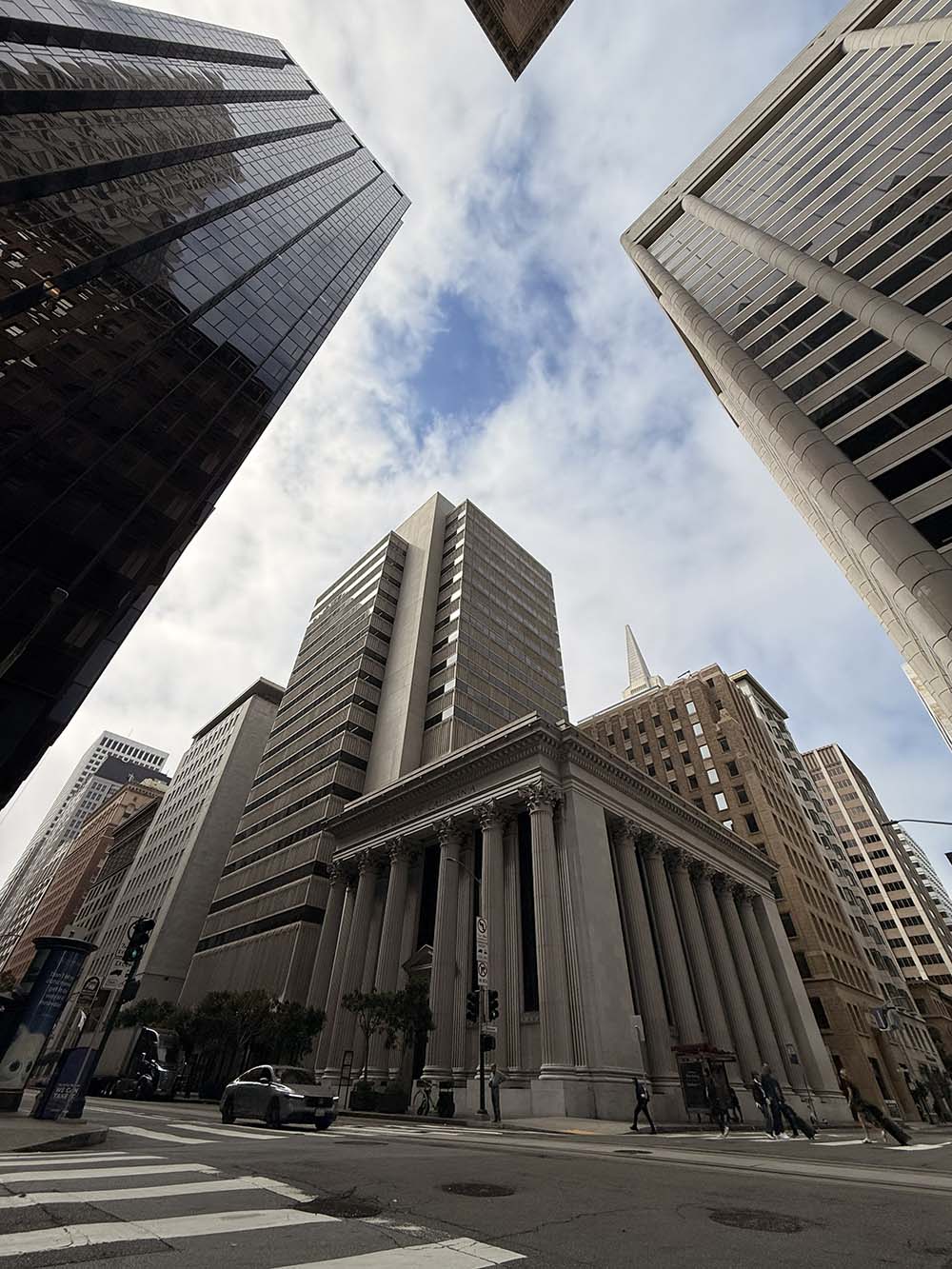
One building particularly caught my attention: the former Bank of California headquarters at 400 California Street.
Completed in 1908, just two years after the devastating earthquake, its imposing Corinthian columns were designed to project strength and permanence.
I was surprised to learn that it is San Francisco Landmark No. 3, one of the first buildings formally designated for historic preservation by the city. Ahead of it on the landmark register are only Mission Dolores, whose surviving church dates to 1791, and Old St. Mary’s Cathedral, completed in 1854.
What made the discovery even more meaningful for this publication was its Japanese connection.
In 2016, Japan’s Takenaka Corporation, together with American real estate investment firm Kennedy Wilson, acquired the historic property and its adjoining office tower at 430 California Street. Their investment offers a tangible example of Japanese capital participating in the stewardship of San Francisco’s architectural heritage.
Looking around the intersection, I was struck by how these century-old buildings stood alongside the glass-and-steel towers of modern San Francisco. The city’s successive eras of prosperity were visible in a single streetscape.
Colin Yasukochi, executive director of CBRE’s Tech Insights Center, sees that long-term appeal reflected in the city’s changing investment landscape.
“Many investors view San Francisco as an opportunity to invest for the long term, as many artificial intelligence companies are based in the City and are driving the recovery and growth of the greater Bay Area.”
“Many investors view San Francisco as an opportunity to invest for the long term, as many artificial intelligence companies are based in the City and are driving the recovery and growth of the greater Bay Area.”
Colin Yasukochi, Executive Director of CBRE’s Tech Insights Center
A Century of Innovation at 140 New Montgomery
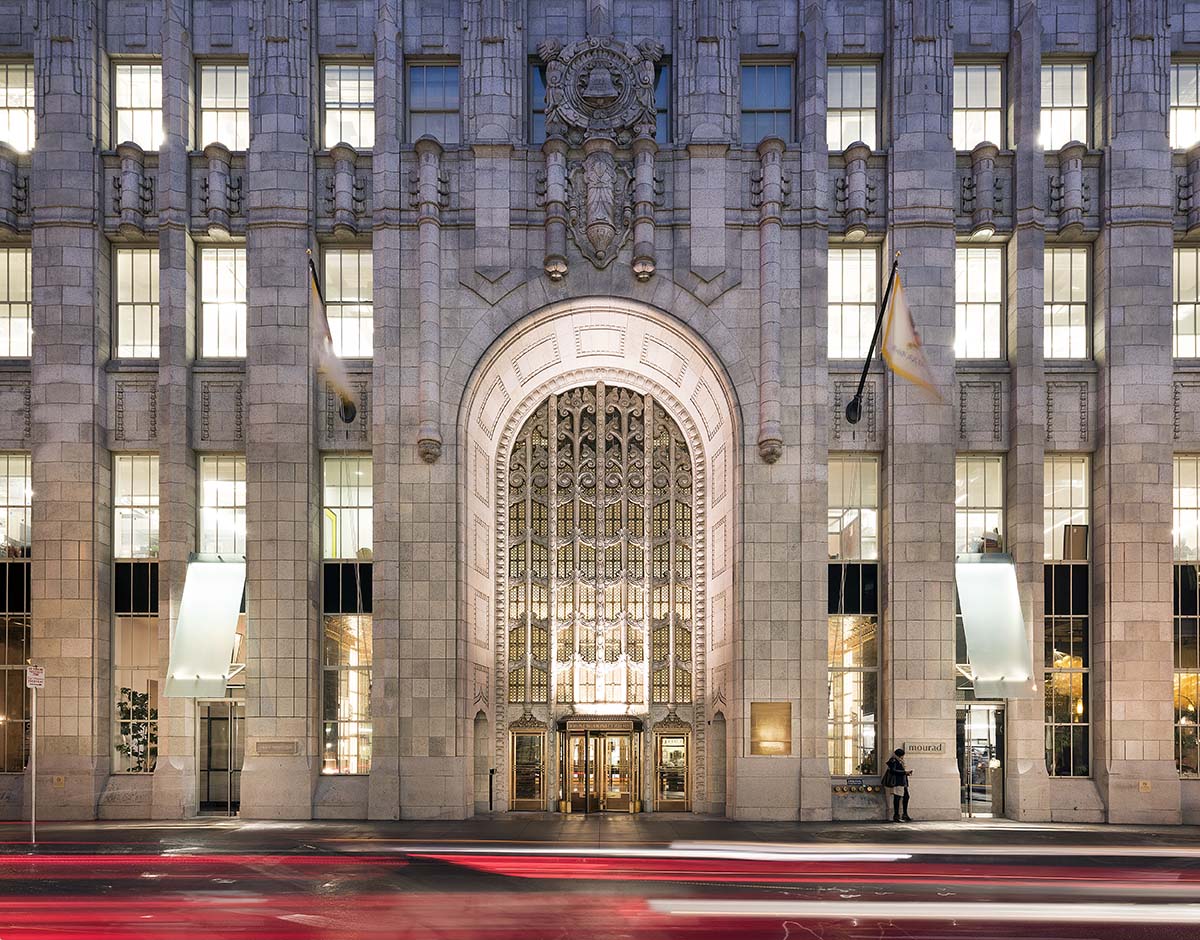
Another remarkable example stands at 140 New Montgomery Street.

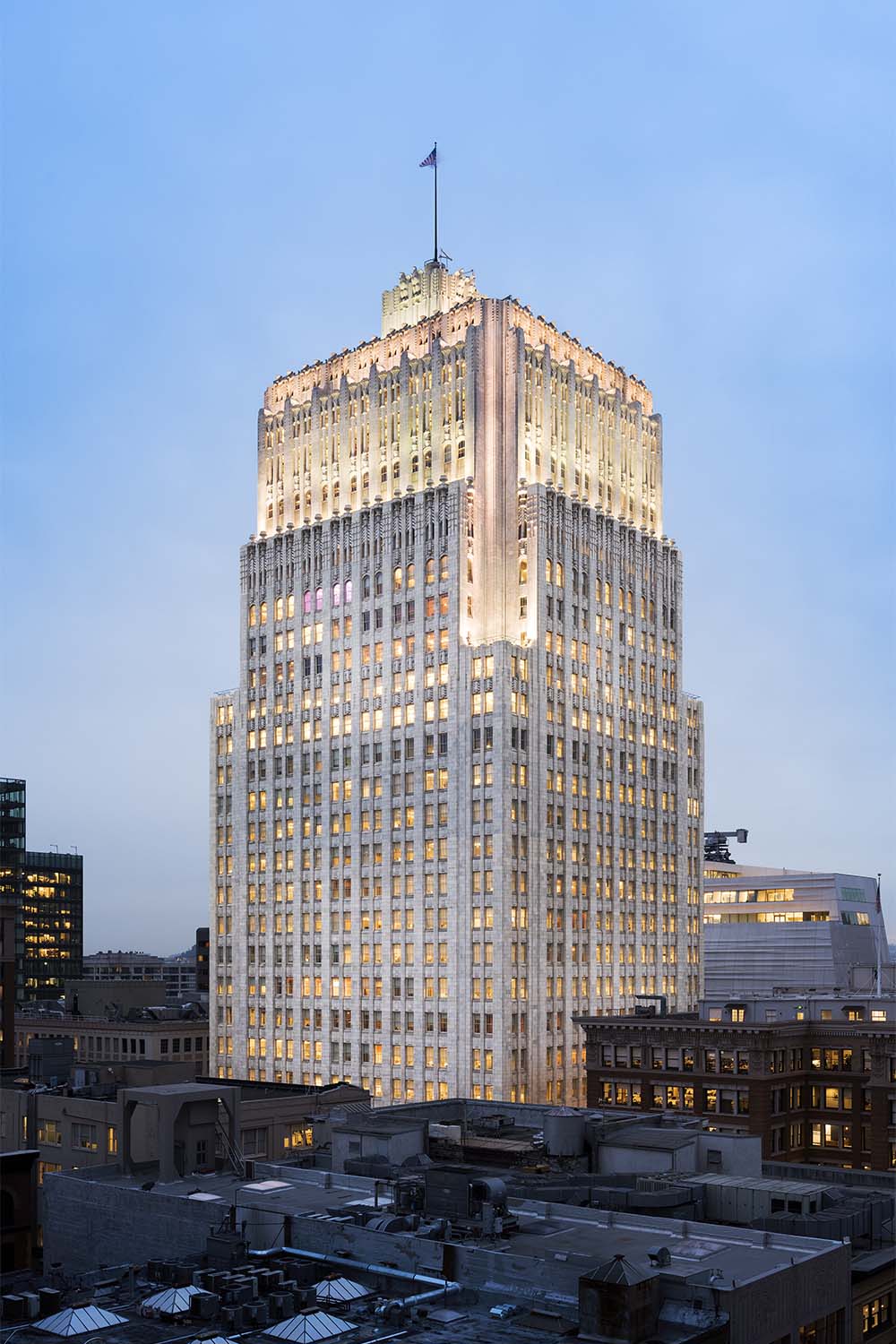
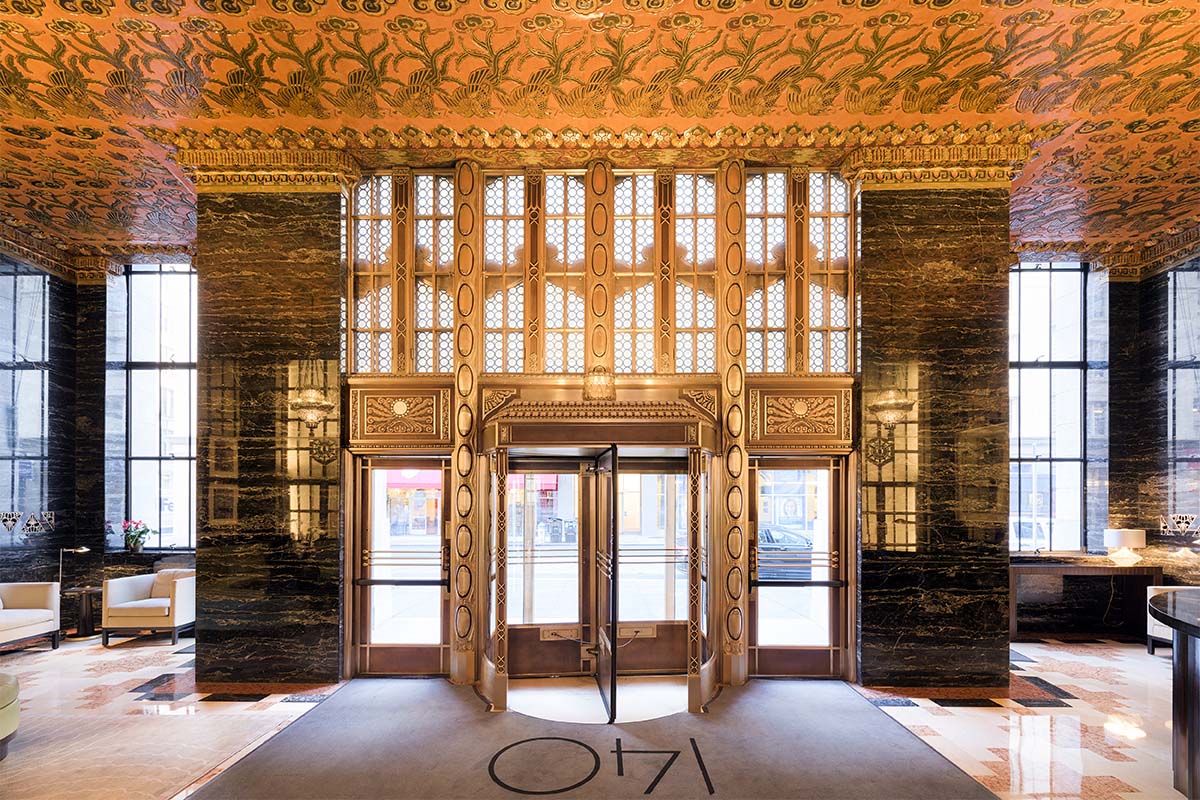
Completed in 1925 as the Pacific Telephone and Telegraph headquarters, the 435-foot tower was once San Francisco’s tallest building. Its distinctive architecture reflected the optimism of an emerging communications age.
Following a major renovation completed in 2013, it was acquired in 2016 by international real estate company Pembroke.
“140 New Montgomery represented a generational opportunity to be part of the history of such a unique building and the city of San Francisco,” says Stacey Spurr, Pembroke’s Senior Regional Director, West Coast.
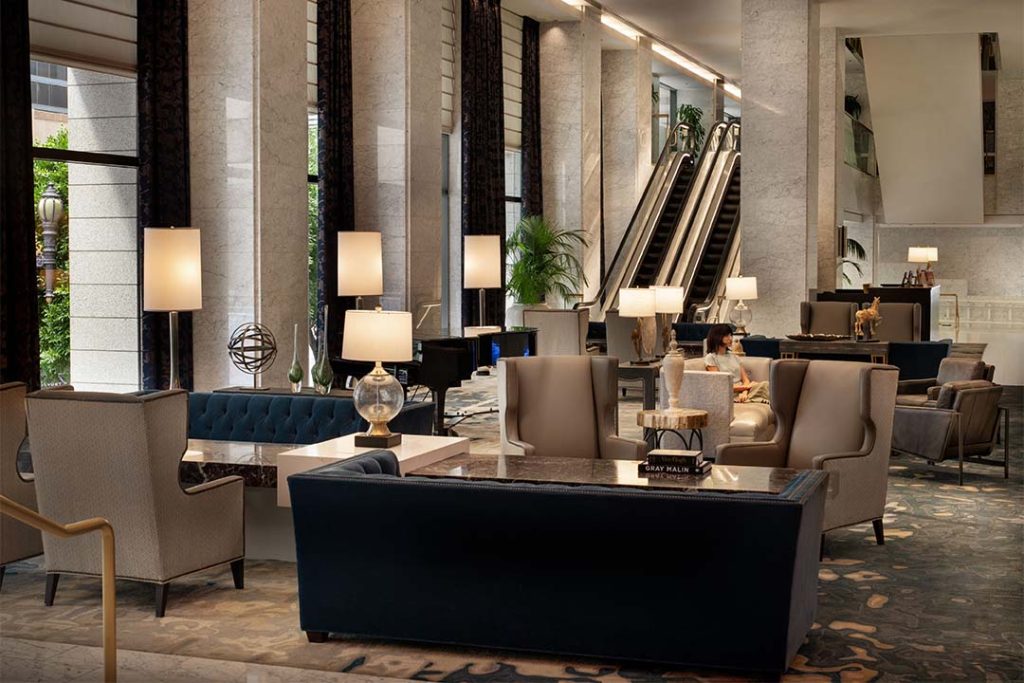
Inside, the building’s spectacular lobby preserves elaborate decorative details, including Asian-inspired symbolism.
Spurr points to “Buddha’s three fingers holding up the lobby ceiling and the lotus flower that blooms as you reach the upper floors.”
The building’s appeal extends beyond its appearance. Its 1,300 operable windows and abundant natural light offer qualities increasingly valued in contemporary workplaces.
For Spurr, the historic character remains a powerful attraction.
“It’s more than just a building – it’s a place to innovate and create – which has been the case since its original opening as Pacific Telephone’s headquarters and the place where the first Transatlantic call was placed.”
Yasukochi agrees that architectural heritage can offer commercial advantages.
“Vintage office buildings typically offer unique architectural design features, good locations and lower costs that appeal to creative and smaller businesses.”
He also acknowledges the challenges of modernization, particularly the expense of upgrading older building systems and amenities.
As demand improves, however, owners have opportunities to reinvest in properties whose distinctive architecture offers something newer buildings cannot easily replicate.
Looking Ahead by Looking Up
San Francisco is once again experiencing a period of transition.
Artificial intelligence companies are helping reshape its commercial landscape, international investors are finding opportunities in the city, and historic buildings are being adapted for contemporary businesses.
That spirit of reinvention also reminds me of my uncle Ted, who sadly passed away in October. Having spent much of his working life in the printing business, he had a deep appreciation for design and had been an Apple user since the early days of personal computing.
Even upon reaching retirement age, his enthusiasm for technology and desire to keep working never diminished. Apple, one of the Bay Area’s most iconic companies, took a chance on him at its store in Burlingame, where he helped fellow seniors embrace technology and discover that they, too, could become techies like him.
I always admired his curiosity, energy and willingness to embrace change — qualities I have come to associate with the Bay Area itself. San Francisco will always hold a special place in my heart, and much of that has to do with him.
The streets may look different from those I first explored in 1994. Some familiar stores have disappeared, and downtown’s next chapter is still taking shape.
Yet the buildings tell a longer story.
They have witnessed the Gold Rush’s legacy, survived earthquakes, welcomed generations of entrepreneurs and adapted to successive waves of economic change.
For decades, I walked these streets looking into shop windows, often passing extraordinary buildings without giving them a second thought.
This time, some of those windows were empty.
So I looked up instead — and discovered a San Francisco that had stood proudly all along, its history written across the skyline.