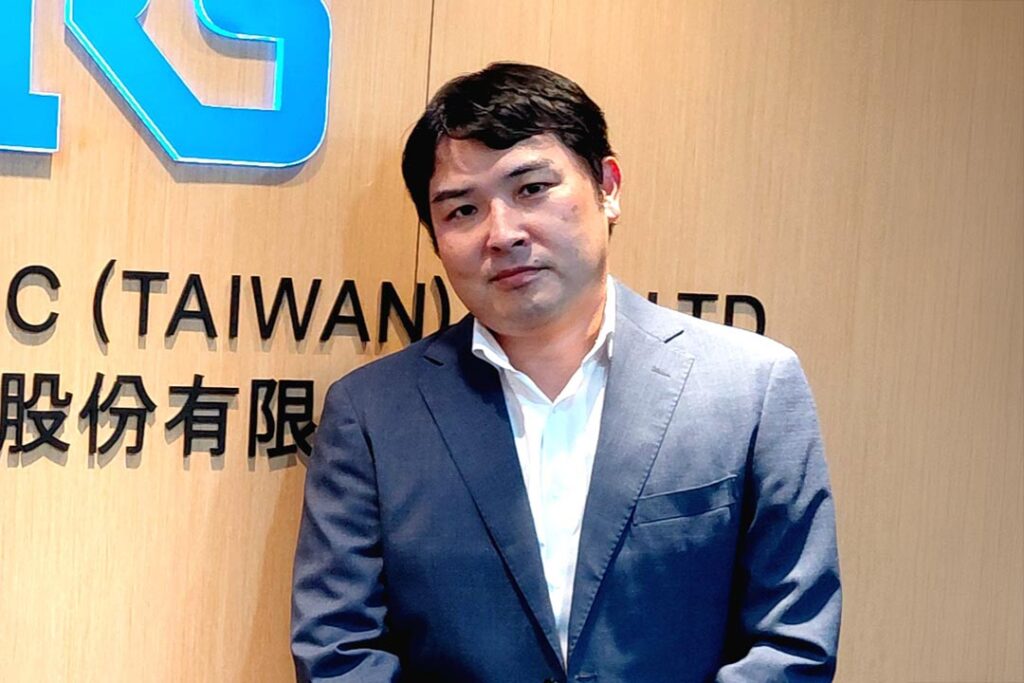

As Japan and Taiwan continue to strengthen economic cooperation amid shifting global supply chains and rapid technological transformation, the relationship between the two economies has taken on increasing strategic importance across industries ranging from semiconductors and advanced manufacturing to healthcare, energy, tourism, and education. In this exclusive Bridges feature, insights gathered from the Japan–Taiwan Exchange Association explore the evolving landscape of bilateral collaboration, highlighting key growth sectors, investment trends, industrial partnerships, and people-to-people exchanges shaping the future of Japan–Taiwan relations.
Bridges: As economic ties between Japan and Taiwan continue to deepen, what key sectors do you see as having the greatest potential for bilateral growth in the coming years?
The field with the greatest potential is, as expected, the semiconductor industry and its related sectors. The semiconductor industry is strategically prioritized in the policies of both sides. It has been designated as one of the 17 strategic fields under the Takaichi administration in Japan, and in Taiwan, it is included among the 13 strategic industries announced on February 24 by Premier Cho Jung-tai.
Looking at trade data, integrated circuits accounted for approximately 42% (about USD 12.6 billion) of Taiwan’s total exports to Japan last year, and about 21% (approximately USD 11.5 billion) of Japan’s total exports to Taiwan. Compared to five years ago, exports have increased by about 1.3 times and imports by about 1.4 times, and this trend is expected to continue for at least the next several years.
The next highest category of trade between Japan and Taiwan is semiconductor manufacturing equipment, which accounted for about 14.4% (approximately USD 7.9 billion) of Japan’s exports to Taiwan, while automatic data processing machines (such as computers) accounted for about 7% (approximately USD 2.2 billion) of Taiwan’s exports to Japan. Compared to five years ago, the former has roughly doubled, while the latter has increased about sevenfold.
A symbolic example of Japan–Taiwan cooperation in the semiconductor field is TSMC’s expansion into Kumamoto (establishment of JASM). Recently, it was announced that the JASM Kumamoto plant will begin producing 3-nanometer-generation semiconductors in 2028, further deepening cooperation. Beyond this case, collaboration between Japanese and Taiwanese companies—particularly in Kyushu—has seen remarkable progress in recent years.
Taiwan is an extremely important partner and a valued friend of Japan, sharing fundamental values such as freedom, democracy, human rights, and the rule of law, as well as maintaining close economic ties and active people-to-people exchanges.
Looking at investment data, in 2025, Japan made 271 direct investments in Taiwan totaling approximately USD 900 million. Of this, about USD 230 million (26%) was in manufacturing, with more than 70% concentrated in the chemical materials and chemical products industries. Meanwhile, Taiwan made 128 direct investments in Japan totaling approximately USD 2.2 billion, of which about USD 1.9 billion (86%) was in manufacturing, with over 90% in electronic components and computer, electronic, and optical products. This signifies that Japan is investing in semiconductor and integrated circuit manufacturing as well as related chemical materials, while Taiwan is investing in application areas of semiconductors and integrated circuits. This complementary economic relationship between Japan and Taiwan is expected to continue for the foreseeable future.
Next, the pharmaceutical and energy sectors have been identified as having significant potential. According to 2024 research conducted by our association on opportunities for Japanese companies in Taiwan’s healthcare market, the pharmaceutical market size is approximately 11 trillion yen in Japan and over 1 trillion yen in Taiwan, with high growth rates of 4% and 8%, respectively.
In the fields of drug discovery and regenerative medicine, the “Daiwa Taiwan-Japan Biotech Fund” was established through joint investment by Taiwan’s National Development Fund, the Daiwa Securities Group, and SME Support, Japan. The first fund was launched in 2015 with a total of 11.6 billion yen, and the second in 2020 with 15.3 billion yen, investing in unlisted biotech ventures primarily in drug discovery in both Japan and Taiwan. This March, there was also an announcement regarding the signing of the third fund agreement.
In the energy sector, Taiwan has been promoting various climate change measures since formulating its “2050 Net-Zero Roadmap” in 2022. In the power sector, which produces a large amount of CO₂ emissions, Taiwan has set a target of replacing 60–70% of total electricity generation with renewable energy by 2050. Under these circumstances, multiple projects involving Japanese companies in renewable energy facilities and LNG power generation related facilities are underway, and further collaboration between Japanese and Taiwanese companies in this field is expected. Furthermore, growth is also anticipated in the tourism industry and the agriculture, forestry, and fisheries sectors.
Last year, the number of people traveling between Japan and Taiwan reached a record high, supported by strong travel demand and increased flight availability. In particular, the number of Taiwanese visitors to Japan grew significantly, reaching a record 6.76 million (total visits), more than 10% higher than the previous year’s record. This upward trend is expected to continue and contribute positively to the growth of the tourism industries on both sides.
In addition, Japan’s exports of agricultural, forestry, fishery, and food products to Taiwan totaled approximately 181.2 billion yen last year, a 6.4% increase year-on-year. Taiwan ranked third among export destinations, following the United States and Hong Kong, and surpassing China. Our association is strengthening export support initiatives, including hosting local business matching events, and aims to contribute, even modestly, to the growth of Japan’s agriculture, forestry, and fisheries sectors.

In light of global supply chain shifts, how is the Association supporting closer Japan–Taiwan collaboration in areas such as semiconductors, advanced manufacturing, and digital trade?
First, we collect necessary business-related information and provide it broadly to Japanese-affiliated companies and other stakeholders. Our association collects information and organizes them to meet the needs of Japanese companies seeking insights into Taiwan’s semiconductor industry. We leverage networks with Taiwanese authorities, Taiwanese companies, and Japanese companies operating in Taiwan. As part of these efforts, we conducted a “Research on Taiwan’s Semiconductor Industry” over a two-year period covering FY2025 and FY2026.
Through this research, we have analyzed the characteristics of semiconductor supply chain companies that are expected to expand into Japan in the future. Based on these findings, we provide support to Japanese local governments interested in attracting Taiwanese semiconductor companies, as well as to Japanese firms exploring collaboration with them. In addition, the knowledge accumulated through our research and information-gathering activities is shared with Japanese companies and local governments through briefings and presentations at semiconductor-related events such as SEMICON Taiwan.
Next, we are implementing the Japan–Taiwan Industrial Cooperation Bridging Project. This project aims to promote business alliances—such as joint ventures and technology partnerships—between Japanese SMEs and Taiwanese companies, supporting collaboration across a wide range of fields including semiconductors and contributing to the creation of new markets.
Specifically, in the current fiscal year, under the “New Market Creation Project Utilizing Advanced Manufacturing Base Technologies in the Tokyo Metropolitan Area and Taiwan,” implemented by the Greater Tokyo Initiative, business matching events are scheduled to be held in both Japan and Taiwan. In Taiwan, an exhibition and business matching event is planned to coincide with SEMICON Taiwan 2026 in September.
In the previous fiscal year, we partnered with JETRO and leading Taiwanese accelerators to support the expansion of Japanese startups into Taiwan, providing opportunities for matching with investors and potential partners across a wide range of industries.
Regarding advanced manufacturing, in recent years, many Japanese semiconductor equipment and materials manufacturers have established R&D centers in Taiwan in order to develop manufacturing equipment in close collaboration with semiconductor manufacturers such as TSMC. Our association supports these business developments by providing trade and investment consultations and other forms of assistance.
What initiatives are currently in place to encourage Japanese investment in Taiwan, and how do you assess Taiwan’s role as a strategic partner for Japanese companies in the region?
We collect and provide business-related information, respond to consultations on trade and investment—including briefings—and work in coordination with the Japanese Chamber of Commerce and Industry, Taipei (JCCIT) (台北市日本工商会) to advocate for improvements in Taiwan’s business environment.
In pursuit of enhancing Taiwan’s business environment, the JCCIT produces a “White Paper” on an annual basis. It encompasses the organization’s policy recommendations and the compilation of its members’ requests, which are subsequently submitted to the Taiwanese government. In addition, in March of this year, the JCCIT submitted an urgent request to the relevant Taiwanese authorities regarding the challenges confronting their members in implementing Taiwan’s public works projects. Our association offers its support to such initiatives and calls upon Taiwanese authorities to address the issues raised in as many of these requests as possible.
Taiwan is an extremely important partner and a valued friend of Japan, sharing fundamental values such as freedom, democracy, human rights, and the rule of law, as well as maintaining close economic ties and active people-to-people exchanges. Based on this shared understanding, we aim to steadily develop practical cooperation between Japan and Taiwan.

People-to-People Exchanges Beyond economic ties, how is the Association strengthening cultural, educational, and youth exchanges to foster deeper mutual understanding between the people of Japan and Taiwan?
Our association promotes a variety of exchange programs in Taiwan to deepen understanding of Japan and foster a sense of affinity toward Japan.
First, we organize and co-organize a wide range of events throughout the year to introduce Japanese culture, while actively disseminating information about Japan. In cooperation with Taiwanese partners, we have also held a large-scale event called the “Japan–Taiwan Fruit Festival(日台フルーツ祭り)” in Taipei or in Kaohsiung every summer since 2022. In addition, we actively give lectures about Japanese culture at universities and other institutions across Taiwan.
Next, in the area of educational and youth exchange, we implement various programs aimed at improving the educational and research standards of both Japan and Taiwan, as well as cultivating pro-Japanese and Japan experts in Taiwan. Specifically, we organize programs that provide Taiwanese high school students with opportunities to study in Japan, and offer long-term and short-term scholarships for Taiwanese undergraduate and graduate students. Furthermore, we also conduct initiatives aimed at researchers and professionals, such as providing opportunities for research visits to Japan, funding joint research projects involving participants from both Japan and Taiwan, supporting academic events related to Japanese studies, and dispatching lecturers from Japan to Taiwan.
In addition, we support Japanese language education—an important tool for deepening understanding of Japan. We also implement programs to invite to Japan and dispatch to Taiwan talented individuals from Taiwan who have strong international communication skills and are expected to play leading roles in the future.