

India’s Moment: Why Japanese Business is Betting Big on the Subcontinent
These are not projections made in a vacuum. They reflect companies that have already navigated India’s regulatory environment, built local teams, established supplier relationships, and proved out their operating models. The expansion plans that follow from that experience carry a different weight than first-entry optimism.
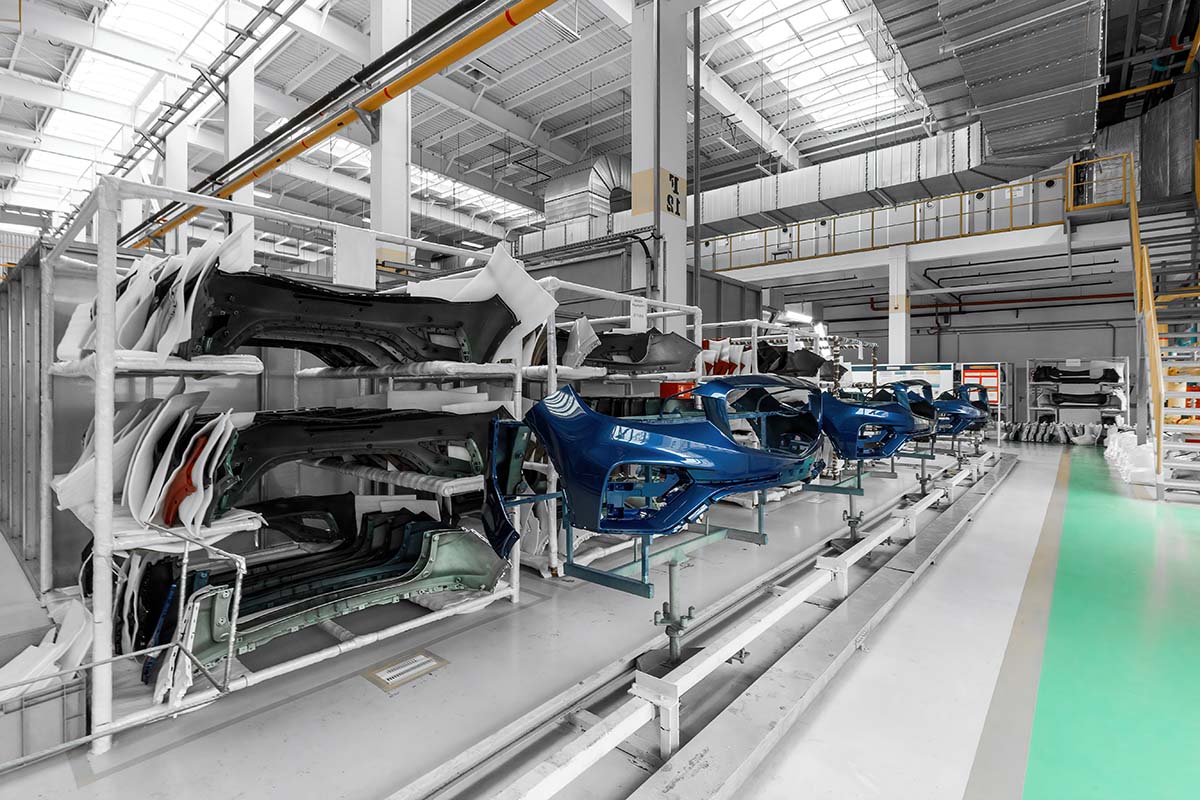
The automotive leading edge
No sector illustrates the India opportunity more sharply than automotive. Japan has long been a defining force in India’s automotive industry — from the Maruti Suzuki partnership that reshaped personal mobility for an entire generation, to the precision manufacturing capabilities that underpin the country’s growing role as a global production hub.
The survey data confirms that this relationship is entering a new gear. More than 70 percent of automotive-related Japanese firms in India expected to be profitable in 2025. More strikingly, 62.5 percent of automotive companies anticipated that operating profits would increase in 2026 — the highest figure among all major markets surveyed, and a 19.2 percentage-point improvement on the prior year’s forecast. No other country in the survey comes close to that swing.
India and Japan are approaching 75 years of formal diplomatic relations.
The drivers are structural. India’s domestic vehicle market is expanding rapidly, underpinned by a growing middle class, increasing urbanization, and improving road infrastructure. At the same time, India is positioning itself as a manufacturing export base for emerging markets across Asia, Africa, and beyond. For Japanese automotive companies, these two vectors — domestic consumption and export potential — reinforce each other in ways that are difficult to replicate elsewhere.

Reading the signal correctly
What the data captures, in aggregate, is a relationship that has moved from promising to proven. Japanese companies in India are not exploring the market — they are deepening inside it. The profitability rates, the expansion intentions, the sectoral leadership in automotive: these are the indicators of a business community that has made its assessment and committed to the long view.
India and Japan are approaching 75 years of formal diplomatic relations. For most of that history, the partnership was described in terms of potential. The numbers from 2025 suggest something has shifted. The potential is becoming performance, and the companies that recognized it early are now building on a foundation that will be difficult for later entrants to replicate.
For Japanese businesses still evaluating their India strategy, the survey data offers a clear signal. For those already present, it is confirmation that the bet is paying off.
Source: JETRO FY2025 Survey on Business Conditions of Japanese-Affiliated Companies Overseas (Global Edition)