
Channeling Japanese Investment into India’s Growth Sectors
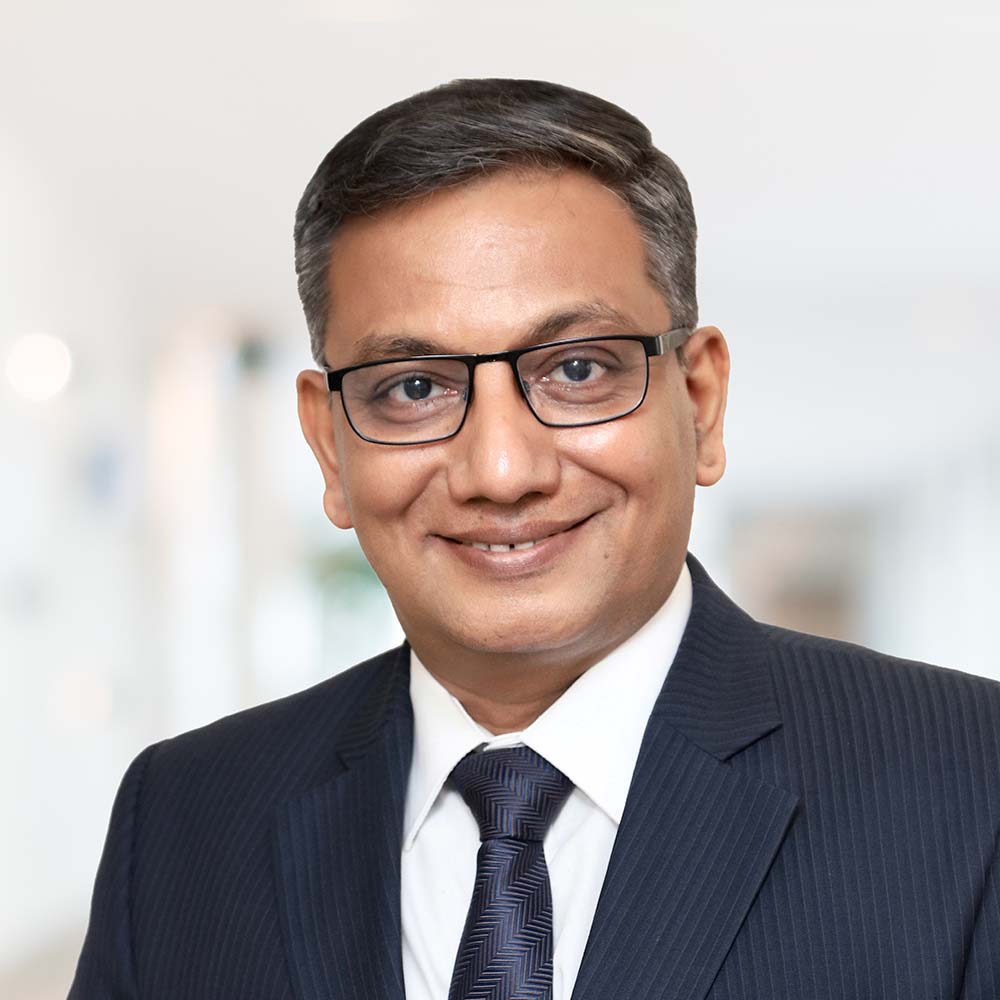
“For 75 years, India and Japan have built a relationship founded on mutual respect, technology, and shared prosperity. The capital markets have been central to this journey, channeling Japanese investment into India’s growth sectors. At BSE, we remain committed to strengthening this bridge through deeper market integration, new products, and investor participation. As both economies focus on innovation, sustainability, and global supply chains, our collaboration in financial markets will be key. We look forward to working with Japanese partners to co-create opportunities that support the next phase of India–Japan economic cooperation.”
— Sundararaman Ramamurthy, Managing Director and Chief Executive Officer, Bombay Stock Exchange
Founded in 1875, the Bombay Stock Exchange is Asia’s oldest exchange and, by number of listed companies, the largest in the world — a scale that has made it a natural gateway for foreign capital seeking exposure to India’s growth story. For Japanese investors, that gateway has taken on particular significance as the two countries mark 75 years of diplomatic relations, a milestone Ramamurthy points to directly in describing capital markets as the connective tissue of the bilateral relationship.
That connective role rests on an exchange that has grown, since the BSE Sensex launched in 1986 as India’s first stock market index, into a full-spectrum capital markets platform — one increasingly relevant to Japanese partners looking for diversified entry points into India. At its core, BSE offers trading across equity, debt instruments, equity derivatives, currency derivatives, interest rate derivatives, mutual funds, and stock lending and borrowing. But the exchange’s real relevance to a Japan–India investment conversation lies less in that core market than in the ecosystem built around it.
BSE SME, launched in 2012 as India’s pioneering SME platform, gives small and medium enterprises — the layer of the economy that large investors often struggle to reach directly — a regulated route to raise capital, build visibility, and earn investor confidence. BSE StAR MF, the country’s largest online mutual fund transaction platform, offers distributors and asset managers a paperless, seamless way to route capital efficiently across India. BSE Bond adds a transparent electronic mechanism for the private placement of debt securities, while BSE Index Services Private Limited, a wholly owned subsidiary, builds and maintains the benchmark indices that let global investors track and price that growth.
Underpinning all of it is BSE Clearing Limited (formerly the Indian Clearing Corporation), which acts as central counterparty to every trade executed on the exchange and guarantees settlement — the kind of infrastructure that gives foreign institutional investors confidence to commit capital at scale.
Founded in 1875, the Bombay Stock Exchange is Asia’s oldest exchange and, by number of listed companies, the largest in the world — a scale that has made it a natural gateway for foreign capital seeking exposure to India’s growth story.
For investors looking further outward still, India INX — the country’s first international exchange, based at GIFT City IFSC in Ahmedabad — offers a dedicated offshore gateway. And the BSE Social Stock Exchange extends the model into impact investing, giving social enterprises and NGOs a transparent platform to raise capital for causes as well as returns.
Taken together, these platforms describe an exchange positioning itself not simply as a venue for trading India’s growth, but as infrastructure for the kind of long-term, diversified partnership Ramamurthy describes — one built around innovation, sustainability, and the global supply chains that will define the next phase of India–Japan economic cooperation.