
Civil aviation has become one of the clearest measures of the enduring relationship Singapore and Japan have built over 60 years of diplomatic ties. Mr. Han Kok Juan, Director-General of the Civil Aviation Authority of Singapore, reflects on how both countries have built a strong foundation of cooperation in air connectivity, safety and innovation, and shares how this partnership is evolving to meet the demands of a fast-changing global aviation landscape.
Bridges: As Singapore and Japan mark 60 years of diplomatic relations, how do you view the significance of aviation cooperation in the broader bilateral relationship?
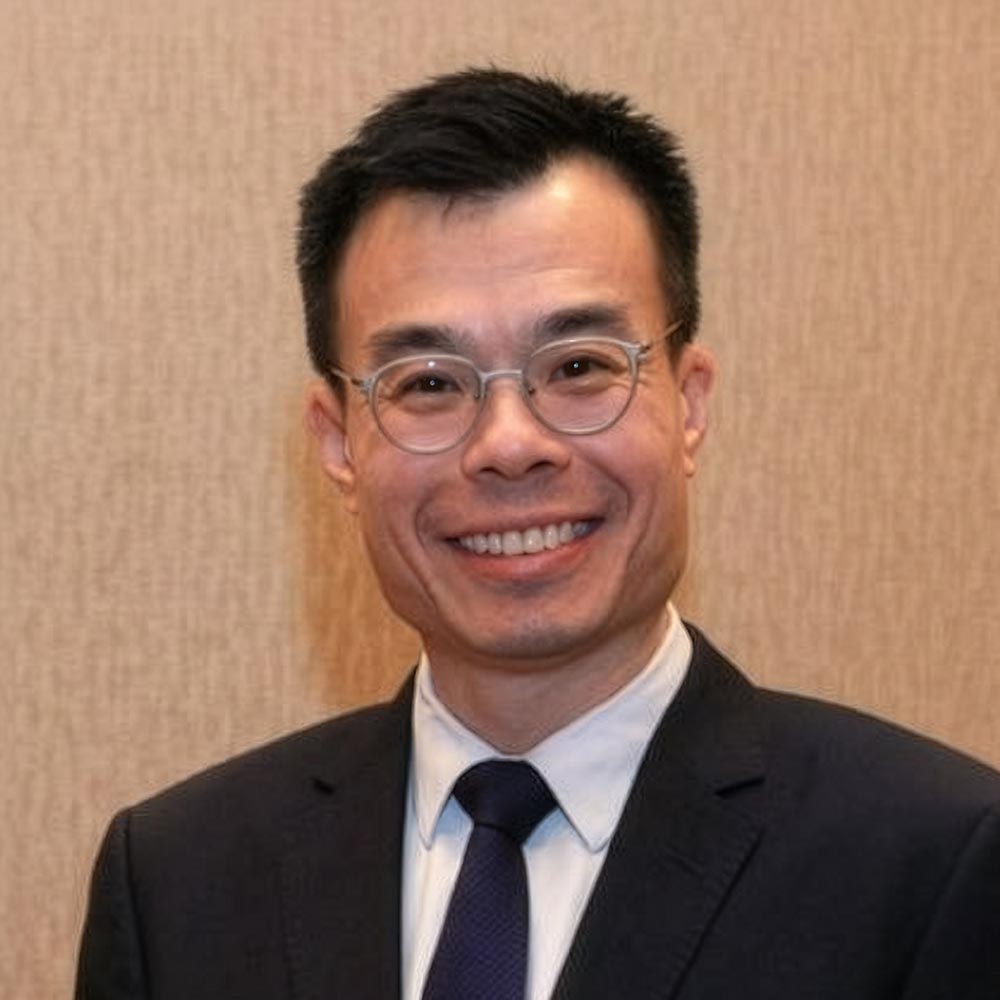
Han: Over the last 60 years, Singapore and Japan have established a strong foundation of aviation cooperation, built on shared goals. As island states, Singapore and Japan rely on aviation to connect with the world, enable trade and investments and facilitate people-to-people exchanges. Global air travel is expected to nearly triple over the next 25 years, with the Asia-Pacific region accounting for half of this growth. As major air hubs, Singapore and Japan play instrumental roles and can work even more closely together to shape the global civil aviation system and support this growth.
One key way by which we do so is through the annual strategic dialogue between the Civil Aviation Authority of Singapore (CAAS) and the Japan Civil Aviation Bureau (JCAB). Set up by my then-JCAB counterpart, now International Civil Aviation Organization (ICAO) Council President Onuma Toshiyuki and me in 2022, the strategic dialogue provides a platform for us to enhance air connectivity between our two countries, foster aviation safety and efficiency, and seize new opportunities in sustainability, innovation, advanced air mobility, and air traffic management.
How has aviation supported the growing economic and people-to-people ties between Singapore and Japan, and how would you describe the current level of air connectivity between the two countries?
Japan and Singapore’s bilateral economic ties have grown from strength to strength over the years. Aviation has played an instrumental role in supporting trade and investment flows and facilitating people-to-people exchanges. Japan has consistently been one of the most popular destinations for Singaporeans. A record-breaking 726,200 Singaporeans visited Japan last year, a 5.1% increase from the previous record in 2024. Singapore also welcomed more than 627,000 Japanese visitors in 2025.
To establish air connectivity between our two countries, Japan and Singapore signed our first Air Services Agreement (ASA) in 1967. Since then, the ASA has been expanded several times, most recently in 2019. Today, Singapore is connected to six cities in Japan by 167 weekly passenger services operated by two Singapore carriers and five Japanese carriers.
“Japan and Singapore’s bilateral economic ties have grown from strength to strength over the years. Aviation has played an instrumental role in supporting trade and investment flows and facilitating people-to-people exchanges.”
Han Kok Juan, Director-General of the Civil Aviation Authority of Singapore
Over the years, Singapore Airlines and Scoot expanded their presence in Japan, starting with Tokyo and now flying to many other cities such as Fukuoka, Nagoya, Okinawa, Osaka and Sapporo. The number of Japanese carriers operating to Singapore has also increased significantly over the years, from Japan Airlines and All Nippon Airways (ANA) to Zipair, Air Japan and Peach Aviation. Singapore Airlines and ANA now operate revenue-sharing flights and expanded code-sharing arrangements. This allows both airlines to use each other’s hubs as gateways to other regions, offering passengers more travel options.
Besides the airlines, Japanese construction companies are also key partners in the building of Singapore’s physical airport infrastructure. Takenaka Corporation was the general contractor for Terminal 1, Changi Airport’s first terminal, and also constructed Changi Airport Terminal 4 and the Seletar Airport passenger terminal, while a joint venture between Obayashi and Sato Kogyo recently completed the bored tunnels that will link the future Changi Airport Terminal 5 to Terminal 2.
Safety and efficiency are central to aviation. How are CAAS and the Japan Civil Aviation Bureau working together in these areas?
Safety has always been at the heart of our cooperation. One key collaboration between the Civil Aviation Authority of Singapore (CAAS) and the Japan Civil Aviation Bureau (JCAB) is the Technical Arrangement on Aviation Maintenance signed in 2020 to facilitate the reciprocal acceptance of approvals for the maintenance, repair, and overhaul (MRO) of aircraft components. The technical arrangement enhances the ease of doing business for both countries’ MRO companies, reduces regulatory compliance costs, while maintaining high safety standards.
CAAS and the JCAB also host regular exchanges to share best practices and expertise on safety topics such as runway safety, aircraft maintenance, turbulence, cabin safety and safety culture. One such high-level platform is the upcoming 4th edition of the Asia Pacific Summit for Aviation Safety to be held in Osaka in August 2026, co-organised by CAAS, JCAB and the Flight Safety Foundation.
Beyond connectivity and safety, what new areas of collaboration do you see emerging between Singapore and Japan in civil aviation?
Leveraging our complementary strengths, Japan and Singapore have deepened our collaboration to seize new opportunities in sustainability, innovation, advanced air mobility and air traffic management.
Sustainability – Singapore and Japan have regular policy and technical exchanges on sustainability issues through platforms such as the annual Singapore-Japan Dialogue on Civil Aviation. These exchanges have included discussions on Sustainable Aviation Fuel (SAF) policy implementation and procurement, as well as study visits focused on airport sustainability initiatives.
“As we celebrate the 60th year of diplomatic relations and the 5th anniversary of the Singapore-Japan Dialogue on Aviation Collaboration this year, Singapore looks forward to strengthening our aviation collaboration with Japan to take aviation to even greater heights.”
Innovation – Both countries share a common interest in leveraging automation and robotics technology to address our manpower challenges. Japan is an excellent innovation partner for Singapore due to its global leadership in high-precision robotics, which are essential for automating complex airside turnaround tasks.We see potential opportunities to collaborate with Japan on innovation initiatives to enhance our airports’ capacity and operational efficiency. For example, Narita Airport is a member of the International Aviation Lab that comprises Boeing, Airbus, Narita, SIA, CAG, SATS, CAAS, ICAI and Singapore University of Technology Design.
Advanced Air Mobility (AAM) – Singapore and Japan’s partnership on Advanced Air Mobility allows us to raise awareness, seek alignment in regulatory approaches and collectively build capabilities to speed up adoption of AAM. CAAS and JCAB have been collaborating on AAM regulations, and we worked together at the Meeting of Asia-Pacific Regulators on AAM and co-developed the Reference Materials for Regulators to facilitate AAM Operations.
Air Traffic Management – Singapore and Japan have also been working closely together to improve the safety and efficiency of air traffic management in the region, including participation in expert groups of the International Civil Aviation Organization and in a regional group of air navigation service providers. As major air hubs in our region, we work together towards future seamless air traffic management, leveraging technological enablers and new operational concepts.
Looking ahead, what is your outlook for the future of Singapore-Japan aviation cooperation?
Today, Singapore and Japan face a world marked by geopolitical uncertainty, fragmentation, and disruption. In this current environment, it is crucial for Singapore and Japan to remain committed to maintaining a safe and efficient global international civil aviation system.
As we celebrate the 60th year of diplomatic relations and the 5th anniversary of the Singapore-Japan Dialogue on Aviation Collaboration this year, Singapore looks forward to strengthening our aviation collaboration with Japan to take aviation to even greater heights.