
A Japanese logistics specialist is moving from the supermarket shelf to the farm gate. Its bet says much about the future of Philippine agriculture.
The Philippines ought to be an agricultural powerhouse. It has volcanic soils, plentiful rain and no real winter. It is the world’s second-largest exporter of bananas and a major producer of coconut, pineapple and cacao. Yet abundance has not translated into resilience. Farms are often small, capital is scarce and growers remain exposed to diseases and weather shocks that richer agricultural economies have learned to contain. The country has enviable natural assets, but too little of the infrastructure, finance and technology needed to turn them into durable advantage.

Japan offers the opposite puzzle. It has far less arable land, but a farm sector known for discipline, quality control and technological finesse. E-SUPPORTLINK Co., Ltd., a Japanese supply-chain company, sits at the junction of these two agricultural worlds. Its move into Mindanao is not charity, nor simple diversification. It is a strategic response to a vulnerability in one of Japan’s most familiar food supply chains.
E-SUPPORTLINK is best understood as an infrastructure company for perishable food. It is the only Japanese firm to have built, on its own, an integrated system for moving Philippine bananas from port to supermarket shelf. That dependence on Philippine fruit has pulled the company upstream. “Approximately 75% of bananas consumed in Japan are Philippine bananas,” says Hiroyuki Fukatsu, Executive Vice President of E-SUPPORTLINK Co., Ltd.
When output began to fall, hit by plant disease and unsettled weather, the consequences travelled quickly along the chain to Japanese retailers. Fukatsu and his colleagues went to the plantations to find out why. What they found was not merely a crop disease. It was a weakness in the production system itself.
“I have always said that bananas are a symbol of peace between Japan and the Philippines.”
Hiroyuki Fukatsu, Executive Vice President of E-SUPPORTLINK Co., Ltd.
Much of the export crop is grown by smallholders. They are essential to the supply chain, but often sit at its weakest point: subcontracted to large multinationals, short of capital and poorly equipped to absorb shocks. “We came to recognise that small-scale farmers play an important role in production and supply—and that, because they lack capital, they are exposed to greater damage,” Fukatsu explains.
The immediate enemy is Fusarium wilt, a soil-borne fungal disease with no cure. Once it takes hold, the practical defence is early detection and containment. That is where E-SUPPORTLINK has chosen to compete. Using drones and AI-assisted image analysis, it maps fields plot by plot and visualises the spread of disease before damage becomes irreversible. In a sector still short of capital and data, that kind of visibility can be transformative.

The company is careful not to present this as a Japanese fix for a Philippine problem. “Agriculture is a country’s culture and history,” Fukatsu says. “Even when applying Japanese technology, we believe it is essential to engage with Philippine agriculture and farmers with respect, and without the arrogance of a developed country.” That caveat matters. Foreign investors have brought technology to Philippine agriculture before, only to retreat when progress proved slower than expected. Fukatsu’s postgraduate training at the University of the Philippines College of Agriculture, and E-SUPPORTLINK’s own farming experience in Japan, give the venture a different texture. Its work with the Department of Agriculture (DA), the Department of Science and Technology (DOST) and Davao banana-industry stakeholders is framed less as market entry than as institutional partnership.

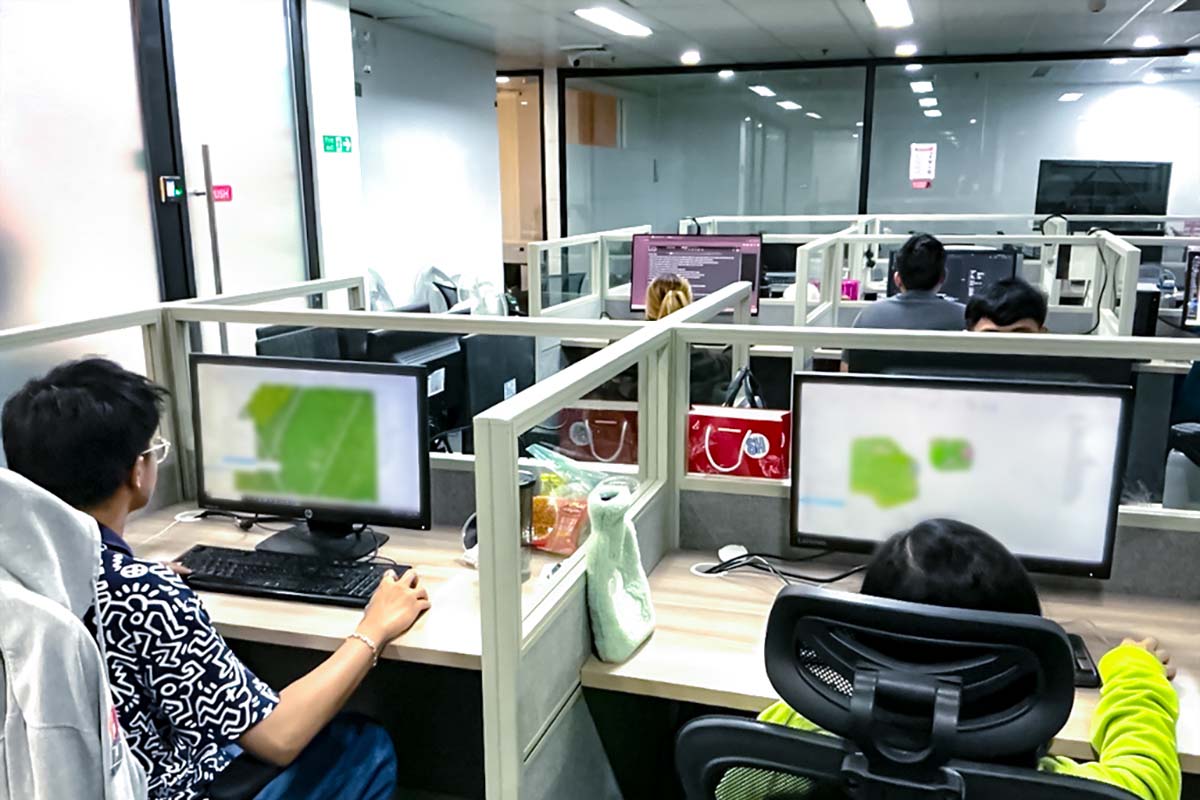
R: Aerial image AI processing center for Banana farm in Manila, Philippines.
Beyond the Banana
Bananas are the beginning, not the end of the proposition. Talks with the Department of Trade and Industry (DTI) and the Philippine Economic Zone Authority (PEZA) have expanded to coconut, cacao and pineapple—crops in which the Philippines has clear advantages but too often exports value in unfinished form. If E-SUPPORTLINK’s model works, it could help move technology closer to the farmers who need it most, through cooperatives and local governments rather than only through corporate plantations.
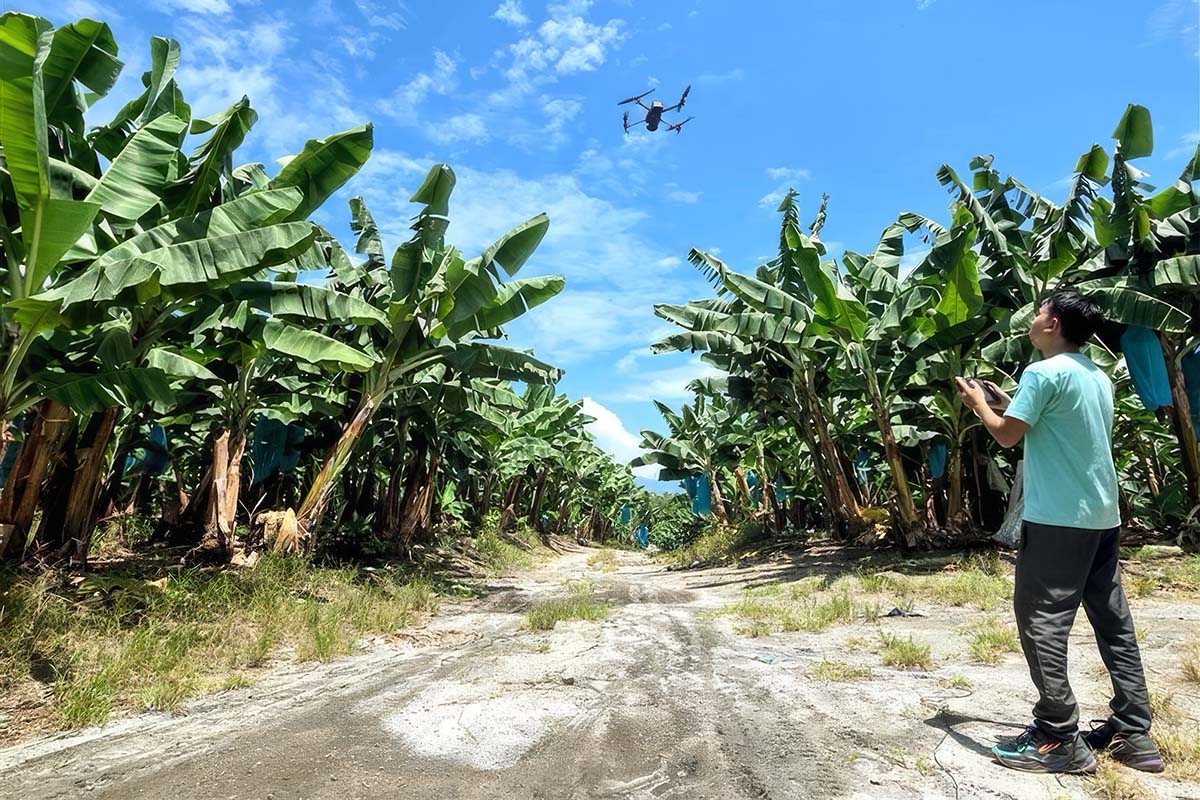
“I have always said that bananas are a symbol of peace between Japan and the Philippines,” Fukatsu says. “Agricultural products grown by Filipino farmers are imported by Japan and consumed by the Japanese people. Japan and the Philippines will continue their agricultural trade and maintain their friendly relationship without interruption.” The sentiment may sound old-fashioned. The economics are not. Food security, climate resilience and supply-chain reliability are now strategic concerns. E-SUPPORTLINK’s Philippine venture suggests a more useful form of bilateral business: one that is commercial, certainly, but also patient, embedded and reciprocal. In that sense, the partnership is rooted not merely in trade, but in the soil from which trade begins.