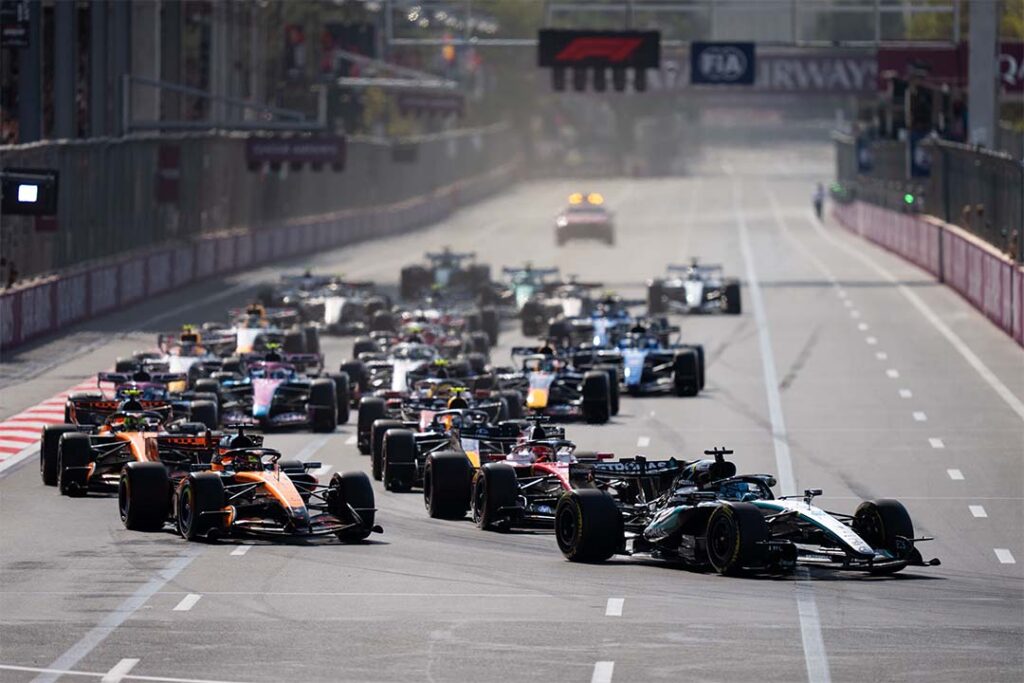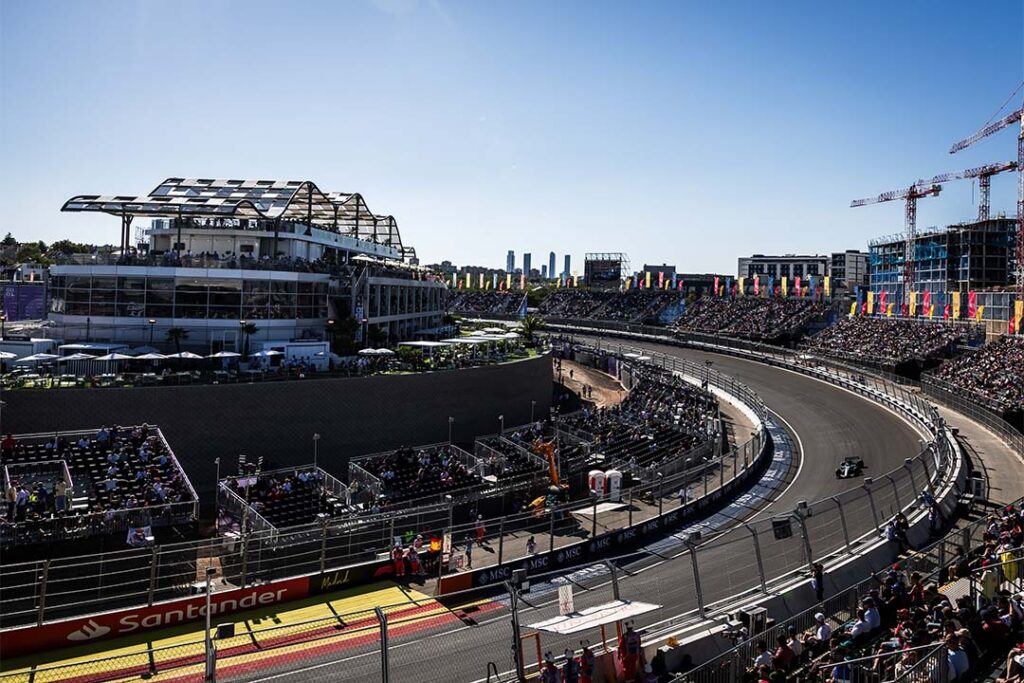

Lewis Hamilton’s breakthrough in Ferrari red, Mercedes’ shifting momentum, and a changing Spanish Grand Prix landscape set the stage in Barcelona.
As La Sagrada Familia lit up after 144 years of waiting for its completion, Formula 1 engines roared to life at the Circuit de Barcelona-Catalunya. A city known for art, architecture, and reinvention once again became the center of the sporting world.
This was a weekend filled with symbolism: a historic first victory in red for Lewis Hamilton, a changing of the guard for one of Formula 1’s most familiar venues, and a reminder of how motorsport continues to connect people, cultures, and generations.
Barcelona’s place on Formula 1’s map
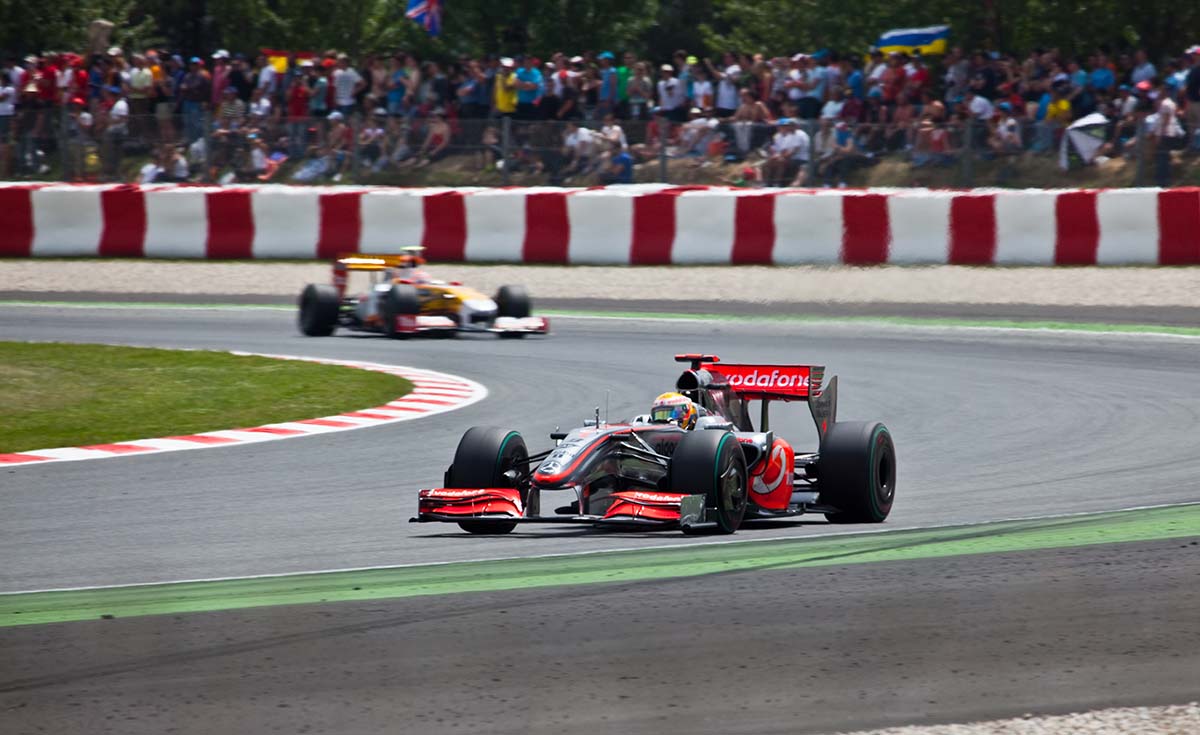
For more than three decades, Barcelona has been one of Formula 1’s most important destinations.
The Circuit de Barcelona-Catalunya first hosted the Spanish Grand Prix in 1991. For years, it served as Formula 1’s unofficial classroom, becoming the championship’s preferred pre-season testing venue thanks to its technical layout and reliable conditions. Drivers, engineers, mechanics, and media from around the world gathered here every winter, turning the circuit into a meeting point for international collaboration long before the racing season officially began.
For more than three decades, Barcelona has been one of Formula 1’s most important destinations.
That chapter shifted in 2021 when pre-season testing moved to Bahrain, reflecting Formula 1’s growing global footprint and commercial expansion into new markets.
The race itself has also evolved. No longer carrying the title of the Spanish Grand Prix, Barcelona now hosts the Barcelona-Catalunya Grand Prix. Beginning in 2026, the “Spanish Grand Prix” name will move to the MadRING, Madrid’s new street circuit that promises a fresh and modern identity for Formula 1 in Spain.
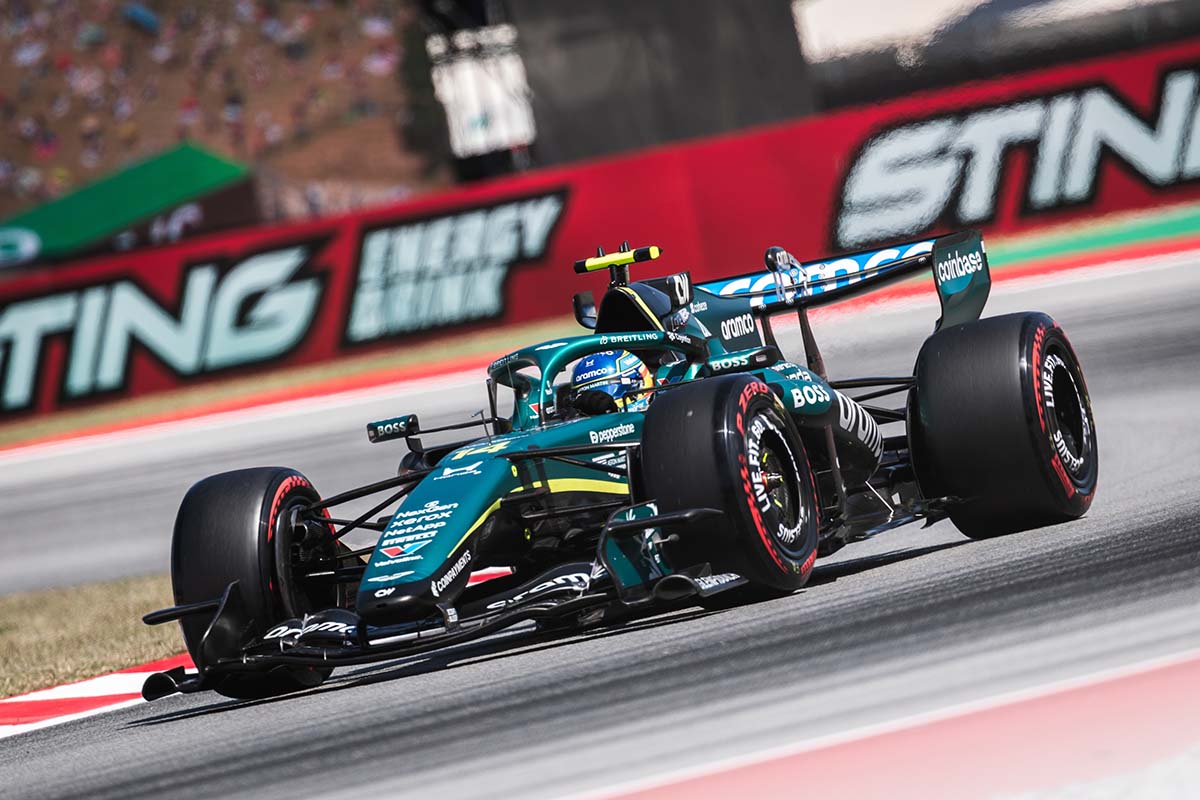
With Barcelona’s current contract now operating on a rotating schedule, and its next race set for 2028, every appearance on the Formula 1 calendar carries added significance. For many fans, last weekend felt particularly emotional. It could have been Fernando Alonso’s final Formula 1 appearance at the circuit where generations of Spanish fans first fell in love with the sport.
Yet while one chapter may be approaching its conclusion, another was only just beginning.
The first victory in Barcelona for Lewis Hamilton wearing Ferrari red.
Lewis sees victory in red
Some victories feel bigger than the championship standings.
After more than a year of anticipation, Lewis Hamilton finally secured his first win for Ferrari. The result ended Mercedes’ remarkable streak of six consecutive victories, five of them delivered by Kimi Antonelli. For the first time in weeks, the top step of the podium belonged to Ferrari.
The achievement added another milestone to Hamilton’s already legendary career. He became the first driver in Formula 1 history to win races with McLaren, Mercedes, and Ferrari, three of the sport’s most iconic teams.
The setting made the story even richer.
Barcelona was the same circuit where Michael Schumacher claimed his first Ferrari victory in 1996, a rain-soaked masterclass that cemented its place in Formula 1 history. Nearly three decades later, another seven-time world champion created a landmark Ferrari moment of his own on the same asphalt.
One of the most touching moments came after the checkered flag — the first person to interview Hamilton was Nico Rosberg, his former teammate and championship rival. Ten years earlier, the pair famously collided at this very circuit while fighting for the title. Their relationship shifted from childhood friends to fierce competitors. Now, they shared a moment that reflected just how much time, perspective, and history Formula 1 can hold.
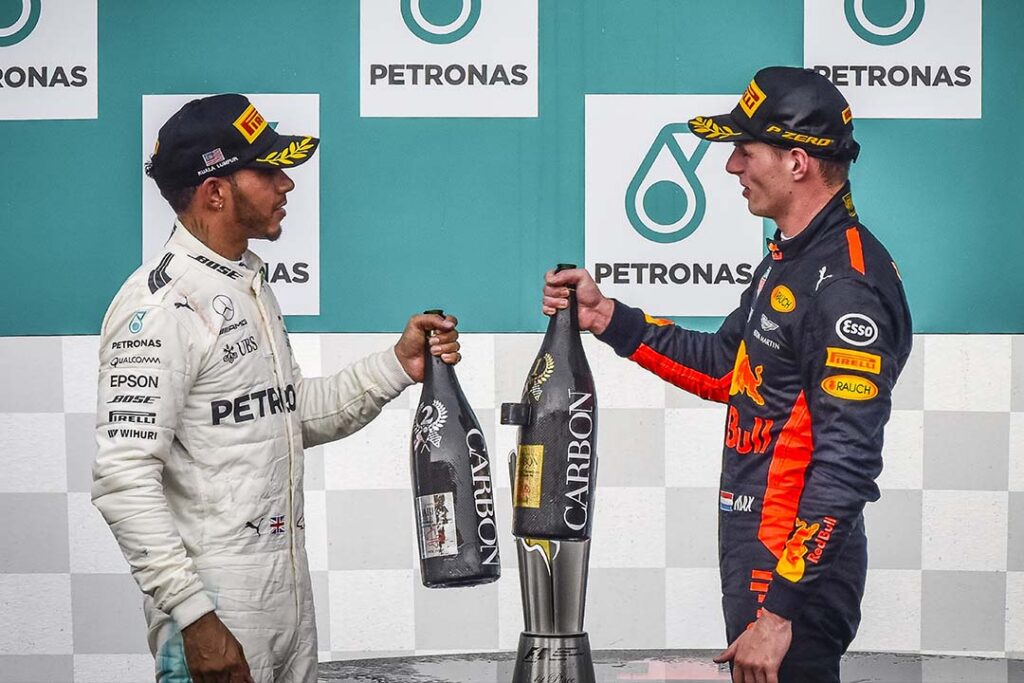
The podium itself felt like a reflection of Hamilton’s journey: alongside him stood George Russell for Mercedes and Lando Norris for McLaren, representing both of Hamilton’s former teams on a day that celebrated his newest chapter.
The Brits on top
Hamilton’s victory also produced a statistical rarity.
For the first time since 1968, Formula 1 witnessed an all-British podium.
Yet the result highlighted something deeper than nationality. While all three drivers carried the British flag beside their names, they represented teams rooted across Europe. Hamilton raced for Italy’s Ferrari. Russell competed for Germany’s Mercedes. Norris stood on the podium for Britain’s McLaren.
Behind each driver stood thousands of people from around the world: engineers, mechanics, strategists, aerodynamicists, and software specialists drawn from the UK, Italy, Germany, India, France, and North America, alongside countless others whose work happens behind the scenes in factories and operations bases.
Formula 1 remains one of the most international environments in sport, where team garages buzz with multiple languages, sponsors connect global brands with local markets, and fans travel from every continent, often supporting drivers whose home countries are far beyond the circuit.
An all-British podium, in Spain, achieved through multinational teams, perfectly captured the interconnected reality of modern Formula 1.
A collection of Formula 1 fans from around the world showing support for different drivers, capturing the sport’s diverse and global fanbase.
Building bridges through speed
Barcelona’s Grand Prix weekend was ultimately a story about transitions, with a circuit entering a new era, a seven-time world champion securing a long-awaited breakthrough, and a historic all-British podium shaped by teams and talent drawn from across the globe.
Formula 1 thrives because of these intersections. It brings together different languages, cultures, industries, and generations, all driven by the same goal: new chapters in F1 history, new champions, and wheel-to-wheel racing at its core.
As Barcelona prepares to share Spain’s Formula 1 spotlight with Madrid, and the sport continues to expand into new markets, weekends like this are a reminder of why fans connect so deeply to Formula 1. Every Grand Prix becomes a meeting point between local identity, global ambition, and the people who follow it from grandstands, living rooms, and circuits around the world.
On a day when Lewis Hamilton finally saw victory in red, Barcelona once again stood at the heart of Formula 1’s story — where fans, drivers, and teams turn races into memories that stay long after the checkered flag.