

Fifty years after Australia and Japan formalized their partnership, the relationship is entering a new chapter. Long-standing commercial ties in resources, energy, agriculture and infrastructure are expanding into critical minerals, renewable energy, defense, advanced manufacturing, research and emerging technologies.
Across these sectors, Australian business, government and academic leaders see trust as the partnership’s defining strength and the foundation for deeper cooperation in an increasingly uncertain regional and global environment.
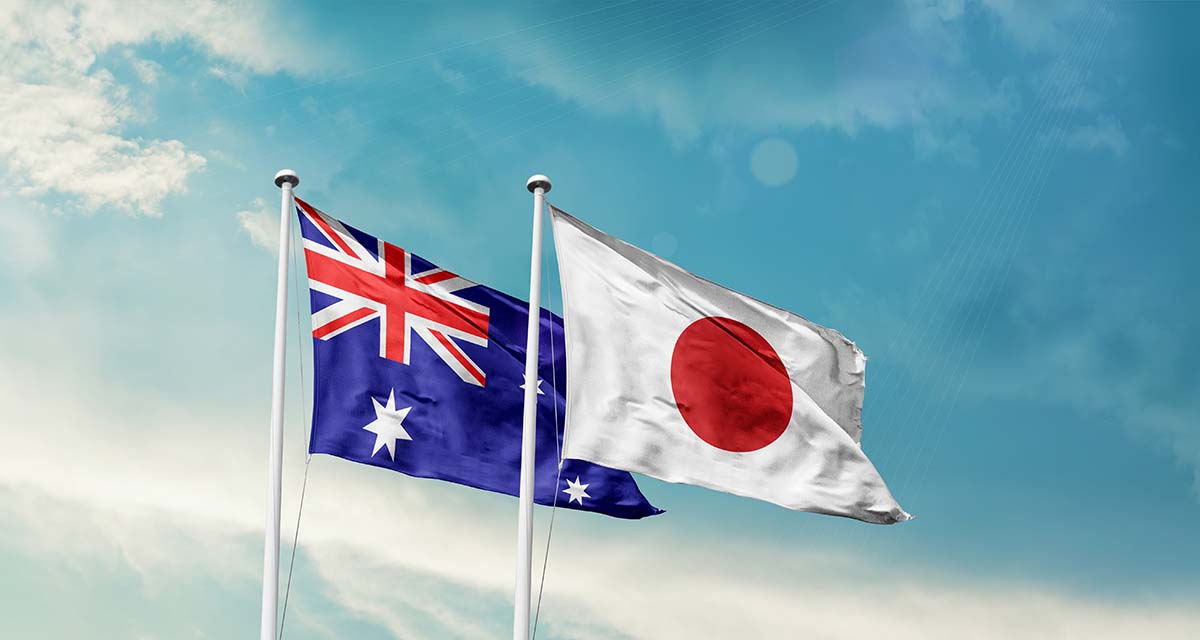
“As Australia and Japan mark the 50th anniversary of partnership, our enduring relationship is evolving to serve a new purpose. A purpose that achieves economic security and regional resilience. Already, collaboration between Australia and Japan is underway in areas such as energy, critical minerals, and advanced manufacturing. Further alignment on policy and regulations, pragmatic and synchronized approach to energy transition will further attract investment from Japan,” said Sam Maresh, founding partner of Trinity Indo-Pacific Partners, a strategic advisory firm connecting businesses across Australia, India, Japan and Singapore.
Investment built on stability and trust
Japanese capital has played a significant role in Australia’s economic development, supporting major projects and long-term growth across infrastructure, energy and other essential sectors.
Shiv Sivarajah of National Australia Bank said the reliability of the bilateral relationship has become even more valuable amid geopolitical and economic uncertainty.

“Ongoing geopolitical and economic uncertainty reinforces the importance of strong relationships, trust and stability for governments and businesses. These qualities have long underpinned the relationship between Japan and Australia, supporting consistent trade and investment, including the steady flow of long-term Japanese capital into key parts of the Australian economy such as infrastructure, energy and housing.
“National Australia Bank has been facilitating Japan-Australia commercial flows since 1969, when we first established a presence in Japan. We believe the quality, scale and strength of the relationship will only continue to grow and evolve in the years ahead.”
While traditional industries remain central, Japanese companies are also broadening their Australian portfolios.
“Japanese investment in Australia continues to evolve. While resources and infrastructure remain the anchor, Japan Inc is increasingly making strategic expansions into adjacent sectors, diversifying its presence across industries and accessing new customer markets,” said Jason Hayes, partner at PwC Australia and leader of PwC’s Asia Pacific Japan Practice.
Perth, one of Australia’s principal gateways to the Asia-Pacific, illustrates how established relationships are opening doors to new areas of collaboration.

“Our partnership with Japan is built on decades of trust, shared values, and strong business ties, underpinned by a deep sense of mutual respect. It’s a relationship that continues to deliver not only in trade, but in long-term collaboration and shared prosperity,” City of Perth Lord Mayor Bruce Reynolds said.
“Because our relationship is built on consistency and trust over many decades, we are able to move directly into new and emerging opportunities without needing to establish credibility first.”
Reynolds also emphasized the city’s attractiveness to companies seeking a stable base for regional growth.
“Perth is a city of growth and opportunity, located in the right region at the right time, with strong economic fundamentals and deep connections across the Asia-Pacific.”
“Investors come to Perth because they can see and feel the opportunity, supported by a stable environment, a strong resource base, and an established network of global and Japanese companies already operating here.”
Energy and critical minerals define the next chapter
Energy has long been a cornerstone of Australia-Japan trade. Today, the partnership is broadening to encompass renewable energy, hydrogen, data infrastructure and the resources needed for electrification and advanced technologies.
“While LNG remains a cornerstone of our partnership, the next chapter will be defined by energy transition and the development of resilient, future-focused supply chains,” Reynolds said.
“Western Australia is uniquely positioned to support Japan’s evolving needs, from rare earths and critical minerals to green energy solutions, building on an already strong foundation of cooperation in the energy sector.”
Energy Estate, an Australia-based energy and data infrastructure developer, has worked with Japanese companies including Eurus Energy, a Toyota Tsusho subsidiary, Idemitsu Kosan, IHI Corp. and NEC Corp. through renewable energy, hydrogen and data cable ventures and memorandums of understanding.
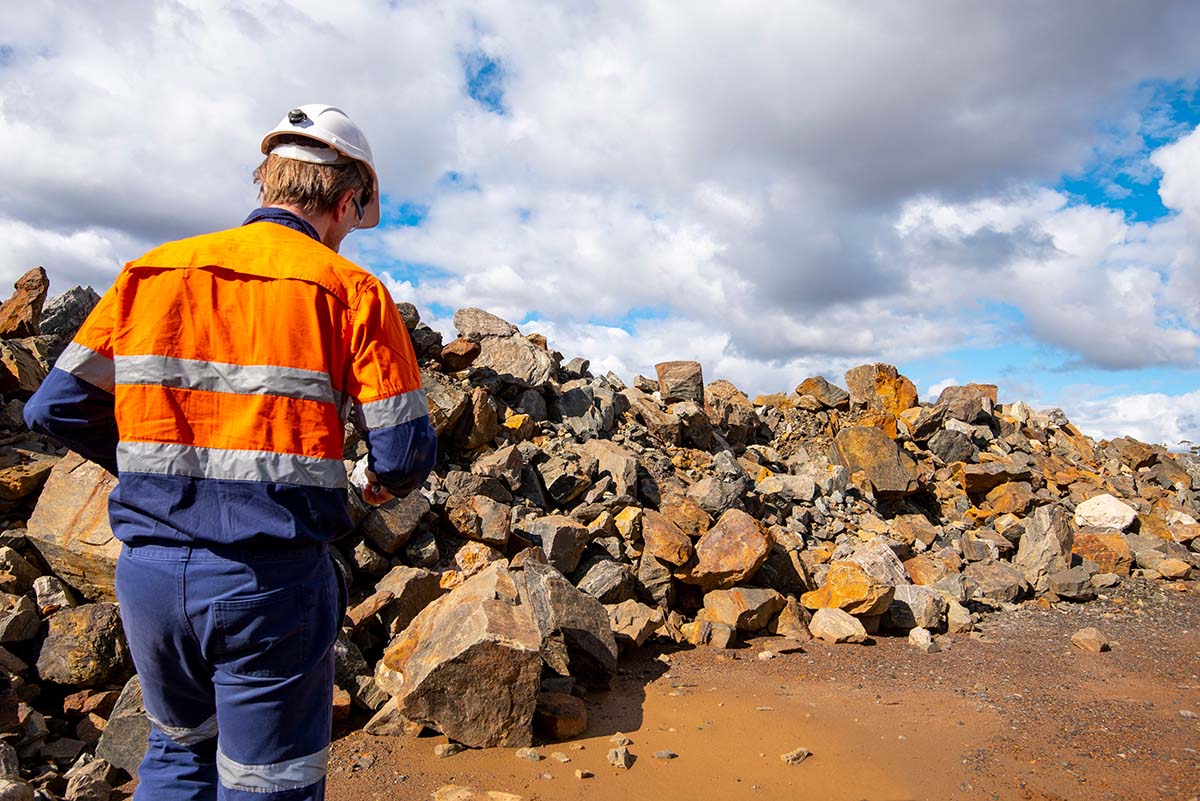
“Given the current global environment, we are seeing strong momentum from Japanese corporates in international-scale data infrastructure and the renewable energy required to support that and the broader energy transition. This complements not only the current critical minerals and natural resources engagement between our countries but the deeper investment by Japanese corporates across the economy.
“The depth and history of trade and investment between Australia and Japan dates back well over 100 years, but the nature of that investment continues to evolve with the strategic directions of each of our economies, including our joint decarbonisation commitments and in promoting technology, energy and the infrastructure supporting it,” said Energy Estate co-founder and CEO Vincent Dwyer.
Critical minerals are another increasingly important area of cooperation, particularly as both countries seek secure and diversified supply chains.

“Australia and Japan have a long history of working together to build secure, trusted supply chains, and that collaboration has never been more important than it is today. Our letter of intent with Sumitomo Corporation, signed last year, reflects a strong alignment on the importance of building a secure, transparent and Western-aligned supply chain for heavy rare earths. As global demand continues to accelerate across defence, electrification and advanced technologies, the need for trusted, diversified sources has never been clearer. With Sumitomo’s deep market reach and Victory’s rapidly advancing North Stanmore project, we are well positioned to play a meaningful role in supporting Japan’s long-term critical minerals strategy and broader supply chain resilience. We continue to explore opportunities with other Japanese partners as we expand relationships across the value chain and strengthen Australia–Japan cooperation in critical minerals,” said Victory Metals CEO and Executive Director Brendan Clark.
Long-standing agricultural relationships
Agriculture demonstrates the durability of the bilateral relationship and the importance Japanese customers place on quality, consistency and long-term business partnerships.
Stockyard Beef’s engagement with Japan began in 1969, when a visit to the country inspired founder Robin Hart and his son Lachie to develop a premium grain-fed beef product suited to Japanese preferences.
“With vision and foresight, in 1974 Stockyard became the first Australian company to export chilled Australian grain-fed beef to the Japanese market. That early access and ongoing success was made possible through a strong commitment to quality, consistency and the trust we developed with our Japanese customers who demand the highest standards in quality fresh produce,” Stockyard Beef CEO Lisa Sharp said.
“Today, Japan is our highest export market by volume. Our longevity in Japan not only speaks to our product, but our ability to nurture our customer relationships with the shared values of Japanese business. Respect, reputation and credibility as well as a commitment to long-standing and stable partnerships over short-term gains.
“As Australia and Japan mark the 50th anniversary of partnership, our enduring relationship is evolving to serve a new purpose. A purpose that achieves economic security and regional resilience.”
Sam Maresh, Founding Partner of Trinity Indo-Pacific Partners
“Looking ahead, Stockyard is focused on adapting to the evolving preferences of Japanese consumers, from refined marbling profiles to increasing expectations around provenance, sustainability and nutrition. Despite current economic challenges such as the rising cost of living, Australian beef’s reputation in Japan as safe, fresh and high quality offers a positive outlook for long term market growth in Japan.”
Bega Group has similarly developed enduring customer and corporate relationships with Japan.
“Bega Group has had long term customer relationships with Japan for over 30 years. Our partnerships with Lacto Japan and Snow Brand, including our infant formula joint venture at Tatura, are built on a genuine commitment to quality and consistency. Today, Japan represents around 30% of our ingredients business, reflecting the strength of these partnerships.
“Beyond trade, we’re also supporting Dairy Australia’s scholarship program which brings emerging Japanese industry talent to Australia and strengthens the educational and professional ties that underpin these long-term partnerships,” the company said.
Security and advanced manufacturing
The strategic dimension of the relationship is also expanding as Australia and Japan respond to a more complex Indo-Pacific security environment.

“The Australia–Japan alliance plays an important role in addressing an increasingly complex security environment marked by rapidly evolving and emerging threats. Japan’s careful and considered approach to strengthening its defence posture recognises both its role in contributing to regional stability, and the importance of close coordination with trusted partners like Australia. As we mark 50 years of collaboration, this shared commitment to deterrence, innovation and regional stability remains essential to safeguarding a secure and resilient Indo-Pacific,” said Angus Bean, CEO of DroneShield.
Tom Harley, managing director of Dragoman, has observed the expansion of bilateral cooperation through his firm’s work with Japanese companies operating in Australia.
“We’ve worked with a number of leading Japanese companies in Australia on understanding the public policy environment, particularly in the resource sector.”
“We’ve been working on defense-related projects, and this represents an important new horizon for the Australia–Japan relationship—driven both by evolving policy direction in Japan and the changing strategic environment we share, underpinned by common values.”
Harley also sees strong industrial complementarity between the two countries.
“Australia’s limitations in sophisticated manufacturing are complemented by Japan’s strength and excellence in large-scale manufacturing, and there is a clear alignment in our shared needs.”
Research, innovation and future generations
Universities and research institutions are building another layer of the partnership by connecting academics, students and industries in fields ranging from quantum technology and urban development to medicine and space exploration.
“From quantum technologies and liveable cities initiatives to co-located innovation hubs, RMIT has a proud history of working with Japanese industry, government and academic institutions,” said Professor Calum Drummond AO, RMIT deputy vice-chancellor for research and innovation.
“In recent years, RMIT has significantly increased its engagement with Japanese industry partners as we seek to build stronger connections with key collaborators across the Asia–Pacific. These partnerships play a vital role in linking Australian industry innovation with global supply chains. We are excited by the potential for new breakthroughs and innovation as a result of this increased engagement.”
Drummond described the countries as natural collaborators with closely aligned interests and capabilities.

“Japan and Australia are complementary and natural research and innovation partners, due to our aligned interests, leading systems and our shared communities of dedicated academics, researchers and students.”
“As we celebrate the 50th anniversary of friendship and cooperation between our two countries, RMIT remains firmly committed to fostering bilateral exchange for years to come. Together, we will continue to advance research and innovation, strengthen industry ties, and contribute to a more sustainable and prosperous region.”
Adelaide University is also expanding its collaboration with Japanese institutions through research partnerships, fellowships and student mobility.
“Adelaide University’s collaboration with Japan is deep and strategically aligned across research, innovation and student mobility. Partnerships are demonstrated through programs such as the Mawson Lakes Fellowship Program that supports researcher exchange, and strong outbound mobility including New Colombo Plan scholarships to Japan. Key Adelaide University partnerships include with Nagoya University, which features Japan’s first jointly conferred PhD program and sustained collaboration in medicine and research training, and the University of Tokyo, which embeds strong cross-sector engagement in areas including lunar exploration and advancing space communications,” said Professor Jessica Gallagher, deputy vice-chancellor for international and external engagement.
From established trade in energy and food to emerging cooperation in defense, critical minerals, technology and research, the Australia-Japan relationship continues to demonstrate its ability to evolve. Its next chapter is being built on the same qualities that sustained its first 50 years: trust, complementarity and a commitment to long-term partnership.