

Audi’s interpretation of premium brings together purposeful design, exceptional craftsmanship and the quiet confidence of engineering excellence. More than a century of automotive heritage informs an approach that makes the pleasure of driving central to the brand’s appeal.

In Japan, where Audi’s presence reaches back nearly six decades, an appreciation for quality and thoughtful detail gives the brand a receptive audience. A compact car for city streets, a more spacious model for changing routines or an electric vehicle chosen with curiosity and conviction each reflects a different moment in someone’s life. Audi seeks to accompany customers through these stages, offering a familiar sense of refinement as individual tastes and expectations evolve.
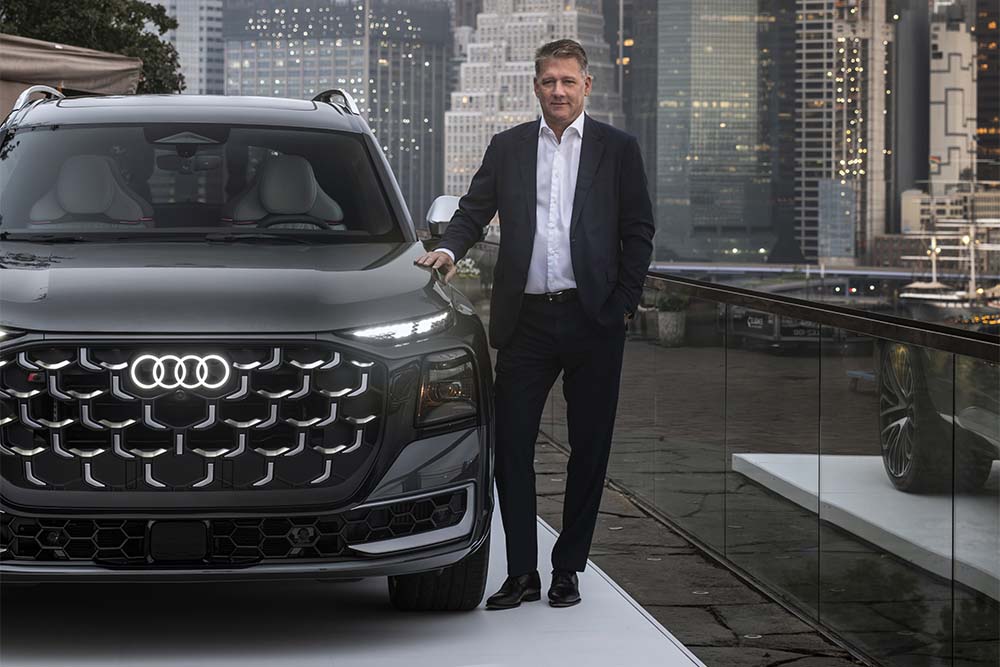
Gernot Döllner, CEO of Audi, shares with Bridges his vision for the company’s renewal and Japan’s role in its future. He discusses how listening more closely to Japanese drivers and responding to the country’s pace of electrification can give customers new reasons to choose the four rings. The continuous drive to push technological boundaries, together with the demands of Formula 1 completes the portrait of a company intent on making its next generation of cars unmistakably Audi.
Bridges: Audi has a long-established presence in Japan through its dealer network. How do you view Japan as a strategic market in 2026, and which models or segments are you most focused on?
Döllner: Audi is renewing itself — as a company and as a brand. We are becoming more focused, more efficient and clearer in what we stand for, while staying fully committed to technological progress. That is why Japan is such an important market for us. Customers here value exactly what defines Audi: technology, quality, precision and engineering excellence.
At the same time, renewal also means listening more closely to what different markets need. In Japan, compact premium models are particularly relevant, especially in urban environments. But we do not think in single segments only. We want customers to grow with Audi — from their first compact model to larger, more expressive cars as their lives and expectations evolve. With models such as the new Audi Q7 and Q9, we are expanding our offer upward as well. In this way, Audi can remain a companion for customers through different stages of life.
“Our aim is clear: to offer the right technology at the right time and support Japan on its own path toward electrification.”
Gernot Döllner, CEO of AUDI AG

Audi is committed to an electric future. Japan has its own distinct EV infrastructure landscape and consumer readiness timeline. How is Audi adapting its electrification roadmap to meet the specific demands of the Japanese market?
As an engineer, I am convinced that electric drive is the superior technology to make mobility more sustainable — and Audi is fully committed to making electric mobility attractive and more accessible to a broader range of customers.
The pace of EV adoption, however, differs from market to market. In Japan, the transition is more gradual, but interest in premium electric vehicles is clearly growing. That is why we are bringing a strong electric portfolio to the market, while also launching a completely new generation of combustion engine models.
Our aim is clear: to offer the right technology at the right time and support Japan on its own path toward electrification.

Germany and Japan share deep strengths in precision engineering, battery technology, and automotive software. Are there areas where Audi sees natural opportunities for deeper technical collaboration or supply chain integration with Japanese partners, particularly as the industry moves toward next-generation EV platforms?
Japan is not only a highly sophisticated automotive market, but also a country with exceptional strengths in technology, quality and industrial excellence. The Japanese concept of “monozukuri” resonates strongly with us. The philosophy of excellence, craftsmanship and continuous improvement feels very familiar to Audi.
In general, there are opportunities for even deeper collaboration, especially in technologies that are critical for the next generation of electric vehicles – such as battery technologies, semiconductors, and automotive software.
In times when resilient value chains are becoming increasingly important, Japan has a strong role to play here. For Audi, partnerships are not only about sourcing components; they are about jointly advancing technologies and mobility.
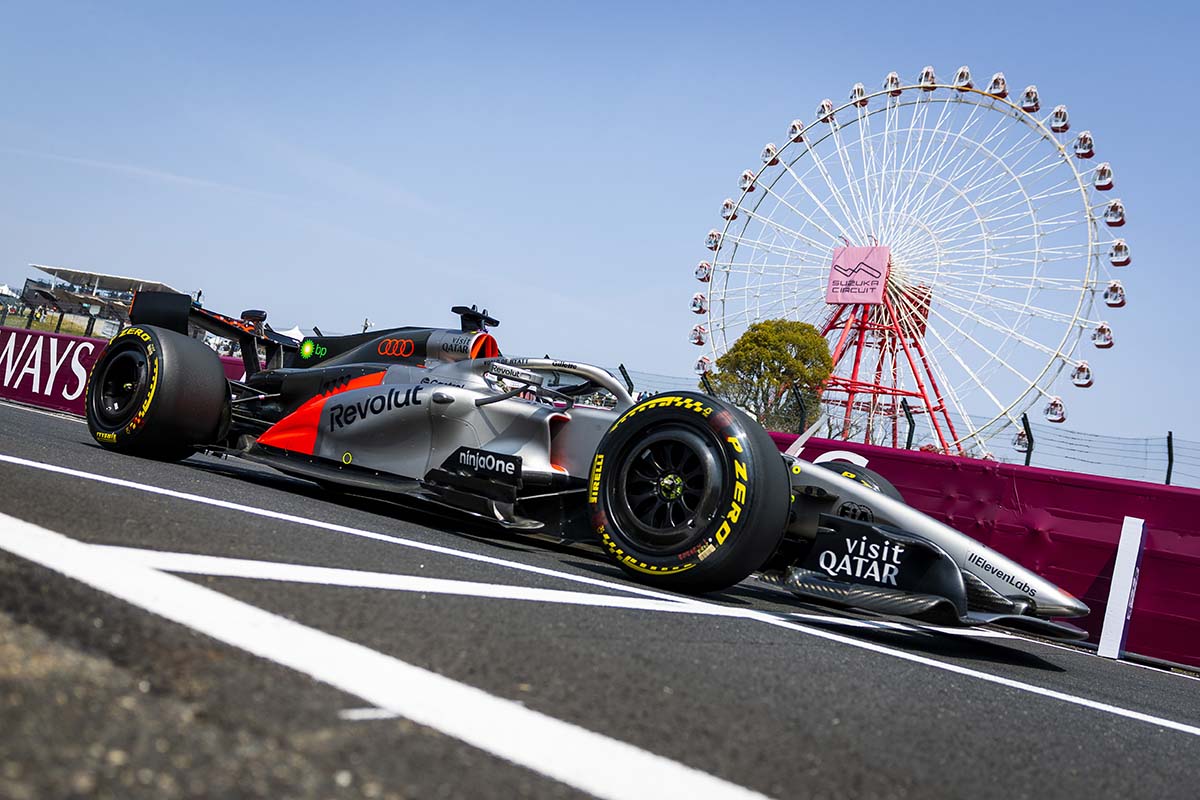
Audi’s Formula 1 debut is now underway. Japan has one of the sport’s most devoted fanbases, and the Japanese Grand Prix draws enormous attention. What has the first season taught you about connecting with Japanese audiences through motorsport, and how is the F1 programme influencing Audi’s brand strategy in the market?
Formula 1 is much more than a motorsport programme for Audi. It is a catalyst for the renewal of our company and our brand. F1 stands for exactly the qualities that are critical for Audi’s future: technological ambition, speed of execution, precision, teamwork and the ability to perform on a global stage.
It pushes an organization to make decisions faster, work more closely across disciplines and turn innovation into performance under extreme pressure. That mindset is highly relevant for the transformation we are driving at Audi.
Japan adds a very special dimension to this. Few markets have such a deep appreciation for motorsport, engineering and dedication. For us, Formula 1 is therefore also a way to connect with existing Audi customers and with new audiences who follow technology, performance and global culture.
The message is clear: Audi is renewing itself with focus, ambition and confidence — and Formula 1 makes that transformation visible.