

By Krzysztof Ingarden, Honorary Consul General of Japan in Kraków, Poland
Nearly five decades ago, a journey across Japan sparked a fascination that would shape my professional career, academic interests and personal life. What began as an architectural study trip in 1977–1978 has evolved into a lifelong commitment to strengthening the cultural and architectural relationship between Poland and Japan. Through architecture, education, exhibitions and cultural diplomacy, Japan has remained an essential source of inspiration and a constant partner in my work.
My relationship with Japan began in 1977–1978, when, as a second-year architecture student at Kraków University of Technology, I travelled across the country with an architectural guidebook, from Sapporo in the north to Beppu and Oita in the south. The journey offered an extraordinary opportunity to experience Japanese architecture firsthand, from historic temples, shrines and traditional houses to contemporary buildings and urban environments.
I was particularly fascinated by the way Japanese architecture balances tradition and modernity, nature and technology, simplicity and complexity. These observations became a lasting influence on my architectural thinking.
In 1983, I returned to Japan as a doctoral research fellow at the School of Art and Design at the University of Tsukuba, where I remained until 1985. During this period, I also worked at the Tokyo architectural office of Arata Isozaki (1984–1985). This experience introduced me more deeply to Japanese architectural philosophy and established professional relationships that would prove fundamental to my future career.
The Manggha Museum: A Symbol of Polish-Japanese Friendship
One of the most meaningful chapters of my relationship with Japan began through my collaboration with the renowned Polish film director Andrzej Wajda and his wife, Krystyna Zachwatowicz-Wajda.
Inspired by his lifelong fascination with Japanese art, Andrzej Wajda decided in 1987, following his receipt of the Kyoto Prize, to devote the prize money to establishing a museum in Kraków. Its purpose was to provide a permanent home for the remarkable Japanese art collection assembled by Feliks Jasieński, known as Manggha, and preserved at the National Museum in Kraków.
I had the privilege of working with Andrzej Wajda, Krystyna Zachwatowicz-Wajda and Japanese architect Arata Isozaki on bringing this ambitious vision to life. As the local architect, I collaborated with Isozaki and his team on the architectural development and implementation of the project.
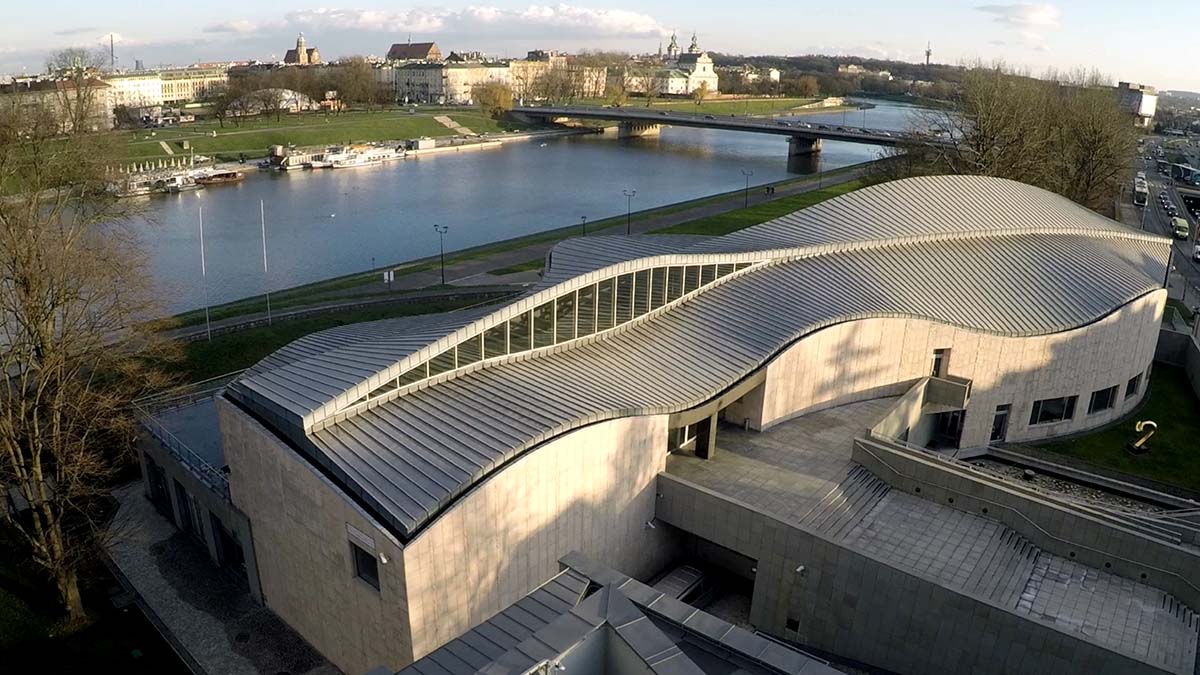
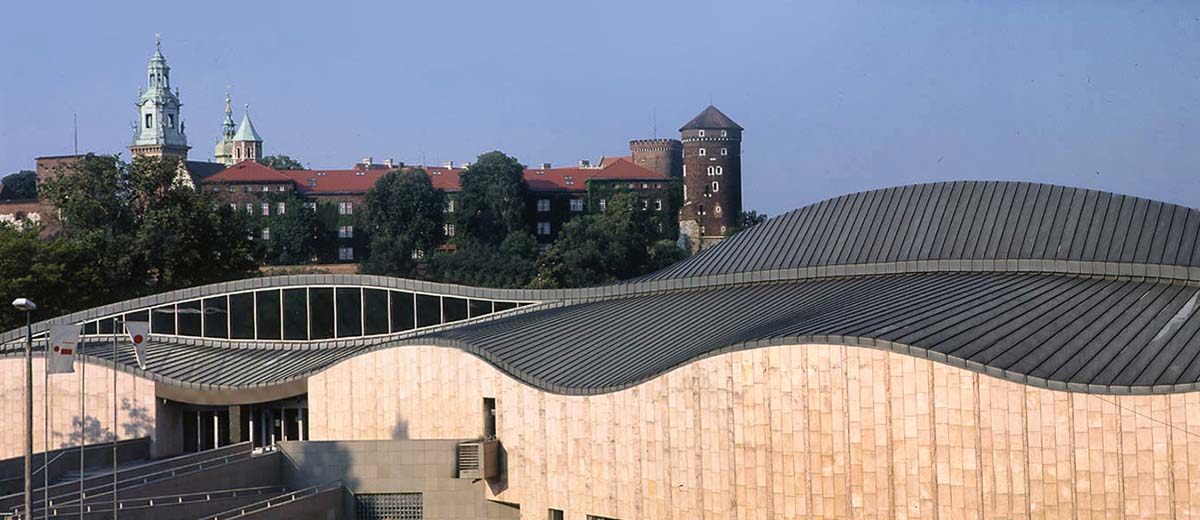
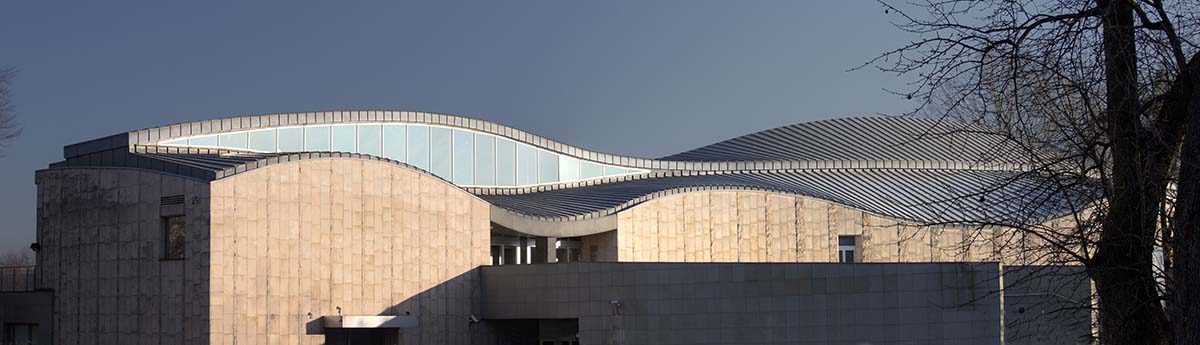
The building, with its distinctive flowing roof inspired by the landscape of the Vistula River, became an important addition to Kraków’s architectural identity. Opened in 1994, the Manggha Museum of Japanese Art and Technology developed into much more than an exhibition space. It became a vibrant centre for cultural exchange and an enduring symbol of friendship between Poland and Japan.
For me, this project represented the beginning of a deeper professional and personal commitment to connecting our two cultures through architecture.
Architecture as a Bridge Between Poland and Japan
Over the following decades, my architectural practice at Ingarden & Ewý Architects (IEA) increasingly became involved in projects reflecting the relationship between Poland and Japan.
Among the most significant was the Polish Embassy in Tokyo, designed by our office. It was an opportunity to express Polish architectural identity within the distinctive cultural and urban context of Japan. We also collaborated with the Japanese architectural practice Ishimoto Architectural & Engineering Firm on the Embassy of Japan in Warsaw, acting as local architects. Together, these diplomatic projects became particularly meaningful examples of architectural cooperation between our countries.
Another important milestone was the Polish Pavilion at EXPO 2005 Aichi in Nagoya. Designed by our team, its distinctive façade of woven wicker drew inspiration from traditional Polish craftsmanship, transforming a familiar natural material into a contemporary architectural expression. The pavilion presented an aspect of Polish cultural identity to Japanese audiences while demonstrating how traditional techniques can find new relevance in modern design.
My collaboration with Arata Isozaki also continued. In 2008, our teams won the international competition for the Mystetskyi Arsenal cultural complex in Kyiv, Ukraine, although the project was ultimately not realized. Later, with IEA as the leading office, we worked together on the design of the ICE Kraków Congress Centre, completed in 2014.
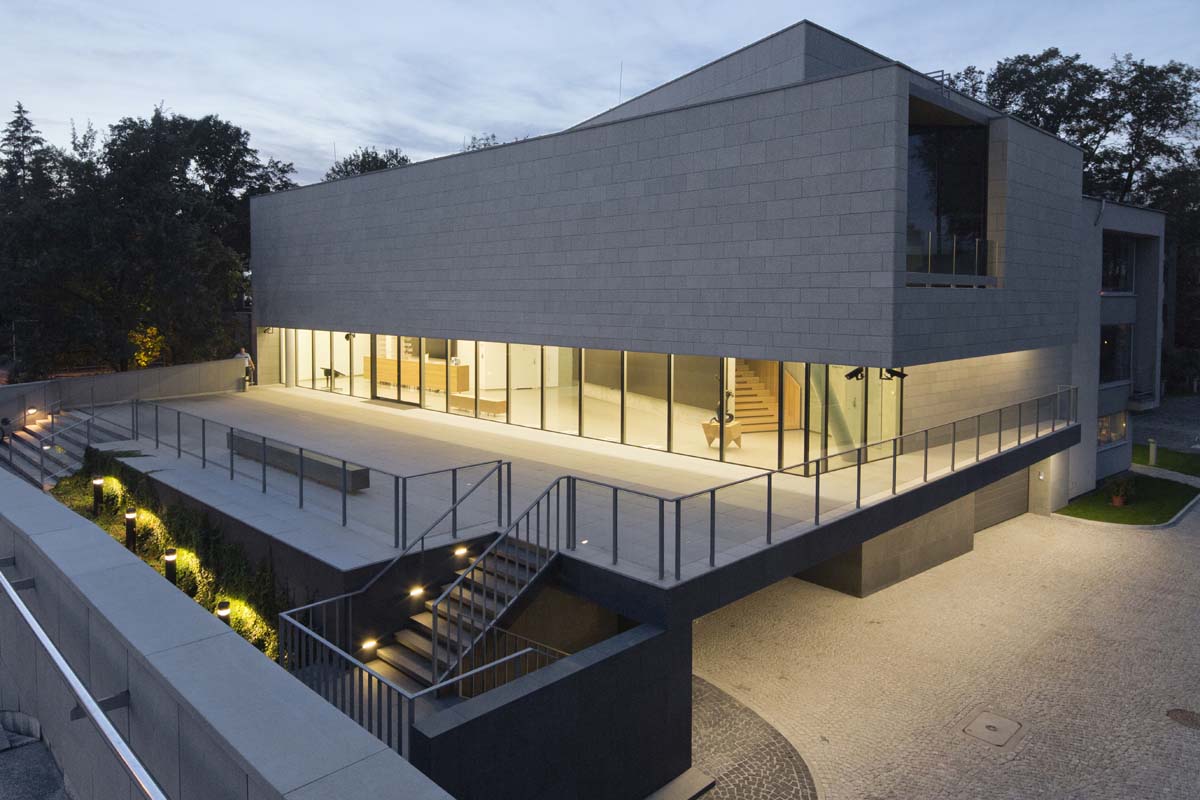
In 2015, we completed the Europe–Far East Gallery, an extension of the Manggha Museum. Returning to an institution so closely connected with the beginnings of my professional relationship with Japan was especially meaningful.
These experiences have reinforced my belief that architecture is not simply about creating buildings. It is also about establishing connections between people, cultures and ideas.
Sharing Japanese Architecture with European Audiences
Alongside architectural practice, I have devoted considerable attention to introducing contemporary Japanese architecture to audiences in Poland and elsewhere in Europe.
The Manggha Museum has provided an important platform for exhibitions exploring the creative thinking and architectural philosophies of leading Japanese architects. In 2009, we presented Arata Isozaki: Drawings and Sketches, offering visitors insight into his intellectual approach and creative process.
In 2021–2022, I initiated and co-curated an exhibition devoted to Kengo Kuma, together with Marcin Sapeta of Kengo Kuma & Associates. The exhibition explored Kuma’s distinctive approach to materials, nature and the relationship between buildings and their surroundings.
Following Arata Isozaki’s death in December 2022, I proposed the exhibition programme Arata Isozaki in Memoriam. Its purpose was to honour his intellectual and architectural legacy while continuing the dialogue with outstanding contemporary Japanese architects that he had helped foster.
The first exhibition, Shigeru Ban: Architecture and Social Engagement, opened at the Manggha Museum in October 2025. It highlighted Ban’s innovative use of unconventional materials and his commitment to humanitarian architecture and social responsibility. The next major project in this programme is an exhibition devoted to SANAA, the internationally acclaimed practice founded by Kazuyo Sejima and Ryue Nishizawa, planned for 2028.
For me, these exhibitions are not simply presentations of architectural achievements. They create opportunities for new generations of architects, students and audiences to discover Japanese architectural culture and engage with its ideas.
Education, Research and the Next Generation
Academic exchange has always been another important dimension of my relationship with Japan. My research explores Japanese architectural traditions, domestic space and the cultural meanings embedded in spatial organisation. I have been particularly interested in concepts such as uchi/soto, omote/ura and honne/tatemae, which offer valuable perspectives on the relationship between space, society and cultural identity.
In 2020, while serving as Dean of the Faculty of Architecture and Fine Arts, I initiated a joint international design studio with Professor Makoto Shin Watanabe of Hosei University in Tokyo. Students from both institutions worked together on the revitalisation of the Nishiyamato Danchi housing estate, exploring how Japan’s postwar collective housing could respond to contemporary social and spatial needs.
We also established an agreement with Kengo Kuma & Associates to create the Kengo Kuma Student Award. The award recognises outstanding master’s degree projects at our Faculty and offers the selected graduate an opportunity to undertake a professional internship at Kuma’s Tokyo office.
Such initiatives are particularly important because international architectural cooperation should extend beyond established professionals. It should also create opportunities for young architects to exchange ideas, gain experience and develop lasting professional relationships.
Cultural Diplomacy and Recognition
Since 2002, I have served as Honorary Consul of Japan in Kraków, a role that has allowed me to extend my professional and personal engagement into broader institutional and cultural cooperation. Through this position, I have supported initiatives promoting Polish-Japanese relations in architecture, art, education and culture.
In recognition of my contributions to strengthening these relations, I was awarded the Order of the Rising Sun with Ribbon by the Government of Japan in 2015. I regard this distinction as recognition not only of my own work but also of the many Polish and Japanese colleagues and institutions who have contributed to this shared relationship.
“For me, Poland and Japan have much more to discover and achieve together. And I look forward to being part of that continuing journey.”
Krzysztof Ingarden, Honorary Consul General of Japan in Kraków, Poland
New Projects, New Opportunities
Today, nearly fifty years after my first journey to Japan, our cooperation continues to develop through new architectural projects. One of the most significant is the New Kraków Philharmonic. Following our success in the 2026 architectural competition, Ingarden & Ewý Architects are now developing the design in collaboration with Nagata Acoustics, the internationally renowned Japanese acoustic consultancy. This partnership brings together architectural design and specialist Japanese expertise in concert hall acoustics.
Another recent collaboration involves ADH Architects in Tokyo and the architectural concept for the Japanese Cultural Centre in Iłowa, Poland. The project aims to introduce elements of traditional Japanese spatial culture into a contemporary cultural institution, creating another opportunity for meaningful exchange between our countries.
Looking ahead, 2027 will mark the 70th anniversary of the restoration of diplomatic relations between Poland and Japan. In this context, an exhibition devoted to the work of Ingarden & Ewý Architects is being considered for the Manggha Museum. It would present selected projects and explore the influence of Japanese architectural culture on our practice, tracing a journey from the Manggha Museum and diplomatic buildings to EXPO 2005 and our more recent international collaborations. Details of the programme and exhibition dates remain to be confirmed.
A Relationship That Continues to Inspire
Looking back, I see my relationship with Japan as a continuous dialogue rather than a sequence of individual projects. It has been shaped by extraordinary people, shared architectural ambitions, academic partnerships and friendships that have endured across generations.
From my first journey as a young architecture student to working alongside Arata Isozaki, Andrzej Wajda, Kengo Kuma and many other outstanding architects and cultural figures, Japan has profoundly influenced the way I understand architecture and its role in society. Above all, these experiences have taught me that architecture can transcend geographical and cultural boundaries. A building, an exhibition, a university project or a professional collaboration can become a meeting point between different traditions and ways of thinking.
Nearly half a century after that first journey, my fascination with Japan remains undiminished. I continue to believe that the strongest relationships between countries are built not only through diplomacy and institutions, but also through shared creativity, mutual respect and personal commitment. For me, Poland and Japan have much more to discover and achieve together. And I look forward to being part of that continuing journey.